
September 14, 2026
What Is a Healthy Home Inspection? What It Includes, What It Finds, and What You Get

A standard home inspection answers one question: is this house built and maintained to code? A healthy home inspection answers a different one: what is this house doing to the people who live in it?
Those are not the same question. A home can pass every code inspection and still have a damp crawlspace feeding mold into the return air, an oversized air conditioner that never dries the house, wiring that puts a magnetic field across the master bed, and water that tastes fine and carries arsenic. None of that shows up on a standard report, because a standard inspector is not looking for it.
This article explains what a healthy home inspection is, who needs one, what it includes, what it tends to find, and what you receive at the end. It describes the way SENERGY360 does it. Other firms will differ in scope, and the questions at the end will help you compare.
What a healthy home inspection is
A healthy home inspection is a whole-home environmental investigation led by someone trained in building science and building biology. It treats the house as one connected system: the enclosure, the mechanical system, the plumbing, the electrical system, the materials and the occupants' symptoms are read together, because in a real house each one changes the others.
The inspector's job is to find the cause of a problem, not to confirm the symptom. Anyone can see a stain on a ceiling. The useful questions are where the water came from, why it stayed, what else it reached, and what has to change so it does not come back.
At SENERGY360 the inspection is led by Brian Johnson, a licensed General Contractor who holds all three Building Biology Institute certifications. That combination matters at the end of the process, when findings have to become a repair plan a contractor can actually execute. Read more about the healthy home builder and Building Biologist model.
Who needs one
Most families come to a healthy home inspection for one of four reasons.
- Someone in the home is sick and the doctors are running out of ideas. Chronic sinus problems, fatigue, headaches, asthma that appeared after a move, or a diagnosis such as chronic inflammatory response syndrome (CIRS) that points back at the building.
- There has been water. A roof leak, a slab leak, a flooded bathroom, a past remediation that may or may not have worked.
- You are buying a house and want to know what it will do to your family, not only whether the roof has five years left.
- You are finishing a new build or a renovation and want proof that the healthy-home design survived construction.
What the inspection includes
A thorough inspection follows a sequence. Each step narrows the next one, so samples are taken where the building evidence says they will change a decision, not scattered for their own sake.
1. The interview
Symptoms, timelines, water history, past repairs, what changed and when. Which rooms feel worse. Whether symptoms lift on vacation. The occupants usually know more than they think, and a good inspector starts by listening.
The U.S. EPA's introduction to indoor air quality makes the same point about timing: if symptoms fade or go away when a person is away from the area, the indoor air is worth investigating as a possible cause.
2. The building walkthrough
Roof, grading, drainage, cladding, windows and doors, the crawlspace or slab, the attic, every wet room, the garage and its connection to the house. The inspector is looking for the paths water and air take through the building, not only the stains they leave behind.
3. Moisture mapping and thermal imaging
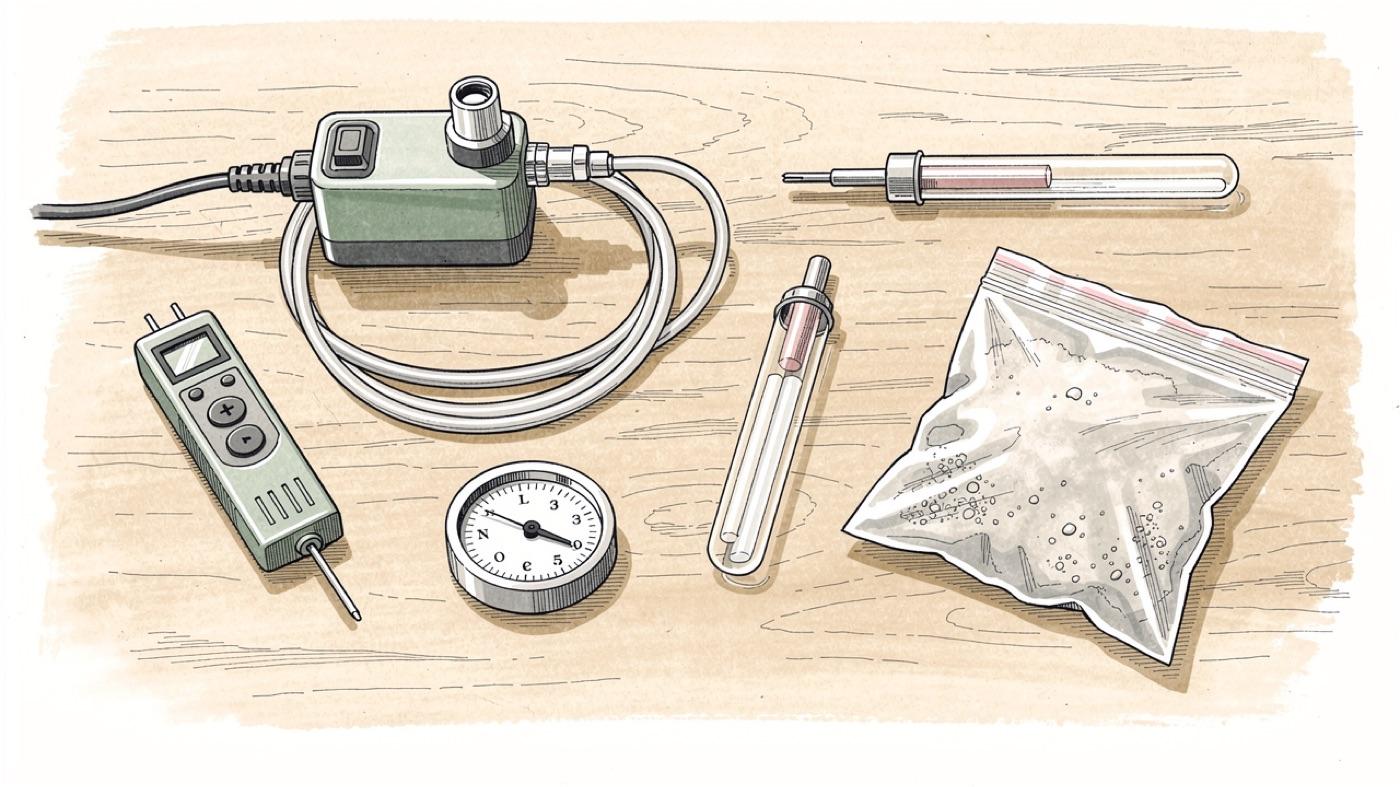
Pin and pinless moisture meters and an infrared camera show what is damp inside walls, ceilings and slabs right now, and where it is coming from. This is where a hidden plumbing leak, a failed shower pan or a condensation problem behind an exterior wall usually turns up.
4. HVAC evaluation
The air handler, coil, drain pan, ducts, filter rack and fresh-air provisions are inspected as the distribution system they are. If the HVAC is contaminated, every room is downstream. Sizing, run times, static pressure and humidity control are checked, because an oversized system is one of the most common causes of a damp, moldy home. The article on HVAC assessments for mold-sensitive homes goes deeper.
Do not run the HVAC system if you know or suspect that it is contaminated with mold - it could spread mold throughout the building.
5. Mold and indoor air sampling
Sampling is targeted by the evidence gathered so far. SENERGY360 uses settled-dust testing (ERMI and related panels) to identify which molds are present and how the home compares with a baseline, and pathway testing to narrow the point source so the cleaning plan is specific. Where airborne sampling is warranted, air is drawn through a pump for an extended period rather than the brief cassette sample many inspectors use, because a short sample misses far more than it catches. Particle counts, carbon dioxide, humidity and volatile organic compound trends round out the picture of the air itself.
6. Water review
Where the water comes from, what treatment is in place, how the plumbing is laid out, and where stagnation or leaks are likely. Laboratory testing of the water at the tap is recommended whenever the source, the plumbing materials or the symptoms warrant it.
7. Electrical and EMF review
Magnetic fields, electric fields, radio frequency and dirty electricity are measured in the sleeping areas and the spaces where people spend the most time, then compared with the Building Biology guidelines for sleeping environments. Common findings include a wiring error, a panel or appliance on the far side of a bedroom wall, and device placement that has easy fixes.
8. Materials and furnishings
Flooring, cabinetry, finishes, furnishings and stored products are reviewed as sources of formaldehyde, volatile organic compounds, flame retardants and fragrance. In a new or newly renovated home this step often explains symptoms that started the week the family moved in.
The EPA lists newly installed flooring, upholstery or carpet, and cabinetry or furniture made of certain pressed wood products, among the common sources of indoor air pollution.
What a healthy home inspection typically finds
After hundreds of homes, the findings repeat. In rough order of frequency:
- Moisture that was never fully dried after a leak or a remediation, still feeding mold behind finished surfaces
- HVAC systems that are oversized, leaking, dirty at the coil, or drawing air from a garage, attic or crawlspace
- Bathrooms and kitchens that do not exhaust to the outdoors, or exhaust fans nobody runs
- Grading and drainage that push water toward the foundation
- Crawlspaces and attics that are connected to the living space by air leaks
- Wiring errors or panel locations that put magnetic fields across a bed
- Water that has never been tested, or a treatment system that is not maintained
- Newly installed materials off-gassing into a tightly closed home
Rarely is it one thing. The usual answer is two or three connected conditions, which is why the whole-home approach matters and why fixing the visible stain alone so often fails. The comprehensive mold guide explains what these conditions do to the people living with them.

What you receive: the Inspection Blueprint
Every SENERGY360 inspection ends in a written Healthy Home Inspection Blueprint. It documents what was found, why it happened, and the specific repairs and changes needed to resolve it, in priority order, with enough detail that a contractor can price and execute the work. Laboratory results are interpreted rather than attached, so you know what the numbers mean for your home.
You can read a real, redacted example on the sample Inspection Blueprint page before you ever book.
What it costs and where we go
The price of a healthy home inspection depends on the size of the home, the scope of sampling and the travel involved. A quick air sample and an invoice is cheap; a building investigation that ends in answers is not, and the difference is usually the cost of the repairs you avoid doing twice. The article on what drives mold inspection cost walks through the variables.
SENERGY360 inspects in person throughout Arizona, including Tucson and Phoenix, and travels for inspections across the United States under a simple published travel policy.
After the inspection
The Blueprint is yours to act on with any contractor. For clients who want one team to carry it through, SENERGY360 can manage the repair or the build-back, coordinating licensed indoor air quality HVAC contractors and remediation specialists, and holding the work to the same 12 CORE Principles for Healthy Building Design applied to new construction. The goal is a home restored to a healthier, more durable baseline, not patched back to the condition that caused the problem.
Questions to ask any healthy home inspector
Use these to compare firms, including us.
- Will you inspect the whole building, or only take air samples?
- How do you find the moisture source, and what instruments do you use?
- Do you evaluate the HVAC system as part of the inspection?
- What sampling do you use for mold, and why?
- Do you measure EMF and review the water?
- What does the written report look like, and can I see an example?
- Who is qualified to carry out the repairs you recommend, and can you oversee them?
Frequently asked questions
How long does a healthy home inspection take?
Most homes take a full day on site, longer for large homes or complex histories, plus laboratory turnaround and report writing. The interview may happen before the visit.
Is a healthy home inspection the same as a mold inspection?
A mold inspection is one part of it. A healthy home inspection also covers HVAC, indoor air, water, materials and EMF, because mold is rarely the only thing a wet building is doing to its occupants. If mold is your specific concern, start with what a real mold inspection includes.
Do I need to leave the house or prepare anything?
No preparation is required beyond gathering any records of past leaks, repairs or lab results. The inspector will need access to the attic, crawlspace, mechanical equipment and every room.
Can you inspect a house I am considering buying?
Yes. A pre-purchase healthy home inspection is one of the most common requests, and it is far cheaper than discovering the problems after closing.
What if the inspection finds nothing serious?
Then you have a documented baseline for the home, which is valuable in itself, and a short list of low-cost improvements. Most homes have at least a few.
Start with a conversation
If your home has been affected by mold, moisture or air quality, or you simply want to know what it is doing to your family, schedule a complimentary 30-minute call. We will talk through your home and your concerns and scope the right inspection together.