

In depth: Climate Control, Ventilation & Indoor Air Quality
Why comfort systems are not the same as healthy-air systems
A conventional HVAC design has one job: hold a temperature. A healthy home asks the mechanical system to do five jobs at once. Keep the temperature steady, keep humidity in a narrow band, bring in filtered outdoor air on purpose, remove pollutants at their source, and keep the pressure relationships between rooms, garage and outdoors under control. A system designed only for the first job will fail at least one of the others.
That is why SENERGY360 sets indoor air quality objectives before the mechanical engineer sizes anything. The targets for particulates, carbon dioxide, humidity and ventilation rate are written down, and the equipment is designed to hit them.
Start with the load, not the catalog
Oversized equipment is the most common healthy-air failure in new construction. A system that is too large cools the air quickly and shuts off before it has removed moisture, which leaves a humid home that feels clammy and grows mold in the ductwork. The fix is a real load calculation for the specific home, followed by equipment selection and duct design that match it.
In a well-insulated, airtight home the loads are small, and the right equipment is often much smaller than a builder would choose by rule of thumb. Variable-capacity equipment that can run long and slow is usually the better match.
Ventilation: bringing in outdoor air on purpose
A tight enclosure is a health feature, because it keeps out dust, pollen, smoke and humid air, and lets the home control what comes in. It also means the home must ventilate mechanically. SENERGY360 designs balanced ventilation with an energy recovery ventilator (ERV) or heat recovery ventilator (HRV), sized to the occupancy and the floor plan.
- Balanced supply and exhaust so the home is not pulling unfiltered air through the walls or the garage.
- Filtered intake placed away from driveways, exhaust vents and roadways.
- Distribution to bedrooms, where people spend a third of their lives and where carbon dioxide climbs overnight.
- Boost modes tied to occupancy, cooking or a carbon dioxide sensor.
Our guide to indoor air quality testing explains how ventilation performance shows up in the numbers.
Filtration that protects sensitive occupants
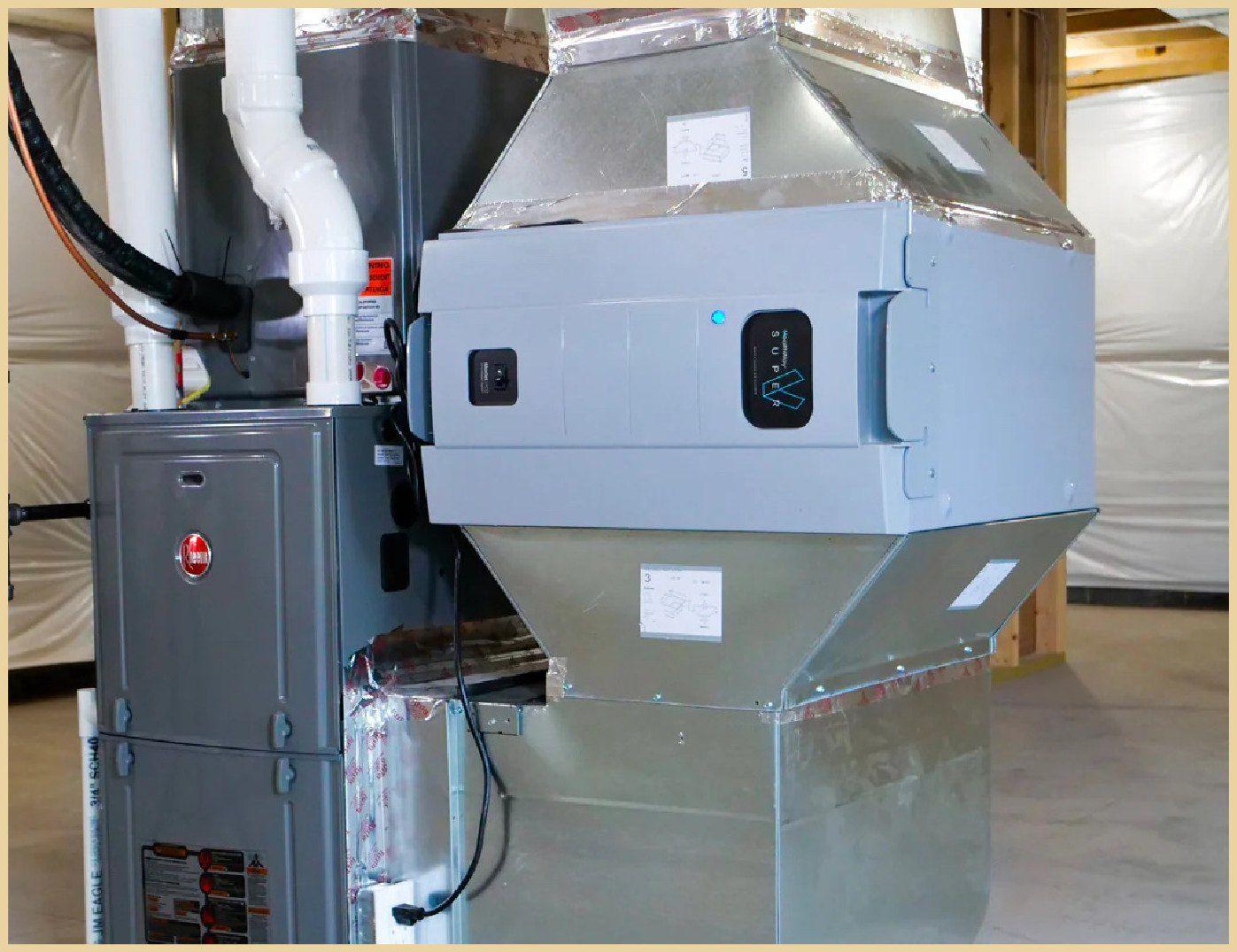
A one-inch fiberglass filter protects the equipment, not the people. Healthy-air design starts with deep-pleated MERV 13 or better filtration on the air handler, a cabinet designed for that filter so it does not choke the airflow, and sealed filter racks so air cannot bypass the media. For mold-sensitive or medically vulnerable occupants, medical-grade filtration and dedicated room units are added where they will change outcomes.
Filtration is designed into the duct system rather than bolted on, so the static pressure, fan speed and filter life are all accounted for. The published article on HVAC inspections for mold-sensitive homes shows what goes wrong when it is not.
Source control and exhaust
The cheapest pollutant to filter is the one that never enters the living space.
- Kitchen exhaust vented outdoors, sized for the range, with makeup air so the hood does not depressurize the house and pull in garage or combustion gases.
- Bathroom and laundry exhaust on humidity or timer controls, ducted outside with short, smooth runs.
- Attached-garage isolation with an airtight separation, a dedicated exhaust fan, and no return air or ducts crossing the garage.
- Combustion planning. Sealed-combustion or all-electric equipment so there is no open flame sharing air with the occupants.
Humidity control
Humidity is the master variable for mold, dust mites and how the air feels. The target is a steady band, roughly 35 to 55 percent relative humidity, year round. In dry climates that means avoiding over-drying in winter. In humid seasons and in tight homes with small cooling loads, dedicated dehumidification is often required because the air conditioner alone will not run long enough to remove the moisture. Condensate management, drain pans and trapped lines are detailed so the equipment that removes water never becomes a water problem itself.
Commissioning: proving the system works
A healthy-air design on paper is not a healthy home until the installed system is measured. Before occupancy, SENERGY360 verifies airflow at each register, static pressure, duct leakage, ventilation rates and pressure relationships, then confirms the results with indoor air quality testing. The homeowner receives a systems orientation and a filter and maintenance schedule so the performance survives the first year.
Ongoing monitoring of PM2.5, carbon dioxide, VOC trend, humidity and temperature turns the home into a system that tells you when something has changed, which is far better than waiting for symptoms.
Ventilation and indoor air quality are one of the 12 CORE Principles for Healthy Building Design, coordinated with the enclosure, materials and mold prevention principles. For an existing home with air quality concerns, start with a Healthy Home Inspection.