
September 21, 2026
How to Know if You Have Good Indoor Air Quality (IAQ)
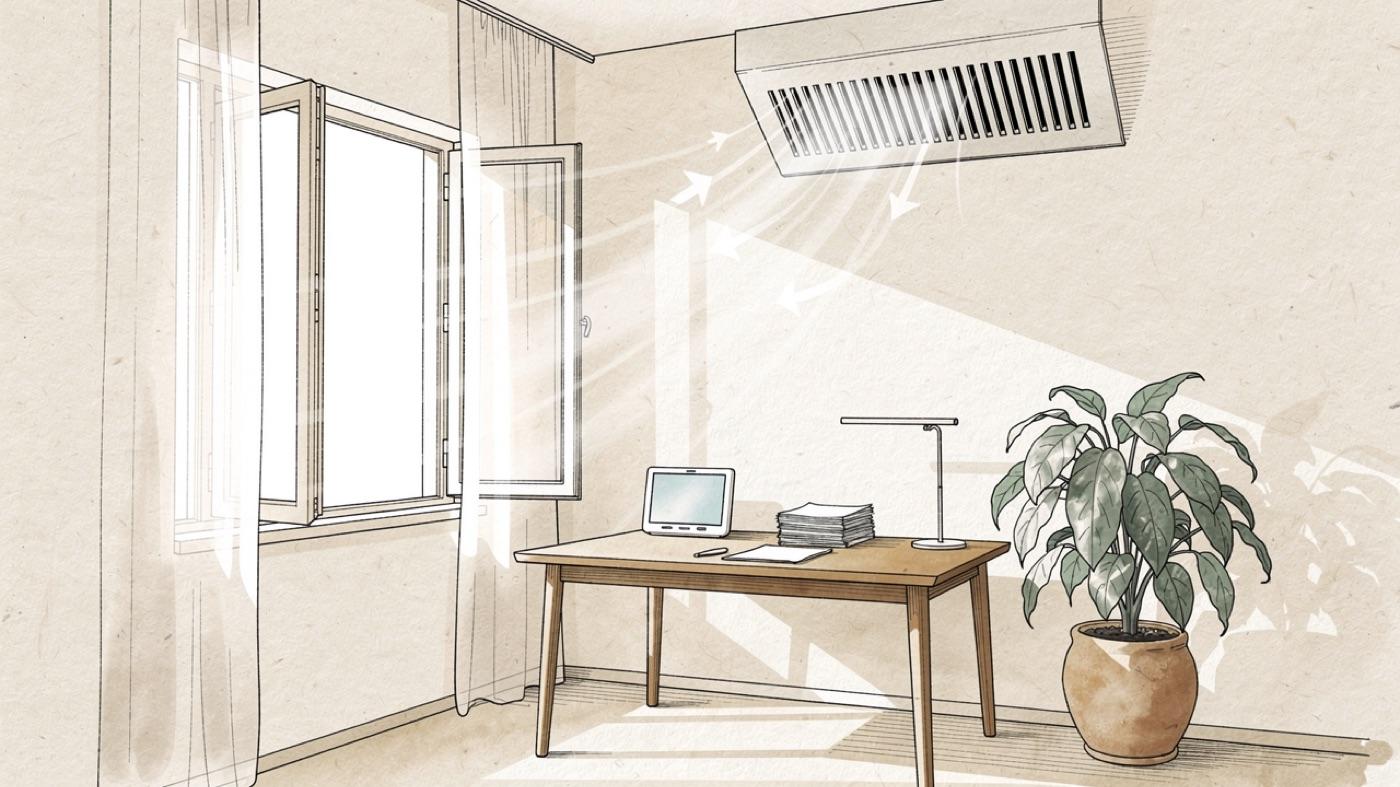
Good indoor air quality means the air in your home is low in pollutants, humidity sits in a comfortable range, and fresh air moves through the house on purpose. Bad indoor air quality usually announces itself first through your body: congestion that clears when you leave, headaches in one room, sleep that never feels restful.
This guide walks through where indoor air pollution comes from, the signs of poor indoor air quality, how to test indoor air quality at home, what a consumer monitor can and cannot tell you, and when to bring in a professional.
What exactly is indoor air quality?
Think of indoor air quality as the overall health of the air inside your home. Good IAQ means the air is free of harmful pollutants, humidity is comfortable, and ventilation is working.
Why should you care about your indoor air?
The air inside a home can be more polluted than the air outside, and most of us spend roughly 90 percent of our time indoors. Poor indoor air quality can trigger asthma, worsen allergies, cause headaches, and interfere with sleep. For anyone with a respiratory condition, young children, or older adults, clean indoor air matters even more.
Where does indoor air pollution come from?
Cigarette smoke is the obvious one. The rest hide in plain sight.
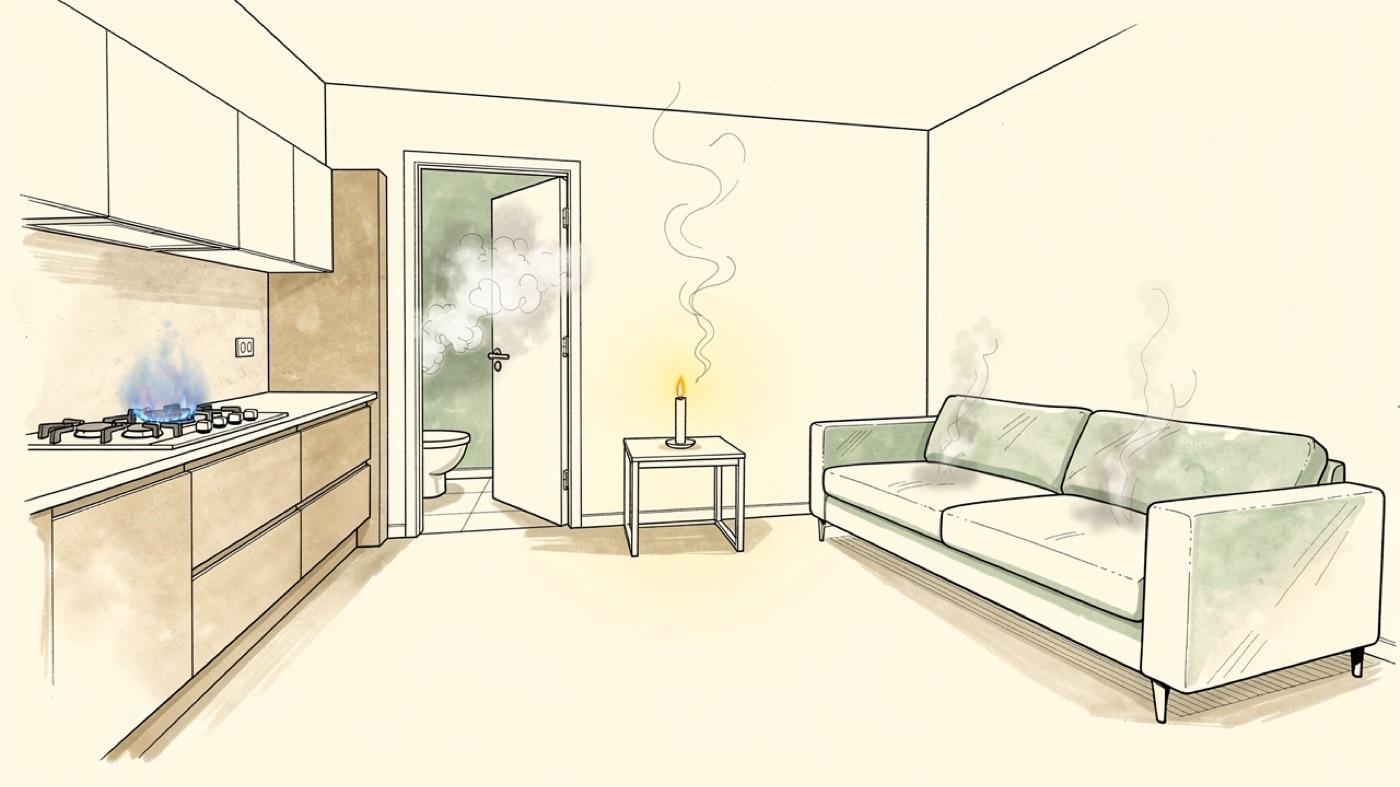
Everyday activities create pollution. Cooking releases particles, especially on a gas stove. A hot shower without a working exhaust fan raises humidity and invites mold.
New purchases bring chemicals with them. The new car smell and new furniture smell are volatile organic compounds (VOCs) off-gassing into your air. New carpet, paint, and some fabrics release them for months.
Building materials and furnishings can release pollutants slowly for years. Pressed wood products, foam insulation, and many synthetic materials emit formaldehyde and other compounds over time. Our guide to choosing non-toxic building materials covers the alternatives.
Moisture creates the conditions for mold and dust mites. Leaking pipes, unvented bathrooms, and even too many houseplants can push humidity above the ideal range of roughly 30 to 50 percent.
Outdoor pollution finds its way in through windows, doors, and cracks. Pollen, vehicle exhaust, and wildfire smoke build up indoors when the house has no real filtration. Pets contribute dander and track in outdoor particles, which is manageable with filtration and cleaning.
The pollutants that define indoor air quality
When we test a home, four measurements tell most of the story. Each one has its own sources and its own symptoms.
Carbon dioxide
Carbon dioxide is a colorless, odorless gas formed by breathing, decay, and combustion. Indoors it comes from the people in the room and from burning coal, oil, wood, gasoline, and natural gas.
At high levels the short-term effects include headaches, vertigo, double vision, ringing in the ears, and trouble concentrating. In a normal home it never gets that far, but a rising number tells you fresh air is not keeping up. Our post on CO2 levels in a house explains what the readings mean.
Fine particles, PM2.5 and PM10
Particle pollution is solid particles and liquid droplets in the air. Dust, dirt, soot, and smoke are large enough to see, while the rest need a microscope. PM10 particles are under 10 microns across, and PM2.5 particles are under 2.5 microns.
Indoors, particles come from cooking, candles, fireplaces, unvented space heaters, kerosene heaters, cigarettes, and some hobbies. They can also be biological, such as mold fragments and pollen. The finest particles reach deep into the lungs and can pass into the bloodstream, aggravating asthma, irritating airways, and stressing the heart.
Volatile organic compounds
VOCs are gases emitted by certain solids and liquids. They are consistently higher indoors than outdoors, up to ten times higher. Paints, varnishes, pesticides, fuels, cleaners, cosmetics, hobby products, building materials, furnishings, and office machines all release them.
Exposure can cause headaches, dizziness, nausea, fatigue, and eye, nose, and throat irritation. Some VOCs damage the liver, kidneys, and central nervous system, and some cause cancer. Elevated levels can persist long after the product is used, which is why we test for them by name in our VOC testing guide.
Building pressure
Building pressure is the difference between the air pushed into a house and the air pulled out of it. It depends on how tight the building is, plus wind, exhaust fans, and make-up air. The healthy target is slightly positive, about two to three hundredths of an inch of water column compared with outdoors.
Negative pressure in summer draws humid outdoor air into the walls, where it can condense on cool surfaces. Negative pressure in winter draws cold air in and makes the house drafty. Positive pressure in winter is the bigger risk, because it pushes warm, humid indoor air out through small openings in the walls, where it condenses and wets the structure.
Signs of poor indoor air quality
Problems range from mildly annoying to serious. The immediate effects are the ones most people notice first.
- Sneezing, coughing, or congestion that is worse at home than anywhere else
- Headaches and fatigue that improve when you are outside or traveling
- Dry, itchy eyes or skin irritation that shows up at home
- Feeling restless or foggy indoors
- Poor sleep despite a reasonable schedule
- A musty or chemical smell you notice when you walk in after being away
If symptoms persist, talk to your doctor, and get the house evaluated at the same time.
When a whole building produces this pattern, the EPA uses the term sick building syndrome. Its fact sheet lists headache, eye, nose or throat irritation, dry cough, dry or itchy skin, dizziness and nausea, difficulty concentrating, fatigue and sensitivity to odors as typical complaints, with most people reporting relief soon after leaving the building.
The term "sick building syndrome" (SBS) is used to describe situations in which building occupants experience acute health and comfort effects that appear to be linked to time spent in a building, but no specific illness or cause can be identified.
How to test indoor air quality at home
Start with your nose after a few hours away. Musty odors point to mold, and chemical or plastic smells point to off-gassing furniture or materials. Our article on why a house smells musty explains what that smell usually means.
Pay attention to humidity. A stuffy, damp feel or constantly dry skin and throat both suggest humidity is out of range. A simple hygrometer settles the question.
Notice your symptoms and look for visible signs. Condensation on windows, water stains, and visible mold are red flags that need attention now, not later.
Do indoor air quality monitors work?
Partly. A good consumer indoor air quality monitor is useful for three things: carbon dioxide, which tells you whether ventilation is keeping up with the people in the room; relative humidity, which tells you whether you are in the mold-friendly range; and particulate trends, which show you what cooking, cleaning, or a wildfire day does to your air.
The same monitors are weak on VOCs. Most report a single total VOC number from a sensor that cannot tell formaldehyde from the alcohol in hand sanitizer, so the reading is a trend line, not a diagnosis. They are also useless for mold, since no consumer monitor detects spores or mycotoxins.
A building biologist tests differently. We take laboratory air and dust samples for specific VOCs and formaldehyde, sample for mold spores and compare indoor to outdoor counts, measure particulate by size, and check the mechanical system rather than one corner of one room. The Climate Control, Ventilation, and Indoor Air Quality principle of SENERGY360's 12 CORE Principles for Healthy Building Design describes how those results turn into design decisions.
Tips to improve your indoor air quality
Most improvements do not require a renovation.
Open your windows regularly. Even in winter, 10 to 15 minutes flushes stale air, as long as outdoor air quality is decent that day.
Upgrade your air filters. If you have central heating and cooling, move to a higher MERV filter that your system can handle, and change it on schedule. A dirty filter cannot do its job.
Control humidity. Run exhaust fans in bathrooms and kitchens, and confirm they vent outdoors rather than into the attic. Use a dehumidifier if the house feels damp and a humidifier if it feels parched.
Clean smart. Vacuum with a HEPA vacuum and choose cleaning products with fewer harsh chemicals, or make your own with vinegar and baking soda.
Be mindful of what you bring home. Choose low-VOC furniture, carpet, and paint, and let new items off-gas in a garage or well-ventilated space before they come inside.
Maintain your appliances. Have the heating and cooling system serviced, replace purifier filters on schedule, and make sure gas appliances are properly vented.
When to call in the professionals
Sometimes the basics are not enough. Consider a professional evaluation if any of these apply.
- You have made the basic improvements and still have symptoms
- You suspect mold but cannot find the source
- You live in an older home that may have asbestos or lead paint
- You want a documented baseline of your home's air quality before a renovation or a move
At SENERGY360, we specialize in creating healthier home environments. Our Healthy Home Inspection finds the pollution sources you would miss, and we explain what the results mean and give you a clear action plan rather than a stack of lab reports. In Southern Arizona, indoor air quality testing in Tucson is one of the most common reasons clients call us.
Air quality monitoring tools
A few simple devices help you keep an eye on things between inspections. A multi-function monitor tracks particulate matter, CO2, total VOCs, and humidity in real time so you can see how daily activities affect the air. A basic humidity gauge keeps you in the 30 to 50 percent range, and carbon monoxide detectors near sleeping areas and fuel-burning appliances are not optional.
Common questions about indoor air quality
My house is new, so the air should be good, right? Not necessarily. Newer homes are tighter, which means less accidental ventilation, and new materials off-gas the most in the first year.
Are air purifiers worth it? For many homes, yes. A quality unit with a true HEPA filter meaningfully reduces airborne particles, but it does not fix a moisture problem, which is why we look for the source first.
How often should I test? For most homes, a professional evaluation every year or so is enough, unless you notice problems or make significant changes. A monitor fills in the daily patterns between visits.
Taking the next step
Improving indoor air quality does not have to be overwhelming. Start with ventilation, filtration, and humidity, and pay attention to how you feel afterward.
At SENERGY360, we believe everyone deserves to breathe clean air in their own home. When the simple changes are not enough, a Healthy Home Inspection shows you exactly what your air contains and what to do about it, and our free guides are a good place to start in the meantime.