September 14, 2026
By Brian Johnson, Building Biologist and Licensed General Contractor
VOC Testing at Home: What VOCs Are and How to Find the Source
Most homeowners ask about VOC testing after something in the house starts to smell wrong. A new floor, a fresh coat of paint, or a sofa that arrived last month. The instinct is to send air to a lab and get a number.
We do run lab tests when they are needed. But in our inspections, sampling is the last step, not the first. This post explains what volatile organic compounds are, how VOC testing actually works, and why finding the source matters more than the number.
What volatile organic compounds are
Volatile organic compounds, or VOCs, are carbon-based chemicals that evaporate at normal indoor temperature and pressure. That is the whole definition. If a material can release vapor into the room air at 70 degrees, it is a VOC source.
Three classes by volatility
The World Health Organization groups indoor organic pollutants by how easily they leave a material. The lower the boiling point, the faster the compound moves into the air. The U.S. EPA's technical overview of volatile organic compounds sets out this WHO classification, with the boiling point range for each group.
- Very volatile organic compounds (VVOCs) exist almost entirely as gas and are hard to measure
- Volatile organic compounds (VOCs) move between materials, surfaces and air
- Semi-volatile organic compounds (SVOCs) stay mostly in solids, liquids, dust and furnishings
The least volatile compounds make up a small share of what is in the air. They collect instead in dust, on furnishings, and inside building materials, where they keep releasing slowly for years.
Where VOCs come from in a home
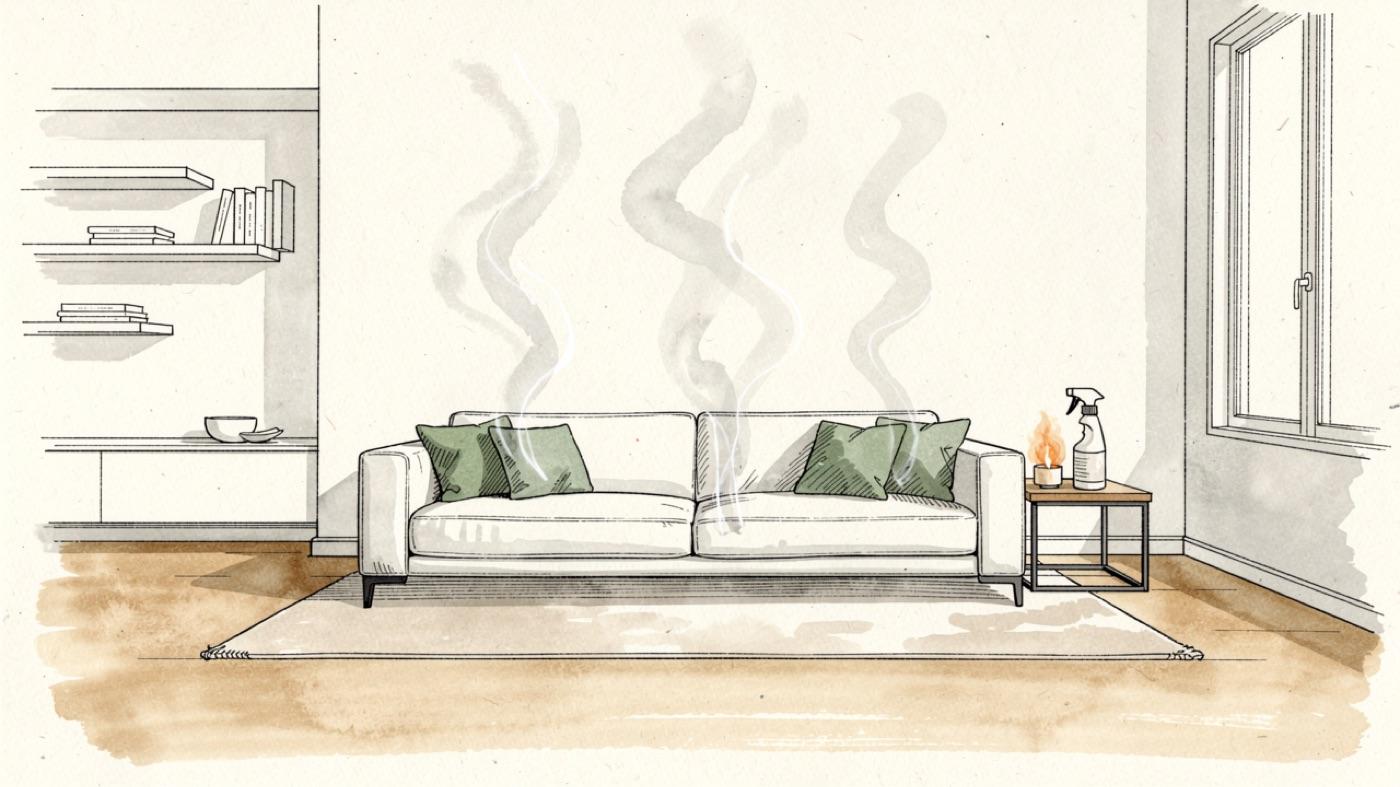
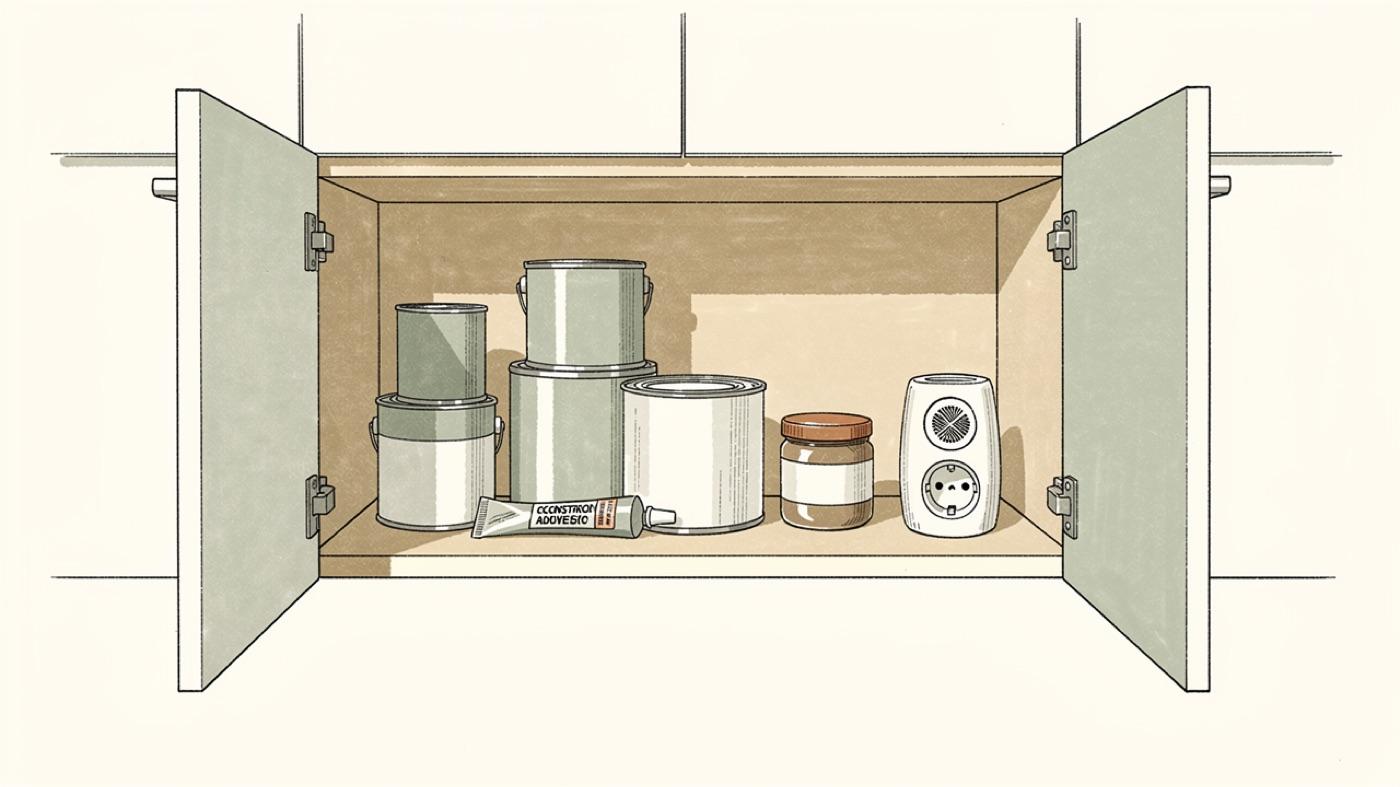
Modern homes are full of them. Glues, paints, varnishes, solvents, air fresheners, perfumes, engineered wood, finishes and upholstery all contribute. If a product has an odor, it almost certainly contains VOCs.
The reverse is not true. Scent-free products often use additional chemicals to mask the original odor, and some VOCs, such as formaldehyde at low levels, have no smell at all. Nothing on the store shelf is labeled as a VOC source, which is why healthy building materials have to be specified on purpose.
Exposure does not stop at the front door. Work, school, the car, and personal care products all add to the daily load. There are natural sources too, such as fruit and plant oils, but those are not the ones making people sick.
What VOCs do to the body
VOCs touch every system in the body. Short-term, they irritate the lungs, skin, eyes, nose and throat. Headaches, brain fog and memory trouble are common complaints in a home with a strong source.
Long-term exposure is linked to asthma, immune system damage, endocrine disruption and reproductive harm. Research also points to subtle effects on nerve cell signaling. Cancer, mutagenic effects, birth defects and multiple chemical sensitivity are all associated with these compounds.
There is one more problem. VOCs react with other pollutants in the air, from outdoors, from the garage, and from particulate, and form new compounds that can be worse than what you started with.
VOC testing: how we find the source
A reading from a handheld meter is not VOC testing. It gives a total number with no idea what is in it. The work that helps a client happens in two stages.
Step one: the walkthrough and the questions
The priority is always the source. We start by asking what is new in the house. New furnishings, new finishes, new cleaning products, new hobbies.
The source is often not one thing. Rubber mats under exercise equipment and the grease on the equipment can combine into an odor that was not there before and does not smell like either item alone. That is why we walk the house before we open a single sample tube.
Step two: lab sampling with sorbent tubes
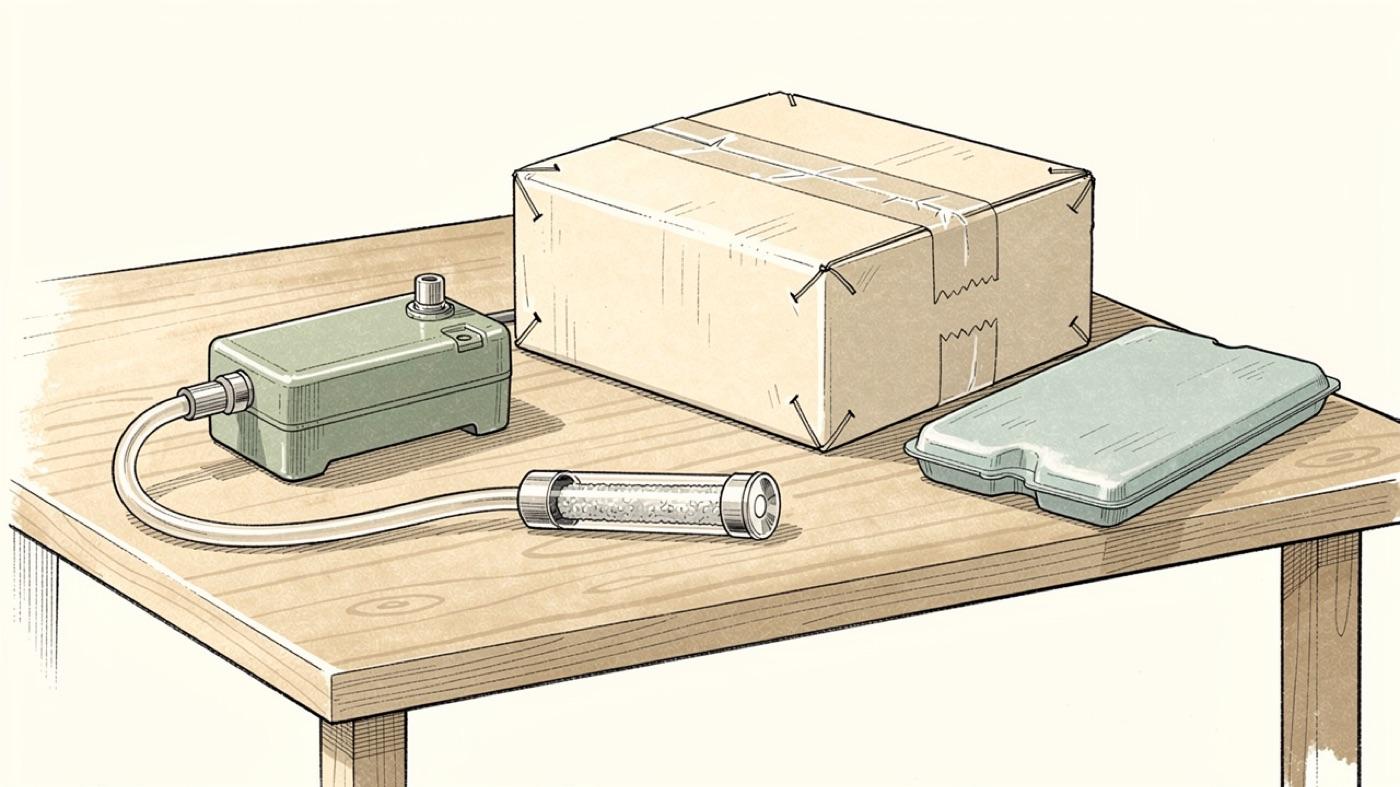
When sampling is warranted, the method is specific. A calibrated pump draws a set volume of air through a sorbent tube for a set period. The tube is sealed and shipped to the lab, which desorbs it and identifies the chemicals with mass spectrometry.
Every lab supplies its own pumps, media and written instructions. Those instructions are followed to the letter, because a shortcut in the field compromises the sample.
Reading the report
Lab analysis is what turns a tube into something useful. Some labs charge extra to discuss the results with you. Others send a report with red, yellow and green ratings for each chemical, written for a residential reader, which helps a great deal.
The hard part is the thresholds. Most published limits are industrial, and there is little guidance written for homes. A client can react to levels well below a "safe" line on the report, which makes the whole exercise expensive and unhelpful if it was done first instead of last.
No federally enforceable standards have been set for VOCs in non-industrial settings.
The same EPA page notes that levels of several organics average 2 to 5 times higher indoors than outdoors, and that during and for several hours after activities such as paint stripping, levels may be 1,000 times background outdoor levels.
That is the reason sampling closes out a Healthy Home Inspection rather than opening it. By the time we sample, we already know what we expect to find.
How to reduce VOCs once you know the source
Remove it, then decide
Take the suspected item out of the house. If the odor goes with it, you have your answer. The homeowner then decides whether the item stays out for good.
Some people will not give up a favorite cleaner or a piece of furniture. As building biologists we accept that. Our job is to make the trade-off clear, not to make the choice.
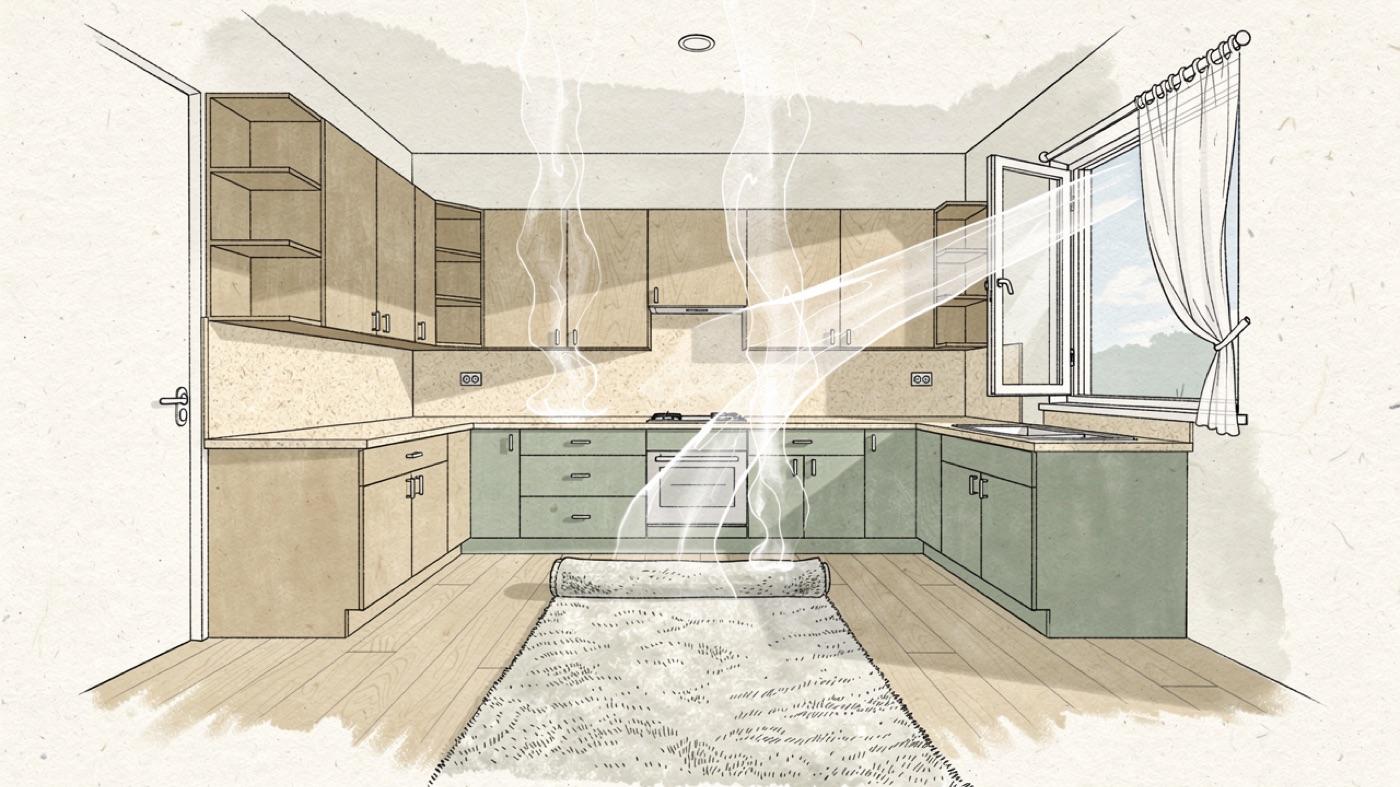
Clean and ventilate
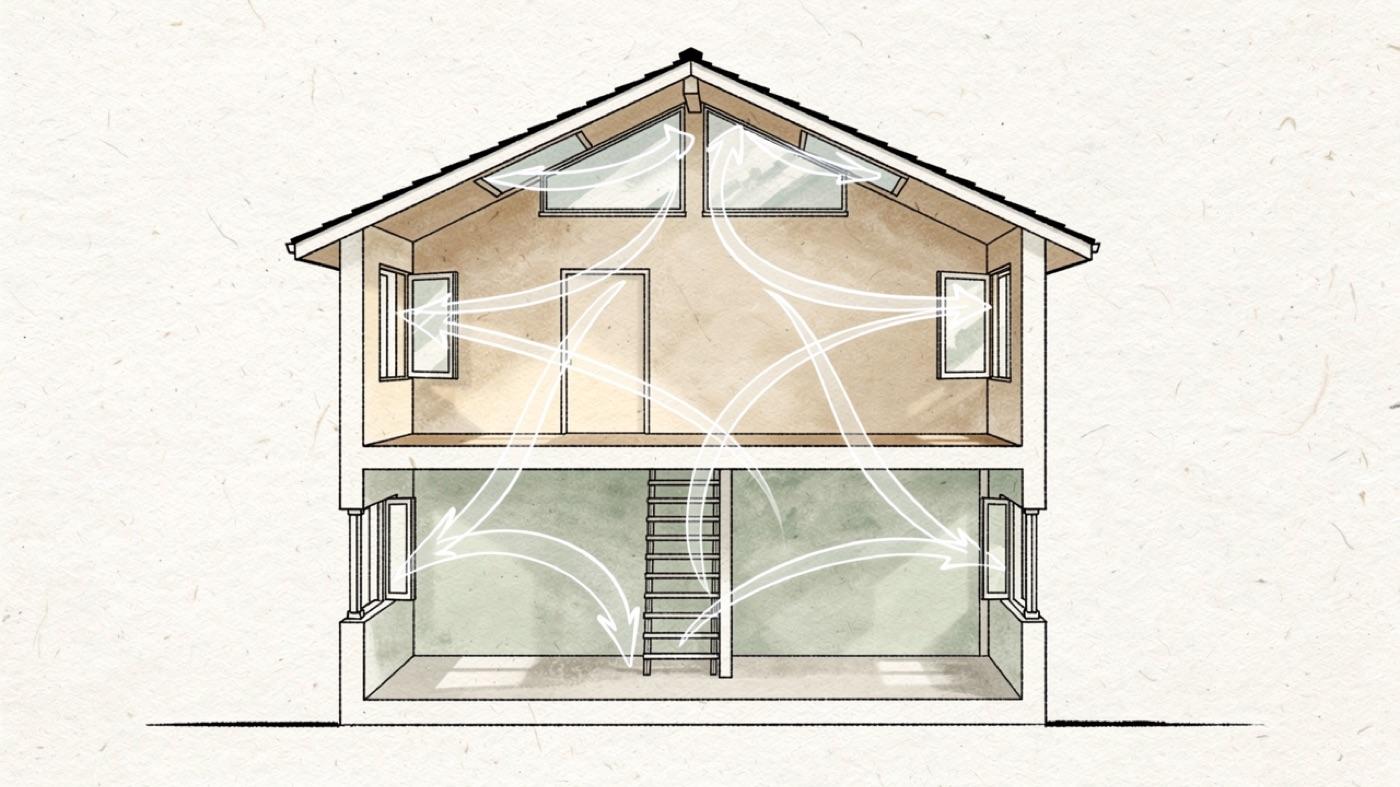
Cleaning removes the chemical-laden dust that carries odor and SVOCs through the house. Use natural, scent-free products, or you are adding to the burden you are trying to reduce. Open the house up while you clean so the air actually exchanges. Our post on natural ventilation strategies covers how to move that air efficiently.
Our guide to avoiding toxic chemicals covers which household products to swap first.
Encapsulation as a last resort
Some sources are too costly to remove, such as a full set of cabinets. A few companies make low-toxicity encapsulants that seal the surface and slow emissions.
Test any encapsulant on a matching scrap before committing. Regardless of what the manufacturer claims, it can fail to block the odor, make it worse, damage the finish, or void a warranty. Treat it as the last option, after removal, cleaning and ventilation have been tried.
What this means for a new build
The cheapest VOC testing is the kind you never have to do. On a new home, we specify the flooring, adhesives, paints, insulation and cabinetry before they arrive, so the source problem is solved on paper. That is the principle behind our design-build work, and it is far easier than chasing an odor through a finished house. Our guide to low-VOC building materials covers what to look for in each category.