September 14, 2026
By Brian Johnson, Building Biologist and Licensed General Contractor
CO2 Levels in a House: What They Mean and How to Lower Them
Carbon dioxide is a colorless, odorless gas that makes up about 0.04 percent of the atmosphere. It is a natural building block, found in volcanoes, hot springs, petroleum and natural gas. People and animals produce it by breathing, and plants absorb it and return oxygen.
Indoors, CO2 levels in a house tell a simple story. High readings mean the air is not being exchanged fast enough for the number of people breathing it. At SENERGY360 we treat CO2 as the easiest ventilation gauge a homeowner can own.
What CO2 levels in a house actually measure
CO2 itself is not the main hazard at the levels found in homes. Its value is as an indicator. Every person exhales CO2 at a steady rate, so the concentration in a room rises in proportion to occupants and falls in proportion to fresh air.
For reference, the OSHA workplace limit for carbon dioxide is 5,000 ppm averaged over an eight-hour shift, several times higher than the bedroom readings discussed below.
That makes it a proxy for everything else that builds up when a room is sealed: moisture, odors, VOCs and whatever the occupants are breathing back in. When CO2 is high, all of those are high too. Our post on what the numbers mean on an indoor air quality monitor covers the other readings.
Inadequate ventilation can increase indoor pollutant levels by not bringing in enough outdoor air to dilute emissions from indoor sources and by not carrying indoor air pollutants out of the area.
The stale room feeling
Everyone has felt it. A conference room full of people with the door closed gets stuffy within an hour. That heaviness and the fog that comes with it is elevated CO2, and it clears the moment the door opens.
The same thing happens in a home at a slower pace. The difference is that nobody notices, because it happens while they sleep.
Why the bedroom runs highest
Within a home, the highest CO2 levels are almost always in the bedroom. The door is closed, two people are breathing for eight hours, and the ventilation is minimal. When two people share a closed bedroom all night the level can easily exceed recommended limits.
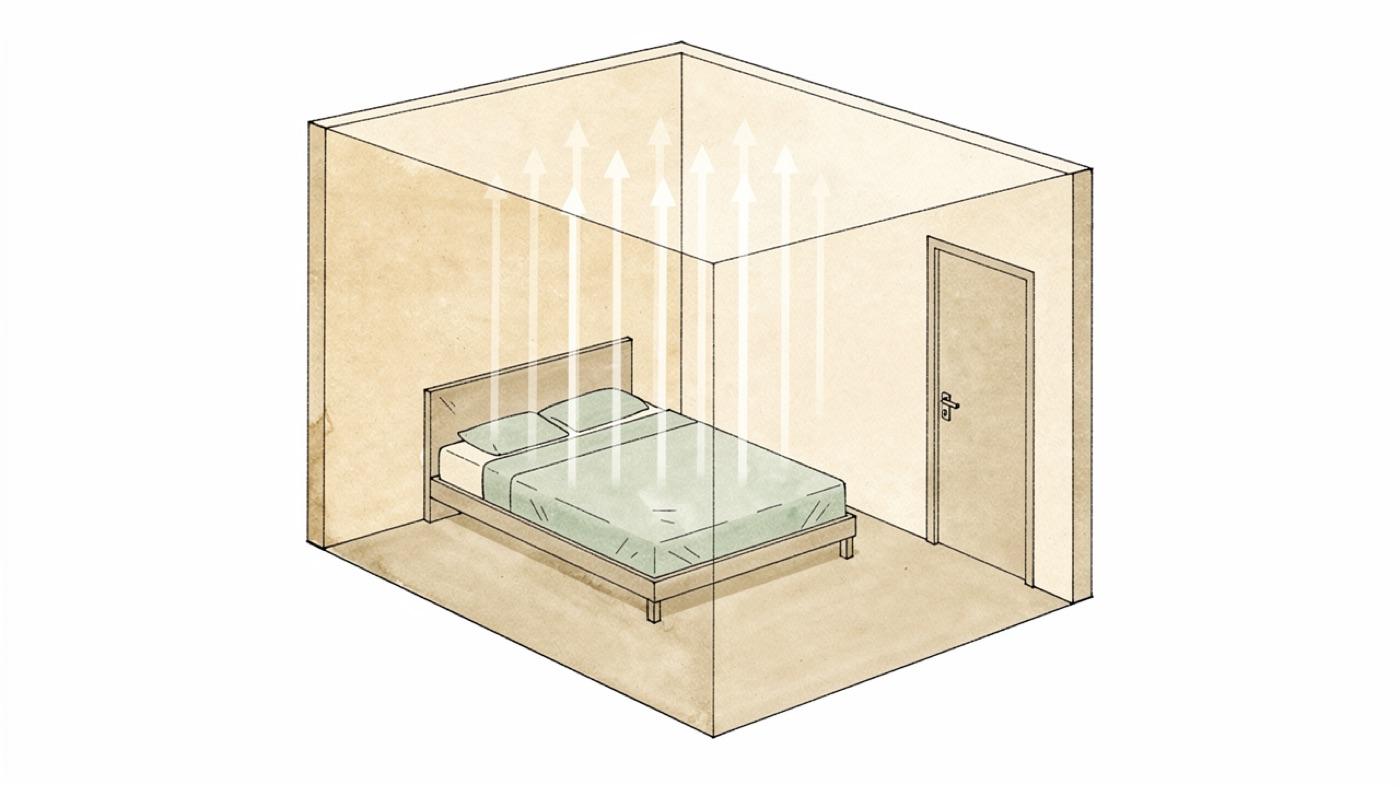
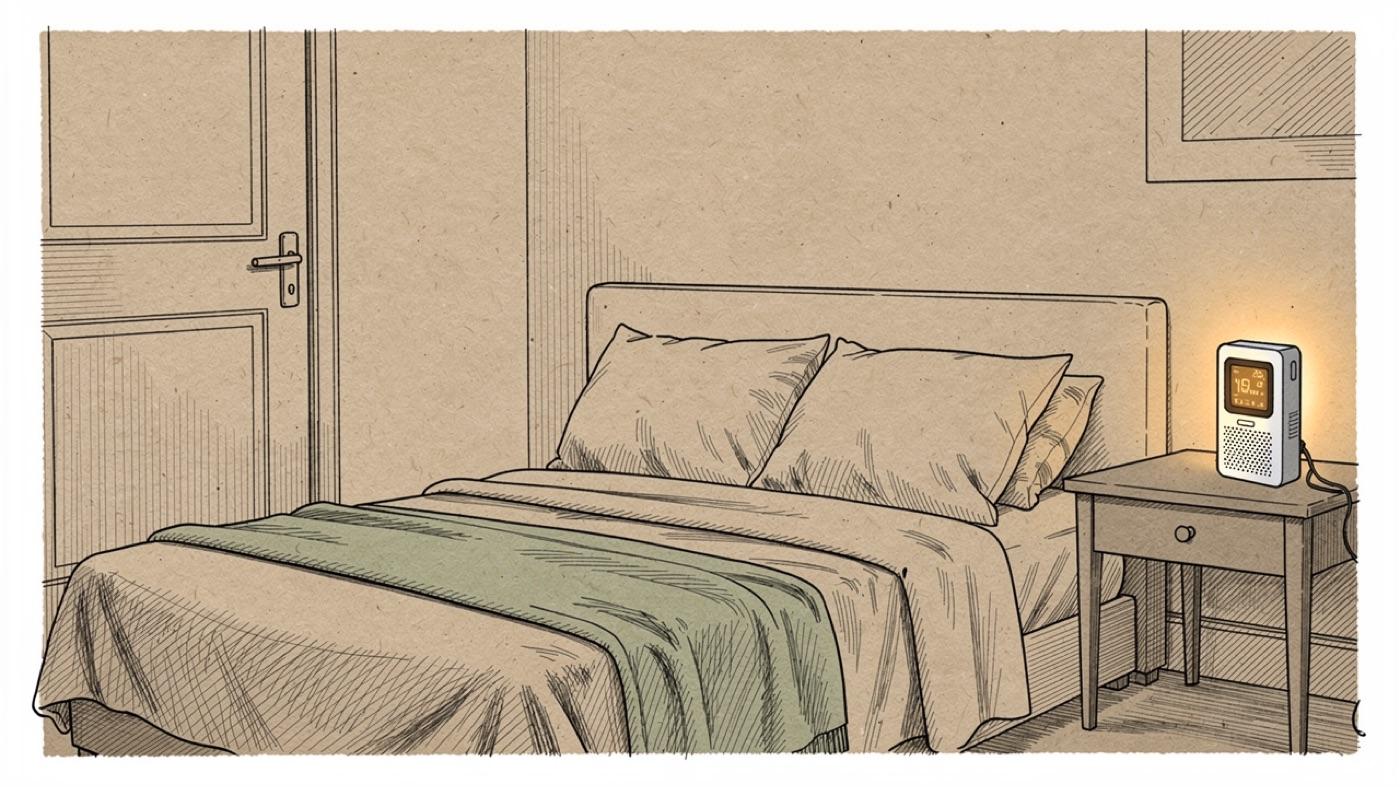
Bedroom ventilation is critical to indoor air quality and to how people feel in the morning. A monitor placed on the nightstand will usually show the reading climb through the night and peak just before waking.
What the numbers mean
Outdoor air sits near 400 parts per million. Indoors, readings in the 400 to 800 range indicate good air exchange. Readings that climb past 1,000 ppm are a common sign of under-ventilation, and a closed bedroom with two adults can run well above that by morning.
Treat the trend as more important than any single number. A room that starts low and climbs steadily all night is telling you the door and the ventilation system are not keeping up.
CO2 may not be entirely harmless at those levels either. In a small controlled study published in Environmental Health Perspectives, 22 adults scored moderately lower on six of nine decision-making scales at 1,000 ppm than at 600 ppm. The authors noted the findings need confirmation, but they are one more reason to keep the bedroom well ventilated.
How to lower CO2 levels
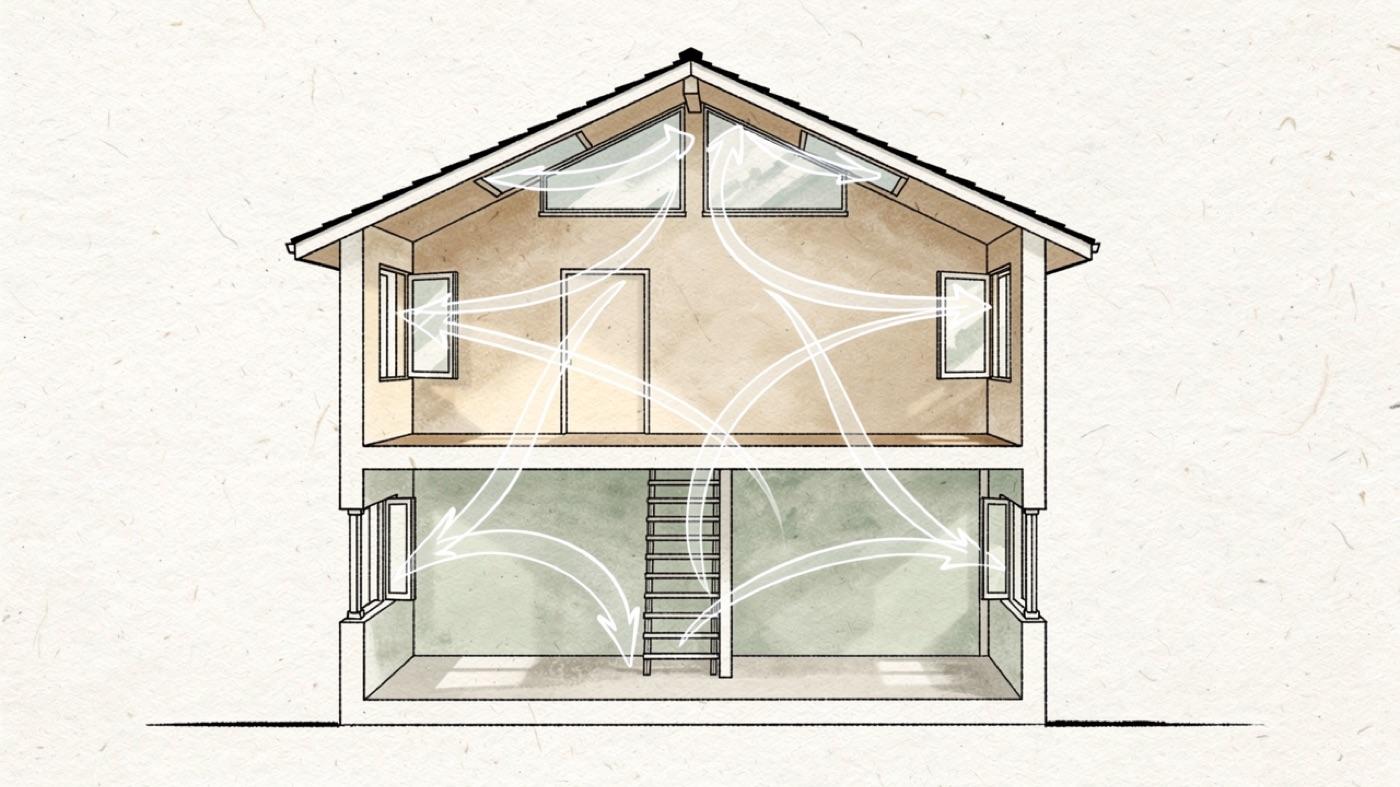
CO2 comes down one way: more fresh air per person. There are three practical ways to get it.
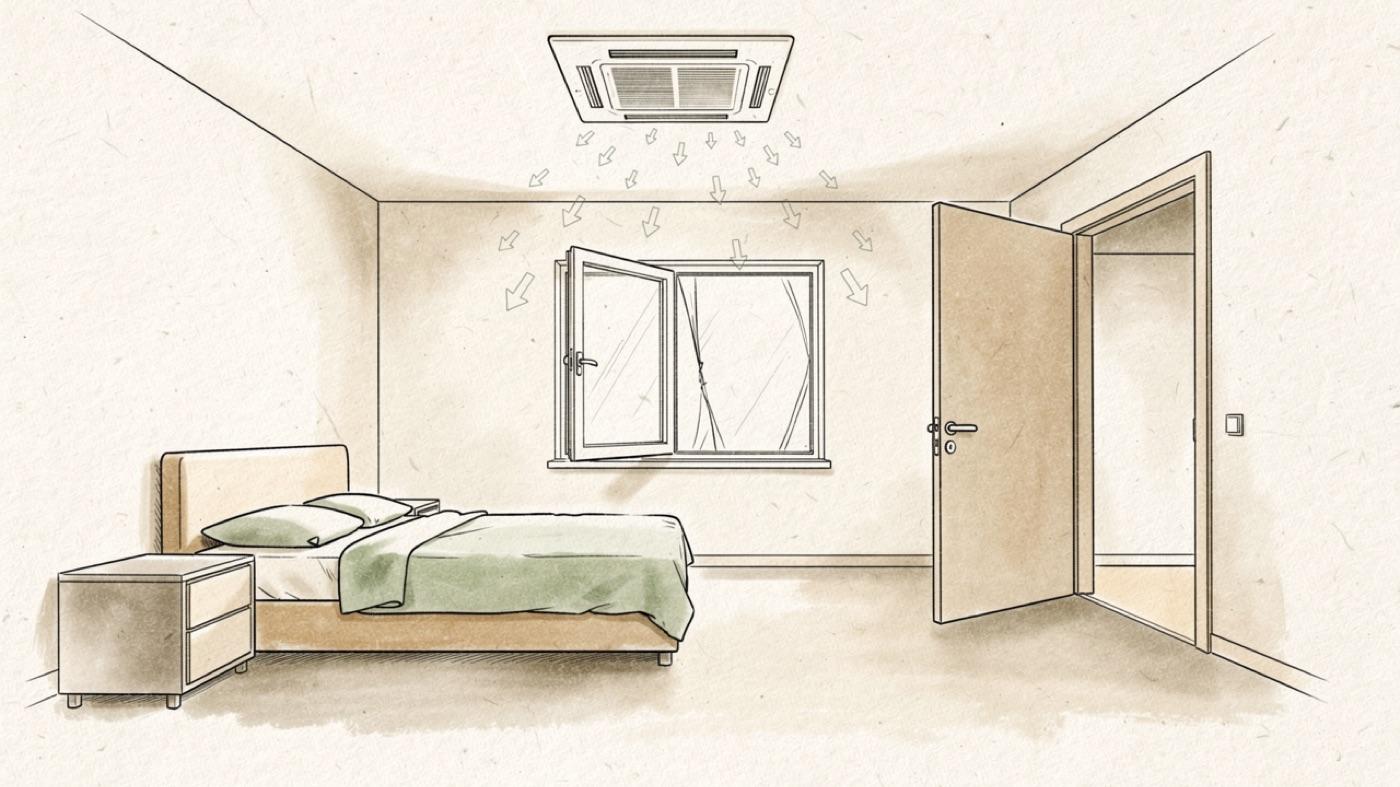
Open the door
Leaving the bedroom door open or ajar lets the room borrow air from the rest of the house. It is the simplest fix and often the most effective. An undercut door of an inch or more helps when privacy matters.
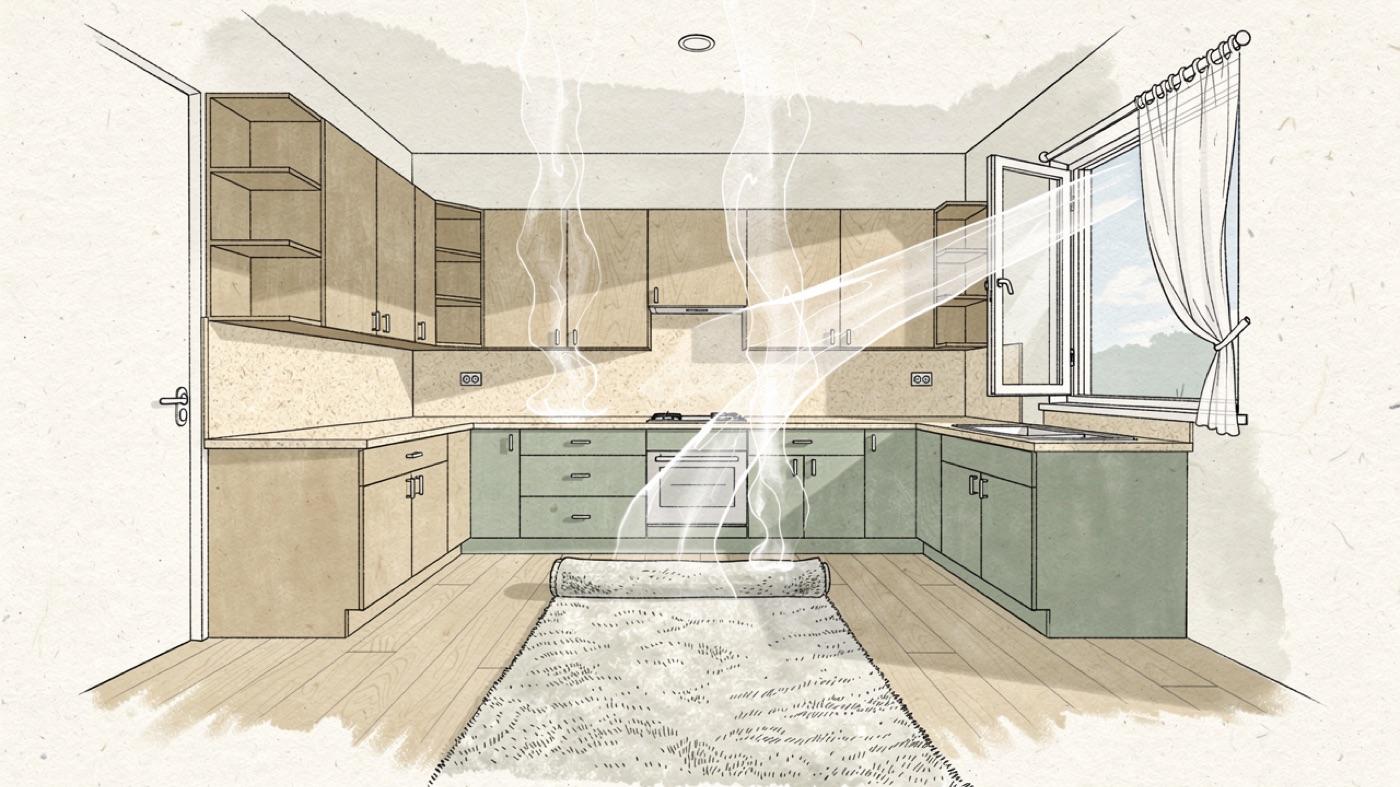
Crack a window
A window opened a few inches provides direct fresh air. In mild seasons this alone keeps a bedroom in a healthy range. In extreme weather it trades air quality for comfort and energy, which is why we prefer a mechanical solution in new homes.
Our home ventilation guide compares window, fan and whole-house options side by side.
Bring fresh air in mechanically
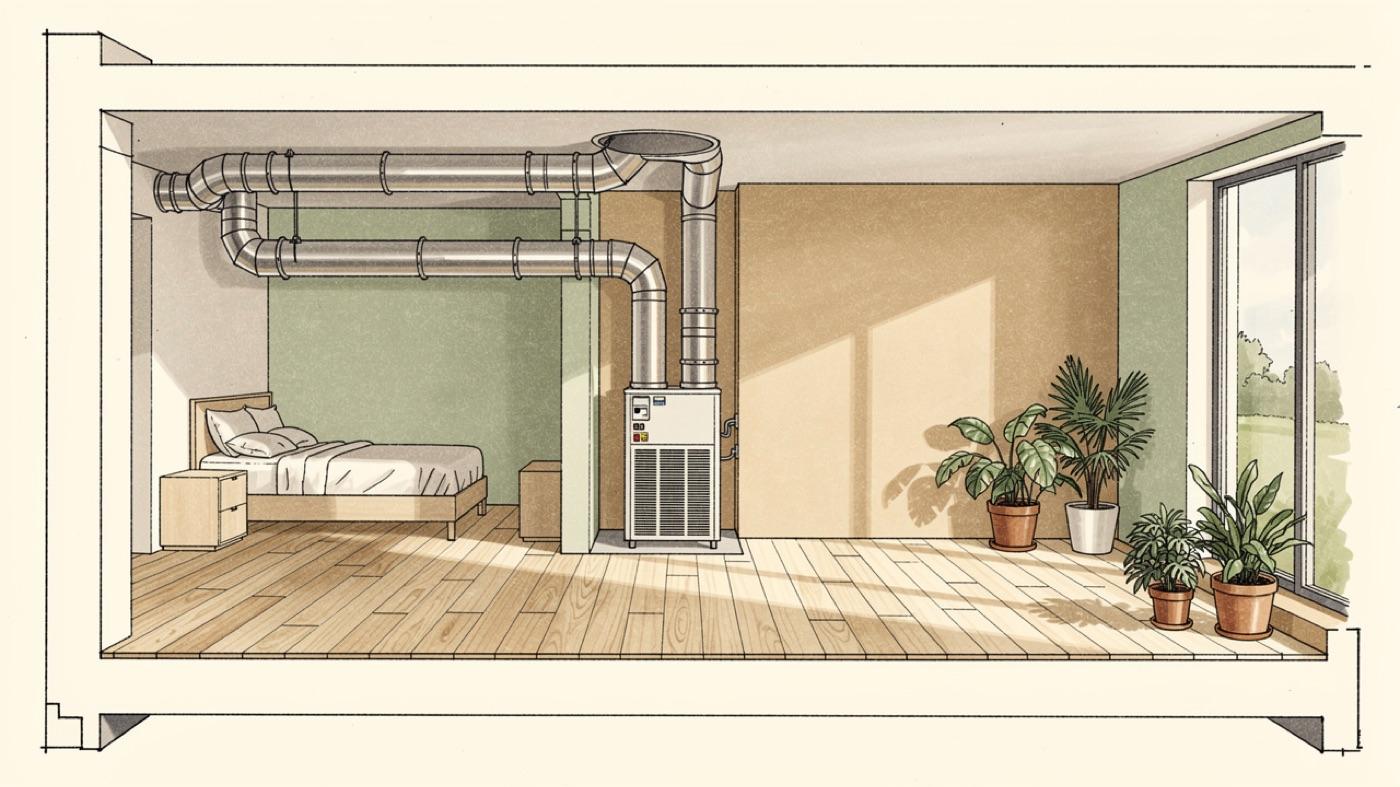
A balanced ventilation system, an ERV or HRV, delivers filtered outdoor air to the bedrooms and exhausts stale air continuously. It works with the windows closed and the doors shut. It is the climate control and ventilation principle in our CORE framework, and our post on fresh air intake explains how to size it.
Use a monitor to prove it
- Place a CO2 monitor on the nightstand for a week
- Note the peak reading each morning
- Change one thing, door or window or fan schedule, and watch the peak move
Monitors with a nondispersive infrared sensor, often labeled NDIR, are the reliable type. Cheaper units that estimate CO2 from other readings drift and mislead.
The bigger picture
Outdoors, fossil fuel use has released more CO2 than the earth's ecosystem can process. That elevated level is the cornerstone of global warming and climate change. Indoors, the story is smaller and easier to fix.
A house with high CO2 is a house that is not breathing. Fix the ventilation and the CO2 drops, and so do the moisture, the odors and the chemical load that came with it. If you want the readings interpreted for your home, a Healthy Home Inspection measures CO2 room by room along with everything else in the air.