September 14, 2026
By Brian Johnson, Building Biologist and Licensed General Contractor
EMF Shielding Fabric and RF Mesh: How We Shield a Wall
EMF shielding fabric and RF shielding mesh are the two materials people ask us about most when they want a quieter bedroom or office. Both work by the same principle. A continuous conductive layer reflects and absorbs radio frequency energy so less of it reaches the room.
The materials are the easy part. What decides whether a shielded room performs is testing, continuity, penetrations and grounding. This post walks through how we specify and install shielding on a SENERGY360 project.
Affiliate disclosure: this post contains an affiliate link. If you buy through it, SENERGY360 may earn a small commission at no extra cost to you, and it never changes what we recommend. Read our affiliate disclosure.
When shielding belongs in the plan
Shielding is one component of a low-EMF strategy, not the whole of it. Site selection, building orientation, wired technology and removing unnecessary wireless sources come first. Our low-EMF electrical principle puts shielding last for a reason.
Federal agencies approach RF exposure through limits and distance rather than shielding. The FDA's cell phones page explains that the FCC sets limits on the radio frequency emissions of cell phones and similar wireless products. The National Cancer Institute's fact sheet on cell phones and cancer risk describes how the absorbed dose drops off with distance.
The SAR decreases very quickly as the distance to the exposure source increases.
That is why moving or removing a source comes first. Our guide on how to reduce EMF at home and in the bedroom covers those steps.
Exterior sources it is designed to reduce
- Cellular towers and rooftop antennas
- Utility communication systems and smart meters
- Neighboring Wi-Fi networks
- Public safety radio equipment
- Dense urban wireless infrastructure
Rooms that usually justify it
- Primary and children's bedrooms
- Home offices, wellness suites and meditation rooms
- Recovery spaces
- Interior walls next to a known RF source
- Shared walls in multi-family buildings where testing shows elevated exposure
Test before you shield
We never specify shielding without baseline measurements. Professional RF equipment, matched to the frequencies in question, identifies the dominant sources and which walls face them. That data decides whether shielding is needed at all and where it goes.
The same equipment comes back after installation to verify the result. A shielded room that has never been re-measured is a guess.
If the units on a meter report are unfamiliar, our EMF terms and definitions glossary explains them.
RF shielding mesh in the wall assembly
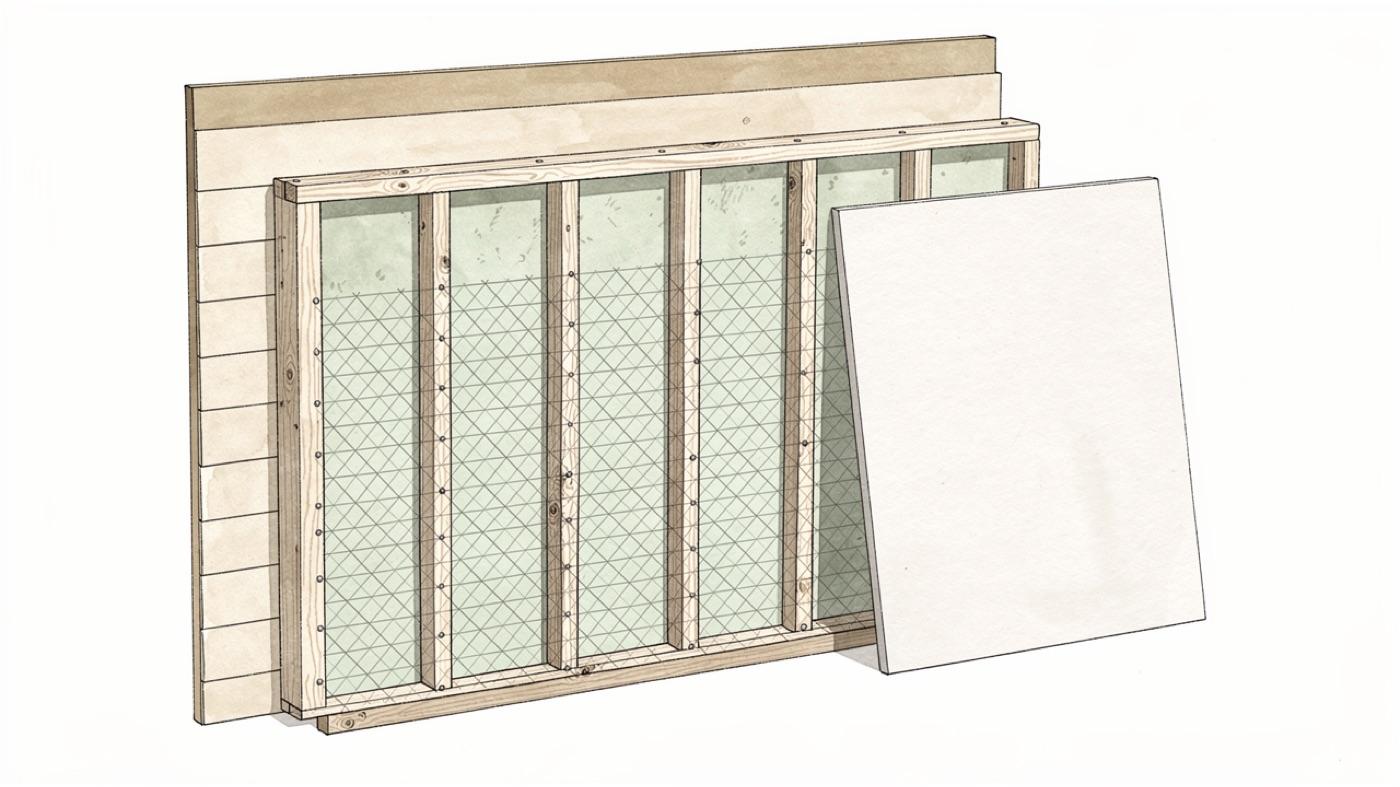
For walls and ceilings we specify Signal Protect AM2 Aluminum Mesh, made by Safe Living Technologies. It is a conductive aluminum mesh, lightweight and durable, that fits conventional framing and takes a standard drywall finish. Approved equals are considered when equivalent performance can be shown.
A typical exterior wall, outside to in
- Exterior cladding
- Ventilated rainscreen cavity where specified
- Water-resistive barrier
- Exterior sheathing
- Framing cavity with the specified insulation
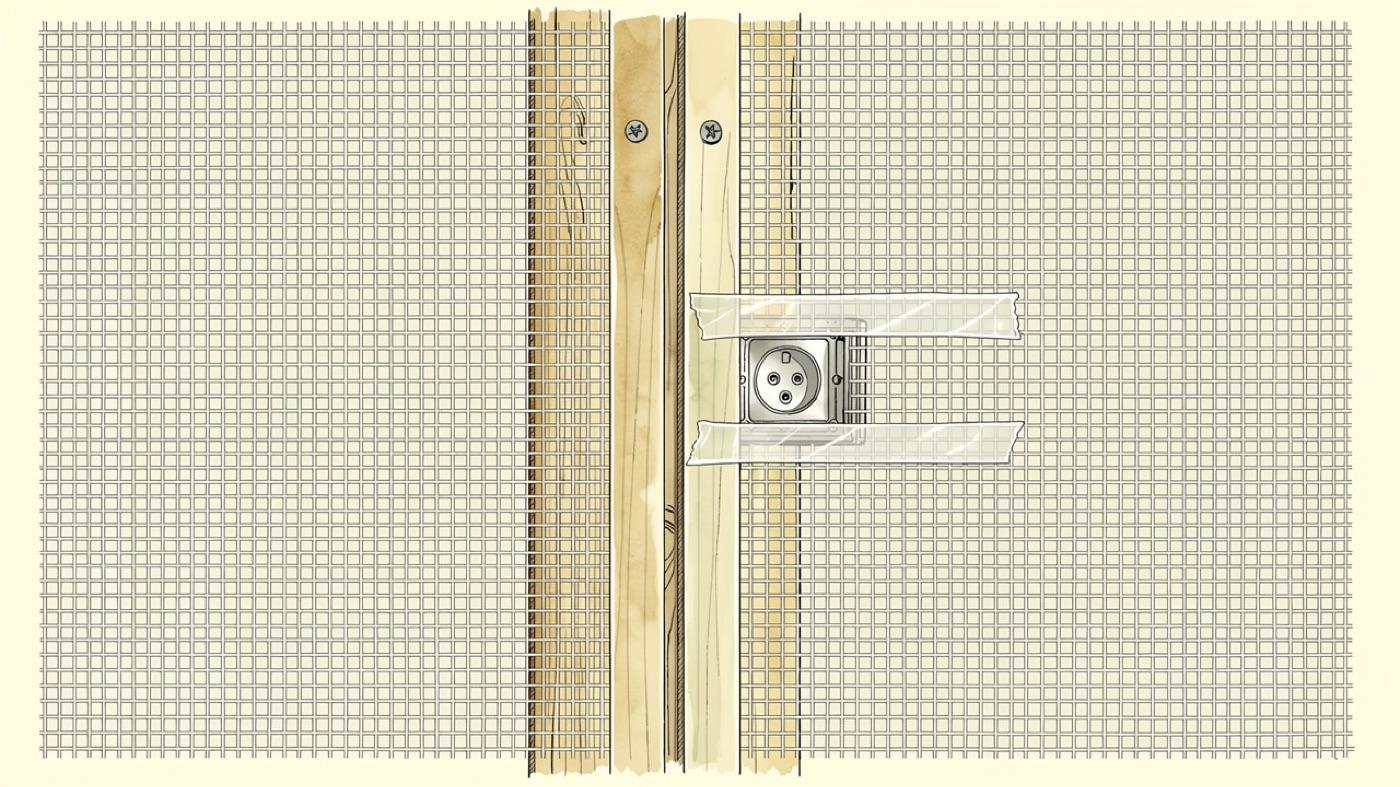
- Signal Protect AM2 mesh installed continuously on the interior side of the framing
- Drywall
- Low-VOC primer and paint
The mesh sits right behind the drywall so it forms one unbroken layer across the room. It goes in after framing is plumb and straight and before any drywall is hung.
Installation rules that protect the result
- Install flat, with no wrinkles
- Overlap seams at least two inches and keep continuity between sheets
- Finish all framing work, straightening, planing and sanding, before the mesh goes up
- Coordinate every electrical and low-voltage penetration ahead of time and keep them to a minimum
- Repair any tear or puncture before drywall
- Inspect every shielded surface for continuity before it is covered
Once the mesh is in, no trade is allowed to cut, notch or drill the framing behind it. The shielding layer is treated as one continuous assembly, not a set of separate panels.
Windows, doors and ceilings
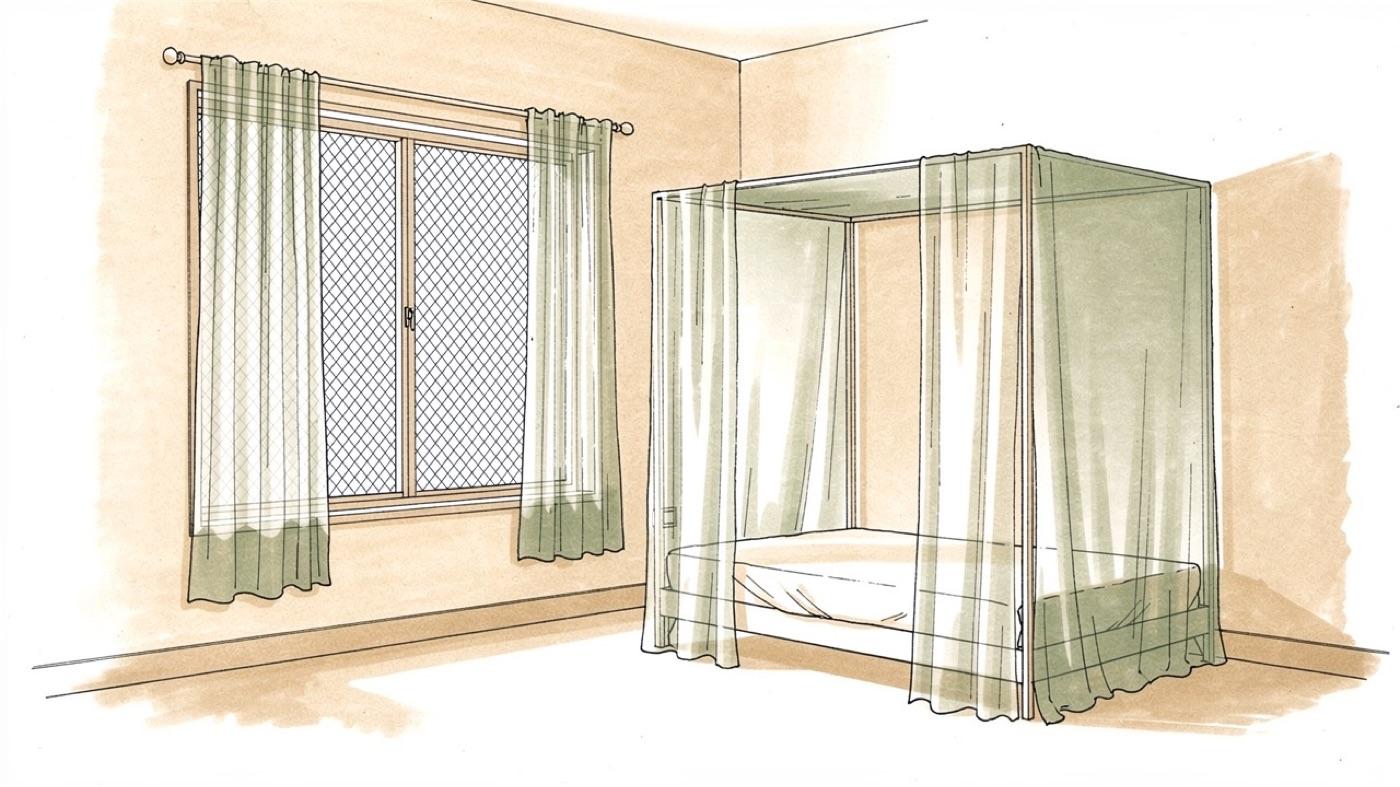
A shielded wall with an untreated window is a shielded wall with a hole in it. Openings are evaluated as part of the same strategy.
Options for openings
- RF-reducing insect screens
- Shielding window films
- Shielding curtains made from EMF shielding fabric
- Specialized RF-reducing glazing
Ceilings get the same mesh when testing shows exposure from above, such as rooftop cellular equipment, nearby antennas or the floors of a multi-story building. Where a ceiling is shielded, the wall-to-ceiling transition is detailed so the layer stays continuous around the corner.
Grounding and the trades that come after
Aluminum mesh is conductive, so grounding is reviewed before installation by a licensed electrician, an electrical engineer where required, an EMF consultant and the local authority having jurisdiction. Methods vary by project and by the manufacturer's recommendations, and they must meet code.
Then comes the part most retrofits miss. Electricians, low-voltage installers, security, audio-visual and HVAC contractors all want to put holes in walls. Every penetration after the mesh is up gets reviewed and approved first, or the shielding quietly stops working.
Documentation and verification
Before drywall, the contractor photographs and records every shielded wall and ceiling, every seam and overlap, every penetration and every grounding point. Those photos go into the closeout records. Years later, when someone wants to hang a TV, that record shows what is behind the wall.
After finishes are complete and before turnover, we test again. Post-installation RF measurements confirm the assembly performs and reveal any leakage paths that need attention. Results are documented and kept with the project.
Where we source shielding materials
Safe Living Technologies is our preferred source for EMF meters, Signal Protect shielding materials, shielding fabrics and canopies, shielding paints and low-EMF assessment tools. SENERGY360 clients receive 5% off through our Safe Living Technologies affiliate link.
Contact us before ordering so the products match the design and the shielding strategy for your home. Shielding is a system, and the pieces have to be chosen together. For a broader look at the options, see our guide to EMF protection for home and office, or talk to us about a consulting engagement before your next build.