September 14, 2026
By Brian Johnson, Building Biologist and Licensed General Contractor
Solar Panel EMF: How to Design a Low-EMF Solar System
Solar power is a real step toward energy independence. Most homeowners focus on savings and battery backup. For families who care about building biology, there is a hidden half of solar design that rarely gets discussed.
That hidden half is electromagnetic interference, or EMI, and the dirty electricity that comes with it. At SENERGY360 we believe a sustainable home must also be a healthy home. This is how we keep solar panel EMF out of the living space.
Solar panel EMF starts at the inverter, not the panels
A common worry is that the panels themselves radiate. They do not. Photovoltaic panels produce smooth direct current at 0 Hz, which is inherently quiet and free of high-frequency noise.
The real source is the solar inverter. Its job is to turn that quiet DC into the alternating current your appliances use. Modern inverters do this with solid-state switches that turn on and off tens of thousands of times per second.
That switching is efficient. It also creates high-frequency electrical noise and voltage spikes. Testing by the Federal Aviation Administration and the National Renewable Energy Laboratory confirms the emissions come from the inverter housing and attached components, not the panels.
A health and safety white paper from the NC State University Clean Energy Technology Center describes the power-frequency side the same way. The array produces DC, and it is the inverters and the wires carrying their AC output that produce extremely low frequency (ELF) EMF.
Why your roof can become an antenna
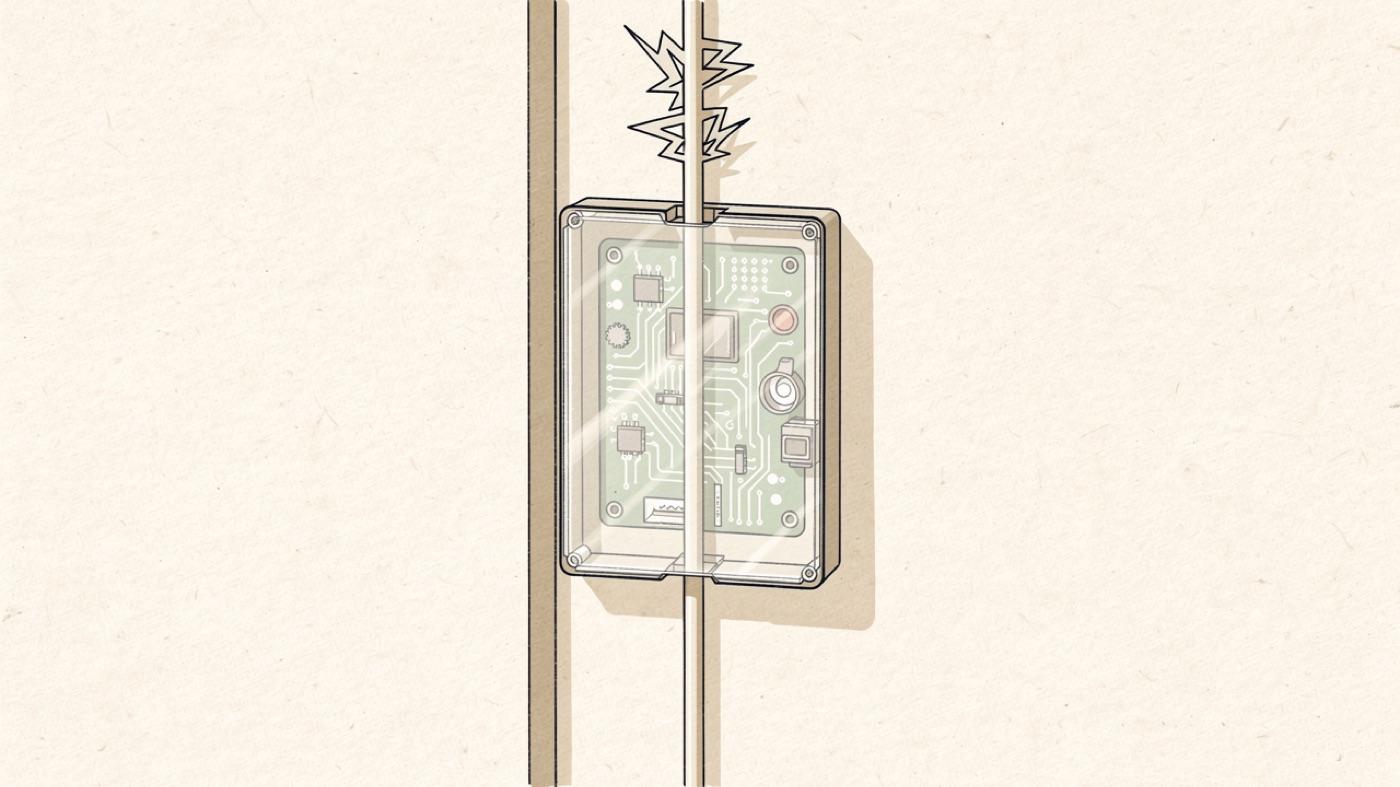
An inverter is a two-way street. The noise it creates travels forward into your electrical panel, and it also travels backward up the incoming DC wires to the roof.
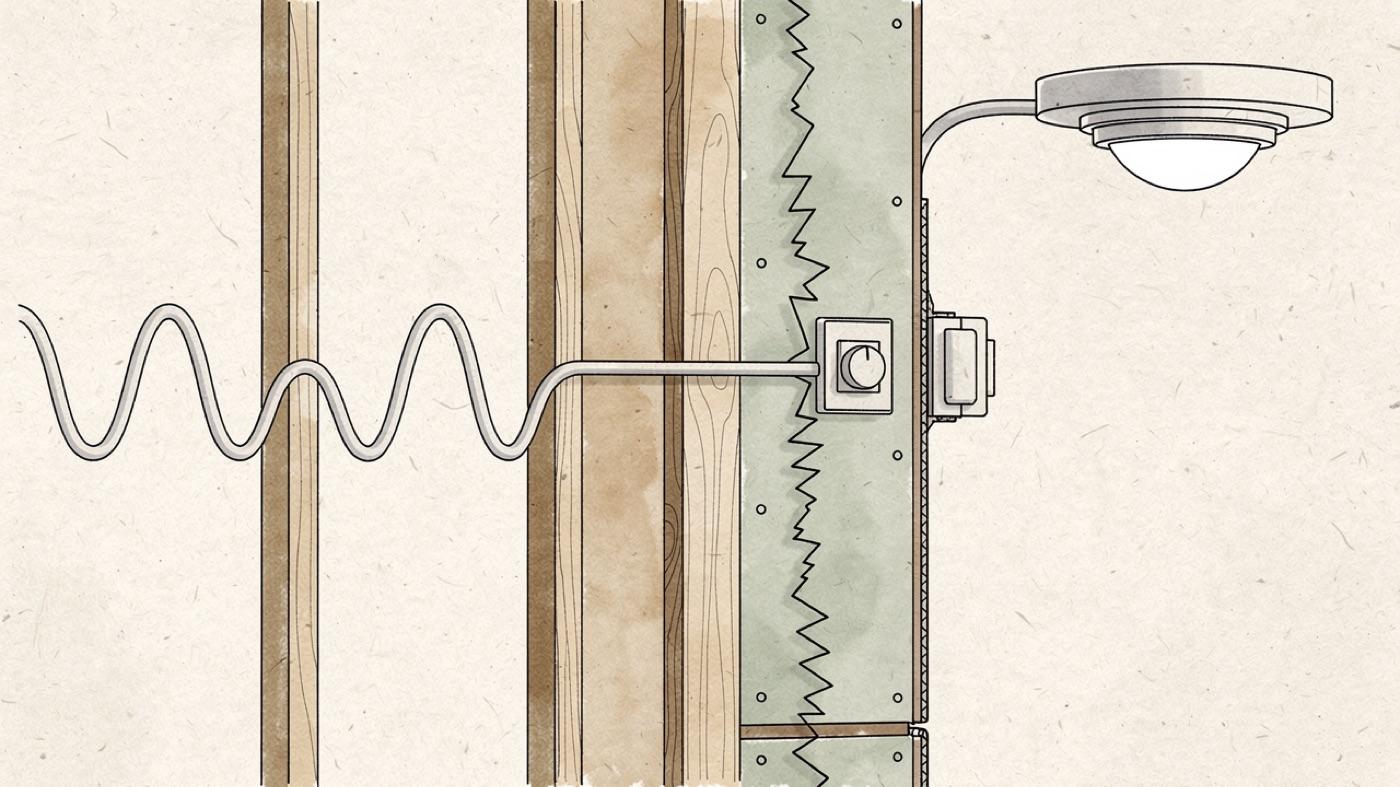
Once that noise is on the DC cables, two things happen. Differential-mode noise goes out on the positive wire and back on the negative wire, turning the cable run into a loop antenna. Common-mode noise leaks onto both wires and uses the mounting rails, panel frames or earth ground as its return path.
Solar panels are large sheets of conductive material spread across the roof. Loaded with inverter noise, they broadcast it straight down into the bedrooms and offices beneath them. This is the same mechanism behind dirty electricity inside the house.
Low THD is not the same as low EMI
Many inverters advertise a low Total Harmonic Distortion rating. That number measures low-frequency distortion on the AC side, at multiples of 60 Hz. A rating under 3 to 5 percent gives appliances a clean sine wave.
EMI is a different animal. It lives in the kilohertz and megahertz range, tens of thousands of times faster than THD. It is created by the sharp edges of the rapid pulses the inverter uses to make that clean sine wave.
So there is a trade-off. The pulse-width modulation that lowers THD raises high-frequency EMI. A "pure sine wave, under 3 percent THD" inverter can still be a severe source of noise on your roof lines.
What to look for instead
Look for inverters that state compliance with FCC Part 15 Class B, the residential emissions standard. Better still, look for built-in EMC filtering on both the AC side and the DC input stage. If the manufacturer does not mention DC-side filtering, plan on external filters.
The federal rule defines the class this way.
Class B digital device. A digital device that is marketed for use in a residential environment notwithstanding use in commercial, business and industrial environments.
Micro, string or hybrid: which inverter is quieter
The architecture matters as much as the brand. Systems with electronics bolted under every panel put switching devices and data signals on the roof itself.
- Microinverter and optimizer systems keep high-frequency switching and communication signals on the roof above the bedrooms
- String inverters move the switching to one box, so the roof lines carry only DC, but high-voltage strings up to 600 V create a stronger field on long unshielded runs
- Low-voltage hybrid all-in-one units, often running 48 V batteries, keep the whole system quieter by default
For the quietest roof, we favor a single hybrid inverter with heavy internal filtering, placed well away from sleeping areas.
The SENERGY360 two-tier strategy
We stop electrical pollution before it reaches the roof. When we design a system from scratch, we specify equipment built for it. When we retrofit, we clean up what is there.
Tier 1: low-EMI all-in-one inverters
When the client controls equipment selection, we lean on manufacturers that build noise filtering into the hardware. Sol-Ark hybrid units use a heavy metal casing as a shield and carry large internal chokes on the DC inputs, tested to FCC Part 15 Class B. OutBack Power's Mojave series uses a die-cast aluminum frame as a Faraday cage with low-pass filters on the DC bus.
Victron Energy's EasySolar-II GX uses a toroidal transformer and chassis grounding that cut switching noise at the board level. SMA's Sunny Boy Smart Energy avoids per-panel optimizers, so the roof array stays quieter, though its high-voltage strings still need metal conduit.
Tier 2: external DC filter remediation
If your installer prefers a standard inverter, or the system already exists, an inline DC EMI filter between the array and the inverter is the most effective fix. The Schaffner FN2200 series is the industrial standard, rated to 1,200 V DC and built to suppress both common-mode and differential-mode noise. Enerdoor's FIN1220 and FIN1520 series are designed specifically for the solar market.
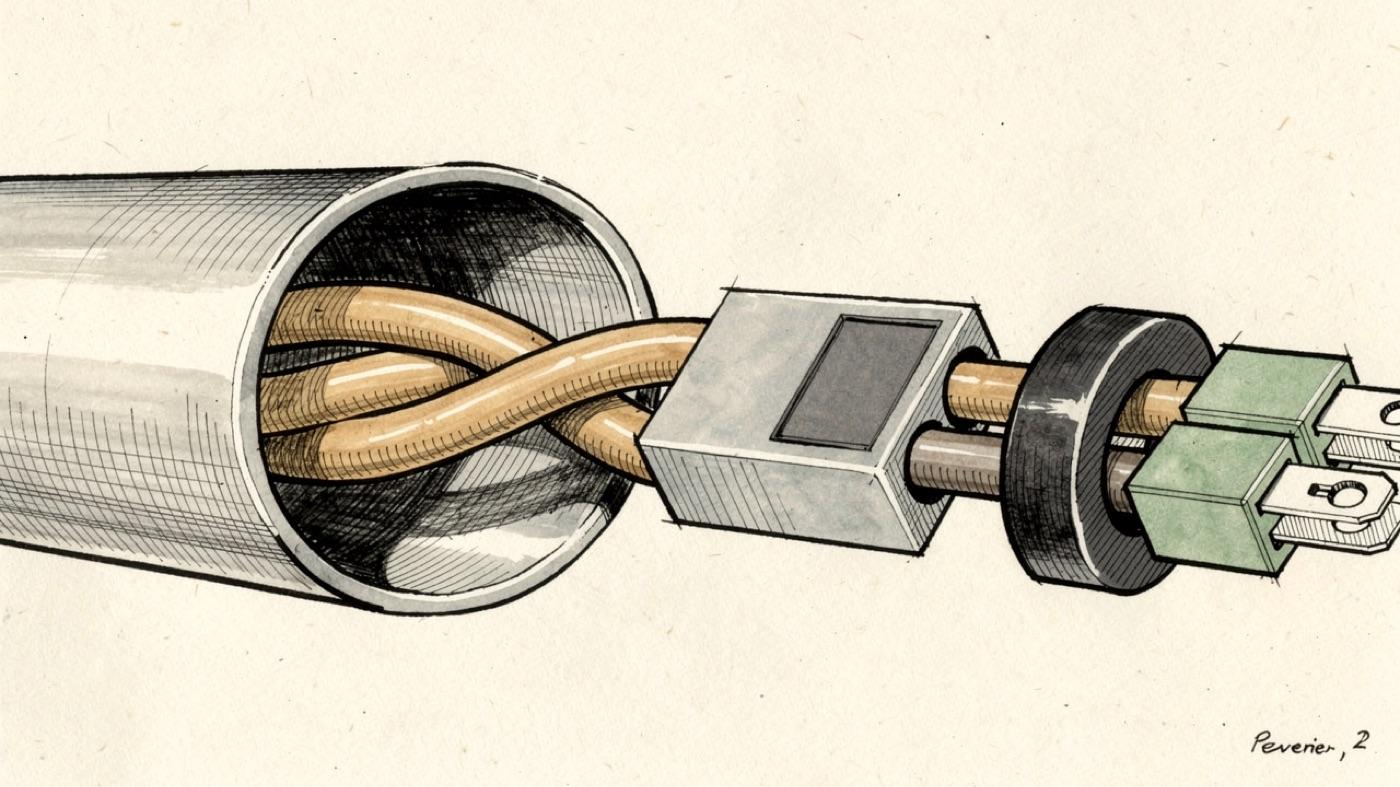
For lower-voltage battery and charge controller lines, we wrap the cables three to five times through large Fair-Rite Type 31 or Type 43 ferrite toroids. The ferrite absorbs the highest frequencies and dissipates them as harmless micro-heat.
Three rules we enforce on every installation
Equipment is half the battle. The crew's habits are the other half. We write these three rules into the scope for every solar job.
- Continuous grounded metal conduit, EMT or rigid, for every DC run from roof to inverter, because plastic PVC offers zero shielding
- Positive and negative DC wires tightly twisted or bundled together so their fields cancel
- External filters mounted as close to the inverter's DC input terminals as possible, so the short lead in between does not become its own antenna
Placement and grounding
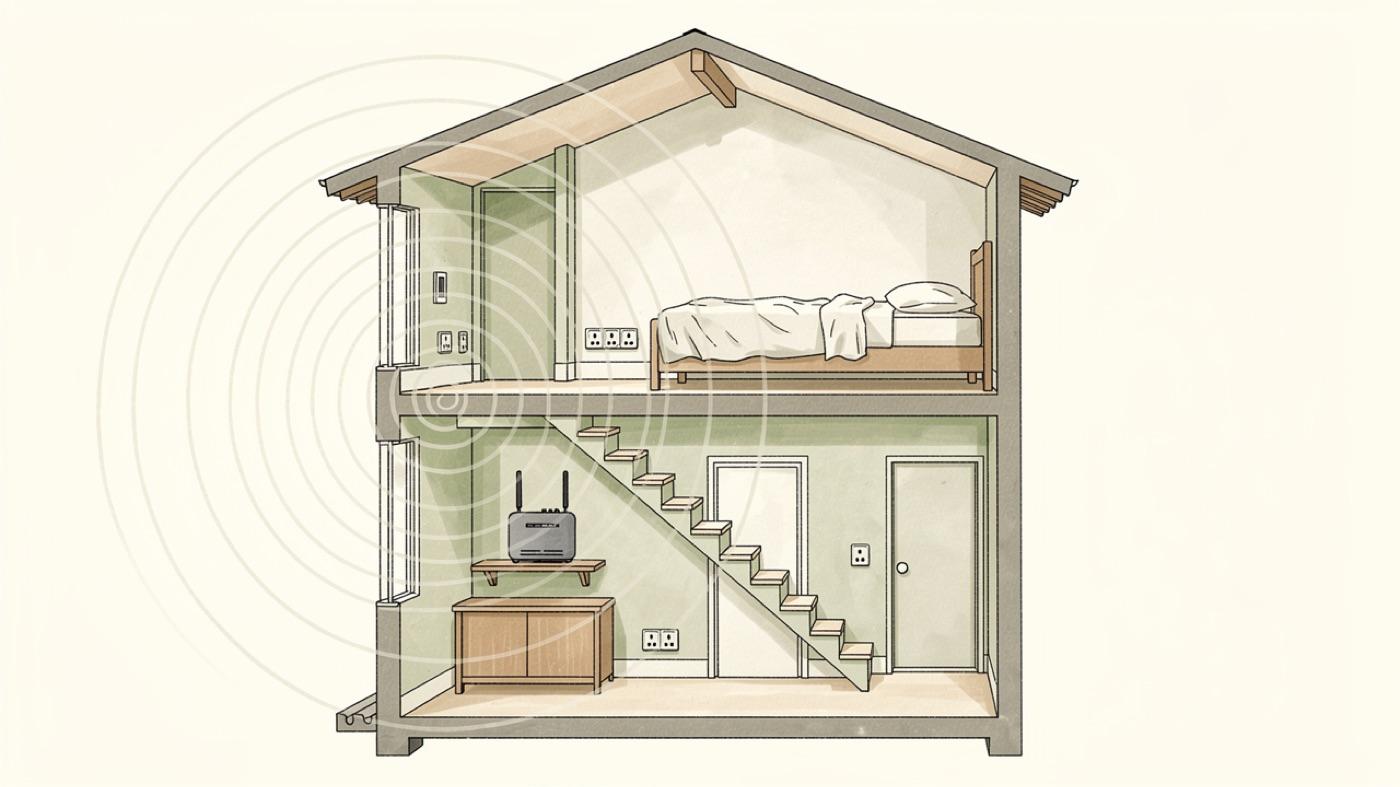
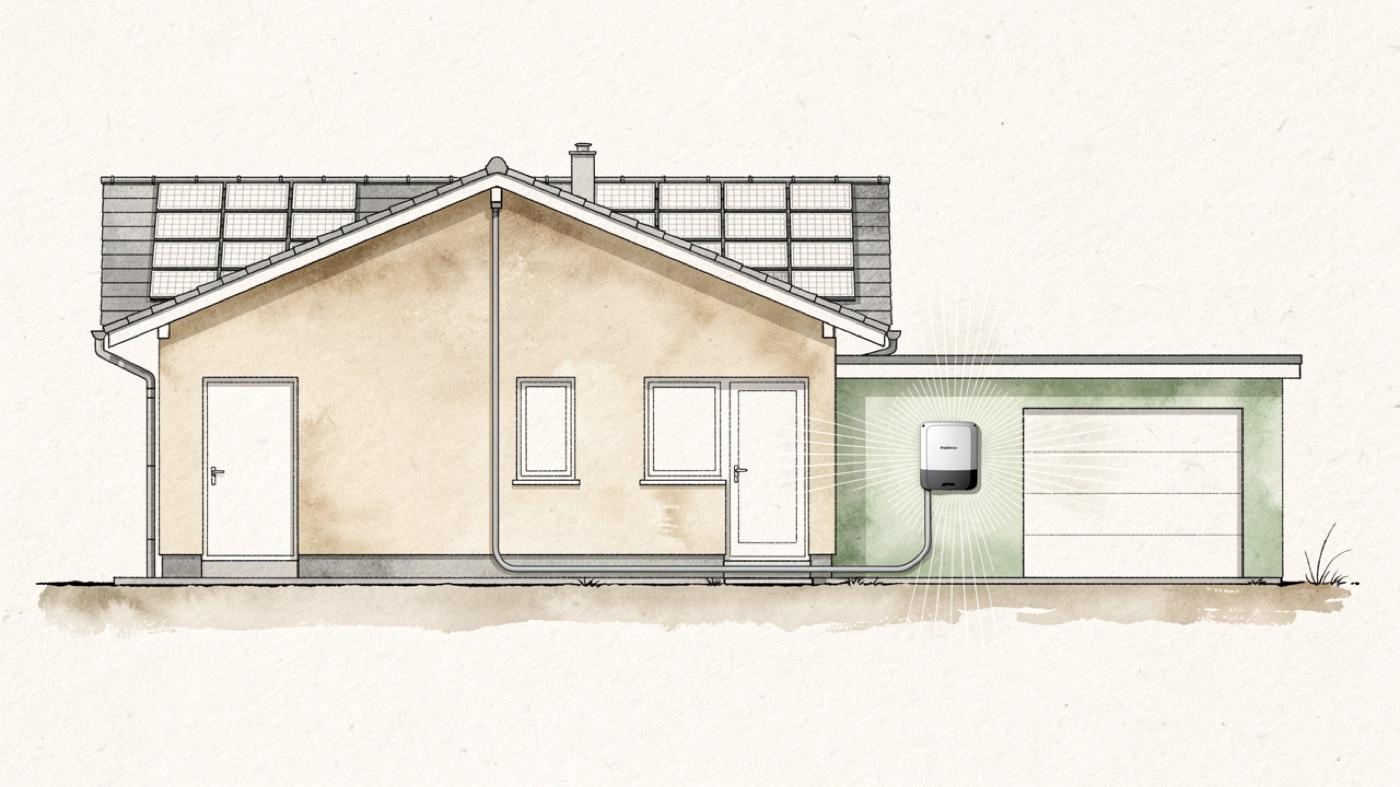
We position the inverter and battery equipment away from bedrooms and primary living zones. A detached garage or a mechanical room on the far side of the house is ideal. Distance is the cheapest mitigation there is.
The NC State paper cites Massachusetts measurements in which magnetic fields dropped to 0.5 mG or less at distances of no more than nine feet from residential inverters. Our post on how to reduce EMF at home and in the bedroom covers the same distance rule for the rest of the house.
A solid grounding system gives common-mode noise a clean path to earth. We build a Ufer ground into the foundation on new construction and verify the bond on retrofits.
Measuring the result
We do not guess. Before and after the work we measure with a line EMI meter on the AC circuits and a radio-frequency meter in the rooms below the array. A quiet AM radio held near the ceiling is a rough field test any homeowner can try.
If audio equipment buzzes, an AM radio hisses when the sun is up, or smart devices glitch, the system is telling you something. Those symptoms are where we start an EMF inspection.
Solar and a healthy home are not in conflict. With the right inverter, shielded wiring and smart placement, a system powers the house without polluting it. That is the standard we hold in our low-EMF electrical design principle.