September 14, 2026
By Brian Johnson, Building Biologist and Licensed General Contractor
Ufer Ground for New Home Construction: Grounding Done Right
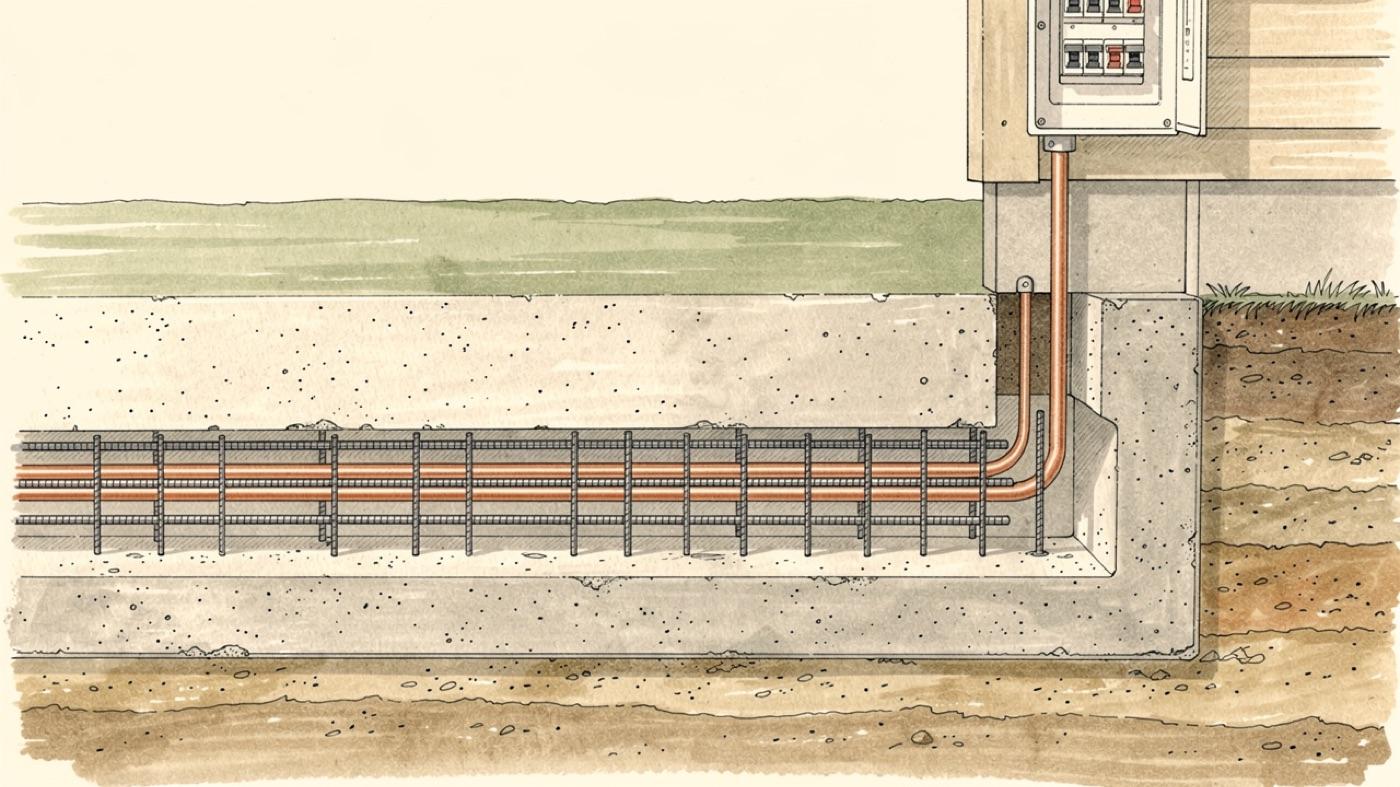
A Ufer ground is the quiet backbone of a home's electrical safety. It is a grounding electrode encased in the concrete of the foundation. In new construction it is the most reliable ground you can build, and it is also the starting point for earthing systems and low-EMF wiring.
This post explains what a Ufer ground is, what the National Electrical Code (NEC) requires, and how we tie earthing outlets and mechanical systems into it without creating interference. Grounding is one piece of the electrical systems and low-EMF design principle in our CORE framework.
A note before we start. SENERGY360 shares this as an example of how a grounding system can be designed. A licensed electrician must design, install, and test the system to NEC and local code. We accept no liability for work done by others.
What a Ufer ground is
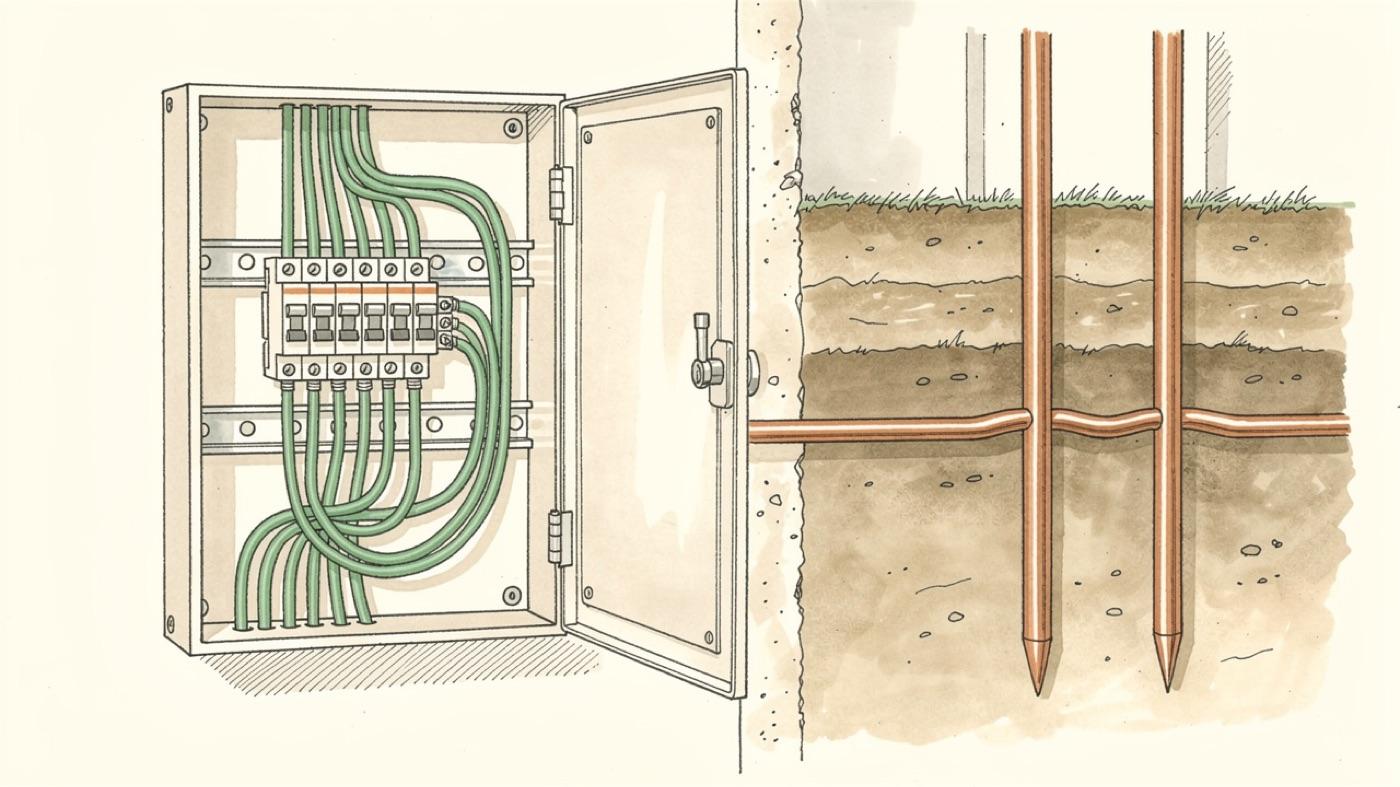
A Ufer ground is also called a concrete-encased electrode. A conductor, usually rebar or bare copper wire, is buried in the concrete footing. The concrete stays in contact with the earth, so it becomes a large, stable path to ground.
Most modern homes use one to meet NEC grounding requirements. It works better than a single ground rod because the footing has far more contact with the soil.
What the NEC requires
The NEC sets minimums for a concrete-encased electrode under Article 250. The basics are simple.
- At least 20 feet of #4 AWG bare copper or 1/2-inch rebar encased in the footing.
- At least 2 inches of concrete cover, with the concrete in direct contact with the earth.
- A grounding electrode conductor from the Ufer to the main panel's grounding busbar.
- Bonding to every other grounding electrode in the building, such as ground rods and metal water pipe, per NEC 250.50.
An 8-foot conductor alone does not meet the standard. It has to be supplemented by more conductor length or by additional electrodes.
The same principle runs through federal workplace electrical rules. OSHA's wiring design standard puts it in one line:
The path to ground from circuits, equipment, and enclosures shall be permanent, continuous, and effective.
OSHA's standard governs workplaces rather than homes, but a concrete-encased electrode is one of the most permanent paths to ground a builder can create.
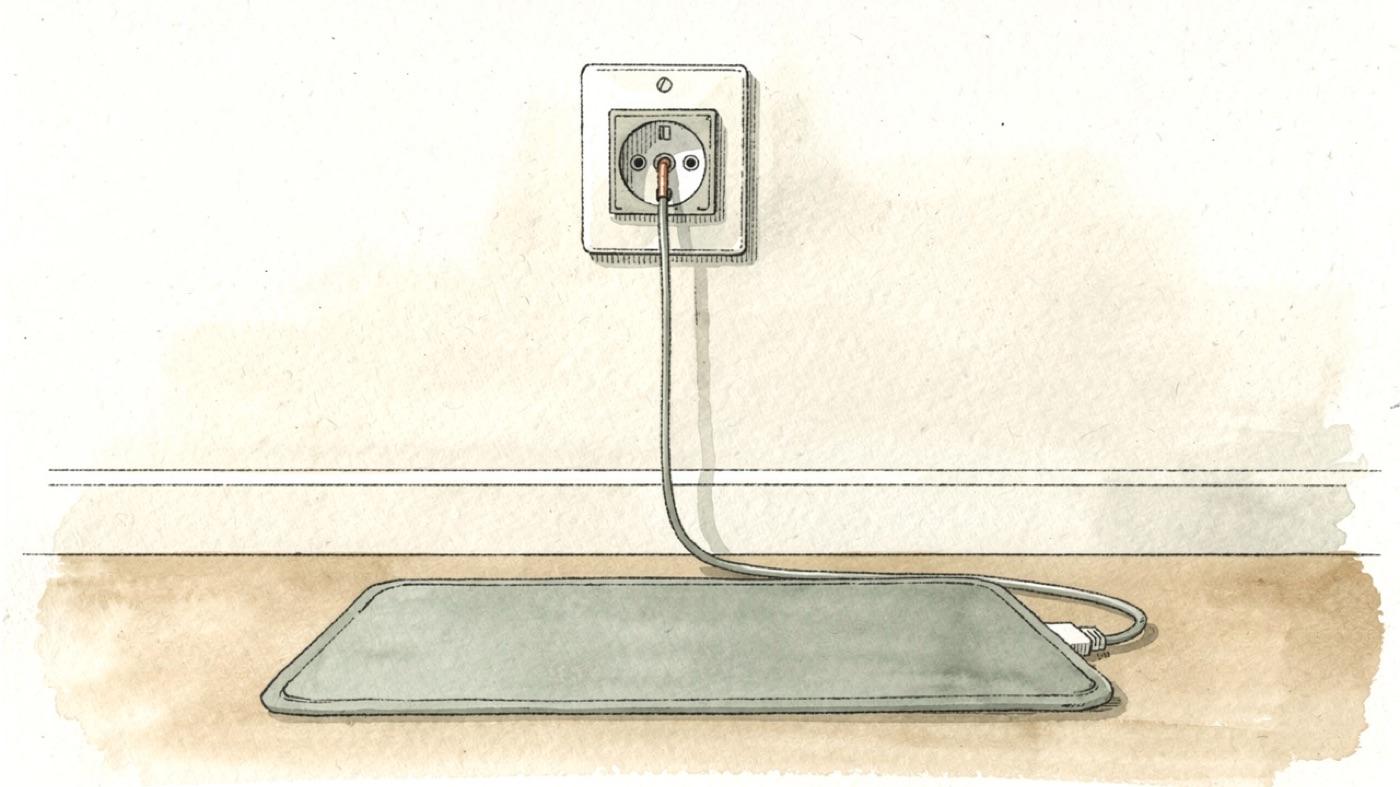
Earthing outlets on a Ufer ground
Some of our clients ask for earthing outlets. These are dedicated outlets that connect earthing mats, sheets, or floor pads to the earth. The idea is direct contact with the earth's surface electrons, which some people use for sleep and inflammation.
The evidence on health benefits is mixed. Studies such as Chevalier et al. (2015) suggest possible benefits, but larger peer-reviewed work is still needed.
We design the system for electrical safety first and treat the health goal as a bonus.
For readers who want the research itself, a 2015 review in the Journal of Inflammation Research, co-authored by Chevalier, summarizes the early studies on grounding and inflammation. Our post on the benefits of grounding and how to get them indoors covers the practical side.
How the outlets are wired
An earthing outlet is not a powered outlet. It carries a ground conductor only.
- Run a dedicated #6 AWG copper conductor from the Ufer ground or the main grounding busbar to each earthing outlet.
- Wire only the ground terminal. Never connect a live or neutral wire.
- Use UL-listed earthing products designed for connection to a grounding system.
- Add a surge protector or current-limiting device in the earthing circuit to guard against lightning and fault current.
Is it safe to tie into the house ground?
Yes, when it is done correctly. The NEC requires all grounding electrodes to be bonded into one system. That keeps every grounded surface in the home at the same potential, so there is no voltage difference to shock anyone.
The risks come from shortcuts. An unbonded ground can create voltage differences, and an earthing outlet tied to a live circuit could energize a mat or sheet. A separate, unbonded ground path violates NEC 250.54 and creates a hazard.
Grounding the rest of the house
A Ufer ground is the anchor. The rest of the grounding system decides whether the home is quiet or noisy from an EMF standpoint.
Establish a reliable earth ground
Pair the Ufer ground with driven rods where the site calls for it. Use at least two copper-clad steel rods, each at least 8 feet long, spaced well apart and bonded together with #4 AWG or larger bare copper. In low-conductivity soil, drive the rods deeper or use a ground enhancement material.
Use star grounding
Every ground path should converge at a single point, normally the main panel. This is called star grounding or single-point grounding. Daisy-chained grounds create ground loops, and ground loops carry stray current and electrical noise. That noise is part of what we call dirty electricity.
Ground mechanical systems without adding interference
HVAC units, metal piping, and water filtration equipment must be grounded, but they can inject noise into the system. A few rules keep that in check.
- Use dielectric couplings on metal water pipes near equipment so current cannot flow along the pipe.
- Bond metal ducts and mechanical equipment to the main system at a single point.
- Run isolated grounding conductors for audio, video, and network gear so they do not share noisy paths.
- Keep ground conductors away from high-voltage wiring and transformers to avoid induced current.
Protect sleeping areas
Bedrooms deserve the most care. Avoid routing grounding conductors under or beside beds where possible, and use demand switches to cut power to bedroom circuits at night. Metal-clad or shielded wiring, properly grounded, absorbs electric fields that plain cable radiates. More bedroom strategies are in how to reduce EMF at home and in the bedroom.
Surge protection and the grounding system
Surge protection depends on a good ground. A Type 1 surge protector at the service entrance and a Type 2 protector inside the panel handle most events. Both must be bonded to the same grounding system.
In lightning-prone areas, a dedicated lightning protection electrode system should be installed and bonded to the electrical ground. Avoid running data lines parallel to power lines, which invites induced surges.
Testing and sign-off
The system is not done until it is measured. A licensed electrician should test ground resistance, with 25 ohms or less as the NEC benchmark and lower as the goal. The local inspector then confirms code compliance.
We specify grounding at the design stage, not as an afterthought, on every design-build project. It is far easier to encase the right conductor in the footing than to retrofit a ground later. For an existing home, a healthy home inspection can measure stray current and grounding faults before they become a problem.