July 22, 2024
By Brian Johnson, Building Biologist and Licensed General Contractor
Best Air Purifier for Mold and Mycotoxins: Three Filters That Work
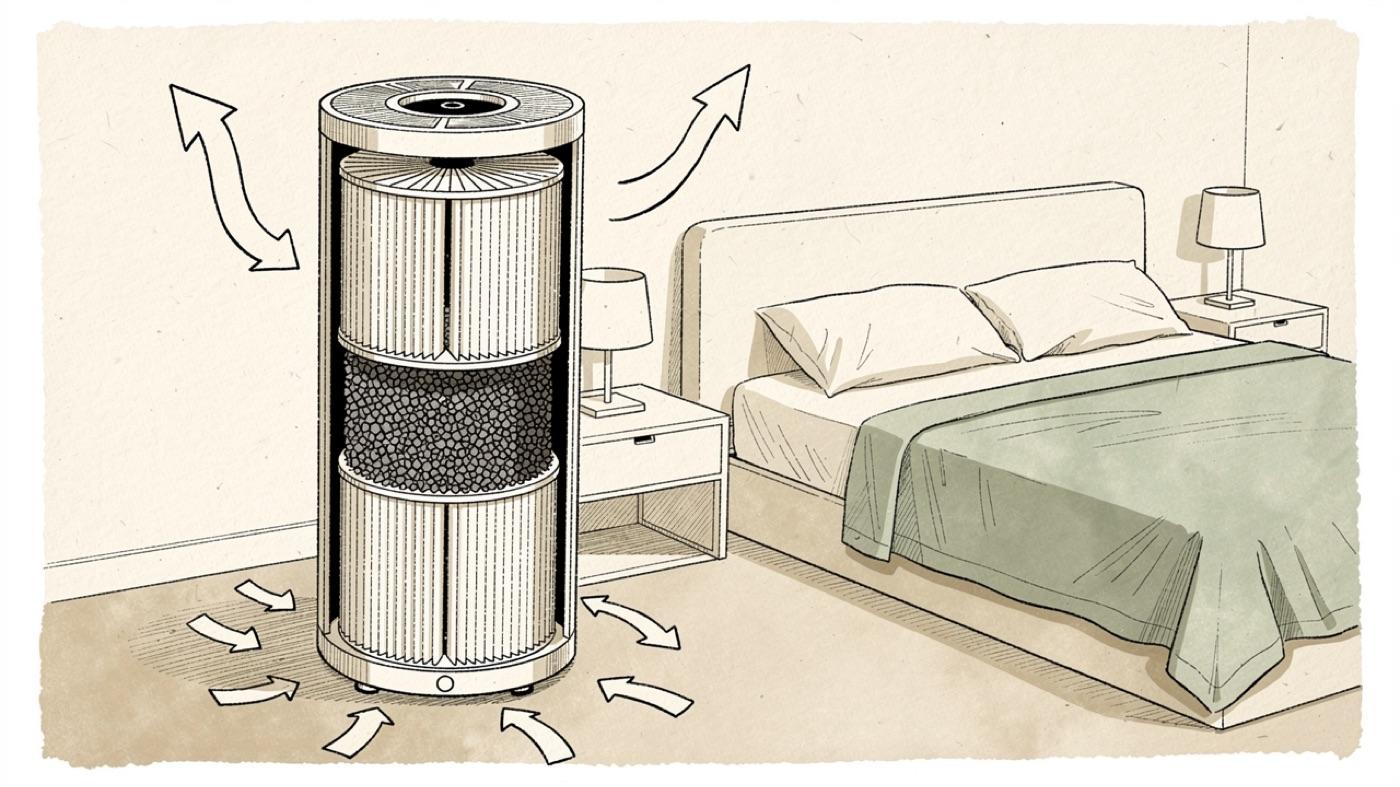
The best air purifier for mold spores and mycotoxins does two jobs at once. A true HEPA filter captures the spores, and a deep bed of activated carbon adsorbs the gases and mycotoxin-carrying fine particles that HEPA alone lets through.
Below we cover three purifiers we see perform well in real homes and the criteria we use to judge any unit. We also cover how furnace filters and MERV ratings fit in, and the part most product roundups skip. A purifier cleans the air, but it does not fix the moisture problem that grew the mold.
Top air purifier picks for mold and mycotoxins
These three represent different budgets and strengths. They are listed in no particular order, and none of them is a substitute for finding and fixing the water source.
Jaspr Air Scrubber
A high-airflow HEPA unit built for real-time results you can see on its display. It is quiet enough for bedrooms and moves a lot of air for its size, which matters in rooms where mold spores are actively being disturbed.
Intellipure Air Purifiers
Intellipure focuses on ultrafine particle capture and reports its performance in terms of CFM, microns, and VOC reduction. It is a strong choice for households that want measurable numbers rather than marketing claims.
Austin Air HealthMate Plus
A long-standing workhorse with a large carbon and zeolite bed behind a true HEPA filter. The heavy carbon load is what makes it useful for chemical vapors, gases, and odors alongside mold spores, dust, pollen, and smoke.
Each of these units captures mold spores reliably. The differences come down to airflow, carbon capacity, noise, and filter replacement cost. Match the unit to the room and the problem rather than the brand name.
Understanding mold, mycotoxins and allergens
Mold is a fungus that thrives in damp environments and shows up in black, green, white, and other colors. Common indoor genera include Aspergillus, Penicillium, and Stachybotrys, which is often called black mold.
Mycotoxins are toxic compounds some molds produce. They ride on fine particles and fragments, settle on surfaces, and can contaminate food. Both spores and mycotoxin-laden dust move through the air, which is why filtration matters.
The other allergens in the same air
Mold rarely travels alone. The same purifier that catches spores is also catching the everyday allergens that trigger asthma and allergy flare-ups.
- Dust mites, which live in bedding and upholstered furniture
- Pollen, which rides in on clothing and through open windows
- Pet dander, which settles into carpet and fabric
Health implications
Exposure to mold and mycotoxins is linked to respiratory symptoms, allergies, and in some people more serious effects. Mold can trigger asthma, and ongoing exposure may contribute to chronic inflammation, especially for anyone with a pre-existing condition or a compromised immune system.
If you have persistent symptoms at home, talk to your doctor and get the house checked.
Common sources in homes
Mold needs moisture. The usual suspects are the same in almost every house we inspect.
- Leaky roofs and flashing that let water into the attic or wall cavity
- Basements and crawlspaces with poor ventilation and high humidity
- Bathrooms where showers run without an exhaust fan that actually vents outdoors
- HVAC systems and ductwork that hold condensation and then circulate spores through the house
- Plumbing leaks behind walls and under sinks that go unnoticed for months
Reducing humidity and ventilating properly does more to prevent mold than any purifier. Our guide to moisture management covers the building side of that in detail.
Why an air purifier does not fix a moisture problem
This is the part to read twice. An air purifier lowers the spore and particle count in the air passing through it. It does nothing to the colony growing behind the drywall, in the duct liner, or under the flooring, and that colony keeps producing spores and mycotoxins as long as it stays wet.
The U.S. EPA makes the same point in its Guide to Air Cleaners in the Home: the most effective ways to improve indoor air are to reduce or remove the sources of pollutants and to ventilate with clean outdoor air, and filtration is a supplement to both. The agency's mold guidance is just as direct about what happens when the water is left alone.
If you clean up the mold, but don't fix the water problem, then, most likely, the mold problem will come back.
If a purifier makes a noticeable difference in a room, treat that as evidence that there is a source to find, not as a solution. A mold inspection locates the moisture, documents the extent, and tells you whether remediation or a building repair comes first. In Southern Arizona, our Tucson mold inspection service does exactly that.
Choosing an air purifier for mold and allergens
The right purifier depends on filter type, efficiency, room size, and how much maintenance you will realistically do.
Filter type
True HEPA filters capture at least 99.97 percent of particles at 0.3 microns. Mold spores are far larger, roughly 1 to 30 microns, so any true HEPA filter traps them. Choose a unit with a sealed housing and a pre-filter that catches large debris and extends the HEPA life.
Activated carbon adsorbs odors, VOCs, and the gases associated with active mold growth. The amount of carbon is what counts. A thin carbon-coated mesh saturates in weeks, while several pounds of granular carbon keeps working for months.
UV-C lamps can inactivate spores that pass close enough for long enough. In most portable units the contact time is short, so treat UV as a supplement rather than the main event. In an HVAC coil application with continuous exposure it can help keep the coil clean.
Efficiency ratings
For furnace and HVAC filters, the MERV rating is the standard measure. MERV 13 or higher captures the fine particle range that carries mold fragments.
For portable purifiers, look at the CADR, or Clean Air Delivery Rate. It reflects how quickly the unit clears smoke, dust, and pollen from a given room size.
The EPA guide recommends a furnace or HVAC filter rated at least MERV 13, or as high as your system fan and filter slot can accommodate. It also notes that the CADR rating system is for particles only, so there is no widely used rating that tells you how well a unit removes gases. For the carbon stage, the amount of material is still your best guide.
Room size compatibility
A purifier that is too small for the room cannot keep up. Check the CFM rating and the manufacturer's room-size guidance, and aim for a unit that can turn the room's air over several times per hour. Undersizing is the most common mistake we see.
Noise and energy use
A bedroom unit has to be quiet enough to leave on all night, or it gets switched off. Look for a low setting well under the noise of normal conversation.
Since the right way to run a purifier is continuously, energy use adds up. Energy Star rated units cost less to run around the clock.
Maintenance requirements
HEPA filters usually last roughly six to twelve months, and carbon filters roughly three to six months, depending on how loaded the air is. A neglected filter loses efficiency and can become a source itself. Choose a unit whose filter schedule you will actually keep.
Furnace filters and MERV ratings
Your central HVAC system moves far more air than any portable purifier, so the filter in the return grille matters. Two things to know before upgrading it.
Higher MERV means more resistance. Many residential systems were designed for MERV 8, and jumping to MERV 13 without checking static pressure can strain the blower and reduce airflow. Ask your HVAC contractor to confirm the system can handle it, or add a deeper media filter cabinet that offers high MERV with lower resistance.
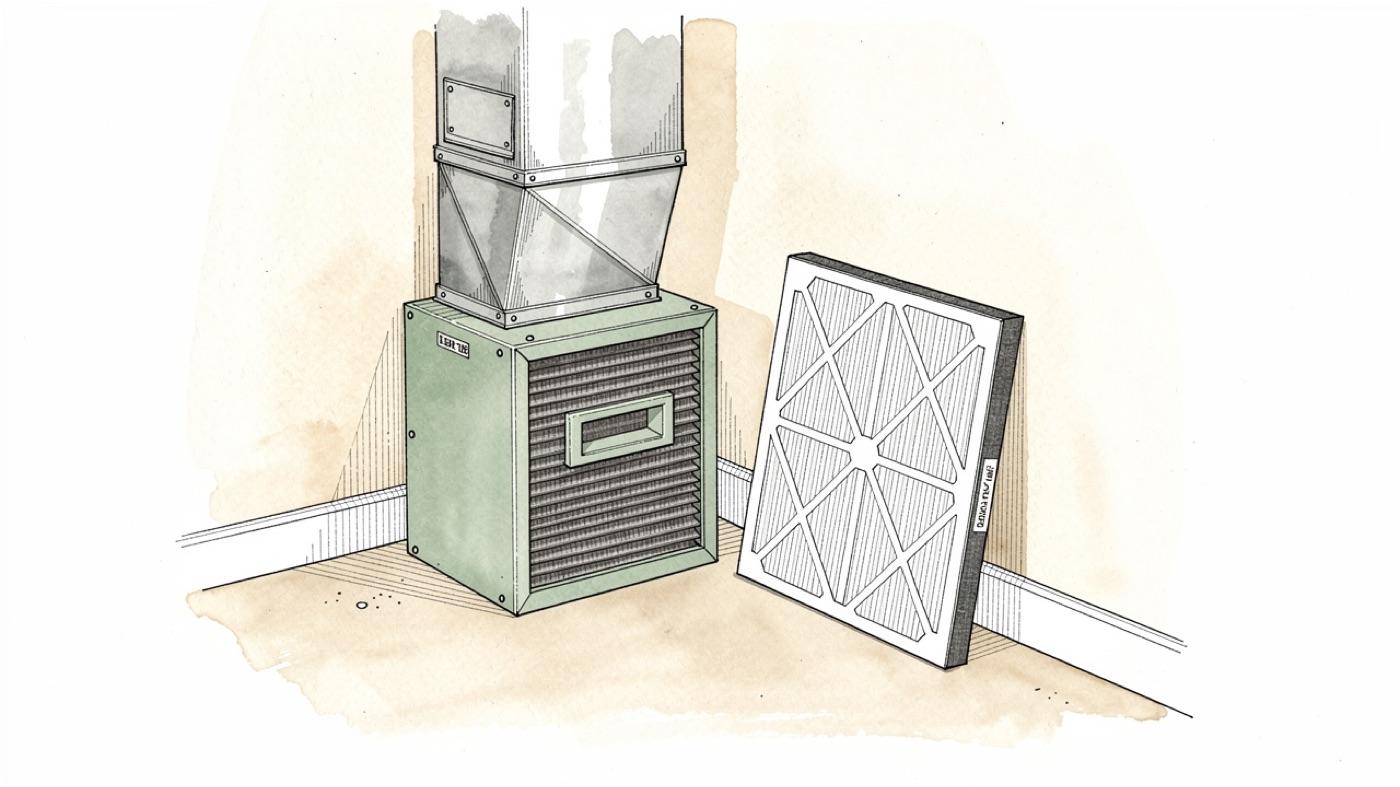
Filters do not clean ducts. If there is mold in the HVAC system, a better filter downstream only masks it. Our article on HVAC inspections for mold-sensitive homes explains how we evaluate coils, drain pans, and duct liner where growth actually hides.
Features worth paying for
Smart sensors adjust fan speed to measured particle levels and log air quality trends in an app. That data is useful for spotting patterns, for example a spike every time the HVAC cycles on, which points to the duct system.
Seal and gasket quality is less visible and more important. If air can bypass the filter around a poorly fitted frame, the HEPA rating on the box means little. Look for units where the filter seats against a gasket and the housing latches tight.
Installation and placement tips
- Put the unit in the room where you spend the most time, usually the bedroom, and in rooms with known moisture sources
- Keep roughly two feet of clearance on all sides so intake and outlet are not blocked
- Raise the unit off the floor if the manufacturer allows it, to improve circulation
- Run it continuously on a low or medium setting rather than in short bursts on high
- Match capacity to room size and add a second unit rather than oversizing one
- Replace filters on the schedule the manufacturer publishes, and sooner in humid or dusty conditions
Maintenance and longevity
Check the manufacturer's replacement interval and put it on a calendar. Rinse washable pre-filters every few weeks so the HEPA behind them breathes freely. Inspect the seals when you change filters, because a gap reduces efficiency.
If measured air quality declines before the scheduled change, replace early. Regular maintenance keeps performance close to the rated numbers and protects the HVAC system if you have upgraded to a high-MERV filter.
Cleaning habits that make the purifier's job easier
A purifier handles what is airborne. Regular cleaning handles what has already settled and would otherwise get stirred back up.
- Vacuum with a HEPA-rated vacuum so the spores stay in the bag
- Wash bedding frequently, since that is where dust mites concentrate
- Keep indoor relative humidity roughly between 30 and 50 percent with ventilation or a dehumidifier
- Use mold-resistant products in bathrooms, kitchens and other wet areas
The Climate Control, Ventilation, and Indoor Air Quality principle of SENERGY360's 12 CORE Principles for Healthy Building Design treats filtration as one layer in a system that starts with keeping water out of the building.
Small rooms and particle size
A common question: what works in a bathroom or other small room, and does a purifier need to capture particles down to 0.003 microns to remove mold? The short answer is no. Mold spores are roughly 1 to 30 microns, and a standard true HEPA filter rated at 0.3 microns captures them easily.
For a small room, a compact true HEPA unit with a modest carbon stage is enough, provided the bathroom exhaust fan is doing its job first.
Concerned about mold and mycotoxins?
A purifier buys you cleaner air tonight. A Healthy Home Inspection tells you where the moisture is coming from, how far the mold has spread, and what to fix so the purifier is no longer doing the heavy lifting.
If you suspect a problem, that is the place to start, and our comprehensive mold guide will help you understand what the inspection finds. If the mold is already confirmed, our overview of mold remediation the healthy building way explains what comes after the inspection.