September 14, 2026
By Brian Johnson, Building Biologist and Licensed General Contractor
Mold Testing: DIY Kits vs a Professional Inspection
Mold is a fungus, and it grows wherever it finds damp material and warmth. Wood, carpet, drywall and dust all feed it. Mold testing is how you find out whether the musty smell, the water stain or the allergy flare-up is pointing at a real problem.
Homeowners have two paths. Buy a kit, or bring in a professional. Both have a place, and choosing the wrong one wastes money or, worse, gives false comfort.
Why Mold Testing Matters
Visible mold is the easy case. The harder problem is growth you cannot see, behind walls, under flooring or inside the HVAC system. Testing gives you evidence before the damage spreads.
Signs that call for a test
- A musty odor that comes and goes with humidity
- Water stains, bubbling paint or soft drywall
- Allergy or respiratory symptoms that improve when you leave the house
- A past leak, flood or plumbing failure
Our post on the sneaky signs your home has mold covers more of the clues that are easy to miss.
Common indoor molds include Cladosporium, Penicillium and Stachybotrys, the one usually called black mold. Exposure can bring respiratory problems, allergies and skin irritation. Early detection is cheaper than late remediation every time. The U.S. EPA's brief guide to mold, moisture and your home sums up the underlying rule in one line: the key to mold control is moisture control.
How Mold Testing Kits Work
Kits are the low-cost, user-friendly option. They come in three broad types, and each one answers a different question.
Settle plate kits
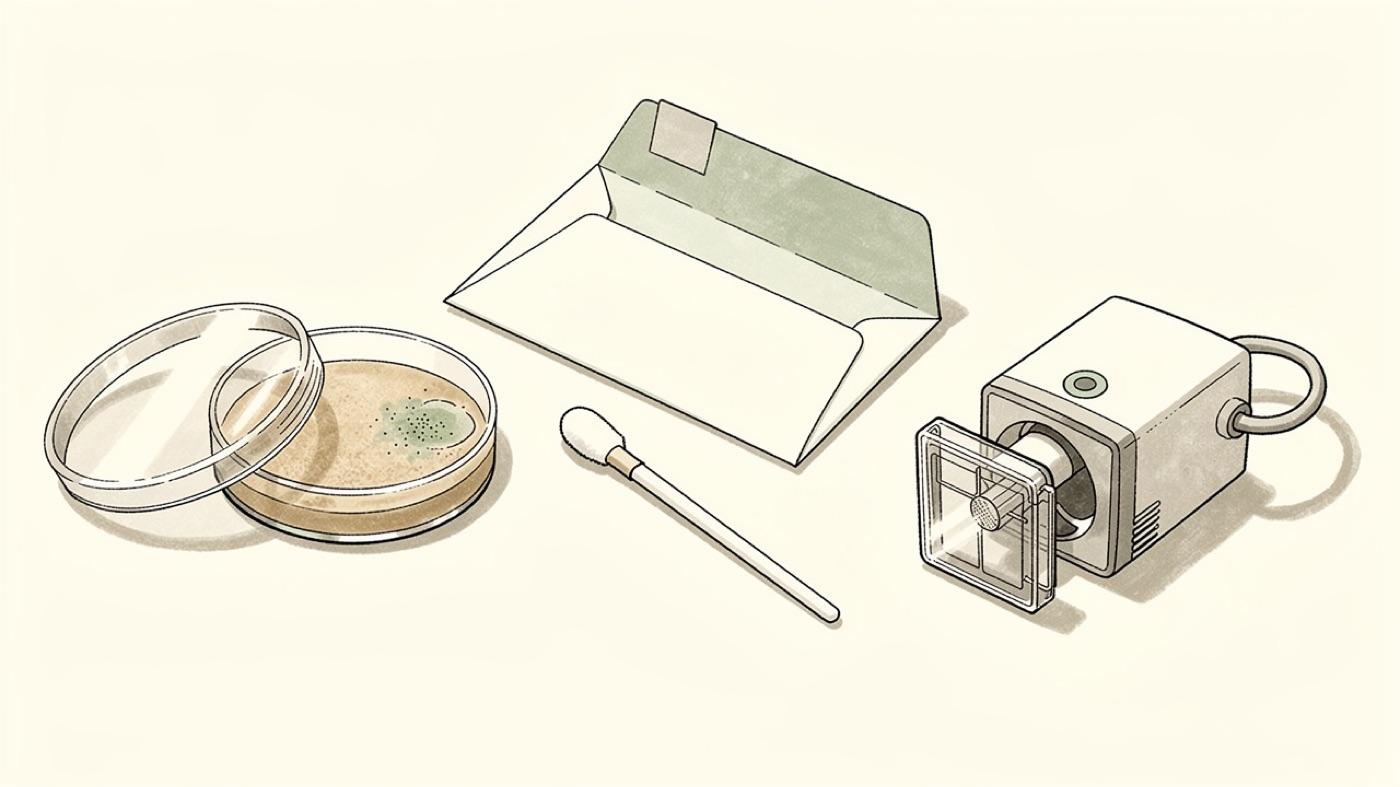
A petri dish sits open on a counter for a set time, then gets sealed and watched for growth. It proves that spores are present. Spores are present in nearly every house, so this tells you very little on its own.
Swab and lab kits
You swab a suspect surface and mail the sample to an accredited laboratory. The lab identifies what is growing and reports the species. These cost more than settle plates and give a real answer about a specific spot.
Air sampling kits
A small pump pulls air through a spore trap cassette for a timed run. The lab counts spores and identifies types, which gives a picture of what is airborne. Results only mean something when compared against an outdoor sample taken the same day.
Where Kits Fall Short
A kit tests where you point it. If the growth is inside a wall cavity or above a ceiling, the swab never touches it. Air samples can be diluted by open windows or skewed by a fan.
Most importantly, a kit cannot tell you why mold is growing or where the water is coming from.
That is the difference between a test and an inspection. A test reports spores. An inspection finds the cause.
There is also no official number to compare a kit result against. The EPA's page on mold testing or sampling notes that no EPA or other federal limits have been set for mold or mold spores, and that in most cases sampling is unnecessary if visible mold growth is present.
Sampling for mold should be conducted by professionals who have specific experience in designing mold sampling protocols, sampling methods and interpreting results.
What a Professional Inspection Adds
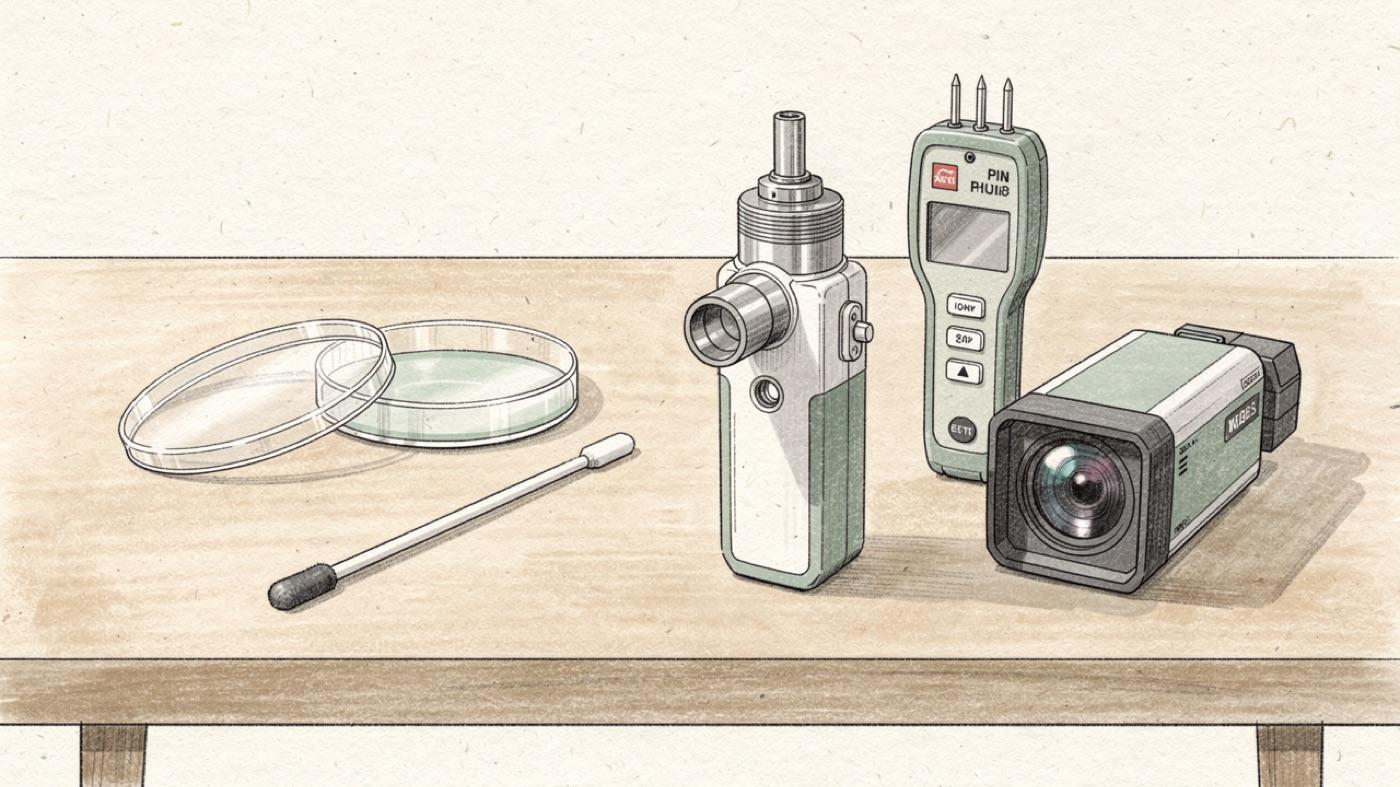
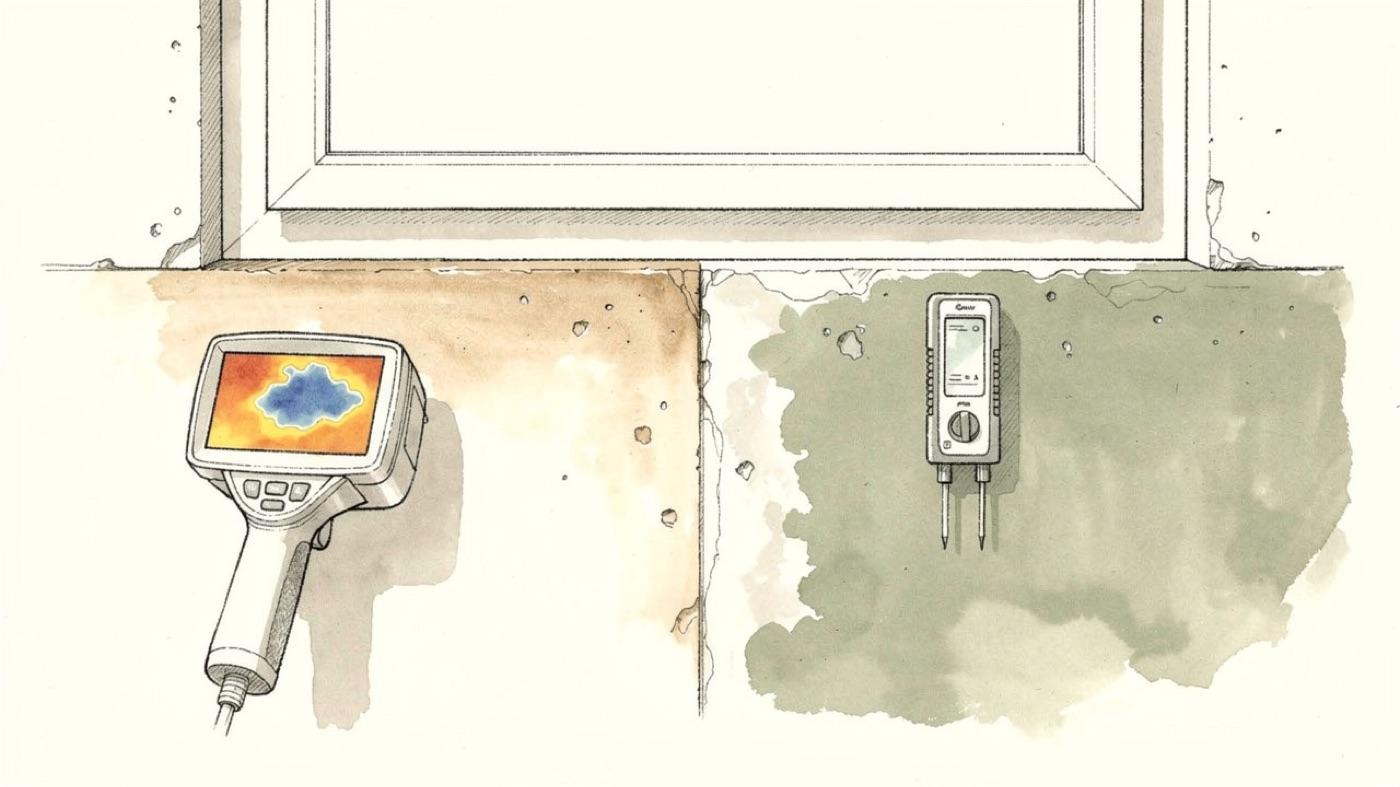
A trained inspector reads the building, not just the sample. Moisture meters, thermal imaging and a knowledge of how assemblies fail point the sampling at the right places. We walk through the full process in what a mold inspection includes.
Tools a kit does not have
- Pin and pinless moisture meters to find wet material
- Thermal imaging to see cold, damp areas behind finishes
- Calibrated air sampling with outdoor controls
- Inspection of the HVAC system, ducts and crawlspace
- A written report with cause, extent and next steps
What it costs
Professional inspections cost more than a kit, and the range is wide depending on the size of the home and the sampling needed. We break down the numbers in our guide to mold inspection cost. For a home in Tucson, our mold inspection page covers what we do locally.
Choosing the Right Approach
Use a kit when you want to confirm growth on a visible surface, or as a cheap first look before committing to more. Use a professional inspection when symptoms are present but nothing is visible, after any water event, before buying a home, or when a kit result comes back high and you need to know what to do about it.
A simple decision guide
- Visible patch, want to know the species: swab kit
- Musty smell, nothing visible: professional inspection
- Past leak or flood: professional inspection
- Buying or selling a home: professional inspection
- Kit came back high: professional inspection
After the Results
A high result is not the end. It is the start of finding the moisture source, containing the area and removing the contaminated material properly. That work is a sequence, and we lay it out in our healthy building approach to mold remediation.
Mold testing belongs in a home maintenance routine the same way a furnace check does. Regular testing, and a professional look when the signs call for one, keeps a small problem from becoming an expensive one.
Comparing quotes for a professional inspection? See what drives mold inspection cost.