September 14, 2026
By Brian Johnson, Building Biologist and Licensed General Contractor
Filtered Water vs Bottled Water: Which Is Healthier at Home?
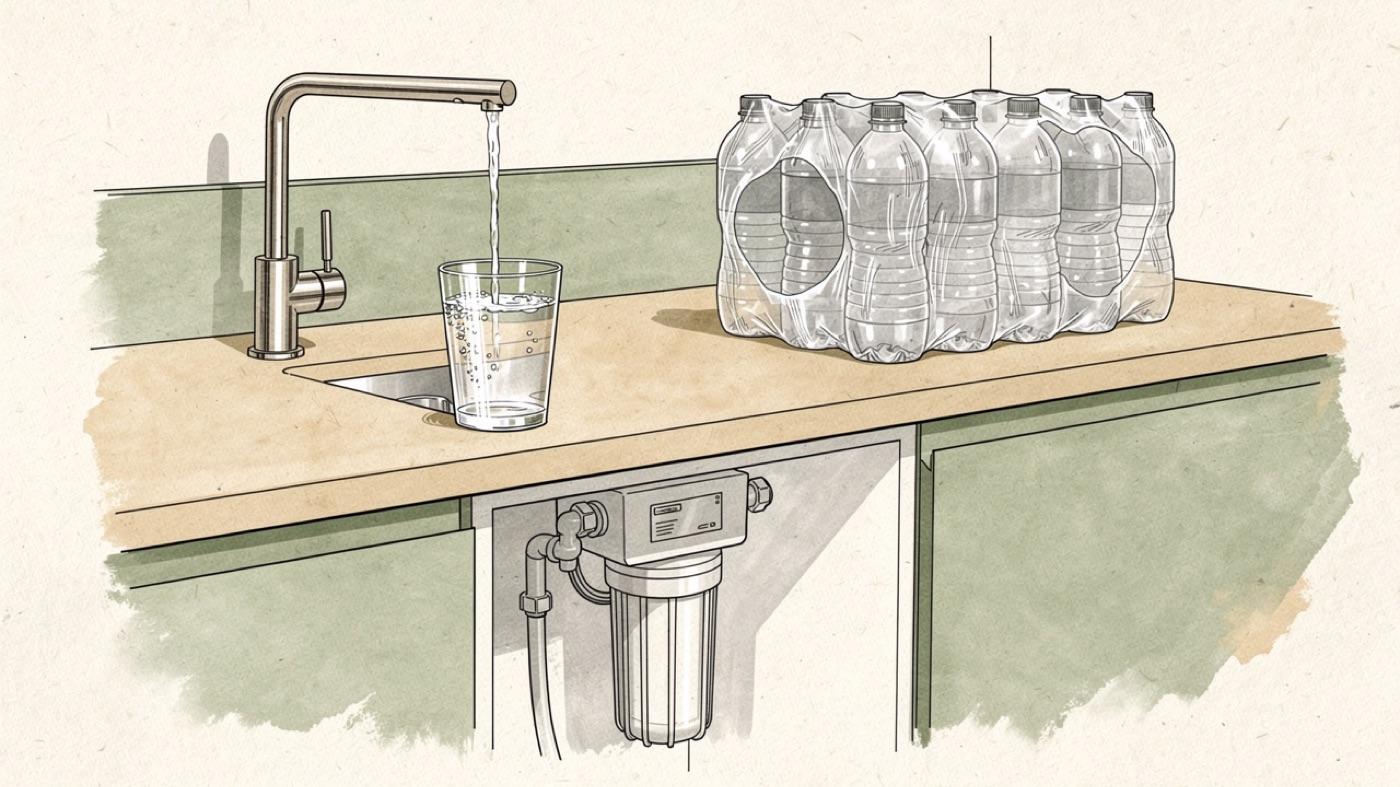
Bottled water sells on trust. The label shows a mountain spring and the price suggests something purer than what comes out of the wall. When we compare filtered water vs bottled water for the families we build for, the bottle usually loses.
The rules that govern bottled water are looser than the rules for your tap. The bottle itself adds chemicals of its own. And a well-designed home filter removes more, for less, without the waste.
Filtered water vs bottled water: who is checking
Municipal tap water is regulated by the EPA. Bottled water crosses state lines under FDA rules, and those rules exclude mineral water, vended water, imported water, and seltzer or flavored water.
The FDA specifies fewer contaminants than the EPA does. Control rests on the bottler's own testing. The bottler is not required to keep reports for review, report results or use certified labs.
On average the FDA inspects a bottler about once every six years. That is a system built on self-regulation. It leaves the buyer to trust the label.
The FDA's own consumer guide to bottled water explains the relationship between the two agencies: each time the EPA sets a standard for a contaminant in public drinking water, the FDA either adopts it for bottled water or finds that the standard is not necessary for bottled water. In some cases the two standards differ.
What has turned up in the bottle
One study of bottled water found that 35 percent of samples exceeded the bottled water industry's own association guidelines. That is microbial contamination, the kind a municipal plant tests for daily.
Chemical contamination comes from two directions. Some bottlers treat with ozone, which can create by-products such as bromate, a suspected carcinogen. The rest comes from the container itself.
What the plastic adds
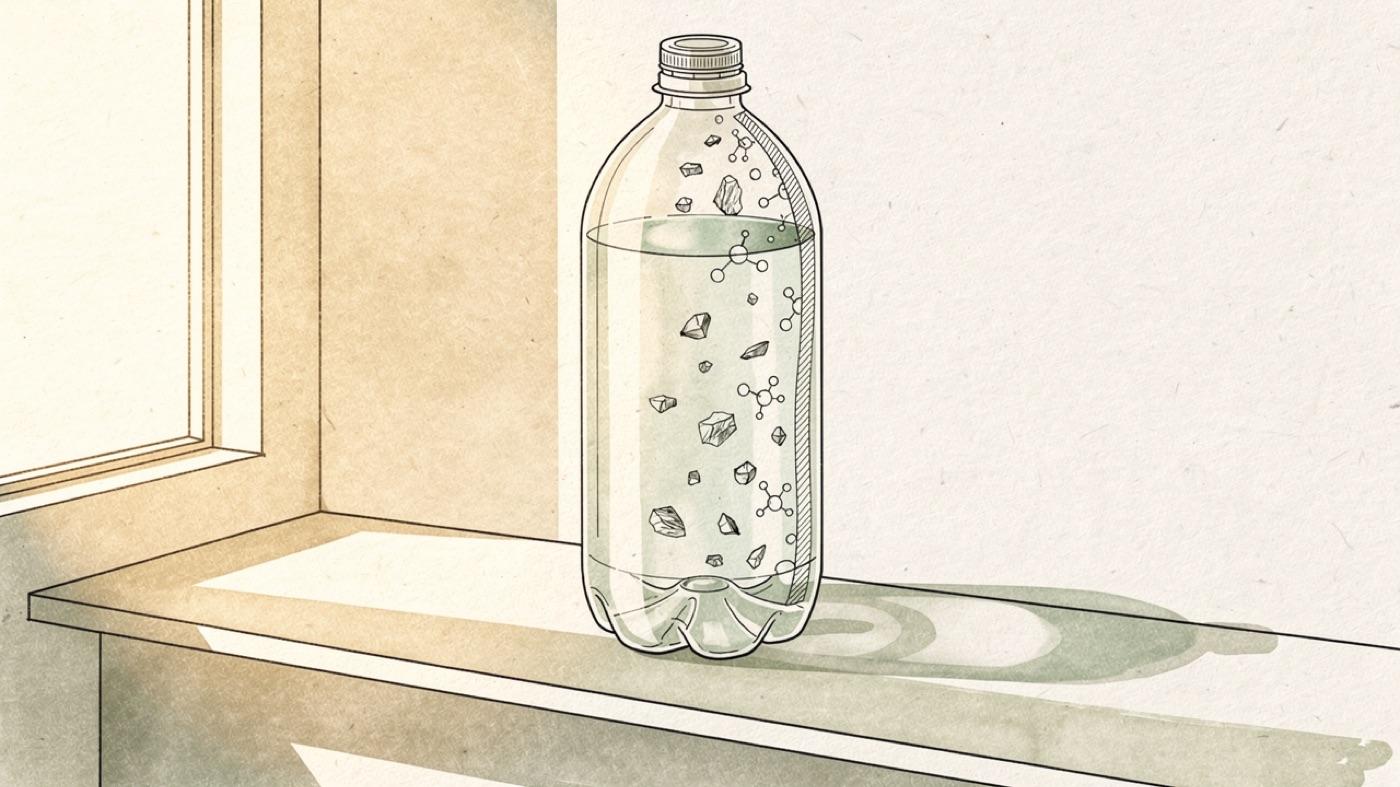
Plastic bottles leach traces of the additives that keep the plastic soft and resistant to oxidation. The source names three that matter.
- Phthalates, associated with increased risk for some cancers and liver damage
- Nonylphenol and its derivatives, which act as xenoestrogens and are banned in Europe
- Bisphenol A, an endocrine disruptor that can mimic the body's hormones even at low doses
Heat makes it worse. A case of bottles left in a hot car or a sunny garage leaches faster than one on a cool shelf. Bottles are also a known source of microplastic particles, which shed from the walls and the cap threads.
The degree to which BPA leaches from polycarbonate bottles into liquid may depend more on the temperature of the liquid or bottle, than the age of the container.
NIEHS notes that diet is the main source of BPA exposure for most people, and that BPA can leach from polycarbonate containers, including water bottles, as well as from the epoxy linings of canned foods.
The cost and the waste
Bottled water costs many times what filtered tap water costs per gallon, and the money mostly flows to the same companies that bottle soda. Every case adds plastic to the waste stream, and a large share of those bottles never get recycled.
There is a quieter cost too. Depending on bottles for something as basic as drinking water pulls a family away from the water under its own roof. We would rather fix the water than ship it in.
What a home filter removes
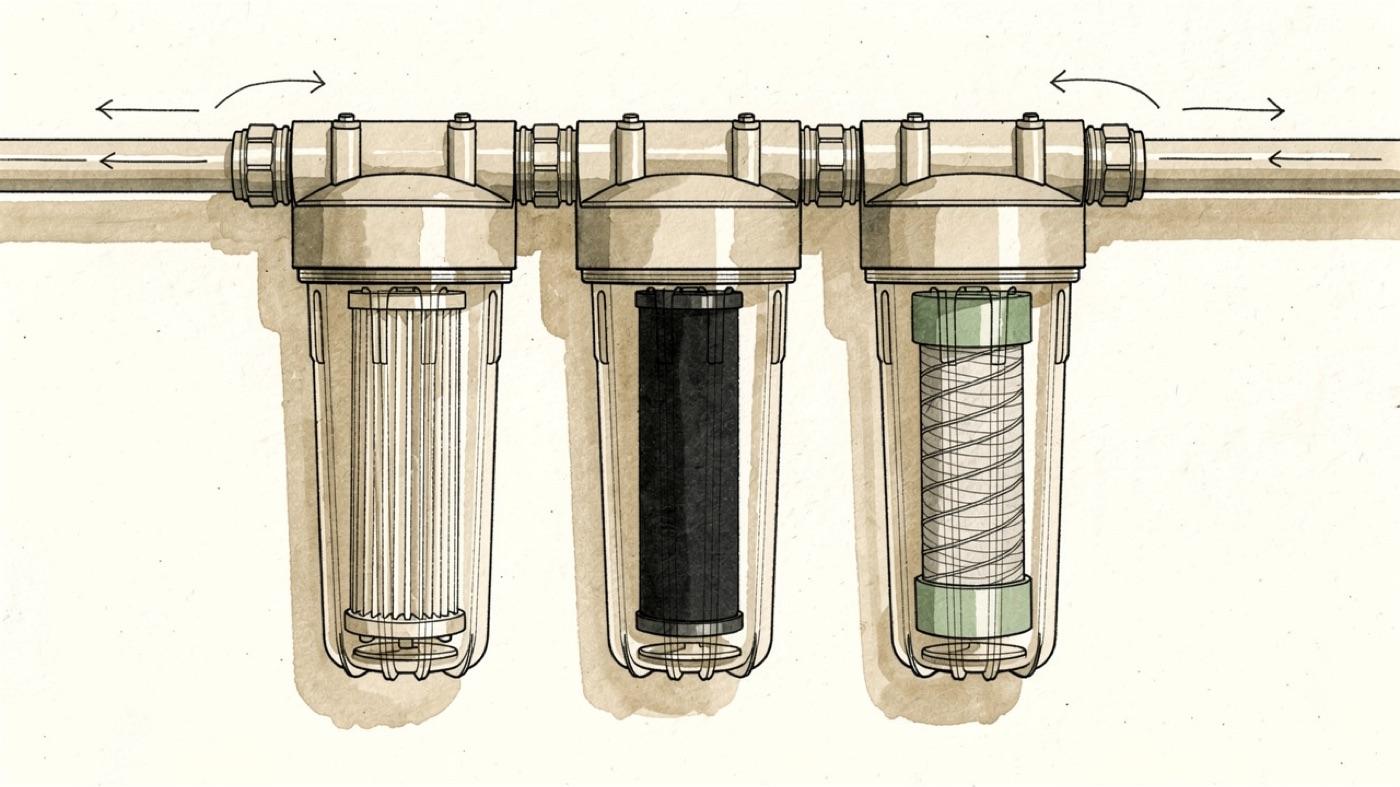
A filter system is built in stages. Each stage targets a different class of contaminant, and the stages work in series. For a fuller comparison of each method, see water filtration methods explained.
- A sediment prefilter catches sand, rust and silt
- A carbon block adsorbs chlorine, chloramine, many pesticides and volatile organic compounds, and improves taste and odor
- A reverse osmosis membrane rejects dissolved solids, including lead, arsenic, nitrates, fluoride and PFAS compounds
- A remineralization or structuring stage can put beneficial minerals back and improve the water's character
Which stages you need depends on what is in your water. We start with a lab test of the incoming supply, whether that is a municipal line or a well. Our water quality principle explains how that test drives the design.
Point of use or whole house
An under-sink filter handles drinking and cooking water at one tap. It is inexpensive and easy to retrofit. It does nothing for the shower, the laundry or the ice maker.
A whole-house system treats every drop that enters the home. Chlorine and its by-products are absorbed through skin and inhaled in steam, so treating the shower matters for sensitive families. Our guide to a whole house water filtration system covers sizing and placement.
Many of our clients run both. The whole-house unit handles chlorine, sediment and chloramine. A reverse osmosis unit at the kitchen sink handles the dissolved contaminants that carbon alone will not touch.
Maintenance is the trade-off
A filter is only as good as its last cartridge change. Sediment and carbon stages need replacing on a schedule, usually every six to twelve months depending on water quality and flow. Reverse osmosis membranes last longer but need checking.
Put the change dates on a calendar. A spent carbon block can release what it captured. A filter you forget is worse than no filter, because it gives you confidence you have not earned.
The healthier choice
Filtered water wins on regulation, on chemistry and on cost. It also puts you in control. You know what is in your water because you tested it, and you know what came out because you chose the stages.
Bottled water asks you to trust a label and a bottler you will never meet. For a family that cares about what it drinks, that is not enough. Start with a water test and read our healthy water guide for the next steps.