September 14, 2026
By Brian Johnson, Building Biologist and Licensed General Contractor
Water Filtration Methods Explained: Which One Does Your Home Need?
Every glass of water in your home passed through some kind of treatment before it reached the tap. The question is whether that treatment was enough. Understanding the main water filtration methods lets you match the right technology to what is actually in your water.
At SENERGY360 we treat water the same way we treat air and materials. Test first, then design the system around the results. The water quality principle in our CORE framework starts with a lab report, not a product catalog.
The U.S. EPA takes the same test-first view. On a private well, its Protect Your Home's Water page advises testing annually for total coliform bacteria, nitrates, total dissolved solids and pH, and using only laboratories certified for drinking water testing. On city water, your utility's reports are the starting point.
Why one filter is rarely enough
No single method removes everything. Sediment, chlorine, heavy metals, bacteria, hardness minerals and industrial chemicals each need a different approach.
Most well-designed homes use two or three methods in sequence. Each stage protects the next one and handles what the others miss.
PFAS are a good example. The EPA's guide to reducing PFAS in your drinking water with a home filter names granular activated carbon, reverse osmosis and ion exchange resins as filter types that can be effective, and tells buyers to look for certification to NSF/ANSI 53 or NSF/ANSI 58 for PFAS reduction.
Certification by an independent entity is an assurance that the filter works as the manufacturer says it does.
The five main water filtration methods
Reverse osmosis
Reverse osmosis pushes water through a semi-permeable membrane under pressure. The membrane blocks dissolved solids, heavy metals, many chemicals and microorganisms while letting water molecules through.
The result is highly purified water that tastes clean. Because it strips almost everything, some homeowners add a remineralization stage after the membrane.
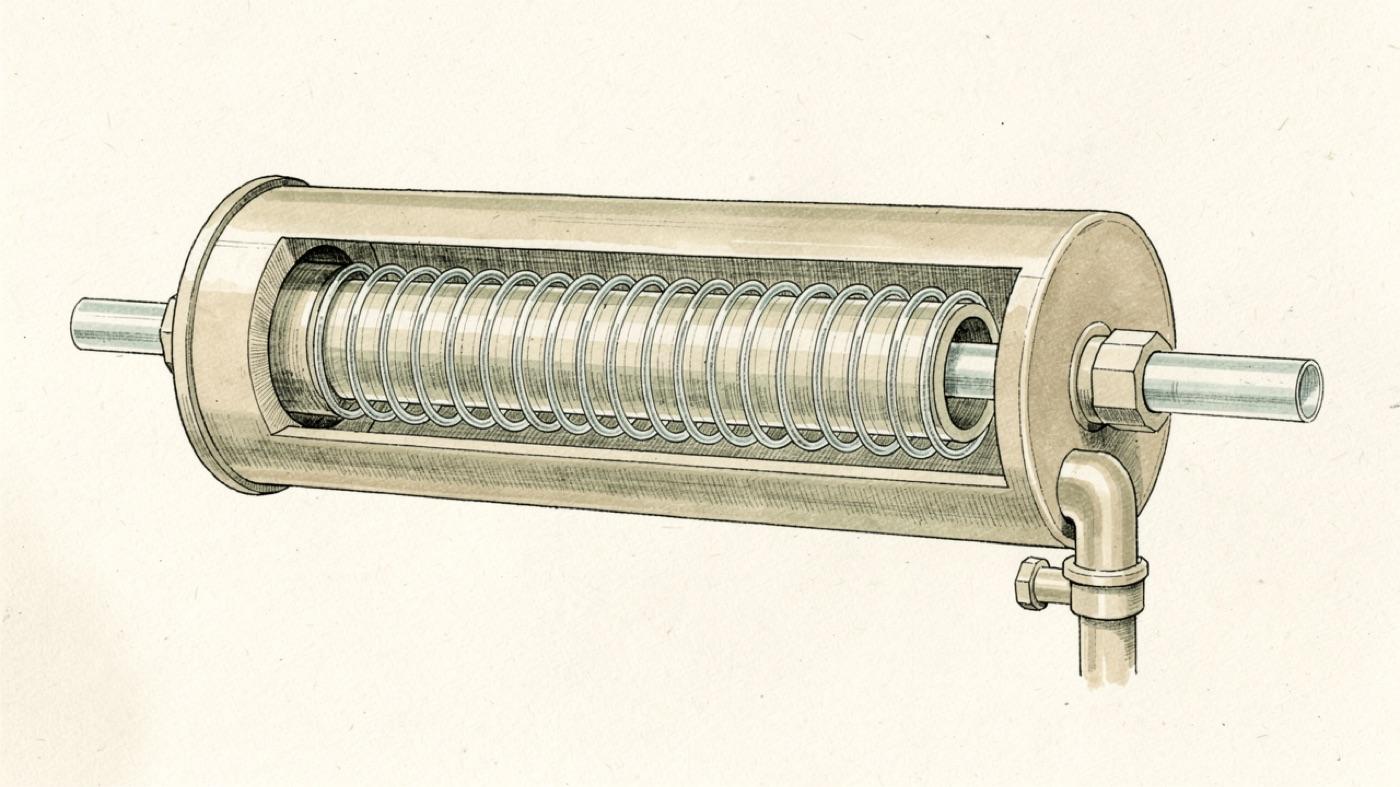
Reverse osmosis sends a reject stream to the drain. It also needs regular prefilter and membrane changes to keep working. Plan for that maintenance before you buy.
Ultraviolet purification
A UV system passes water past a lamp that emits ultraviolet light. The light disrupts the DNA of bacteria, viruses and cysts so they cannot reproduce or cause illness.
UV adds no chemicals and changes nothing about taste. It is the standard safeguard on private wells and on any supply where biological contamination is a concern.
UV has limits. It needs electricity, the lamp must be replaced on schedule, and cloudy water shades the pathogens from the light. It removes no chemicals at all, so it always pairs with other stages.
Activated carbon
Activated carbon has an enormous internal surface area. Chlorine, chloramine, volatile organic compounds and taste and odor compounds stick to that surface in a process called adsorption.
Carbon comes as granular beds in tanks or as compressed blocks in cartridges. Block filters give more contact time and finer filtration. Granular tanks handle higher flow for the whole house.
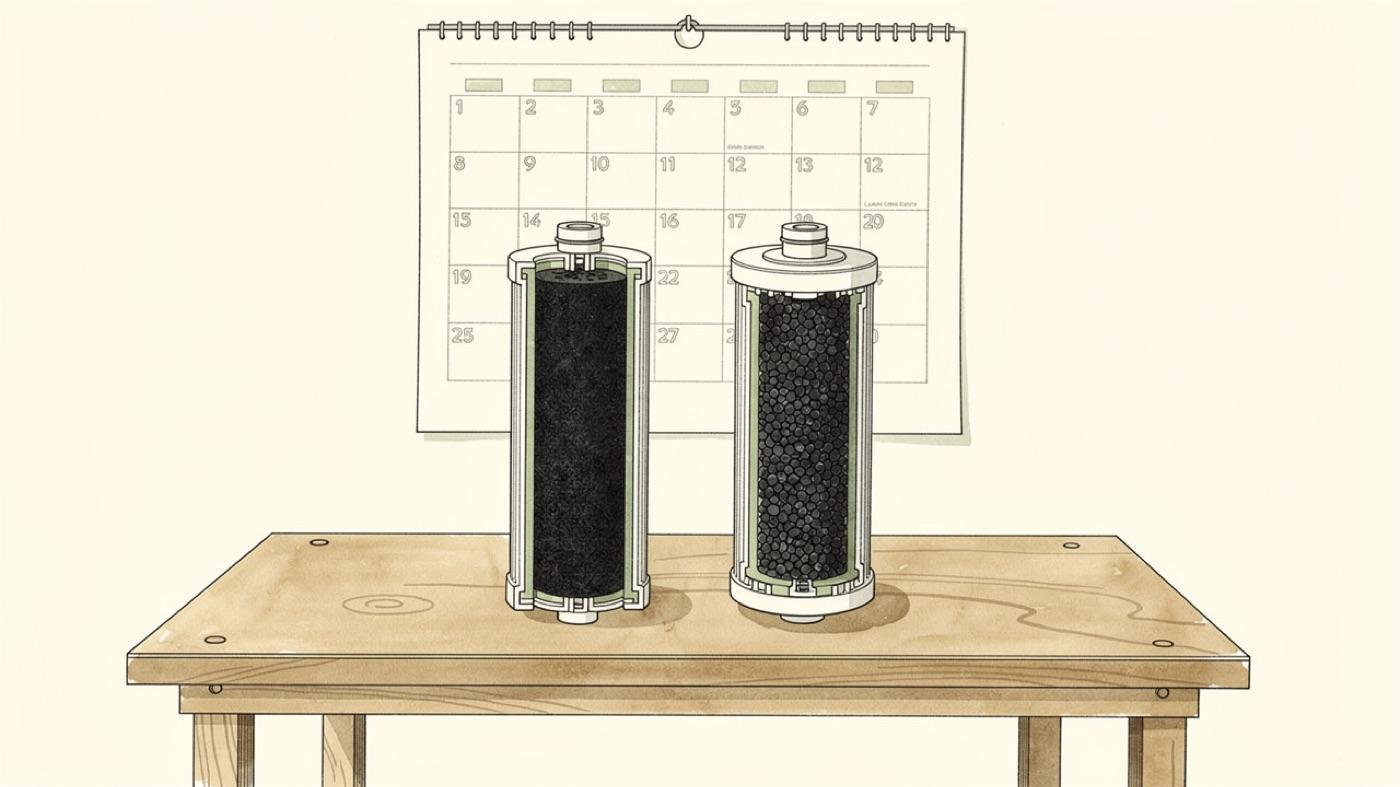
Carbon fills up. Once its surface is saturated it stops adsorbing and can even release what it captured. Replace it on the manufacturer's schedule or sooner if flow drops.
Ion exchange
Ion exchange is the technology inside a conventional water softener. Resin beads swap calcium and magnesium ions for sodium ions as water passes through.
Soft water stops scale from forming in water heaters, fixtures and appliances. That extends equipment life and improves how soap and detergent perform.
The trade-off is sodium in the water. Households on low-sodium diets, or anyone who dislikes the feel of softened water, often put a reverse osmosis tap in the kitchen for drinking and cooking.
Nanofiltration
Nanofiltration uses membranes with pores between those of reverse osmosis and ultrafiltration. It removes ultra-fine particles, many organic compounds and some dissolved minerals while leaving more of the beneficial minerals than reverse osmosis does.
Residential nanofiltration is becoming more available. It is worth watching as the technology matures, but it should be specified only against a lab test that shows it fits the water.
Building a filtration sequence
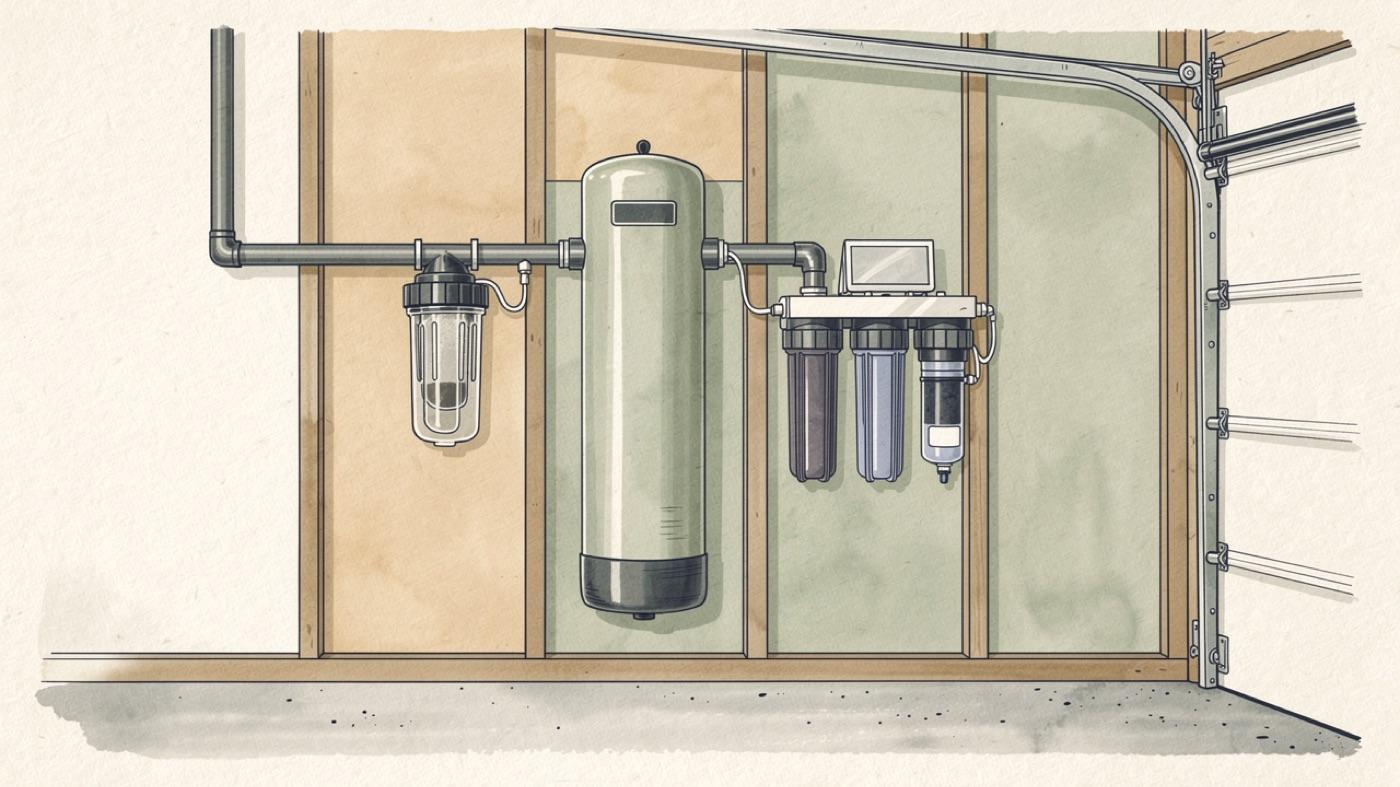
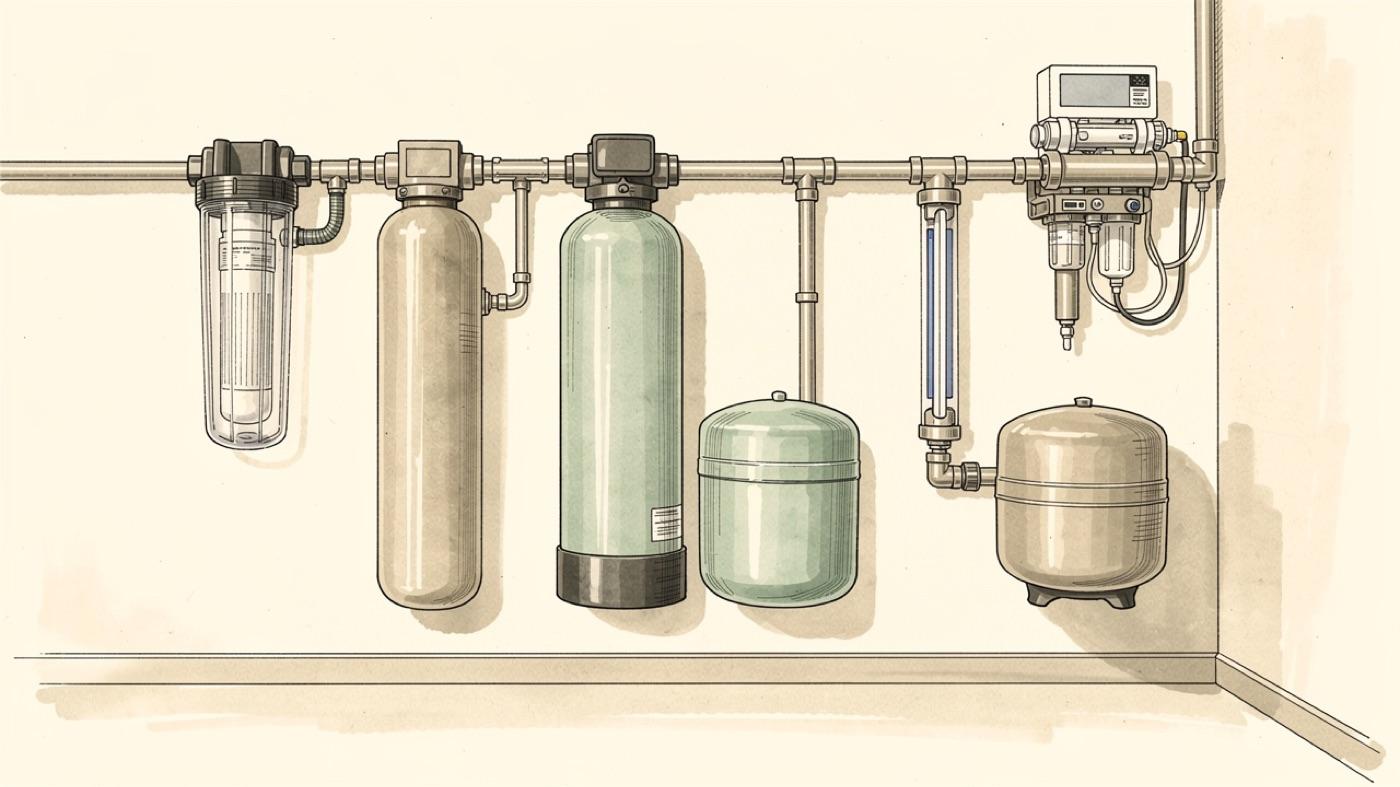
Order matters. Each stage should protect the one after it.
- Sediment first, to keep grit out of every downstream stage
- Carbon next, to remove chlorine before it damages a softener resin or an RO membrane
- Softening or scale control where hardness is high
- UV after the fine filtration, so the water is clear when it reaches the lamp
- Reverse osmosis at the kitchen for drinking water, with remineralization if desired
Our post on choosing a whole house water filtration system walks through sizing and placement for the main line. The healthy water guide covers structured water and other steps beyond filtration.
Materials matter too
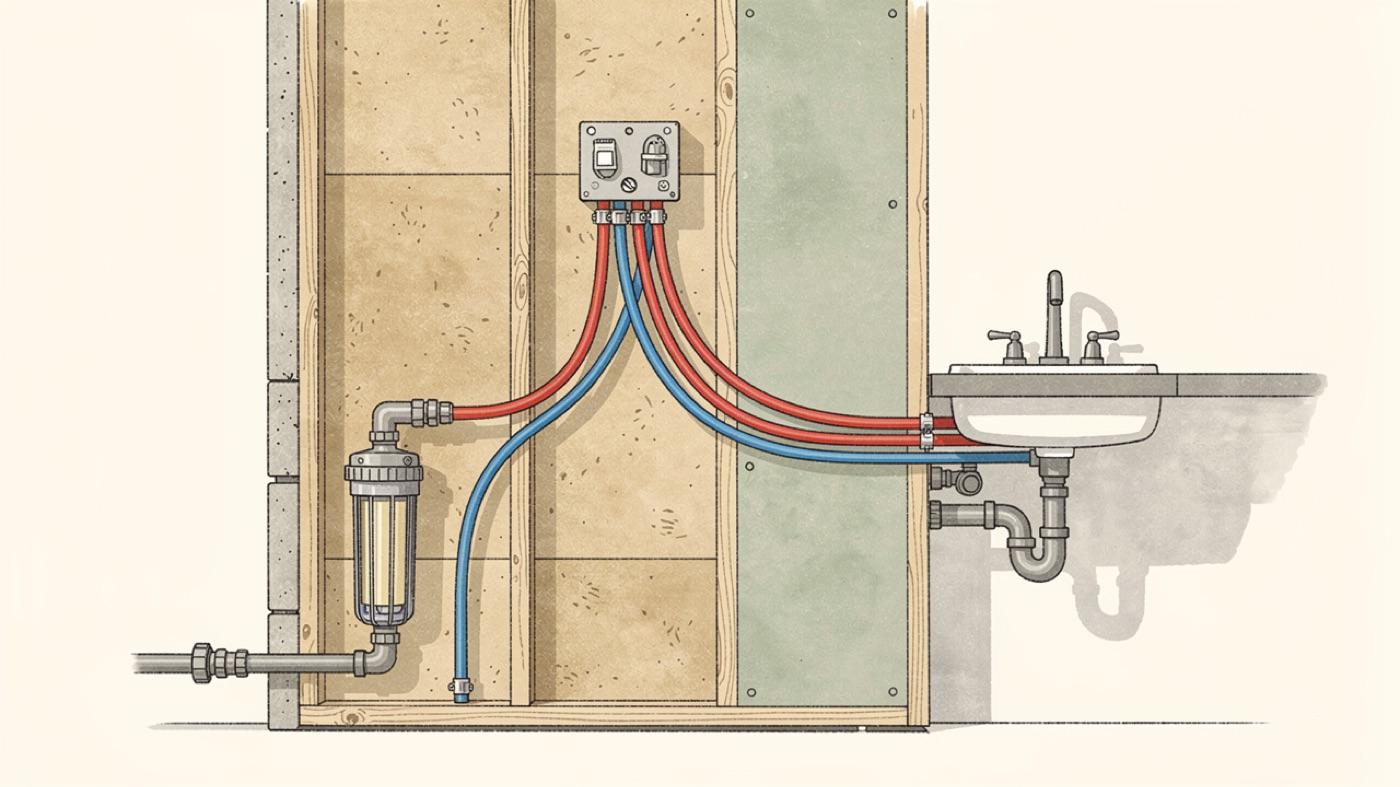
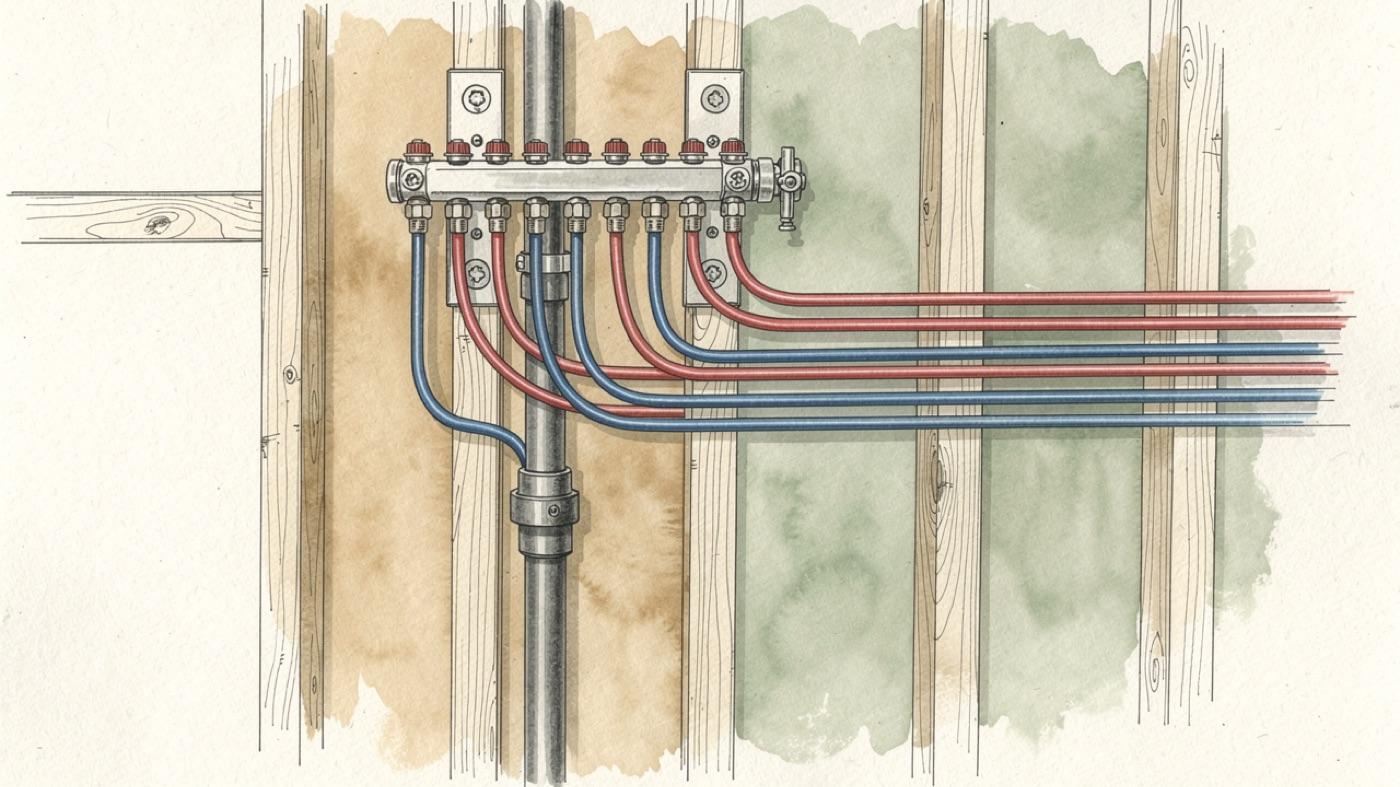
A filtration system is only as clean as its housings, hoses and fittings. Lead-free brass, stainless steel and NSF-certified plastics belong in the water path. Cheap fittings can add back what the filters removed. Our post on non-toxic plumbing solutions compares copper, PEX and stainless steel for the lines after the filter.
We also route filtered water through a healthy plumbing design with short, direct runs. Water that sits in long dead-end lines loses quality no matter how well it was treated. Stagnant lines are also where biofilm takes hold, as we explain in our mold in water systems guide.
Maintenance is the system
Every one of these methods has a service interval. Sediment and carbon cartridges are measured in months. Membranes and UV lamps are measured in years.
Write the dates on the housings and keep spare cartridges on the shelf. A neglected filter is worse than no filter, because it gives a false sense of security while doing nothing.
Start with a water test. Then choose the methods that address what the test found, in the order that makes each stage last. If you are still deciding between the tap and the store, read filtered water vs bottled water.