September 14, 2026
By Brian Johnson, Building Biologist and Licensed General Contractor
Formaldehyde Exposure at Home: Where It Hides and How to Cut It
Formaldehyde exposure at home rarely comes from a single dramatic source. It comes from cabinets, flooring, furniture and cleaning products all releasing a little at once. Add a warm, humid, closed-up house and the level climbs.
Formaldehyde is a colorless, flammable gas with a sharp smell. Nature makes it in small amounts, from decaying plants to forest fires, but the exposure that matters is indoors, from materials people manufactured. This post covers where it hides, what it does and how we design it out.
Why formaldehyde exposure got public attention
A few years ago a major TV news investigation found high formaldehyde levels in laminate flooring imported from Asia and sold by a large American floor retailer. Boxes were labeled as compliant with California Air Resources Board limits. In reality the emissions were well above those limits.
That story put a spotlight on something building biologists had measured for years. The cheapest wood products in a house are often the ones releasing the most gas.
Where it comes from
Building materials
Pressed wood products are the largest source in most homes. That means particleboard, plywood and medium density fiberboard, called MDF, in cabinets, shelving, wall and floor materials. Laminate flooring sits in the same group.
The U.S. EPA's facts about formaldehyde list the resins used in hardwood plywood, particleboard and medium-density fiberboard as a source, along with glues, permanent press fabrics, paints and coatings, and emissions from unvented fuel-burning appliances like gas stoves and kerosene space heaters.
Everyone is exposed to small amounts of formaldehyde in the air that has off-gassed from products, including composite wood products.
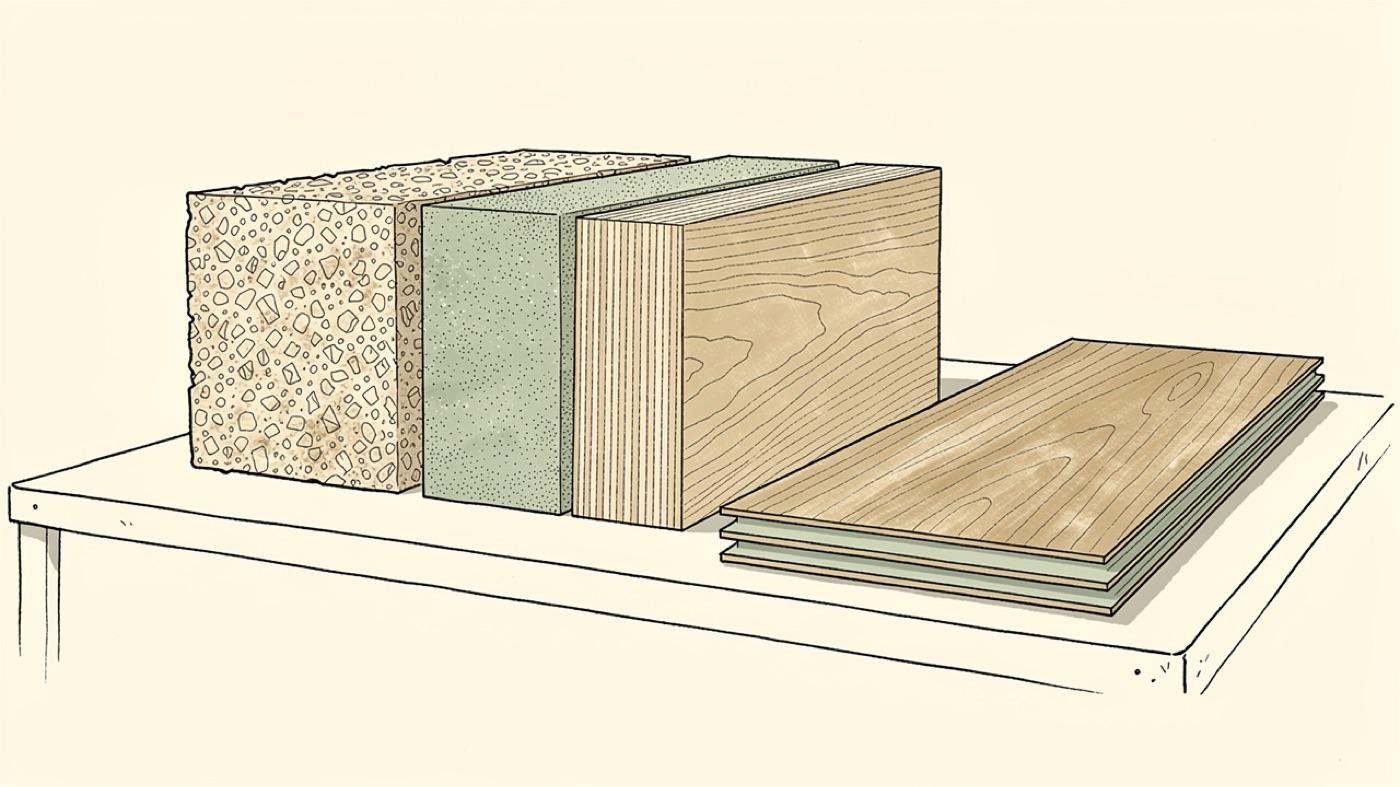
It is also in carpet backing and underpad, new furniture and curtains, and as a preservative in paint and varnish. Our healthy building materials principle exists largely because of this list.
Household and personal products
- Cleaning products, dishwashing liquids and fabric softeners, where it acts as a preservative
- Shoe care products, car shampoos and waxes, and carpet cleaning agents
- Cosmetics, including nail hardeners, lotions, mouthwash, mascara, cuticle softeners and shaving cream
Renovations
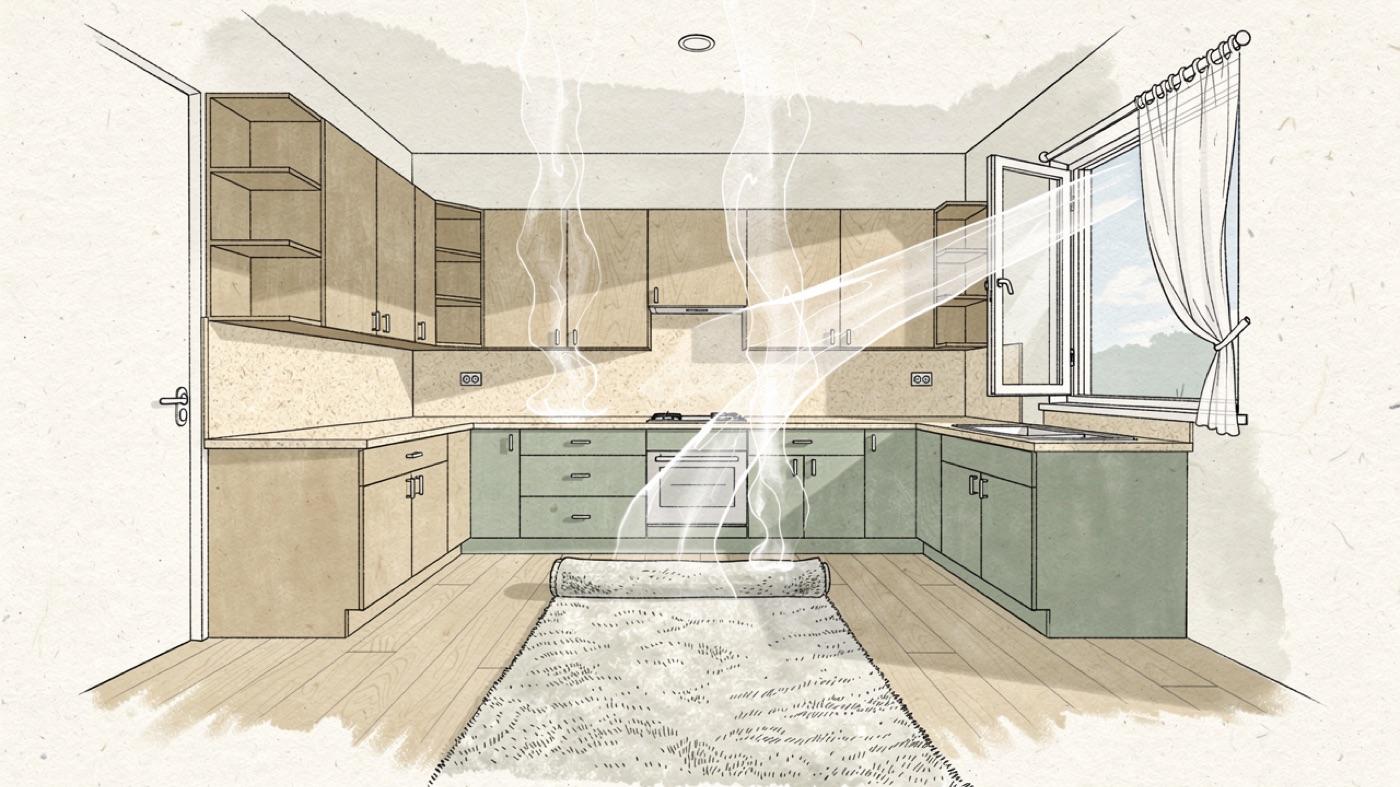
A kitchen remodel is one of the most reliable ways to raise formaldehyde in a house. New cabinets, new flooring and new countertops arrive together and off-gas together. The level falls over time, but that can take years.
Porous furnishings make it worse. Upholstered furniture, foam cushions and pillows soak up formaldehyde from the air, then release it back slowly.
What it does to the body
The International Agency for Research on Cancer has classified formaldehyde as a known human carcinogen since 2004. The National Toxicology Program in the United States did the same in 2011. Below that level of harm sits a long list of everyday complaints.
The National Cancer Institute's formaldehyde and cancer risk fact sheet summarizes both classifications and the research behind them.
Symptoms linked to exposure
- Irritation of the throat, nose, eyes and skin
- Worse asthma symptoms and respiratory distress
- Headaches and trouble thinking clearly
- Chronic runny nose and nosebleeds
- Chronic bronchitis and obstructive lung disease
- Nasopharyngeal cancer
If a new house or a fresh remodel leaves someone in the family with these symptoms, formaldehyde belongs near the top of the suspect list. Our post on VOC testing at home explains how to confirm it.
What the labels mean
The California Air Resources Board adopted a rule limiting formaldehyde emissions from composite wood. It covers hardwood plywood, particleboard and MDF, and it also applies to finished goods made from them, including cabinets, doors, furniture, flooring, moldings, shelving, countertops and even picture frames and speakers. Products that meet it are labeled CARB Phase 2 compliant.
Since March 22, 2019, the federal rule under TSCA Title VI has applied nationwide. It mirrors the CARB Phase 2 standard in every way. When you see either label you know the panel was made to that limit, though it does not mean the product is formaldehyde-free. For finishes and adhesives, our guides to low-VOC building materials and GREENGUARD Gold certification explain which other labels are worth looking for.
How to cut formaldehyde exposure
Three levers control the level in a room: what you bring in, what you take out and the conditions the material sits in.
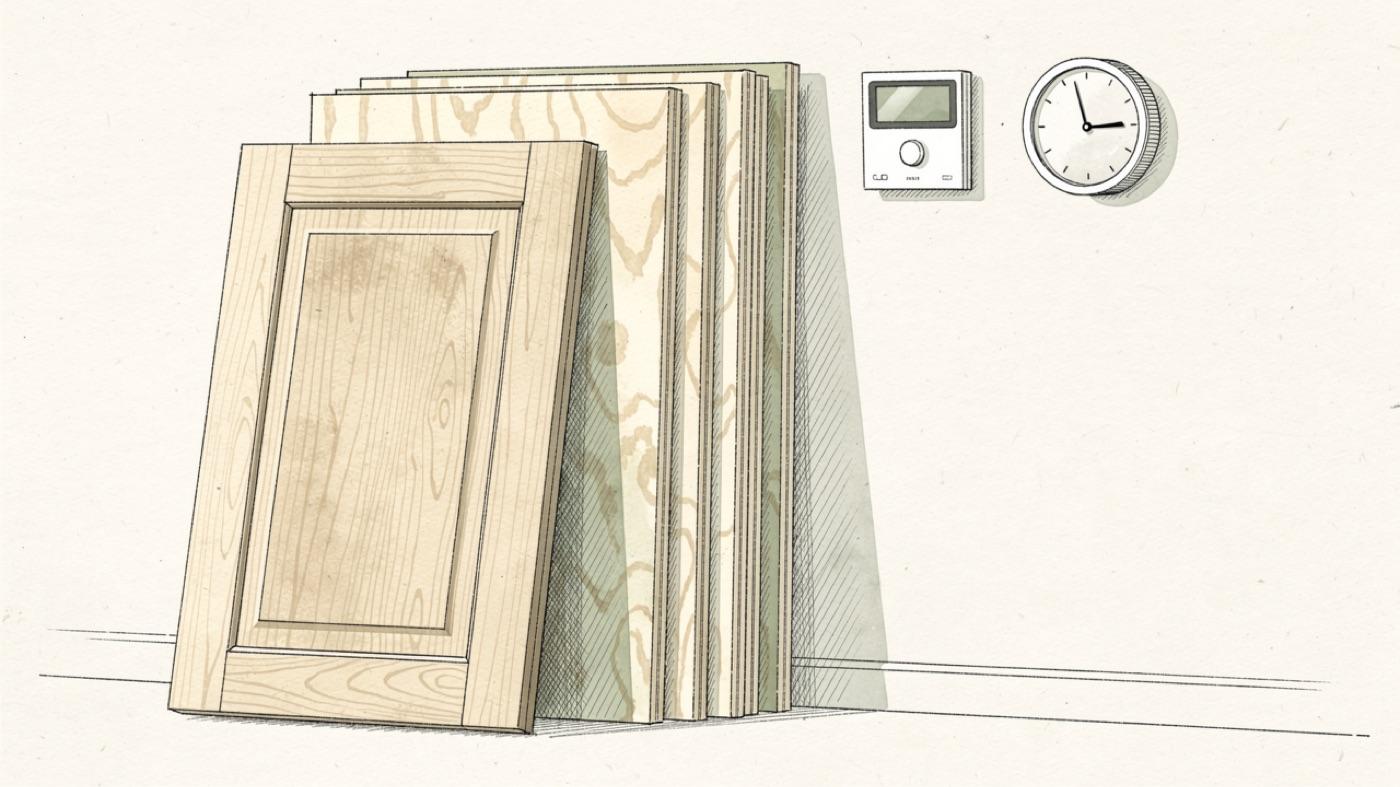
Choose better materials
- Solid wood cabinets, shelving and furniture where the budget allows
- CARB Phase 2 or TSCA Title VI labeled panels where composite wood is unavoidable
- Hard flooring with a real finish instead of laminate over pressed board
- Paints, sealers and adhesives labeled free of added formaldehyde
- Furnishings chosen with the guidance in our non-toxic furniture guide
Control temperature, humidity and air
Formaldehyde release rises with heat and humidity. Keep rooms cooler and drier and the same materials give off less. Then move that air out, because ventilation is what actually lowers the concentration.
New materials should be unpacked and aired before they come inside when that is practical. After a remodel, run the ventilation hard for weeks, not days. Our post on fresh air intake covers how much air a house needs to clear it.
Test before and after
Guessing is not a strategy. A formaldehyde-specific test before the remodel gives you a baseline, and one after tells you whether your material choices worked. We build this into the material selection on every SENERGY360 project so the question is answered before the family moves in.