September 14, 2026
By Brian Johnson, Building Biologist and Licensed General Contractor
Non Toxic Furniture: How to Choose Healthy Home Furnishings
Most people think of pollution as something outdoors. Yet the EPA has noted that about one third of people working in sealed buildings report sensitivity to common chemicals. A big share of what they are reacting to comes from the furnishings around them.
Non toxic furniture is furniture that does not add chemicals to your indoor air. A sofa, a mattress, or a dresser becomes part of your indoor air quality the day it arrives. It can off-gas for years, and it breaks down into household dust that carries the same chemicals. If you suspect your home is already reacting, start with 12 signs your house is making you sick.
Why furniture matters for indoor air
Furniture is one of the largest surfaces in a room, and it sits inches from your face. Foam cushions, pressed-wood frames, and treated fabrics release volatile organic compounds and semi-volatile chemicals over time.
Off-gassing is strongest when a piece is new. It slows down but never fully stops with many synthetic materials. Flame retardants and stain treatments also shed into dust, which is how they end up in the body.
We treat furnishings the same way we treat healthy building materials. Look at what the piece is made of, what was added to it, and what it will release.
The five questions we ask about any piece
Every piece of furniture comes down to five parts. Ask about each one before you buy.
- What is the frame made of?
- What is the fill?
- What is the fabric or leather, and how was it dyed?
- What finishes or treatments were added?
- Who certified any of these claims?
The frame
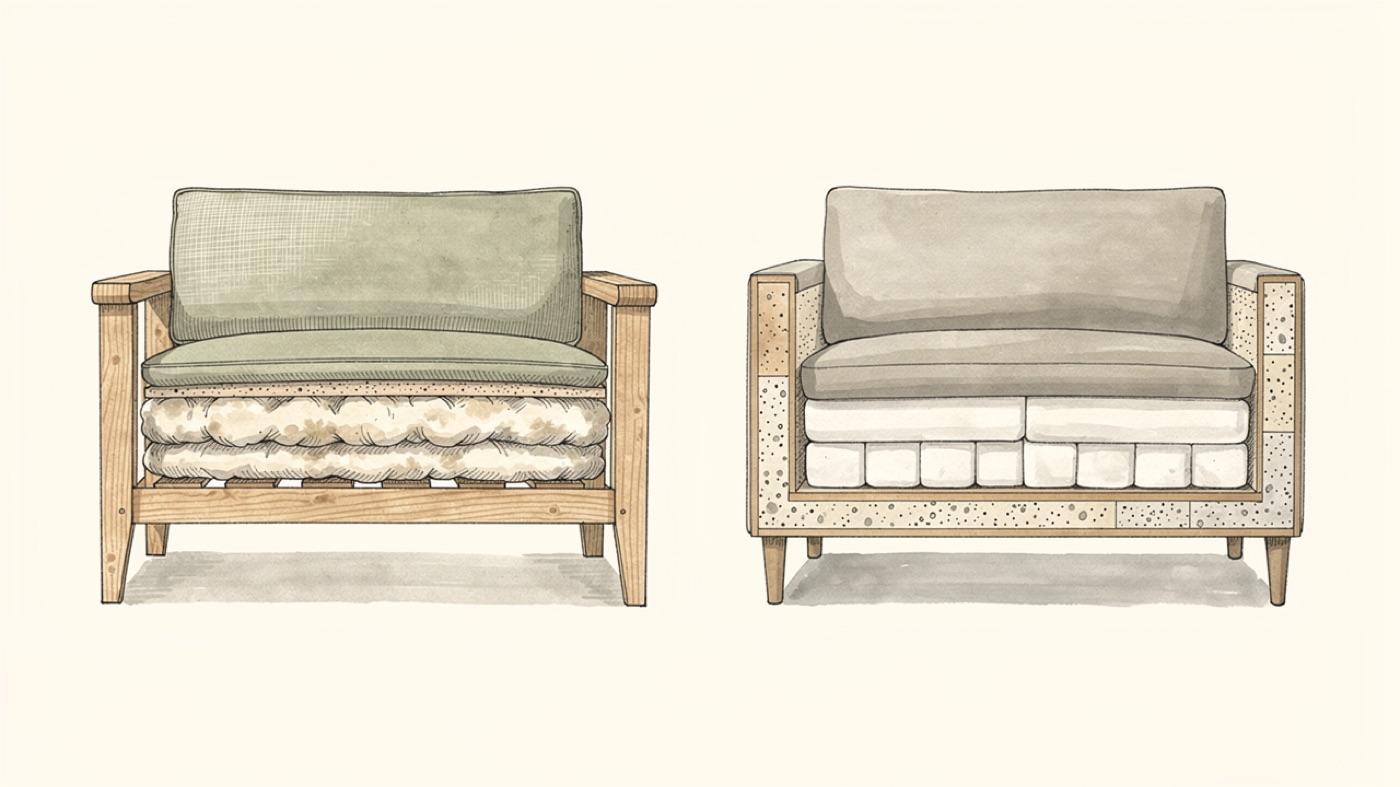
Ask whether the frame is solid wood, or MDF and pressboard. Pressed wood products are bound with resins that can release formaldehyde for years. Solid wood does not.
Sustainably harvested solid wood is the ideal. Look for FSC certification on the lumber. Plastic frames and plastic-heavy pieces are a distant third choice.
The primary way you can be exposed to formaldehyde is by breathing air containing off-gassed formaldehyde.
The EPA lists resins used to make hardwood plywood, particleboard and medium-density fiberboard among the main sources, and it has set federal limits on how much formaldehyde composite wood products can release. Limits reduce emissions but do not remove them. Our guide to formaldehyde exposure at home covers the rest of the house.
The fill
Ask whether the fill is natural, such as wool or natural latex, or whether it is polyurethane foam. Foam is petroleum based, and it is the part of a sofa most likely to carry added flame retardants.
Check for a TB117 label on upholstered furniture. It tells you whether flame retardant chemicals were added to meet California's flammability standard. Newer labels can state that no added flame retardants were used, and that is what you want to see.
Wool is naturally flame resistant, which is one reason it is a good fill. CertiPUR-US is a foam program that screens out certain chemicals, and it is a useful minimum if foam is unavoidable.
The fabric and leather
Natural, organic fibers are the goal. Organic cotton, linen, hemp, and wool are all good choices. Leather should be vegetable tanned rather than chrome tanned, and dyes and pigments should be natural where possible.
Avoid stain-guard and performance finishes. These are the PFAS treatments that make a fabric shed liquid, and they are among the most persistent chemicals in a home. Every interior designer gasps when we say this, but a slipcover you can wash is healthier than a fabric that repels everything.
The National Institute of Environmental Health Sciences notes that PFAS are used to make clothes and carpets resistant to stains, and that they remain in the environment for an unknown amount of time.
Also avoid added antimicrobial treatments. They add another chemical to the room and rarely solve a real problem.
The finishes
Ask what the wood was sealed with. Natural oils, waxes, and water-based low-VOC finishes are better than solvent-based lacquers. A piece that smells strongly at delivery is telling you something.
Certifications that mean something
Third-party certification is how you check a claim you cannot test yourself. The ones we look for most often are below.
- OEKO-TEX for textiles, which screens finished fabric for harmful substances
- GOTS, the Global Organic Textile Standard, for organic cotton and wool
- Greenguard Gold for low chemical emissions from the finished piece
- Cradle to Cradle for material health across the whole product
- FSC for responsibly harvested wood
No single label covers everything. A GOTS fabric on a pressboard frame is still a pressboard sofa. Read the whole piece.
Where to start in your own home
You do not have to replace everything at once. Start where you spend the most time breathing.
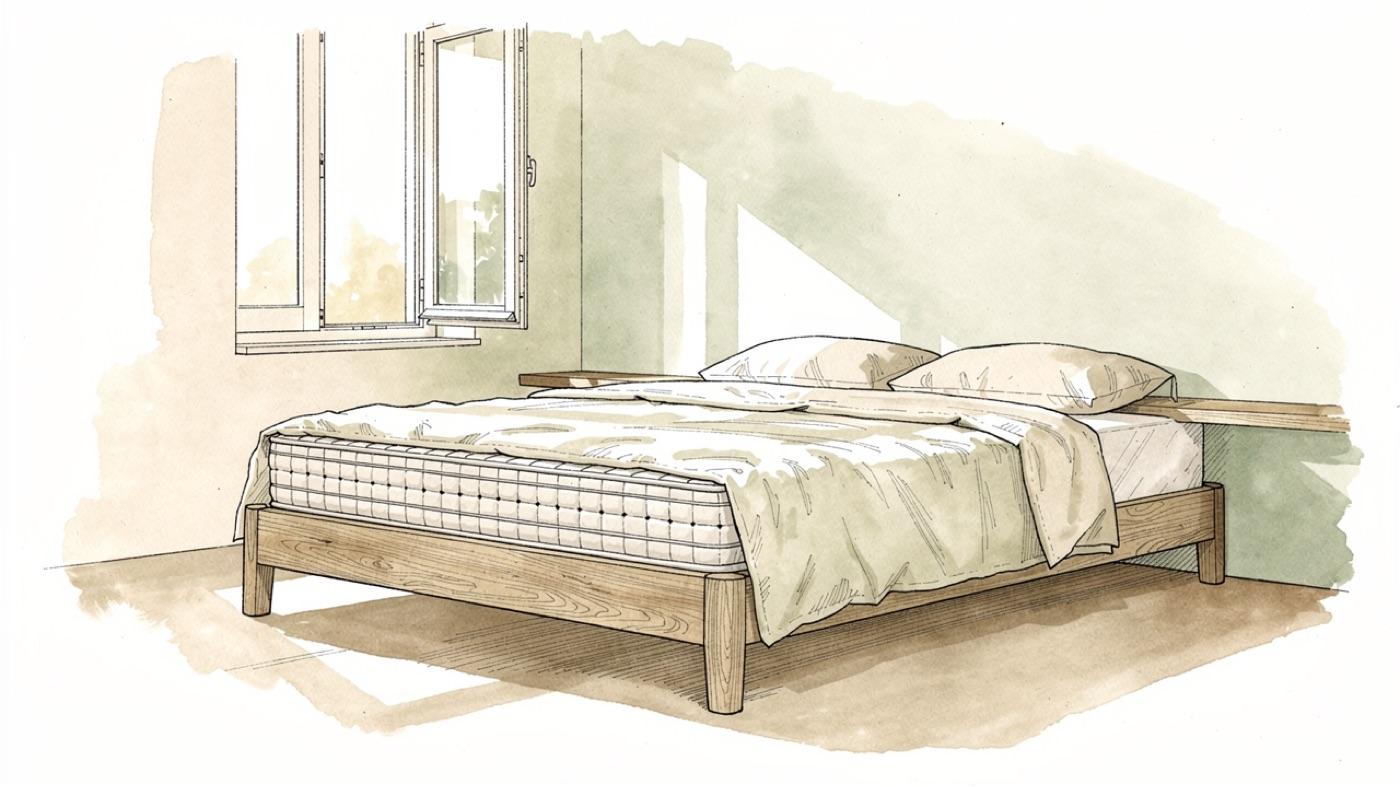
- The bed and mattress, because you spend a third of your life there
- The sofa or chair you sit in every evening
- Children's furniture, since small bodies take in more per pound
When a new piece arrives, let it air out in a garage or a ventilated room before it moves into a bedroom. That will not fix a foam sofa, but it takes the edge off the first weeks of off-gassing.
Buy local when you can
Local makers and artisans are often the easiest way to get solid wood, natural fills, and honest answers. You can ask exactly what went into a piece and sometimes watch it being built. That transparency is worth more than any single label.
Furnishings are the last layer of a healthy home. The walls, floors, and air systems come first, which is why indoor air quality is built into our CORE framework. If you are not sure what your current furniture is doing to your air, a healthy home inspection can measure it.