September 14, 2026
By Brian Johnson, Building Biologist and Licensed General Contractor
Standing Seam Metal Roof: Why a Healthy Home Build Specifies It
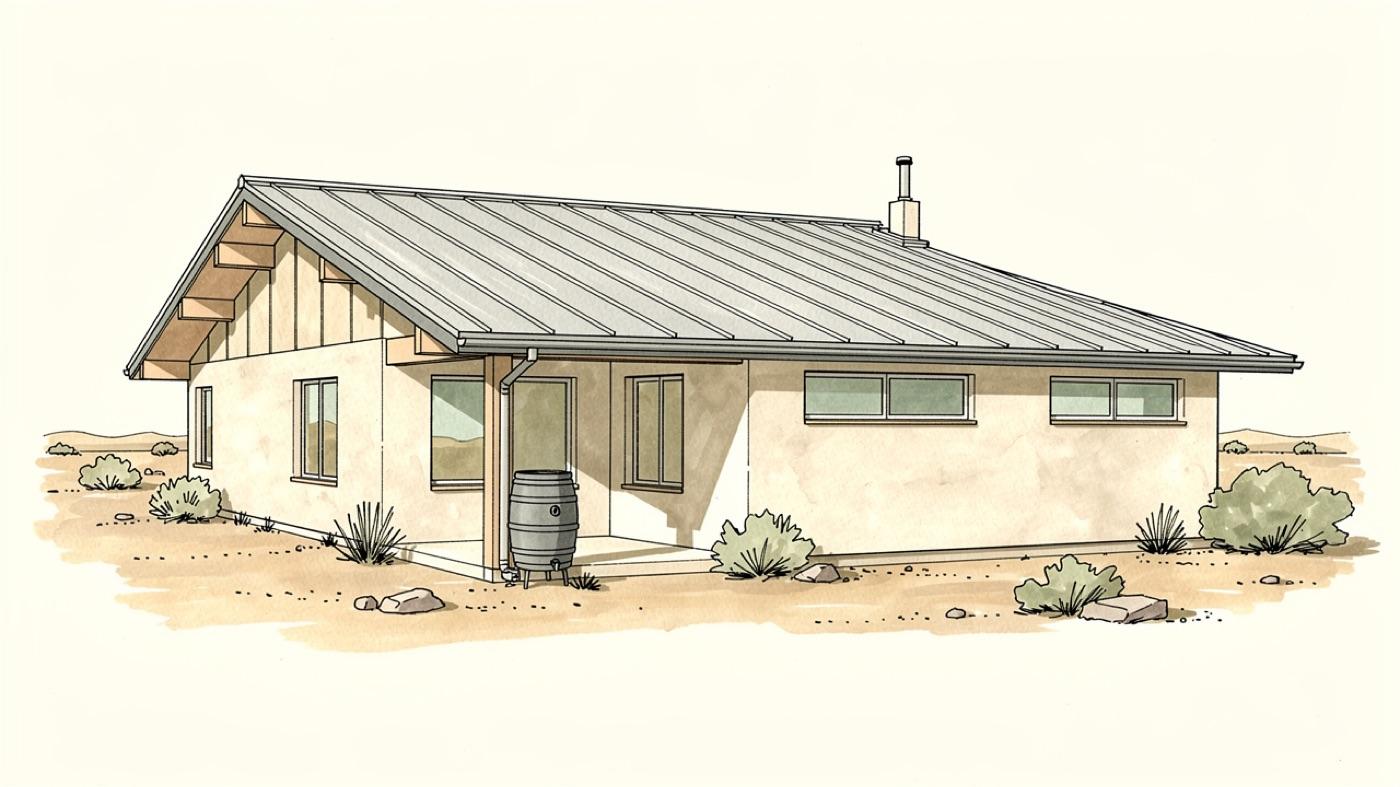
A standing seam metal roof is the roof we specify on most SENERGY360 healthy home builds. It is not a style choice. It is the roof that best serves the building envelope, the materials rules and the mold prevention rules in our 12 CORE Principles.
This post walks through why, and then through the spec itself. It is written for homeowners, architects and contractors who want the actual details, not a brochure.
Why a standing seam metal roof fits a healthy home
A roof has one job before any other: keep water out of the building. Every mold problem we have traced to a roof started with a fastener hole, a lapped seam or a low spot that held water. Standing seam removes all three.
The EPA's guide to mold and moisture lists roof materials above ceiling tiles, wet from roof leaks or insufficient insulation, among the places hidden mold grows, and it puts cleaning and repairing roof gutters on its list of moisture control tips. Our post on what causes mold in a house covers the other entry points.
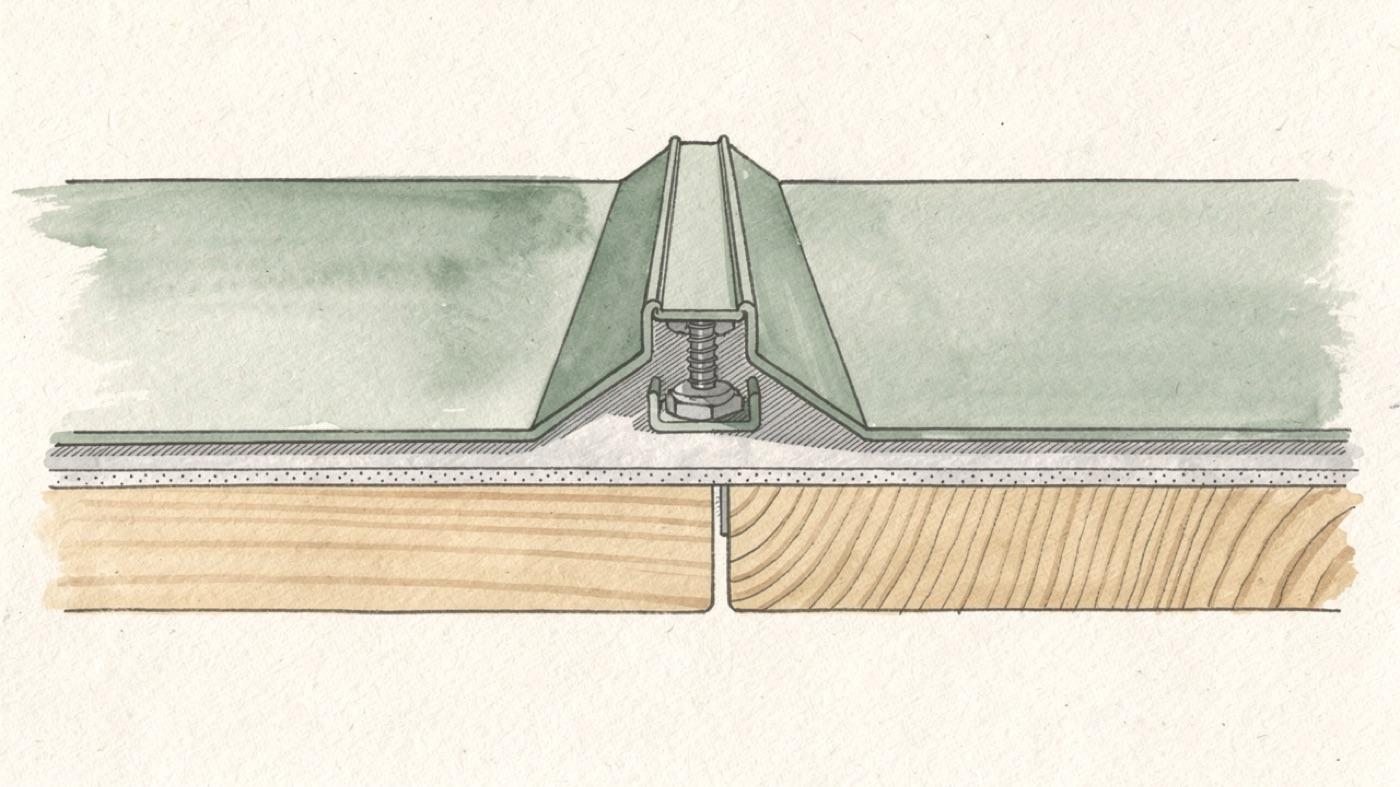
The panels run vertically from ridge to eave, typically 12 to 18 inches wide. Their edges are raised 1 to 2 inches and interlock, so the whole roof drains as one continuous surface. Fasteners are concealed under the seams, so nothing penetrates the weather surface.
The benefits, principle by principle
- Mold resistance. The seamless surface minimizes pooling and leakage, which supports our mold prevention principle.
- Durability. The roof lasts 40 to 70 years with minimal maintenance, compared with 15 to 20 years for asphalt shingles.
- Energy. Reflective coatings cut heat absorption and cooling load, and the roof pairs well with solar.
- Materials. Panels are often made from recycled content and are fully recyclable at end of life.
Corrugated metal and metal shingles are cheaper, but they rely on exposed fasteners or more seams. We use them only on secondary structures like a detached garage.
In wildfire country a noncombustible roof also matters for ember resistance, which we cover in complying with California's new fire codes.
Choosing the metal
Four metals are common for standing seam panels. Each has a place.
- Galvalume steel. A steel core coated with an aluminum-zinc alloy for corrosion resistance. The most cost-effective option and our default for most climates.
- Aluminum. Lightweight and corrosion-resistant. The right choice near the coast, at a modest premium over steel.
- Zinc. A premium metal that forms a natural patina and self-heals minor scratches. Low maintenance over a very long life.
- Copper. The high-end option, 70 years or more, with a striking patina. Expensive.
On recent Florida projects we have used 24 or 26 gauge mill-finish Galvalume or aluminum, 16 inch panels with 1 or 1.5 inch seams, concealed fasteners and striations to control oil-canning. Mill finish carries a 25 year clear acrylic coating warranty, and painted colors carry 35 to 40 years. Panel profiles vary by region, so confirm what your local roll former stocks.
The panel and coating spec
These are the numbers we put on the drawings.
Panel specification
- Seam height of 1 to 2 inches for water shedding
- Panel width of 12 to 18 inches
- Gauge of 24 to 26 for steel, thicker in high-wind zones; 0.032 to 0.040 inches for aluminum
- Snap-lock or mechanically seamed profile, with mechanical seaming preferred in extreme weather climates
- Minimum slope of 3:12 unless the manufacturer allows lower
- Class A fire rating
Coatings and color
Coatings matter for two reasons: emissions and heat. We specify factory-applied, low-emission finishes. The most durable are PVDF finishes such as Kynar 500 or Hylar 5000.
PVDF is a fluoropolymer, and under broad definitions such as the OECD's, fluoropolymers count as PFAS, even though they are large, stable plastics rather than the small PFAS molecules that show up in drinking water. If you want to avoid fluorinated chemistry altogether, ask about a silicone-modified polyester (SMP) finish, which contains no PFAS but fades faster. Either way, we ask the supplier for the safety data sheet before approving any product. That is a standard step under our healthy building materials principle.
For color, light tones like white or light gray reflect the most sun. In warm climates we aim for a high Solar Reflectance Index (SRI). For reference, LEED's cool roof credit uses an SRI of at least 78 for low-slope roofs and at least 29 for steep-slope roofs. A matte or low-gloss finish keeps glare down.
A cool roof absorbs and transfers less heat from the sun to the building compared with a more conventional roof.
The EPA explains that high solar reflectance is the most important property of a cool roof, and that high thermal emittance, how well the roof sheds the heat it does absorb, also plays a role in warm, sunny climates.
We also look for recycled content of 25 to 50 percent, end-of-life recyclability and Cradle to Cradle or similar certification where available.
What goes under the metal
The panels are the visible part. The layers beneath them decide whether the roof stays dry for 50 years.
Underlayment
We use a synthetic, breathable underlayment so vapor can escape from the deck. It is installed with a 4 to 6 inch overlap and sealed edges. It must be free of asphalt and VOC-emitting materials.
Deck, insulation and ventilation
The deck should be clean, dry and mold-free at installation, built from mold-resistant plywood or OSB. Below it we install rigid foam or mineral wool insulation, always formaldehyde-free. Our sample spec calls for mineral wool at R-30.
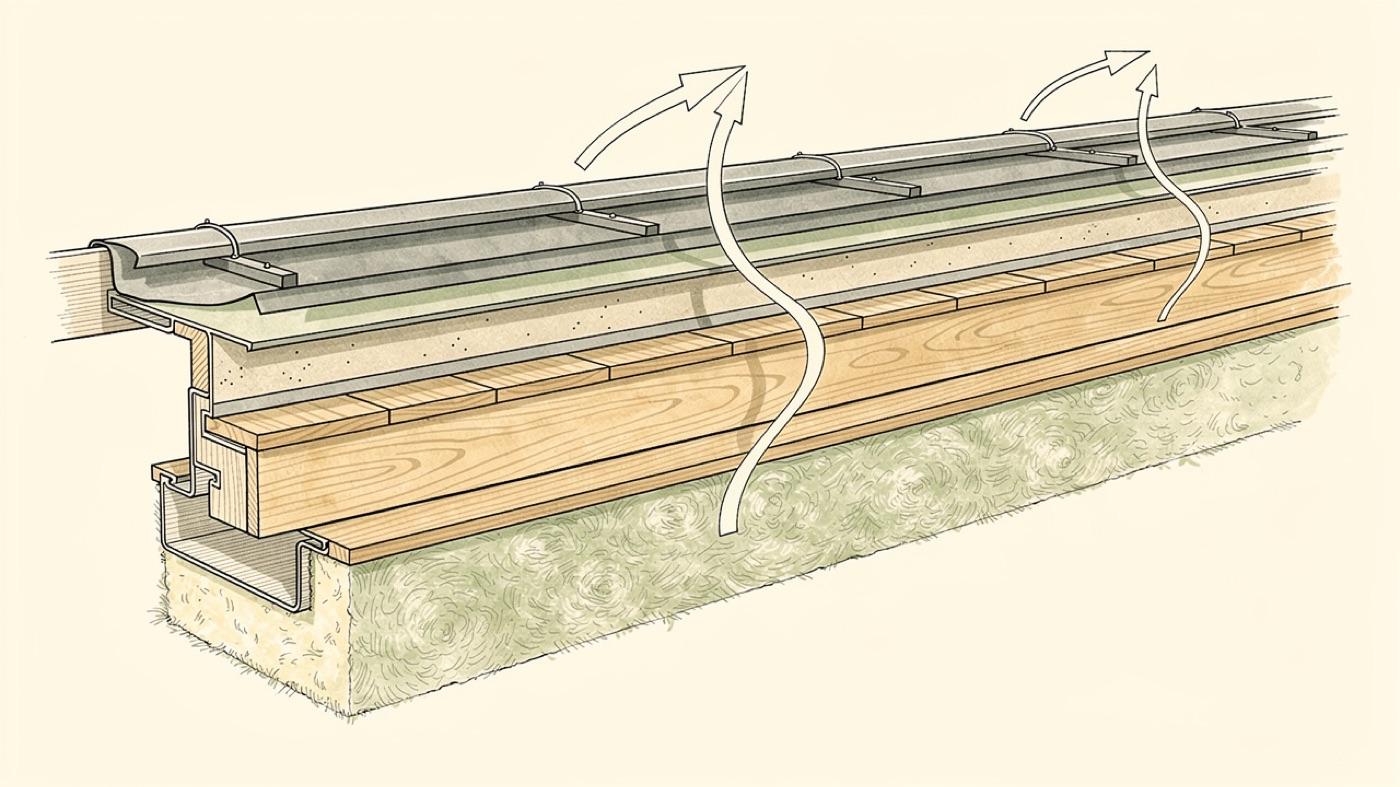
Ventilation is not optional. Ridge vents, soffit vents or a ventilated roof deck keep air moving under the panels so condensation never sits on the wood. This ties directly to our building science and enclosure principle.
Fasteners and sealants
Fasteners are stainless steel or galvanized, and concealed. Sealants at seams, flashings and penetrations are non-toxic and silicone-based. Flashings around chimneys and vents are overlapped and sealed, then checked again at the water test.
EMF notes
A metal roof is a large conductive surface, so we keep electrical systems simple around it. We avoid integrated electrical components such as heated roof systems unless low-EMF wiring is used. When solar goes on the roof, we follow our low-EMF electrical practices for conduit runs and inverter placement. The details are in how to design a low-EMF solar system.
Installation and inspection
The best spec fails with the wrong crew. We require a contractor certified in metal roof installation, through the Metal Roofing Alliance or a manufacturer program, with standing seam experience and references we can inspect.
The inspection sequence is fixed:
- Before installation, inspect every material for defects and confirm the non-toxic and mold-resistant requirements
- After installation, run a hose water test to check for leaks
- Every year, check seams, flashings, fasteners and coating wear
In snow country, add snow guards so a sudden slide cannot tear off gutters or hurt someone below.
Cost and maintenance
Installed cost runs roughly $10 to $20 per square foot. Galvalume sits at the low end, aluminum in the middle, zinc and copper at the top. Roof complexity, slope and location move the number, and some local utilities offer cool roof rebates. ENERGY STAR ended its roof products program in 2022, so an ENERGY STAR label is no longer a guide for roofing.
Maintenance is light. Clear leaves and branches so water never pools, and clean with a soft brush and mild non-toxic detergent. Touch up scratches with manufacturer paint before corrosion starts.
A sample specification
This is the summary line we hand to an architect at the start of a project:
- Standing seam metal roof, mechanically seamed
- 24 gauge Galvalume steel with Kynar 500 PVDF coating, light gray, high SRI
- Synthetic breathable polyethylene underlayment, mold-resistant
- Formaldehyde-free mineral wool insulation at R-30
- Ridge and soffit vents for continuous airflow
- Stainless steel concealed fasteners
- Installed by a Metal Roofing Alliance certified contractor, with post-installation water test
- 40 year material warranty, 5 year installation warranty
Adjust the metal and gauge for your climate, then hold the rest of the spec firm. You can see how the roof fits into a whole healthy-home enclosure on our design and build page.