September 14, 2026
By Brian Johnson, Building Biologist and Licensed General Contractor
Non Toxic Pest Control and Termite Protection for Healthy Homes
Traditional pesticides raise real health and ecological concerns. That is why non toxic pest control sits at the center of how we protect a healthy home from termites and other pests.
The approach is whole-house and sustainable. It leans on physical barriers, biocompatible materials, and careful site design, with chemicals as the last tool rather than the first. Most of the work happens before the slab is poured, which is why it belongs in design-build planning.
Start at the foundation
The best time to stop termites is during construction. Foundation treatments installed before the slab are proactive, they last for decades, and they do not require spraying anything inside the finished home.
What contractors should plan for
- Focus on pre-construction foundation treatments rather than post-construction spraying.
- Choose materials based on site conditions. Humid climates need moisture management first.
- Minimize chemical use and reach for low-toxicity options such as Granitgard or borates.
- Partner with pest control specialists who know non-toxic methods, especially for barriers and biological controls.
- Schedule annual inspections even with non-toxic systems, as Flick and other specialists recommend.
Physical barriers that need no chemicals
Physical barriers work because termites cannot chew through them or squeeze past them. Once installed, they need no reapplication.
The EPA's homeowner guide, Termites: How to Identify and Control Them, describes physical barriers as a non-chemical treatment that is typically built in during construction.
Steel mesh and sands of particular sizes have been shown to perform effectively as physical barriers.
Under-slab barrier wrap
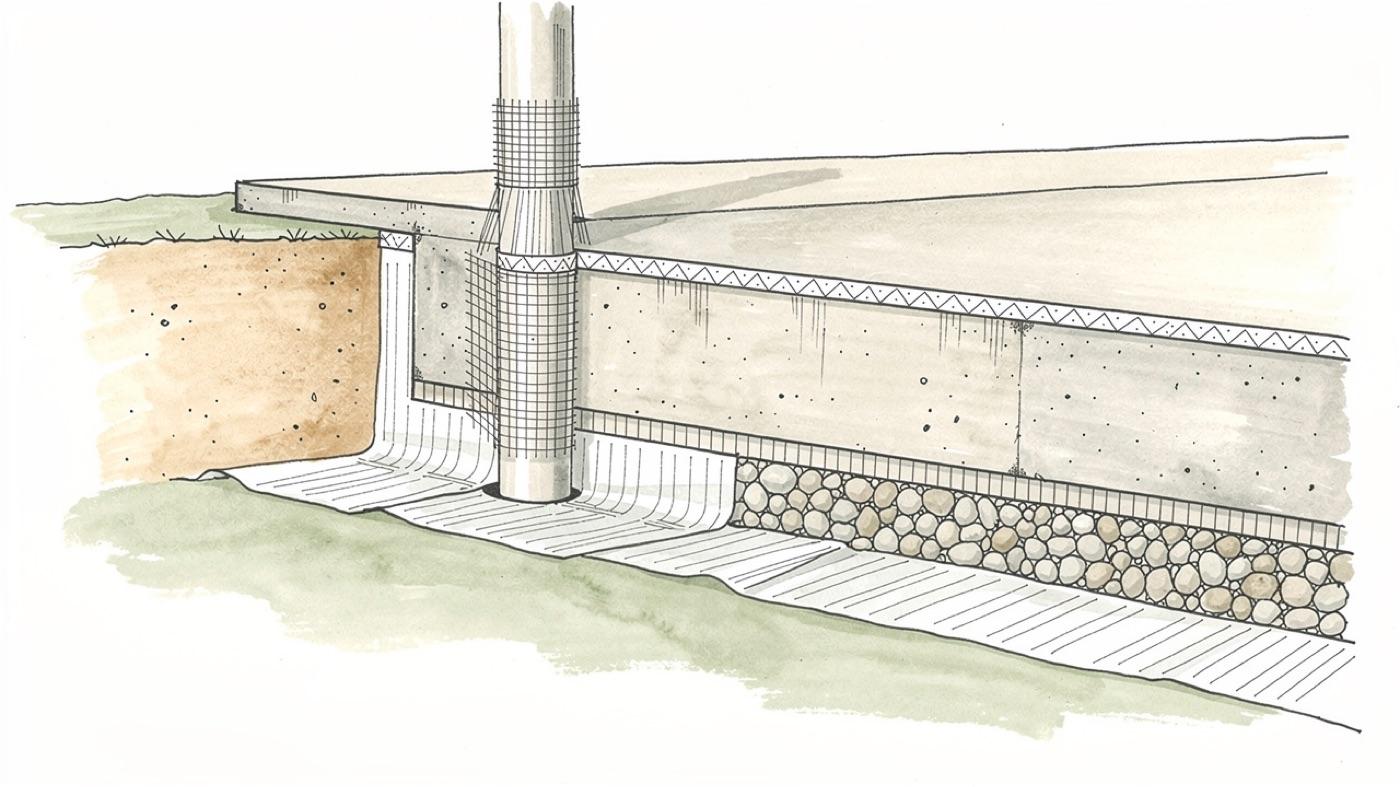
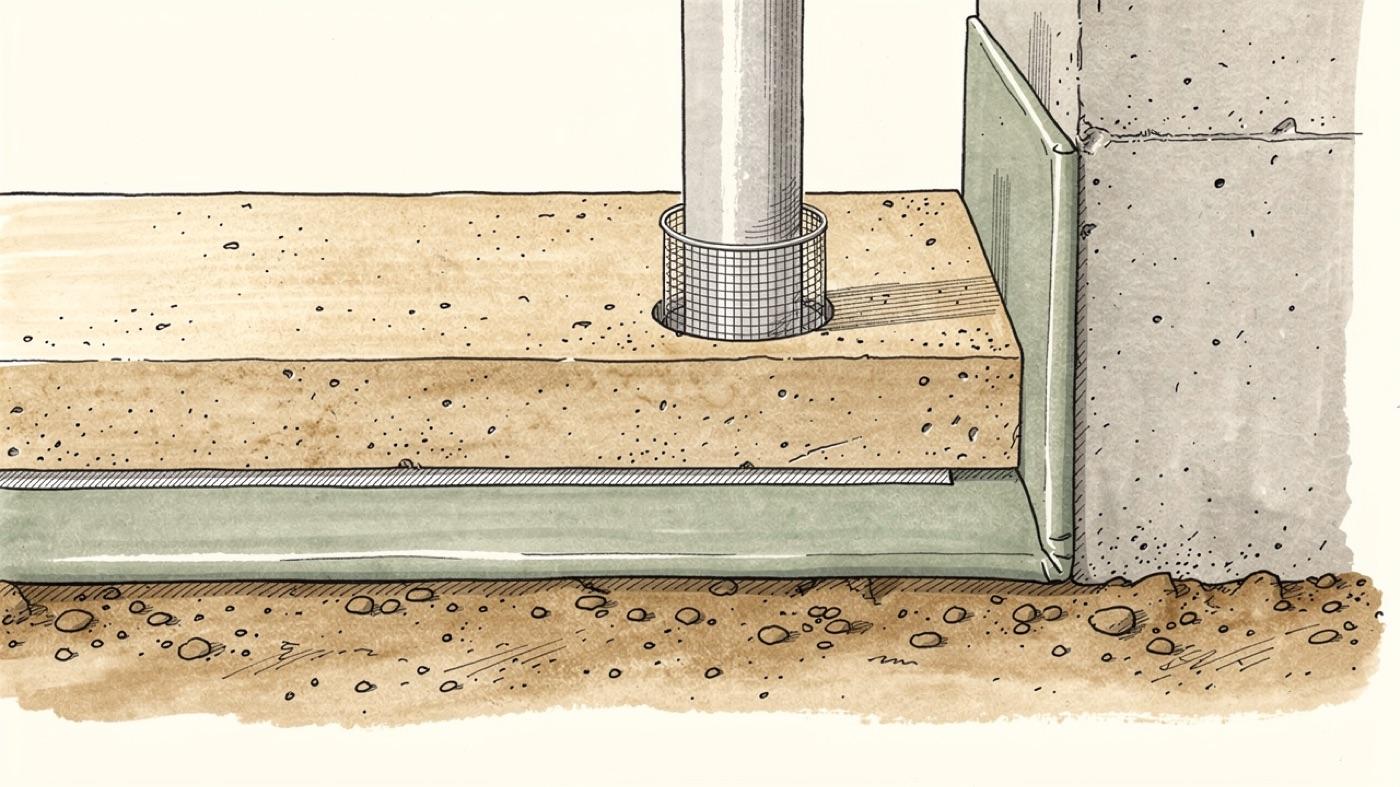
PANGO WRAP from Stego Industries is a two-in-one barrier. It blocks subterranean termites and blocks moisture vapor at the same time. It is a continuous, flexible polyolefin film that installs under the slab as a single foundation barrier, and it fits the principles of integrated pest management. Our post on the vapor barrier under slab, soil treatment and water management shows where it sits in the slab assembly.
Stainless steel mesh
Fine stainless steel mesh, such as TermiMesh, creates a barrier termites cannot penetrate. It goes into foundation slabs, around pipe penetrations, and in wall cavities during construction. It is completely non-toxic, durable, and lasts for decades.
Granite and sand barriers
Granitgard uses crushed granite or sand at a specific particle size. The particles are too large for termites to move and too small for them to pass between. It installs in soil or around foundations, leaves no chemical residue, and has a long record of safe use in Australia.
Concrete and moisture
High-density concrete or silica-based aggregates in the slab make tunneling difficult. Termites also thrive on moisture, so proper drainage, sealed foundation cracks, and moisture-resistant materials remove the conditions they need. Every one of those choices is also part of our mold prevention approach. Our guide on how to reduce moisture in your house covers the same fixes inside the home.
Low-toxicity treatments
When a treatment is needed, we start with the least toxic option that works.
Borates
Borates are naturally occurring minerals. They are low in toxicity to people and pets but effective against termites and other wood-chewing insects, and they also prevent fungus.
Bora-Care from Nisus and Tim-bor from US Borax are applied to wood and foundation materials during construction. Borate treatment disrupts termite digestion and creates a long-lasting barrier.
In an existing home, foamed borate can be injected inside walls. The treatment is permanent unless the wood is continuously wetted.
Diatomaceous earth
Diatomaceous earth is a natural powder made from fossilized algae. Mixed into soil or applied around foundations, it damages insect exoskeletons and causes dehydration. Used as directed, it is non-toxic to people and pets.
Naturally resistant lumber
Woods such as cedar resist termites on their own. Lumber pressure treated with low-toxicity borate preservatives does the same job without adding harsher chemicals later.
Bait systems and reduced-risk options
Bait systems treat the colony instead of soaking the soil. Stations go in around the foundation, often during construction, and provide ongoing protection without widespread chemical application. The EPA notes that bait systems were introduced to help reduce the overall use of insecticides, and that they rely on cellulose baits containing a slow-acting insecticide.
- Sentricon from Dow is a baiting system that has been very successful even in heavily infested buildings, and it is an approach we recommend for many reasons.
- Hexaflumuron baits are slow acting and stop termites from molting. The EPA classifies hexaflumuron as a reduced-risk pesticide.
- Diflubenzuron baits work the same way and are also considered low risk.
- Premise from Bayer is a barrier poison derived from nicotine. It is still a poison, but some people with multiple chemical sensitivities have tolerated it.
Biological controls
Beneficial nematodes are microscopic worms applied to soil around foundations. They attack termite larvae and are harmless to people, pets, and plants. Certain fungi, such as Metarhizium anisopliae, are pathogenic to termites but safe for people, and they can go into pre-construction soil treatment.
Drywood termites and fumigation
Drywood termites live inside the wood itself, so the common treatment is fumigation with Vikane, which is sulfuryl fluoride gas. The gas has no smell or taste. Porous materials such as bedding and stuffed furniture absorb it and take time to fully out-gas.
Before Vikane is injected, a warning gas called chloropicrin is released to drive out anyone still inside. Chloropicrin evaporates at about the rate of water, which is slower than sulfuryl fluoride. If fumigation is unavoidable, plan for extra airing time before moving back in.
The pesticides we avoid
Some pesticide classes act on the nervous system, and that is the reason we avoid them in a home. Our post on what biocides are and where they hide covers the related chemicals built into finishes and materials.
- Organophosphates and carbamates work by inhibiting cholinesterase, an enzyme that human and animal nervous systems need to function.
- Demon WP, Cynoff, and Sniper contain cypermethrin, a synthetic pyrethroid. Designer Poisons by Dr. Marion Moses reports that cypermethrin attacks the brain and central nervous system, though the body absorbs it poorly and excretes it quickly.
Integrated pest management
Integrated pest management, or IPM, is the framework that ties all of this together. It focuses on long-term prevention by managing the whole ecosystem around a building rather than killing whatever pest is visible today. The EPA's IPM principles page describes it as an effective and environmentally sensitive approach that relies on a combination of common-sense practices.
IPM has six steps.
- Identify the pest correctly.
- Monitor and assess numbers and damage.
- Set guidelines for when action is needed.
- Prevent problems through design and maintenance.
- Combine biological, cultural, physical, and chemical tools.
- Assess the effect after any action is taken.
Correct identification decides whether a pest is likely to become a problem at all. Monitoring then tells you whether it can be tolerated or needs control, and which method and timing will work best.
Site design that keeps pests out
The cheapest pest control is a perimeter that gives pests nothing to use.
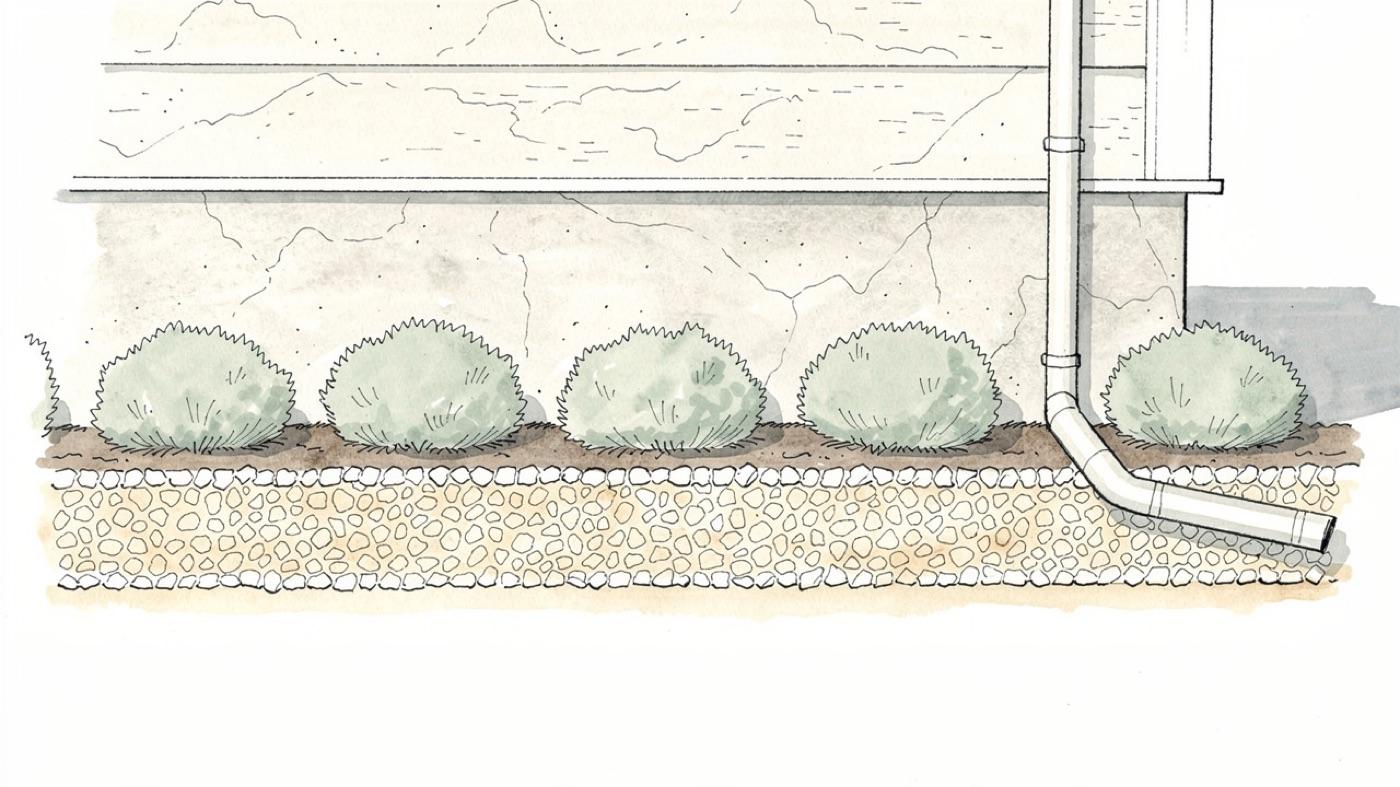
- Provide a 2-foot-wide ground break of pea gravel, crushed stone, graded basalt, pavers, or a concrete skirt along the foundation.
- Keep bushes and trees at least 3 feet from the home.
- Aim irrigation spray away from walls and the foundation, and do not over-irrigate.
- Plant drought-resistant species.
- Slope the ground away from the building on all sides and carry gutter water well away.
- Give homeowners outdoor storage so nothing is piled against the foundation.
- Set garbage cans on a hard surface or gravel where they do not touch the house.
None of this requires a single chemical. It is simply good building practice, and it is standard on every SENERGY360 home. For an existing house, a healthy home inspection can flag the moisture and harborage conditions that invite pests before they arrive.