December 22, 2024
By Brian Johnson, Building Biologist and Licensed General Contractor
Non-Toxic Plumbing Solutions: Copper, PEX and What We Specify
Non-toxic plumbing ensures that you have clean water in your home. Water is the foundation of life. It flows through every cell in our bodies and supports every biological process essential for our survival.
Yet in many modern homes, the systems designed to deliver this vital element may introduce harmful chemicals into daily life. At SENERGY360 we believe non-toxic plumbing solutions are not just about environmental responsibility. They are about protecting your family's health for generations to come.
The hidden dangers in conventional plumbing systems
Many homeowners are unaware of the potential health risks in their plumbing. Traditional plumbing materials can introduce contaminants into the water supply.
PVC pipes, commonly used in modern construction, release phthalates, which are known endocrine disruptors. They also emit vinyl chloride, a known carcinogen, especially when exposed to hot water or sunlight. Over time they can leach stabilizers and other additives, contributing to microplastic contamination as they degrade.
Lead, copper and brass
In homes built before 1986, lead solder in pipe joints presents another concern. Lead can cause developmental issues in children and has been linked to cardiovascular and kidney problems. It accumulates in the body over time with continued exposure.
EPA and the Centers for Disease Control and Prevention (CDC) agree that there is no known safe level of lead in a child's blood.
The EPA notes that lead pipes are more likely to be found in older cities and homes built before 1986, and that among homes without lead service lines, the most common problem is brass or chrome-plated brass faucets and plumbing with lead solder.
Copper pipes are generally safe but can become problematic with acidic water below a pH of 6.5. Copper ions leach into the supply, potentially causing gastrointestinal issues and contributing to liver and kidney problems. The most visible sign is blue-green staining on fixtures.
Even brass fixtures can pose risks. Older installations often contain up to 8 percent lead, and newer lead-free fixtures can still contain up to 0.25 percent. That small amount can leach into water that sits stagnant or runs hot. That 0.25 percent figure is the federal definition of "lead-free": the same EPA page explains that changes to the Safe Drinking Water Act set it as a weighted average across the wetted surfaces of pipes, fittings and fixtures, with 0.2 percent for solder and flux.
Plumbing as a health system, not a utility
We approach plumbing design as a health system, not a code-compliant utility. Building codes define minimum legal acceptability. Our standard evaluates materials and systems against a longer list.
- Long-term water quality
- Chemical and biological interaction between pipe and water
- Durability under modern building conditions
- Compatibility with filtration and commissioning
- Risk management across the life of the home
- Practical cost realities for the client
Our role is not to promote fear or ideology. It is to educate, verify and provide informed choices backed by science and building performance.
Code compliance is not health optimization
Every material in this post can be code-permitted when certified to NSF International / ANSI 61. Certification establishes baseline safety. It does not measure system performance.
Materials are one part of a larger water-quality system. That is why we evaluate them beyond code, through our healthy plumbing design principle.
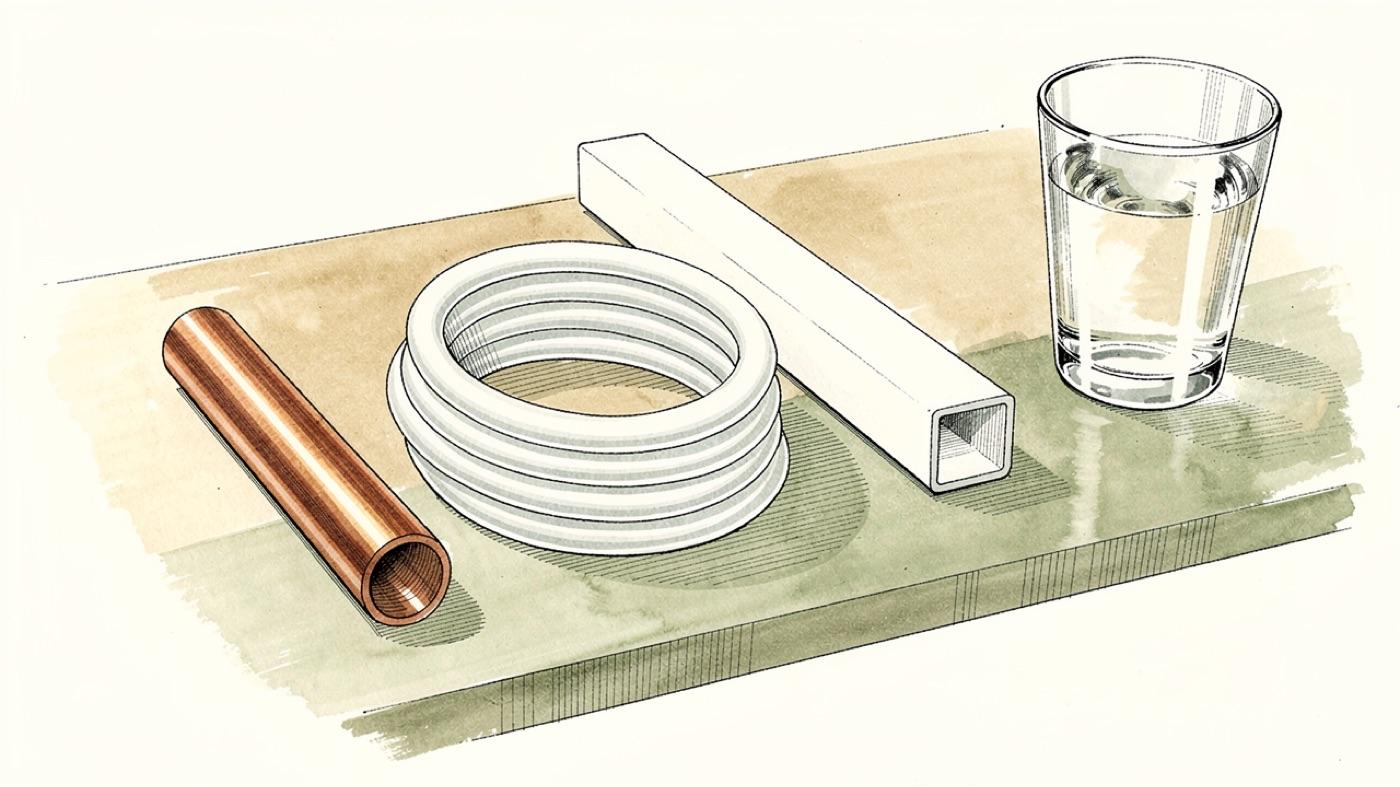
Copper: the time-tested option
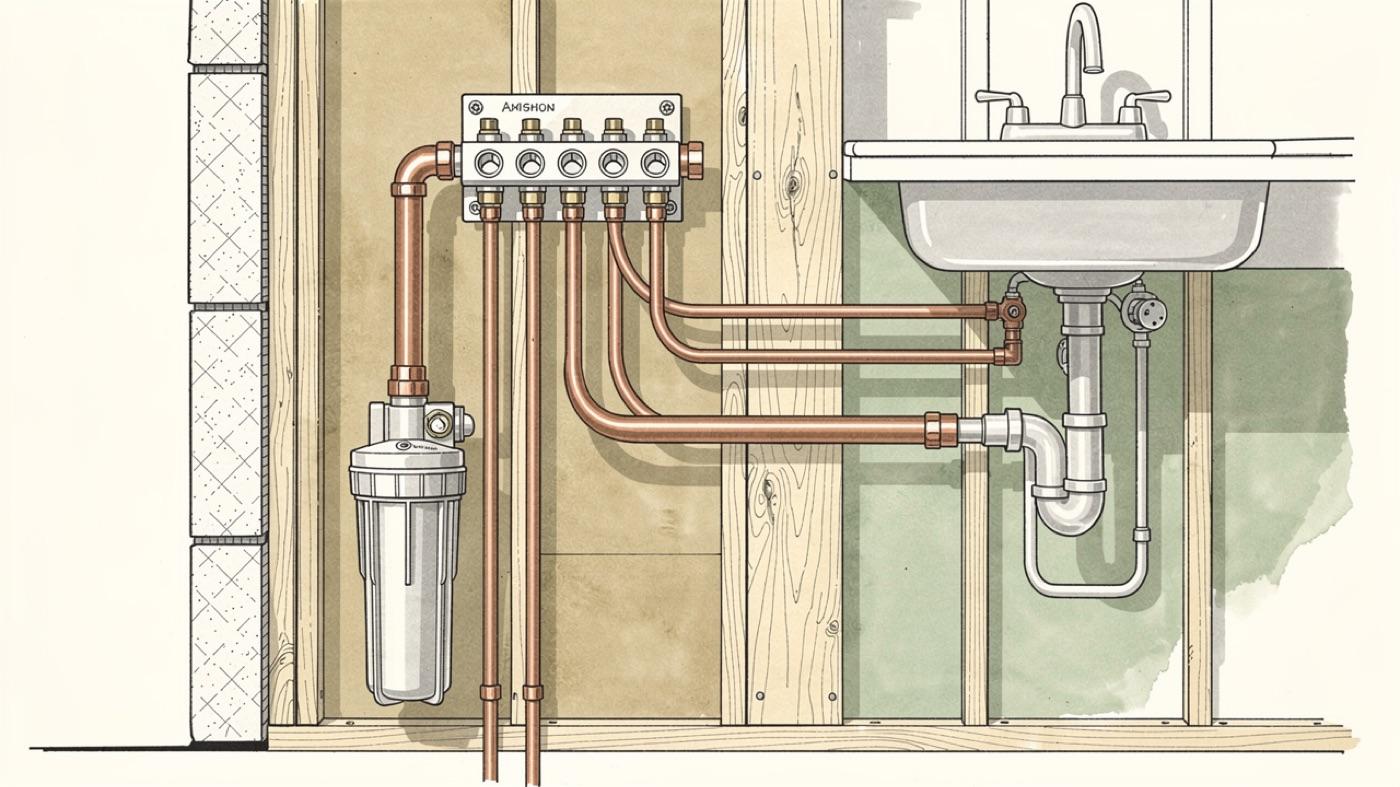
Copper has earned its reputation as one of the most reliable plumbing materials available. It is natural, durable, non-plastic and proven over decades. Its antimicrobial properties create an oligodynamic effect that limits bacterial growth.
Copper does not release volatile organic compounds, and it often contributes to better-tasting water. When water chemistry is favorable, it is the highest-tier material from a traditional standpoint.
What copper needs to perform
Copper is a reactive metal, not an inert one. Its behavior depends on water pH and alkalinity, dissolved oxygen, the disinfectant in the supply and how long water stagnates in the line.
Water pH should stay between 6.5 and 8.5, checked with regular testing. Installation must use lead-free solder. Under the wrong conditions copper can leach metal ions, cause taste and odor complaints, irritate the gut at elevated levels and develop pinhole leaks. The 6.5 to 8.5 pH range matches the EPA's secondary drinking water standards, which also set a copper guideline of 1.0 mg/L and list metallic taste and blue-green staining as the noticeable effects above it.
Copper is also electrically conductive. Improper grounding or stray current causes electrolytic corrosion and premature failure. It is a documented and often overlooked problem in heavily electrified modern homes. Grounding is designed in from the foundation, as we explain in the Ufer ground for new home construction.
Copper cost reality
Properly maintained copper often lasts more than 50 years. It resists UV damage, handles high pressure and temperature swings and holds up in freezing conditions.
The trade-off is cost. Copper is labor intensive, its material price is volatile, and a full copper distribution system is often out of reach for a residential budget. It may be the ideal material in theory but not the most practical or predictable one on a real job.
PEX: the engineered option
Cross-linked polyethylene, or PEX, is a flexible polymer engineered for potable water. It is built for hot and cold service, thermal and pressure cycling, freeze conditions and modern plumbing layouts.
The grades differ. PEX-A offers the best flexibility and chemical resistance. PEX-B provides excellent chlorine resistance, and PEX-C is the cost-effective entry point.
PEX health considerations
PEX is not inert. It can release trace organic compounds early in its service life, particularly when new, after stagnation and on hot lines.
Those behaviors are temporary and low in concentration. NSF certification evaluates them under worst-case conditions, and proper commissioning reduces them further. We cover the common objections in Is PEX Safe?
Unlike copper, PEX does not leach heavy metals. It is non-conductive, which removes the electrical corrosion risk, and it performs consistently across varied water chemistries.
PEX installation advantages
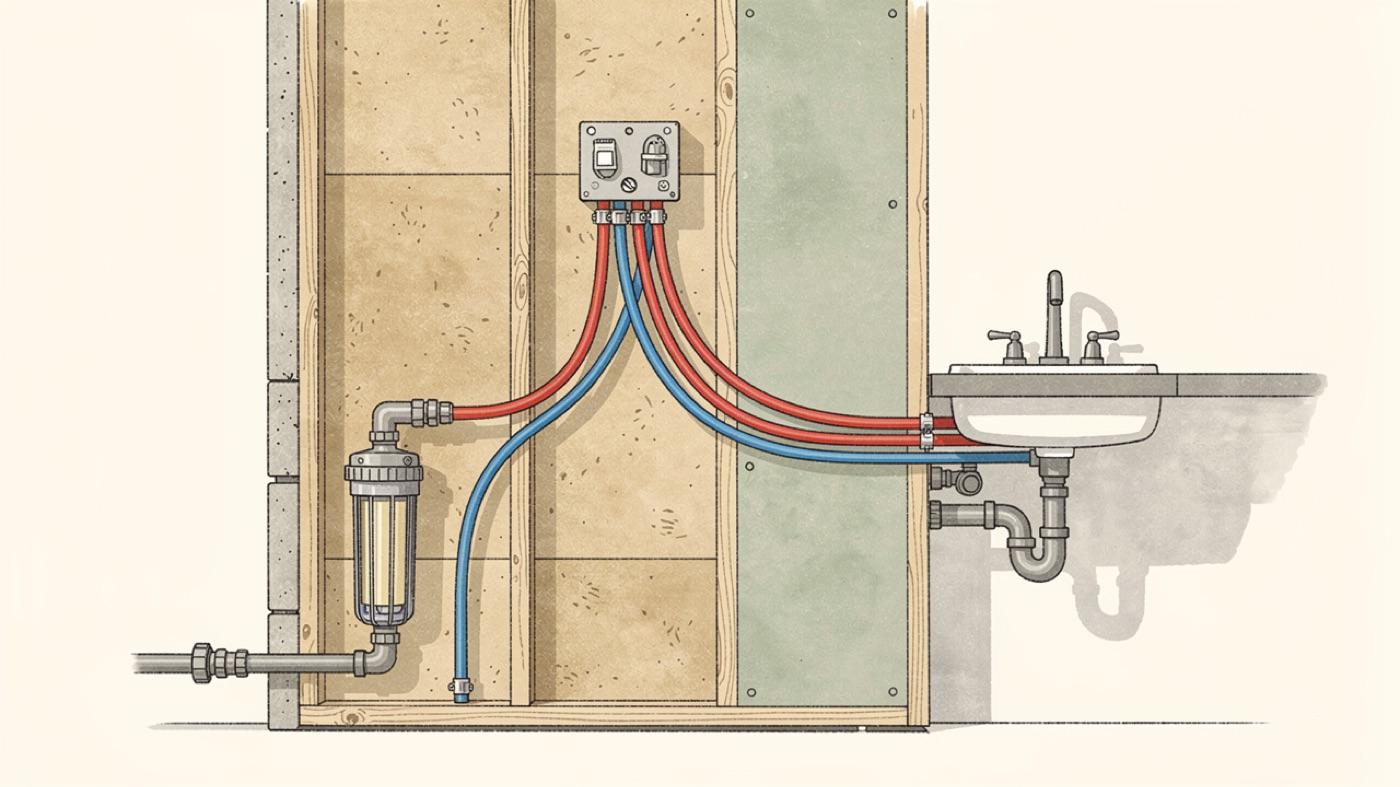
PEX needs fewer joints than rigid pipe and bends without fittings. That lowers labor cost and removes leak points. Direct home runs from a plumbing manifold give every fixture its own line and shutoff.
PEX expands to accommodate frozen water without bursting. It reduces heat loss on hot lines and quiets water hammer. Paired with filtration and commissioning, it is a cost-effective, safe and controllable solution.
Stainless steel: premium protection
For the highest level of water quality protection, stainless steel contains no harmful chemicals or metals that leach into the supply. It offers superior corrosion resistance and handles extreme temperatures without degrading.
Stainless excels in main supply lines, commercial kitchens and solar water heating. Its durability under pressure and resistance to aggressive water chemistry make it the choice where other materials would suffer.
PVC: not for drinking water
We do not recommend PVC for potable water distribution, even where code allows it. Its petrochemical origin in vinyl chloride chemistry is the first reason.
- Suitable for cold water only
- Sensitive to heat, aging and disinfectants
- Less stable chemically over the long term
- More likely to produce taste and odor complaints
We restrict PVC to drain, waste and vent lines, underground service laterals and non-potable uses.
Why material alone does not define health
A common misconception is that the pipe decides whether water is safe. In reality every material interacts with water chemistry. Every system experiences stagnation, and every new system goes through early conditioning.
Health outcomes come from system management, not pipe ideology. That is where our beyond-code strategy starts.
Whole-house filtration as standard
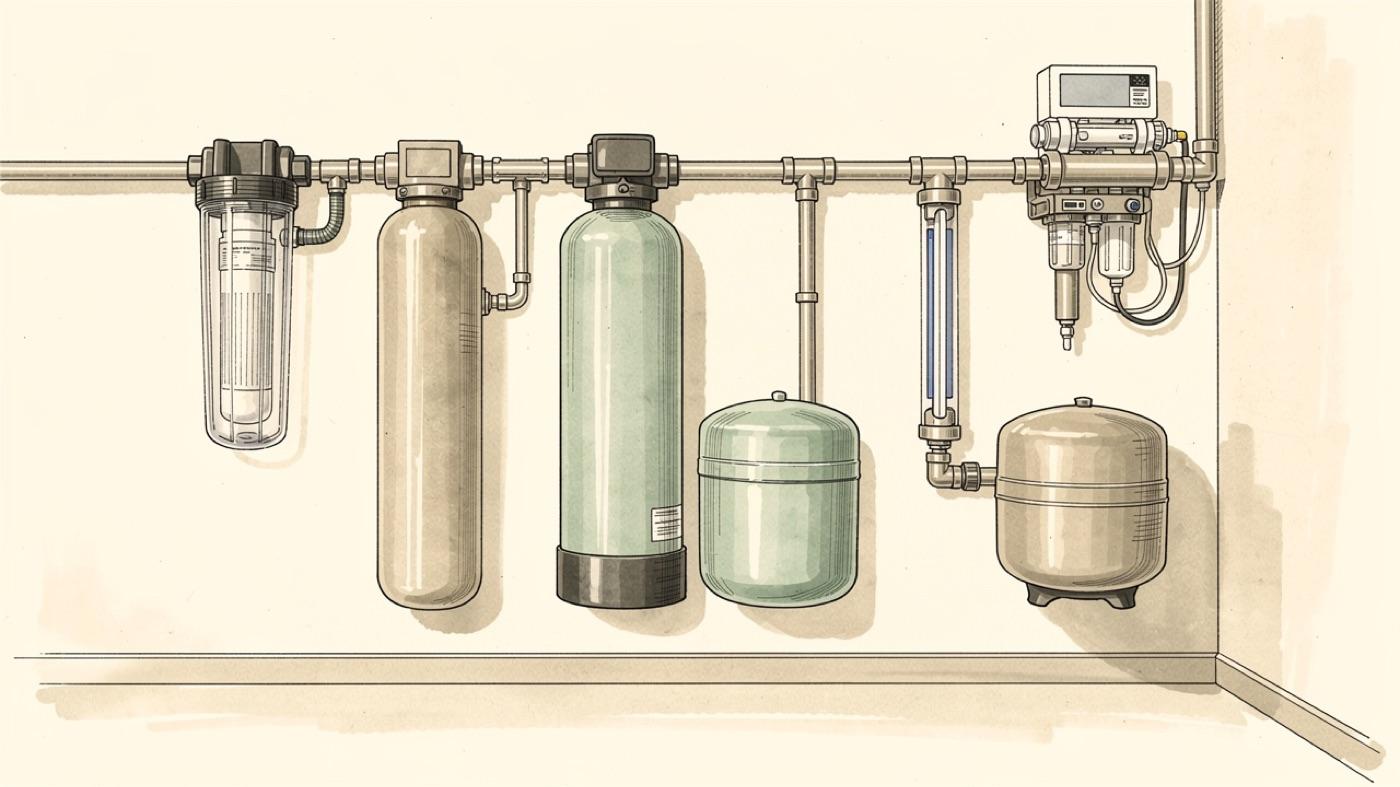
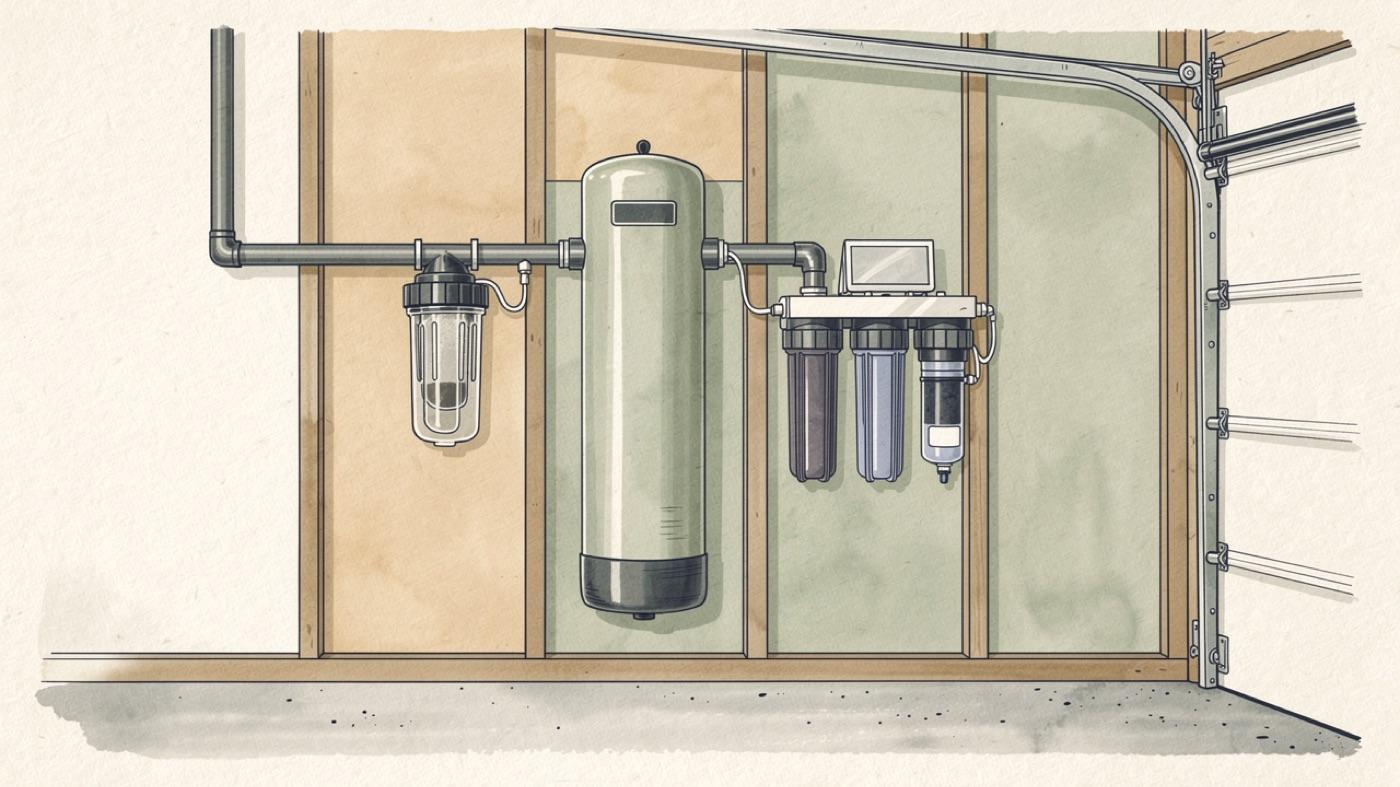
We install point-of-entry filtration on every home. A whole house water filtration system reduces organic compounds, disinfection byproducts, particulates and the variability that comes with municipal supply. For a side-by-side look at the options, see water filtration methods explained for homeowners.
Mandatory commissioning before move-in
Before occupancy, the plumbing system is fully flushed, disinfected and conditioned. Commissioning may use hydrogen peroxide to address organic residues and early biofilm, and chlorine dioxide for controlled oxidation and surface conditioning.
The occupants are never the initial conditioning mechanism. This step cuts early VOC presence, taste and odor complaints, biological growth and long-term exposure pathways.
Our position on each material
We offer choices, not absolutes. We explain how each material behaves, lay out the trade-offs and match the solution to your budget, values and performance goals.
- Copper is the highest-tier option when feasible and water chemistry is favorable
- PEX is the preferred balance of health, performance and cost when filtered and commissioned
- Stainless steel is the premium choice for supply mains and demanding conditions
- PVC is not recommended for potable water
There is no perfect plumbing material. Copper, PEX and PVC all behave differently, and we evaluate them on health, durability, system behavior and cost. Our job is to educate and let you make an informed decision.
SENERGY360 does not sell materials. We design healthy systems.