September 14, 2026
By Brian Johnson, Building Biologist and Licensed General Contractor
The Science of Light: How Sunlight and Bulbs Shape Your Health
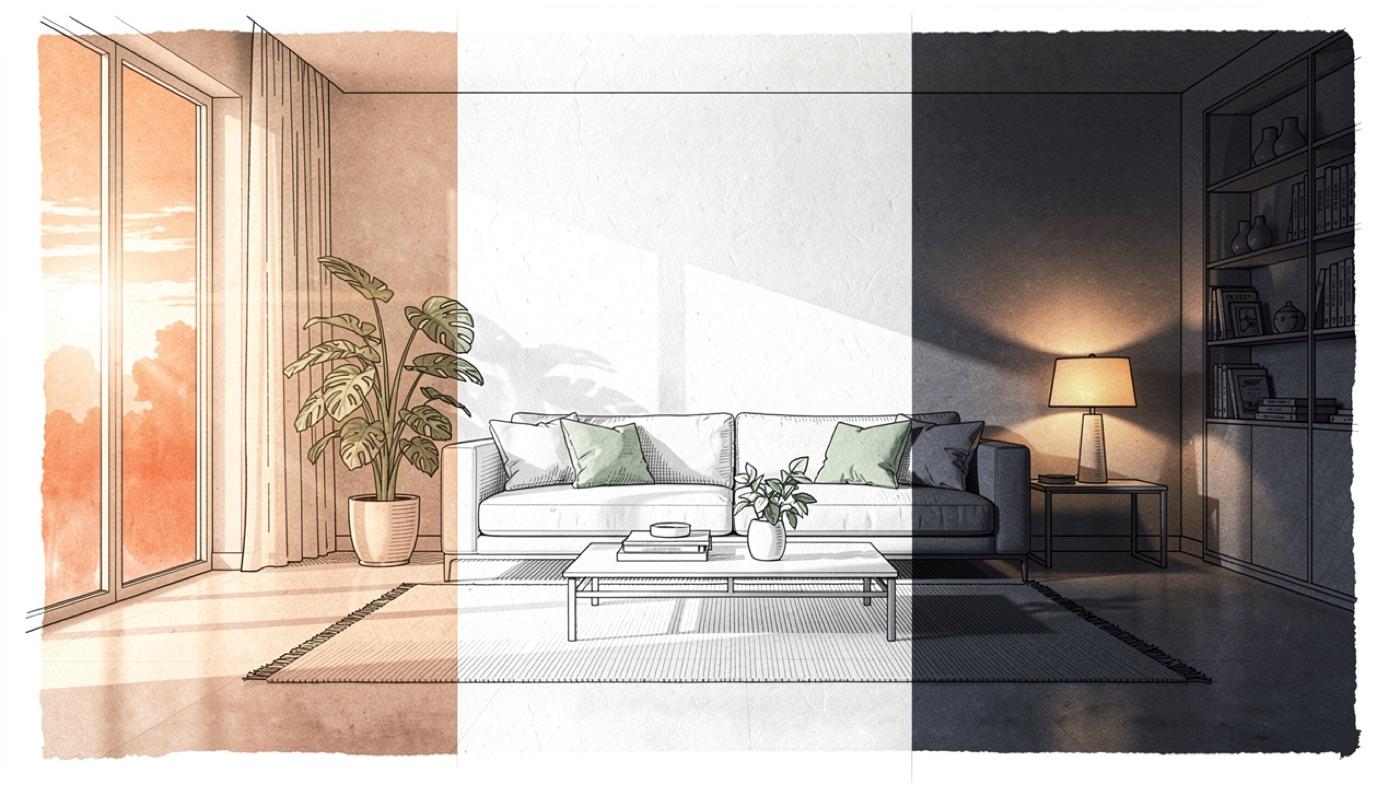
Light does more than let you see. Your exposure to light sets your body clock, drives vitamin D production and shapes how you sleep, think and feel. The science of light is one of the most overlooked parts of a healthy home.
At SENERGY360 we treat lighting as a health system, not a fixture schedule. This post covers what light is, how the body uses it and why the bulbs in most homes work against you. For the practical side, see our circadian lighting benefits post and our healthy lighting guide.
Light is electromagnetic radiation
Light is a form of energy produced by oscillating electric and magnetic disturbance. It travels in waves of different amplitudes, wavelengths and frequencies.
At one end of the spectrum are low frequency radio waves with wavelengths that span kilometers. At the other end are high frequency cosmic rays with wavelengths measured in femtometers, one quadrillionth of a meter.
The visible slice
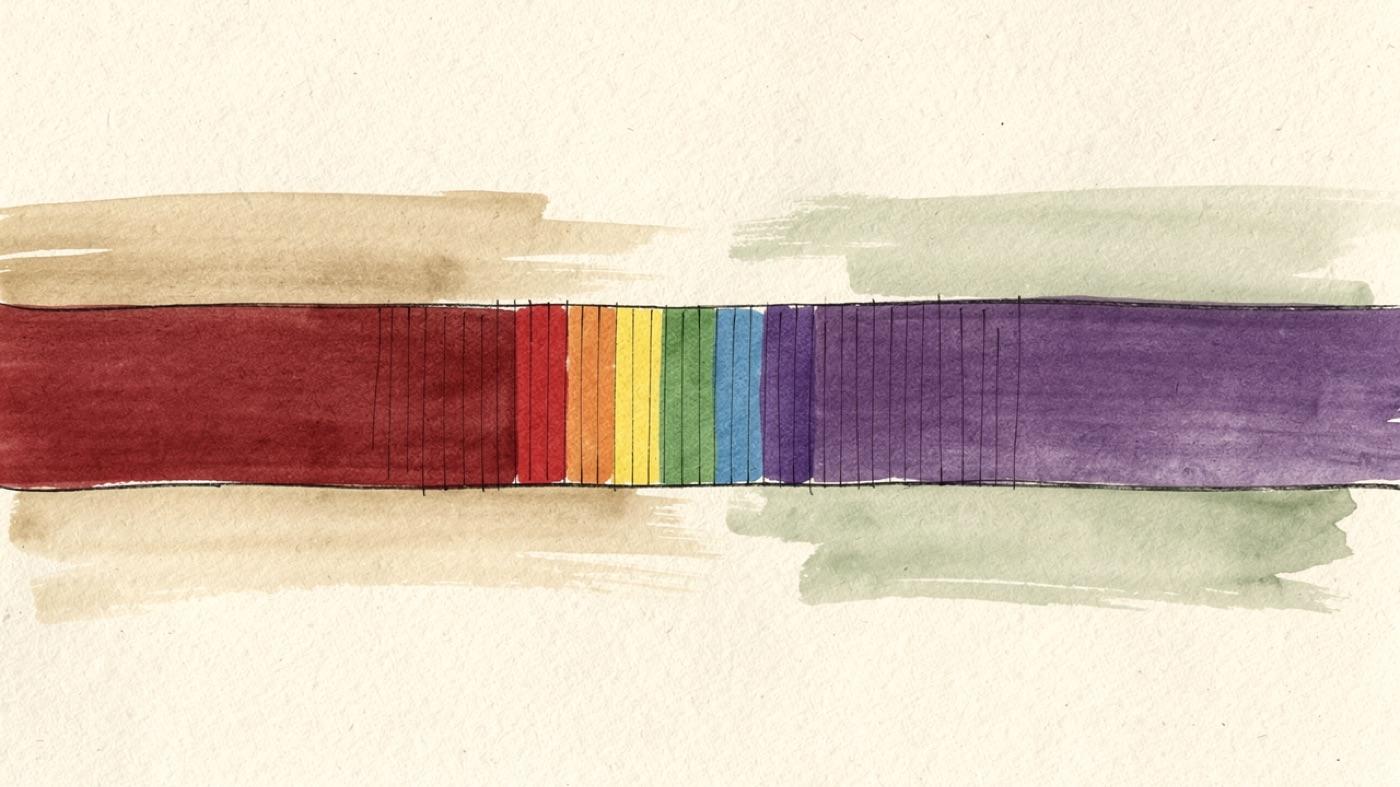
Visible light is the part of that spectrum the human eye can detect. It runs from about 380 to 780 nanometers, and a nanometer is a billionth of a meter. That is a tiny window in a very wide spectrum.
The regions on either side are also called light even though we cannot see them. Infrared sits on the longer side and ultraviolet on the shorter side. Both matter to our biology.
What sunlight actually delivers
Almost all natural light on Earth comes from the sun. The sun emits across the whole spectrum, and the atmosphere filters out most of the harmful short wavelengths, including gamma rays, x-rays and all of the most dangerous ultraviolet, UVC.
What reaches the ground is roughly this:
- Less than 1 percent UVB
- About 5 percent UVA
- Just under 50 percent visible light
- About 50 percent infrared, mostly near infrared
A smooth, complete spectrum
Sunlight has a smooth and continuous emission spectrum with no wavelengths missing. Scientists call this a Planck distribution, or black body radiation. Every color is present in balance.
That balance shifts through the day. Dawn and dusk are rich in red and yellow and low in blue, while midday is very blue-rich. This daily rhythm of color is a signal your body has evolved to read.
Three systems in the body use light
Our understanding of how the body responds to light keeps growing. Three systems do the work:
- The visual system, for seeing
- The non-image forming system, which regulates circadian rhythm
- The skin system, which makes vitamin D and other compounds
The National Institute of General Medical Sciences explains in its circadian rhythms fact sheet that the brain's master clock controls melatonin production based on the amount of light the eyes receive.
Light and dark have the biggest influence on circadian rhythms, but food intake, stress, physical activity, social environment, and temperature also affect them.
The circadian system and melanopsin
The non-image forming system runs on a light-sensitive pigment called melanopsin. It is not very sensitive to dim or brief light. It is most sensitive to violet and blue light between about 446 and 477 nanometers.
Any visible wavelength can suppress or delay melatonin if it is bright enough. Longer wavelengths need much more intensity to do it. Blue light needs very little, which is why blue-rich light at the wrong time is the most disruptive.
Harvard Health's article Blue light has a dark side reports the same pattern: light of any kind can suppress melatonin, blue light at night does so more powerfully, and even about eight lux, a level most table lamps exceed, has an effect.
Exposure to monochromatic blue light as low as 1 lux can shift circadian markers. That is about the brightness of a candle at arm's length.
Why modern bulbs are a problem
Many modern bulbs have an extreme blue component. Cold white LEDs with a high correlated color temperature, or CCT, can carry three to four times the blue light energy of warm white LEDs with a low CCT.
That matters for two reasons. The first is timing, because blue light at night tells your body it is noon. The second is the eye itself.
Eye toxicity
High CCT LEDs pose an elevated risk of eye toxicity. Light from TV, computer and phone screens peaks in the blue wavelengths and has been shown to cause oxidative stress and death of eye cells. Fluorescent and halogen bulbs can cause mild to moderate retinal damage.
The pattern is consistent. The higher the blue component, the stronger the effect, and CCT is a good general guide. Some researchers have suggested that bulbs be classified and labeled by their hazard to the eye.
Midday sunlight contains plenty of blue light too. The difference is that in sunlight it is balanced by every other color.
Spectrum, timing and intensity
The circadian response to light depends on three things together: color, intensity and duration. Individuals differ considerably in how strongly they respond, but the general trends are well established.
Warm colored light sources are the safe default indoors. Incandescent bulbs and warm white LEDs keep the blue component low. Cold white bulbs, especially LEDs with a high CCT, belong nowhere near a bedroom.
Screens at bedtime
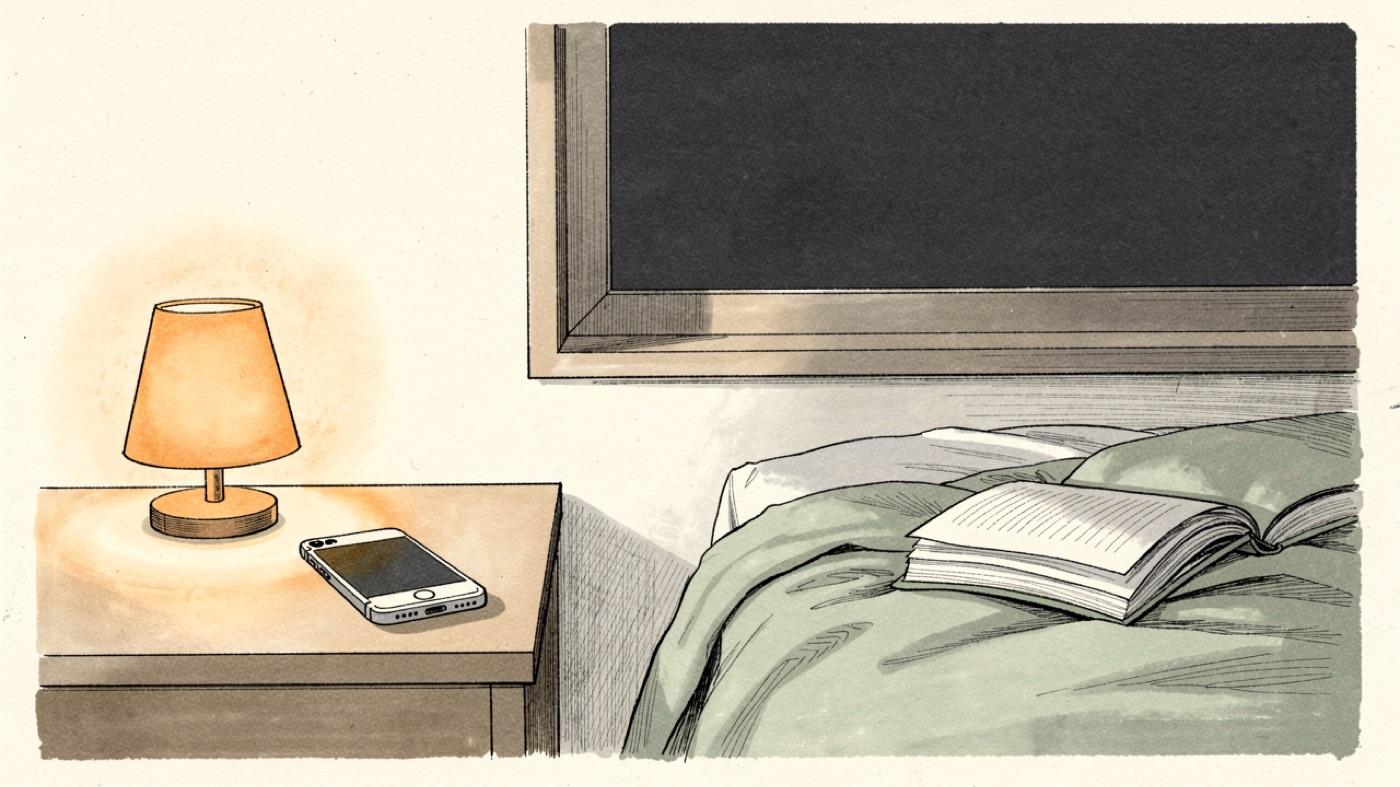
Screens are the other big blue light source. Using them at bedtime suppresses melatonin and delays and disrupts sleep compared with reading a printed book.
A 2011 National Sleep Foundation study reported that 90 percent of Americans used some type of electronic device within an hour of bedtime. Children are much more sensitive, with up to twice the melatonin response of adults. Surveys show children sleep less today than previous generations did, and screens are a likely part of the reason.
The NIGMS fact sheet also notes that light from electronic devices at night can confuse biological clocks. Our post on home construction factors that impact sleep quality covers the rest of the bedroom, and our guide on how to reduce EMF in the bedroom covers the devices themselves.
What the lighting industry is doing about it
LED technology now allows lamps with very specific parameters. The lighting community has started paying attention to circadian research and is working on light that serves both vision and the body clock.
Dynamic lighting
Tunable LEDs make dynamic lighting possible. Intensity and CCT can be adjusted lamp by lamp, so a room can move from bright and cool at midday to dim and warm in the evening.
Schools are beginning to install these systems. One school in Germany reported a significant decline in fidgeting and aggressive behavior in classrooms with tunable lighting compared with those without.
Engineers are also developing warm white LEDs with very low blue content, including candlelight-style OLEDs. These are the direction we watch for healthy homes.
Light also carries an electrical burden
Many modern light sources come with an electromagnetic burden as well as a spectral one. LED drivers and dimmers can add high frequency noise to a home's wiring. That is a separate topic, covered in our post on dirty electricity, but it is part of why we choose fixtures carefully.
How we apply this in a healthy home
The science points to a simple design brief. Get as much natural daylight into the home as the site allows.
Use warm, low-CCT light sources indoors, dimmable so evenings can go soft. Keep bedrooms dark at night and screens out of them.
Daylighting strategies, window placement and fixture selection are part of every SENERGY360 design. Our design and build process treats light as a material, because your body does.