September 14, 2026
By Brian Johnson, Building Biologist and Licensed General Contractor
What Causes Mold in a House? The Moisture Sources We Find Most
Mold does not appear by accident. Every patch of it in a house traces back to water that stayed where it should not have. Understanding the causes of mold in a house is the first step to a home that stays clean without constant fighting.
At SENERGY360 we inspect homes for a living. We build them too, so we see both where mold starts and how the construction let it start.
This post covers the causes. For what to do once you find it, read our comprehensive mold guide.
Mold needs three things
Mold is a living organism, and like anything alive it needs food, water and time. The food is everywhere in a house. Paper on drywall, wood framing, dust, fabric and even the soap film in a shower all feed it.
Time is also easy to come by. Most household molds can start growing on a wet surface in 24 to 48 hours. That leaves water as the only leg of the stool you can control.
Take away the water and mold cannot grow. That is why every cause below is really a moisture story.
There are many types of mold, and none of them will grow without water or moisture.
The same EPA guide advises drying water-damaged areas and items within 24 to 48 hours to prevent mold growth.
Cause one: water that gets in from outside
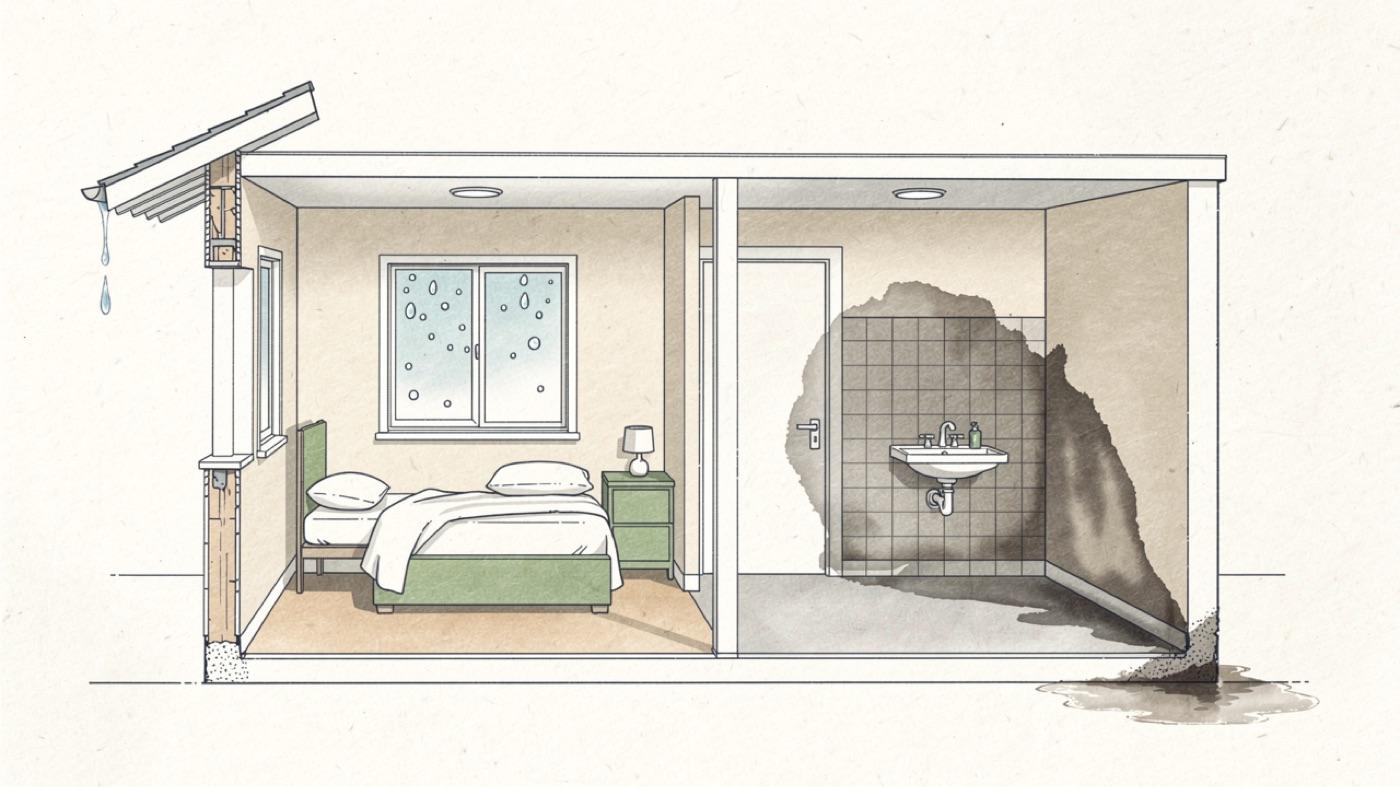
The most obvious mold comes from a leak. Roofs, flashing, window sills and plumbing all fail eventually, and the water lands on materials that hold it.
Roofs, windows and walls
A slow roof leak can run for months inside an attic before a stain shows on the ceiling. Windows without a proper sill pan let water into the wall cavity every time it rains. Stucco or siding with no drainage gap traps water against the sheathing.
Our building science basics post explains how water moves through a wall. The short version is that water always finds the path of least resistance, and it always runs downhill.
Foundations and slabs
Ground water pushes up through concrete as vapor. A slab with no vapor barrier under it wets the flooring from below, which is why carpet over concrete so often smells musty. Our post on vapor barriers under slabs covers the fix for new construction.
Cause two: water the house makes itself
A family of four puts several gallons of water into the air every day. Showers, cooking, laundry, dishwashers, breathing and houseplants all add to it. If that vapor has nowhere to go, it lands on the coldest surface in the house and turns back into liquid.
Condensation
Condensation is the cause we find most often in homes with no visible leak. Windows fog, closet corners on exterior walls go dark and the paint behind a headboard bubbles. Each of those is vapor meeting a cold surface.
The EPA sees the same pattern. Its mold course on why and where mold grows notes that mold is frequently found on walls in cold corners behind furniture where condensation forms.
The fix is a combination of less vapor and warmer surfaces. Our post on how to reduce moisture in your house walks through both.
Bathrooms and laundry rooms without exhaust
A bathroom fan that vents into the attic instead of outdoors moves the problem instead of solving it. A dryer vent with a crushed hose does the same. Any room that makes water needs a fan that carries that water all the way out of the building.
Cause three: materials that hold water
Some materials dry fast and some never do. A house full of the slow ones will grow mold from a moisture load that a well-built house shrugs off.
Carpet and porous rugs
Carpet is the biggest offender. It holds moisture, dust, skin cells and spores in one warm layer, and it sits against the floor where it never fully dries. In a humid room or over a slab it becomes a mold farm.
We do not put carpet in a SENERGY360 home. Sealed concrete, tile, quartz and mineral flooring dry quickly and wipe clean. Where you want something soft, use a removable area rug you can take outside and clean.
Paper-faced drywall and raw wood
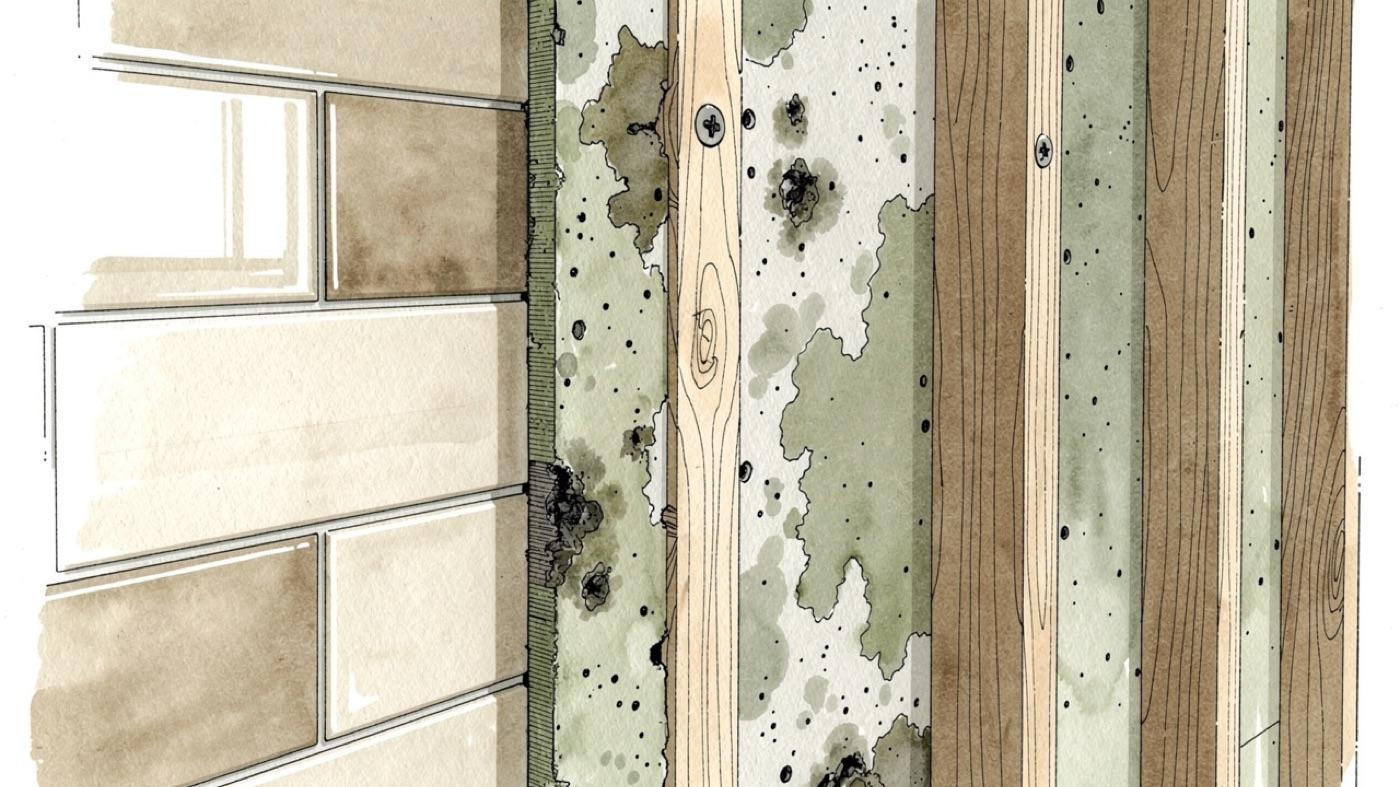
Standard drywall is gypsum wrapped in paper, and paper is food. When the back of a shower wall gets damp, mold grows on that paper where nobody can see it. Unfinished wood trim and framing in damp areas hold water the same way.
Our post on mold resistant building materials covers what we use instead. Cement board, mineral wool and solid wood with a vapor-open finish all dry out instead of feeding growth.
Cause four: a wall that cannot dry
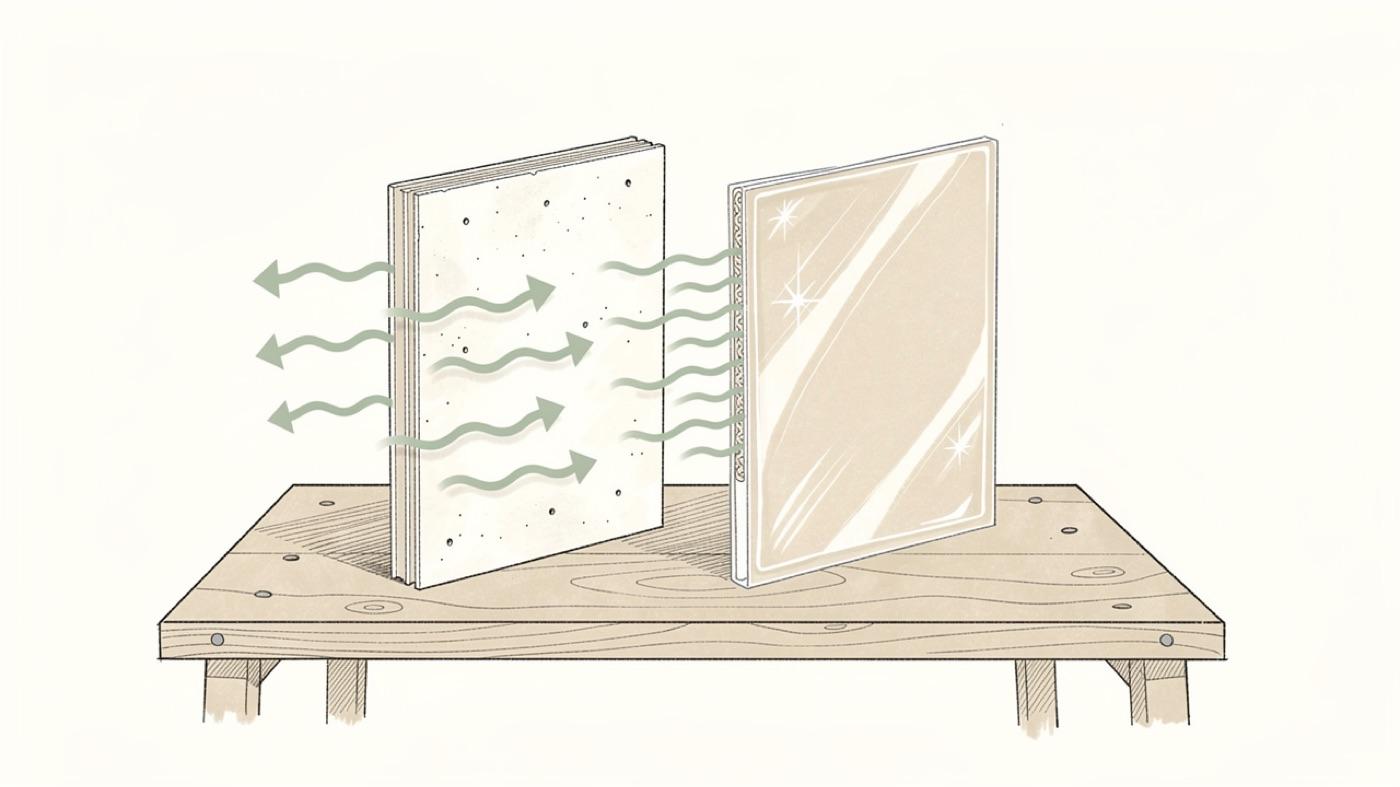
This cause surprises people. Two walls can be built from the same drywall and framing, yet one grows mold and the other stays clean. The difference is the coating.
The EPA's mold course makes a related point about vapor barriers: installed in the wrong place, they can prevent damp or wet building materials from drying quickly enough to prevent mold growth.
Mineral paint lets the wall breathe
Think of a breathable jacket. It keeps rain out but lets sweat escape, so you stay dry inside it.
Drywall finished with a mineral-based paint works the same way. Vapor moves through the wall, the wall can exhale and moisture never gets trapped.
PVA primer and latex paint seal it shut
Now picture a cheap plastic raincoat. Nothing gets in, but nothing gets out either, and you end up damp and clammy.
PVA primer under standard latex paint puts a tight plastic-like film on the drywall. Drying slows dramatically, and any moisture that gets behind the panel stays there.
The materials behind the surface never changed. The finish changed how moisture moves. That is why we specify vapor-open mineral paints and plasters on every wall we build.
Cause five: habits that keep things wet
Construction sets the stage, but daily habits decide the outcome. A few small ones cause a surprising share of the mold we find.
- Wet towels and bath mats left in a heap instead of hung to dry
- Damp laundry stored before it is fully dry
- Spills on floors or under sinks that get wiped but not dried
- Condensation on window sills that is never wiped away
- Furniture pushed tight against exterior walls so the wall behind it never warms or dries
- Central vacuums that exhaust into a garage or furnace room, pushing damp dust back into the house
None of these needs a contractor. They just need attention. Rinse and dry surfaces fully after cleaning, because moisture left behind feeds mold as surely as a leak does.
Cause six: dust
Dust is food. It carries skin cells, fibers, pollen and spores, and it settles on every surface in the house. When dust lands on a damp spot it gives mold a head start.
That is why we treat dust control as mold prevention. A sealed HEPA vacuum, washable fiber mops instead of disposable chemical wipes, and shoes off at the door all cut the food supply. Empty the vacuum outdoors so the fine dust does not go straight back into the air.
Finding the cause in your own house
Most mold problems have one main cause and a couple of helpers. Start with the location.
Mold near a ceiling or window points to a leak or condensation. Mold at the base of a wall or under flooring points to the slab or a plumbing line. Mold across a whole room points to humidity.
If you cannot find it, we can. A Healthy Home Inspection includes moisture mapping, thermal imaging and the sampling that shows where water is going. Our guide to mold-free living is a good next read once you know your cause.
Find the water and you find the mold. Fix the water and the mold has nothing left to live on.
In Arizona, see our pages on mold inspection in Tucson and mold inspection in Phoenix.