September 14, 2026
By Brian Johnson, Building Biologist and Licensed General Contractor
Building Science Basics Every Homeowner Should Understand
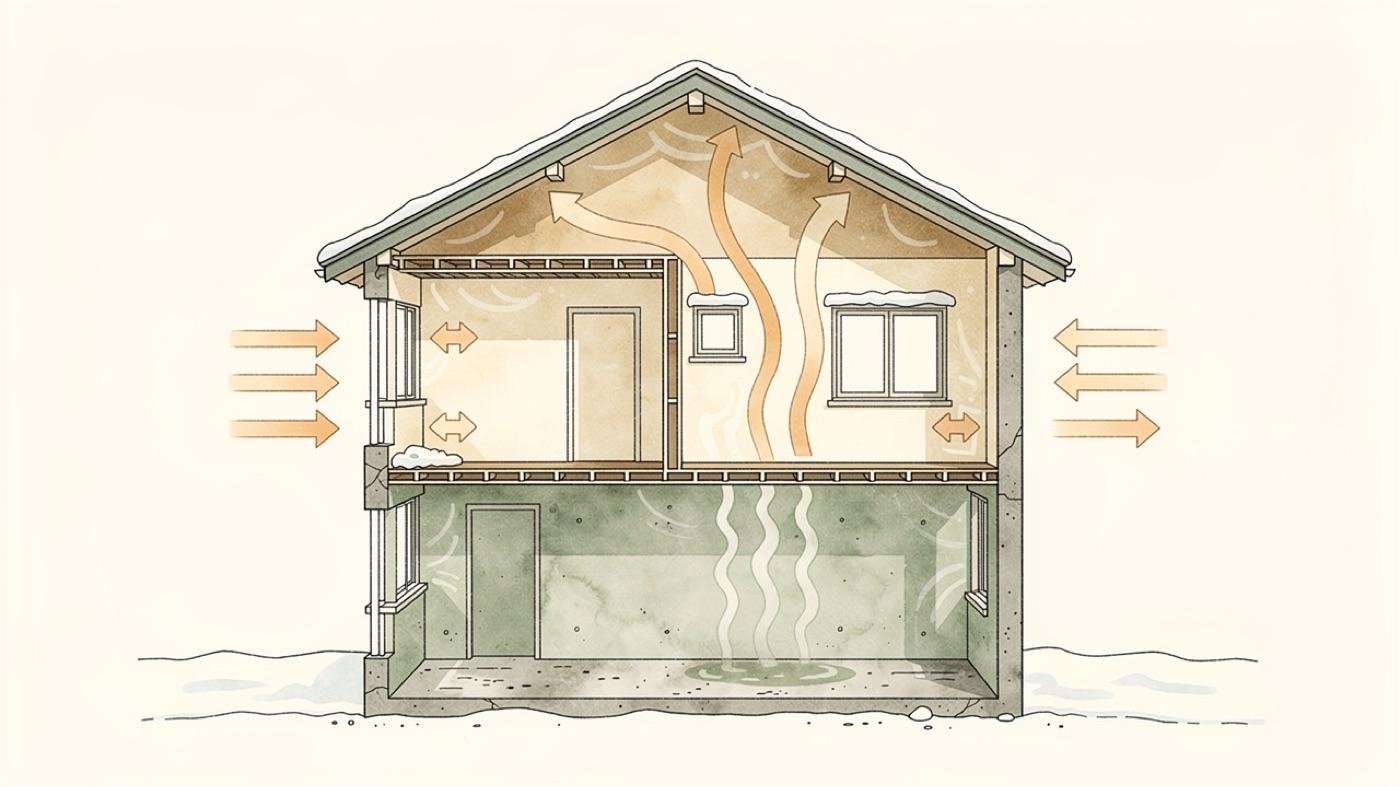
A house is a physics experiment that runs for a hundred years. Heat, air and moisture are always moving through it, and they follow rules that do not care what the finishes look like. Building science is the study of those rules, and every homeowner benefits from knowing the basics.
At SENERGY360 we design from these principles first. The building science and performance enclosure principle in our CORE framework is where every project starts, because the enclosure decides whether a home stays dry, comfortable and healthy.
The four forces acting on every building
The physics is simple. Four movements explain almost everything that goes right or wrong inside a wall.
- Thermal energy moves from hot to cold
- Hot air rises and cold air sinks
- Moisture moves from wet to dry
- Air and gas move from high pressure to low pressure
Every leak, cold wall, damp corner and drafty room is one of these four at work. Once you can name the force, you can see the fix.
Thermal movement
Heat is energy looking for balance. It moves from a warm area to a cold one until the two are equal.
Cold does not move toward heat. The molecules in a cold material lack the energy to excite a warmer region, so the flow only ever runs one way.
In winter that means heat leaves the house. In summer it comes in.
Why material choice matters
Every material has thermal properties that describe how it responds to temperature. A material that insulates, holds no condensation in its pores and does not conduct heat away quickly keeps its surface warm to the touch.
Building biology applies the same test to a wall that you would apply to clothing. Materials close to the body, and the walls around the body, should have balanced thermal properties so rooms stay comfortable in every season regardless of the heat source.
The three ways heat travels
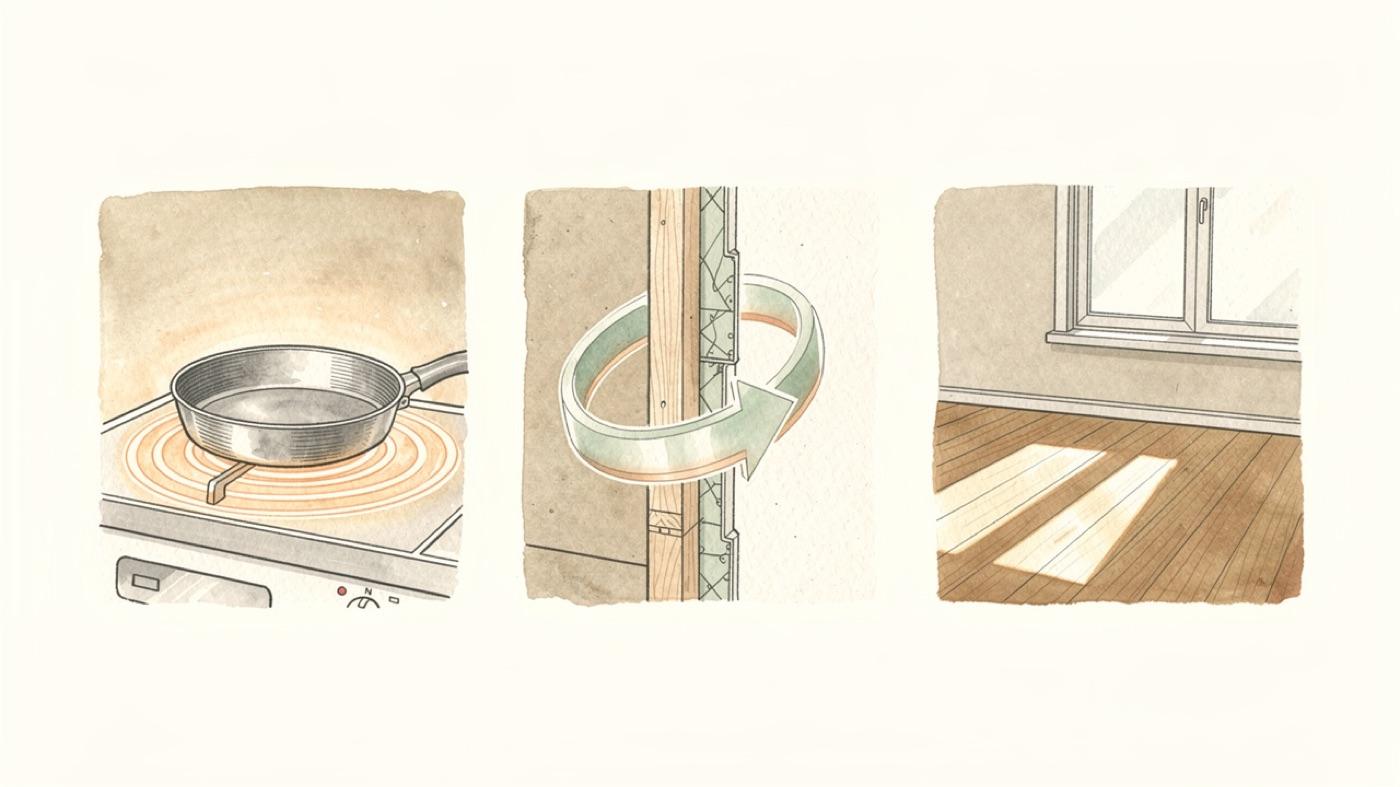
Heat moves by conduction, convection and radiation. A house loses and gains heat by all three at once.
Conduction
Conduction is heat moving through solid objects by direct molecular contact. Warm molecules vibrate faster and agitate their cooler neighbors until they warm up too.
A frying pan on a stove element heats by conduction. So does an uninsulated wall or window, which is why the inside surface of those walls feels cold on a winter day.
Insulation is how a wall slows conduction, and it is rated by R-value. ENERGY STAR, the federal efficiency program, puts it simply:
R-Value is a measure of insulation's ability to resist heat traveling through it. The higher the R-Value the better the thermal performance of the insulation.
Convection
Convection is heat moving through liquids and gases. When cold air enters a house it mixes with warm air, takes energy from it and lowers the room temperature.
Convection shows up as warm air rising and cool air falling. It happens inside a room, between two panes of glass and inside a hollow wall cavity, where a loop of circulating air quietly carries heat from the warm side to the cold side.
Radiation
Radiation is heat traveling as electromagnetic energy through space. It needs no air or solid to carry it.
Sunlight through a single-pane window is the everyday example. The room warms even though the glass is cold, and you feel warmer standing in front of that window because the radiant heat reaches your skin directly.
Infiltration
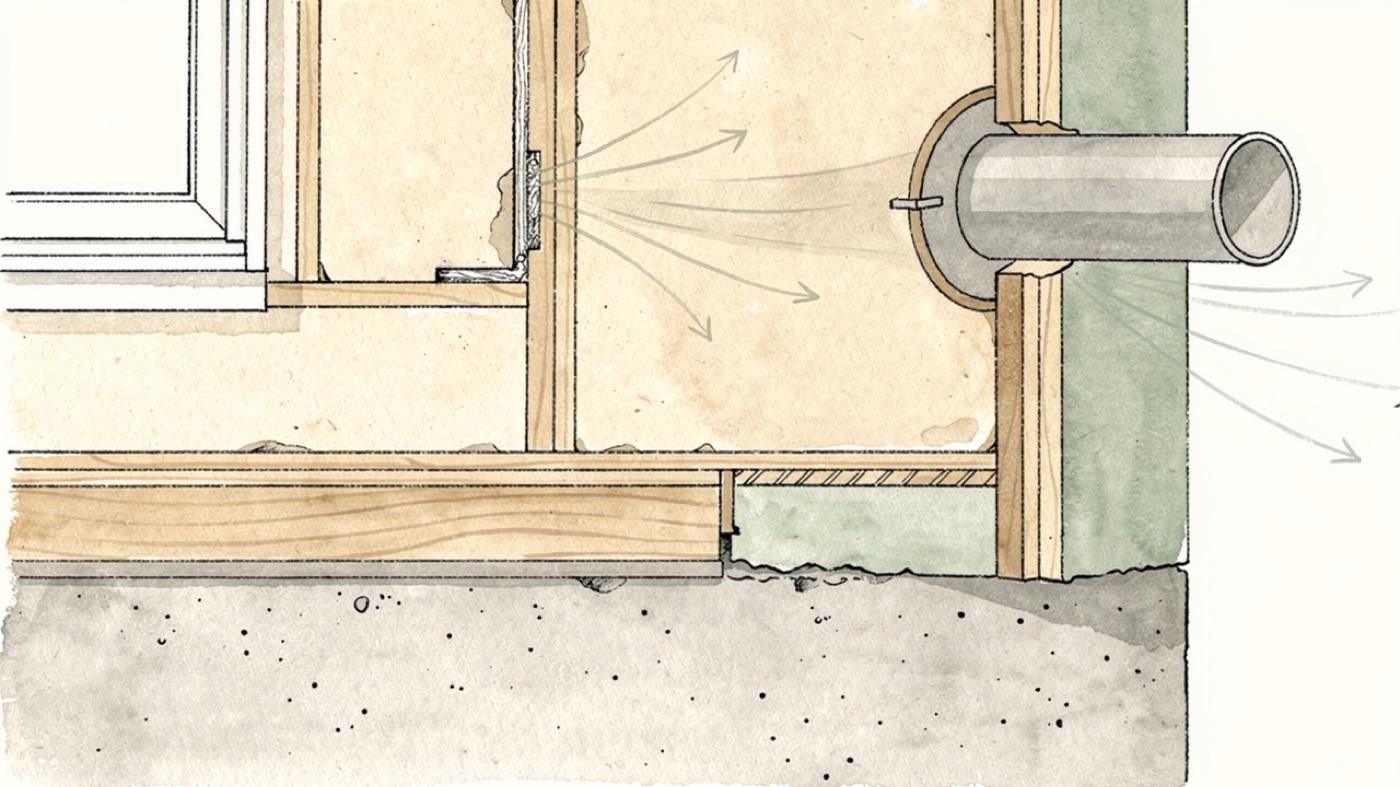
Infiltration is the transfer of heat by air leaking through the building envelope. It happens at the holes where different systems meet, such as around windows, under doors and where wood framing sits on concrete.
Air moving in carries heat or cold with it. Exfiltration is the same process in reverse, with conditioned air leaving the house and taking your energy dollars with it.
The ENERGY STAR seal and insulate guide estimates that sealing air leaks and adding insulation can provide up to a 10% savings on annual energy bills, with simple fixes like weather stripping on doors and caulking around windows.
Why air leaks matter more than thin walls
Leaking air carries moisture along with heat. Warm indoor air that leaks into a cold wall cavity drops its moisture on the first cold surface it finds, and that is how a wall grows mold from the inside.
A continuous air barrier stops that transport. It is the single most cost-effective upgrade in most existing homes, and in new construction we detail it before we size a single piece of insulation.
Moisture, the force that does the damage
Moisture moves from wet to dry. Soil moisture rises into a slab, shower steam migrates into a cold exterior wall and a wet crawlspace pushes vapor up into the living space.
Every one of those paths needs a control layer. Vapor barriers under slabs, drainage planes behind cladding and vented or conditioned attics are all answers to the same rule.
Indoor humidity is part of the same picture. University of Minnesota Extension notes that when the relative humidity is more than 50%, moisture problems may occur, and it recommends finding and removing the moisture source first, then using ventilation or a dehumidifier if the source cannot be removed.
Pressure, the force that drives the others
Air moves from high pressure to low. Wind pushes on one side of a house and pulls on the other. A furnace blower or a bathroom fan changes the pressure inside relative to outside.
A house under negative pressure sucks air in through every gap, pulling soil gas, attic dust and garage fumes along with it. Balanced ventilation with a proper fresh air intake keeps the pressure neutral so the house breathes on purpose instead of by accident.
Putting building science to work
These rules turn a vague worry into a specific question. A cold room is a conduction or infiltration problem.
A musty smell is a moisture path. A drafty hallway is a pressure imbalance.
A healthy home inspection applies exactly this thinking with a blower door, a thermal camera and moisture meters. Find the force, follow the path, and the fix is usually smaller than the symptom suggested.
Related reading: the top features of a home built to Building Biology standards.