March 5, 2025
By Brian Johnson, Building Biologist and Licensed General Contractor
Home Ventilation Guide: 7 Solutions for Healthier Indoor Air
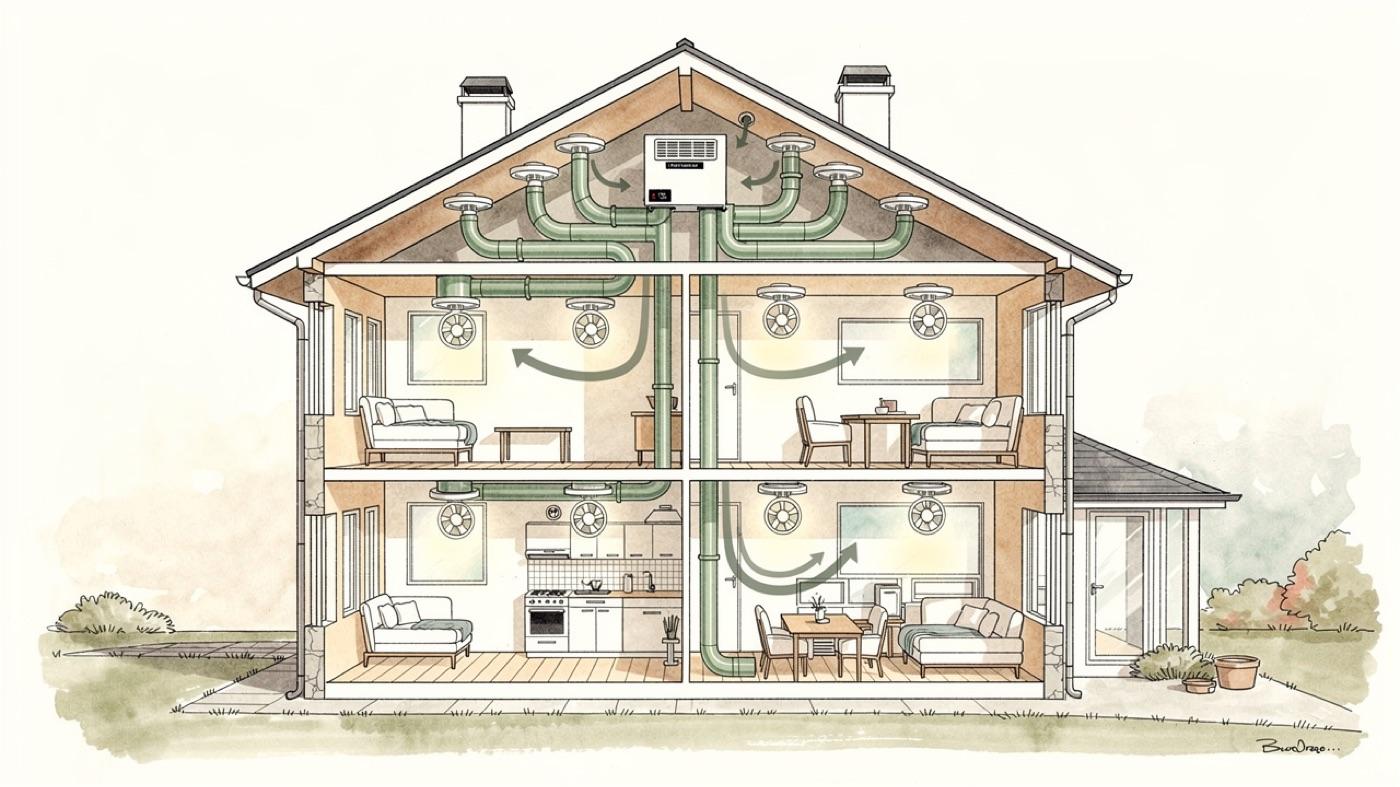
Home ventilation is how an airtight house breathes. Modern construction seals a home tightly for energy efficiency. Without a deliberate way to bring in fresh air and push out stale air, that tight envelope traps moisture, VOCs, and carbon dioxide inside with you.
At SENERGY360, we treat ventilation as a health system, not an add-on. This guide explains why it matters, the seven solutions we use, how to pick between an ERV and an HRV, and the humidity and pressure rules that decide whether any of it works.
Why your home ventilation system matters more than you think
Modern construction techniques prioritize energy efficiency by creating increasingly airtight building envelopes. That is a good thing. It reduces energy costs and keeps dust and pests out.
But without adequate ventilation, an airtight home concentrates whatever is generated inside it. Over time that leads to a familiar list of problems.
- Excess moisture, followed by mold growth and structural damage.
- Accumulated volatile organic compounds (VOCs) from building materials, furniture, and household products.
- Elevated carbon dioxide levels that affect sleep quality and concentration.
- Increased levels of microorganisms and allergens in the living space.
- Lingering cooking odors, pet dander, and stale air.
A properly designed home ventilation strategy balances energy efficiency with indoor air quality, creating an environment that supports health while staying comfortable year round. It is a core part of the climate control, ventilation, and indoor air quality principle in SENERGY360's 12 CORE Principles for Healthy Building Design.
The science behind proper home ventilation
Building biology guidelines call for a continuous supply of fresh air on the order of 30 cubic feet per minute for healthful indoor conditions, and more in certain situations.
- Homes with fireplaces or other appliances that draw combustion air from inside.
- Spaces where smoking occurs.
- Rooms with high occupancy or activity.
- Homes with elevated indoor pollutants such as formaldehyde or radon.
Natural air leakage through building joints is no longer sufficient, or desirable, in an energy-efficient home. Open windows provide either too little exchange or too much. Controlled ventilation is what makes a healthy home possible.
Most home heating and cooling systems, including forced air heating systems, do not mechanically bring fresh air into the house.
The same EPA page lists three basic strategies for better indoor air: source control, improved ventilation, and air cleaners or filtration. It also notes that newer home designs are starting to use mechanical systems, including heat recovery ventilators, to bring outdoor air inside. Our post on fresh air intake and how much fresh air a home needs covers the numbers in more depth.
The hidden dangers of poor home ventilation
Moisture and mold
Inadequate ventilation lets moisture accumulate in bathrooms, kitchens, and laundry rooms. That moisture is all mold needs to grow, and mold can trigger allergies, asthma, and other respiratory issues. Left unchecked it also damages framing and finishes.
Visible mold is the tip of the iceberg, a sign of a moisture problem in the space. Our guide to moisture management covers the building side of this problem.
Indoor air pollution
The EPA notes that indoor air is often two to five times more polluted than outdoor air, even in cities. Without ventilation, VOCs, particulates, and biological contaminants concentrate in your living space. Long-term exposure has been associated with headaches, fatigue, irritated eyes and airways, and worsened asthma and allergies.
Carbon dioxide buildup
Research suggests that elevated CO2, common in poorly ventilated bedrooms and offices, can impair concentration and decision making. An under-ventilated home may be affecting not just how you feel, but how you think. Our guide to CO2 levels in a house explains what the readings mean and how to lower them.
Seven home ventilation solutions for every budget
Natural ventilation
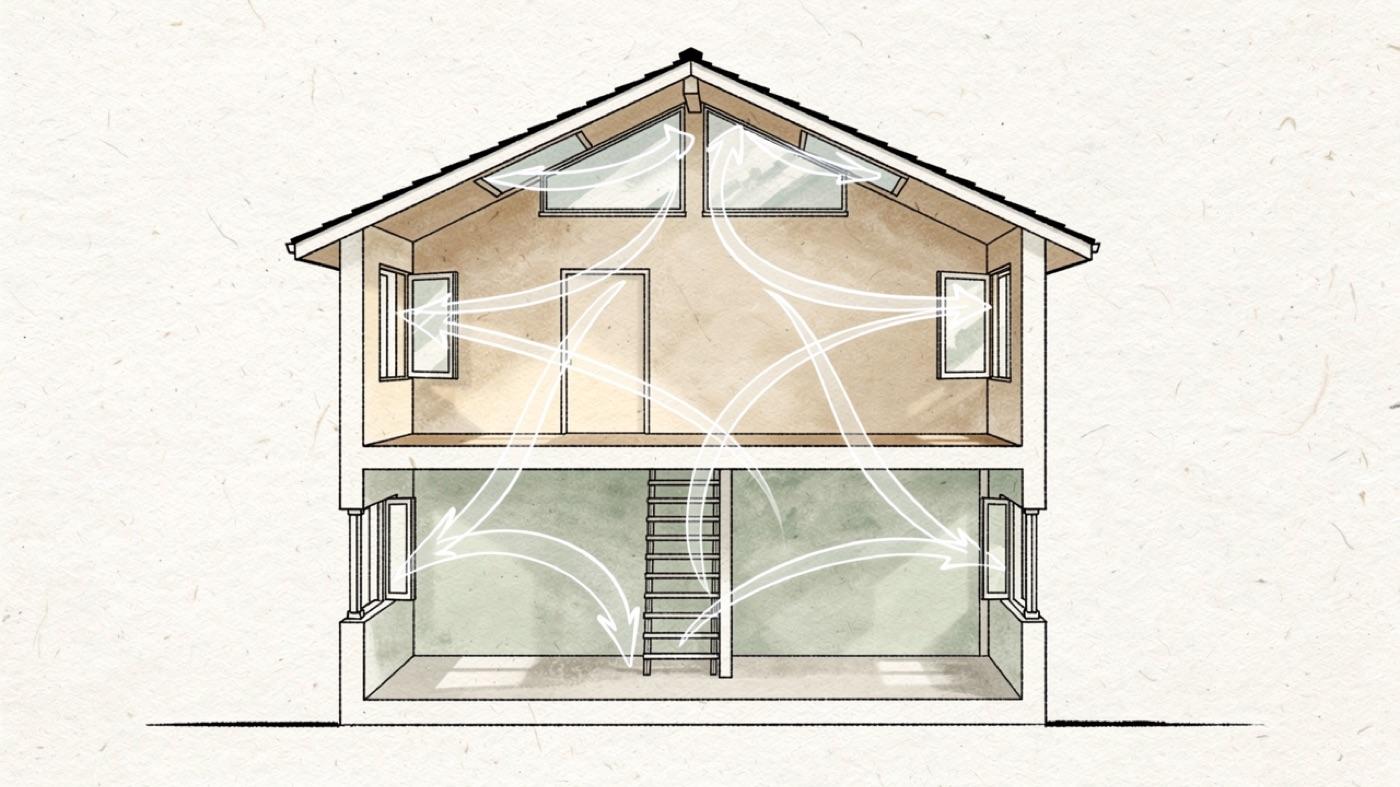
The simplest approach is opening windows to create cross-ventilation during moderate weather. We design openable windows and passive vents into every home as a baseline, and natural ventilation can be enhanced in a few ways.
- Open windows on opposite sides of the home to create cross-ventilation.
- Use window fans to increase air movement.
- Install trickle vents that allow a small air exchange even when windows are closed.
Cost: low. Effectiveness: modest and climate dependent. In Arizona summers and Florida humidity, windows stay closed for months. Our article on natural ventilation strategies covers how to design for it.
Spot ventilation
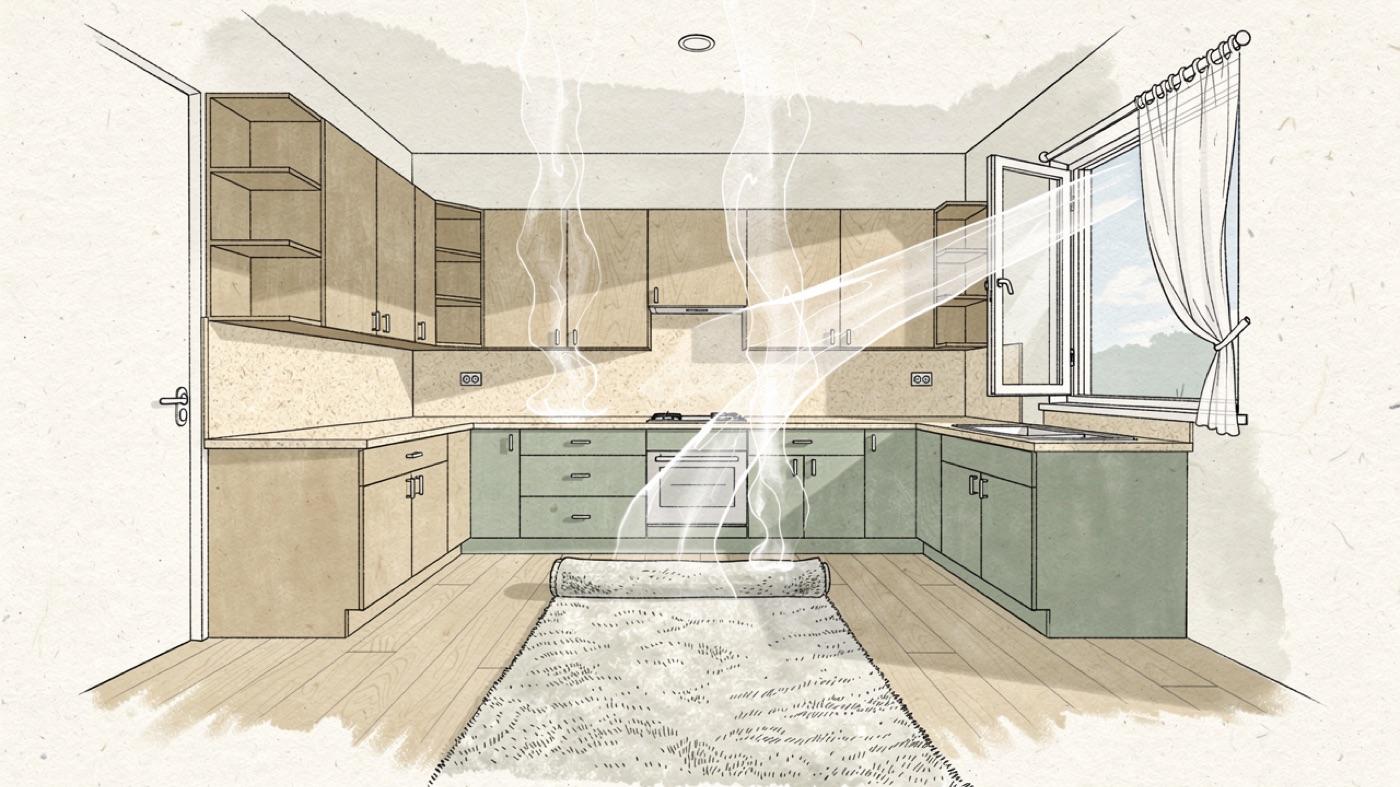
Exhaust fans in kitchens, bathrooms, and laundry rooms remove moisture and pollutants at the source. For best results, follow a few rules.
- Size the fan for the room, with a sufficient airflow rating in cubic feet per minute.
- Duct it directly outside, never into an attic or crawl space.
- Choose models with humidity sensors that run automatically when moisture rises.
- Pick quiet units, ideally under one sone, so people actually use them.
- Run the fan during cooking and showering and for 15 minutes after.
Cost: low to moderate. Effectiveness: good for the rooms it serves.
Balanced whole-house ventilation
This is the gold standard. A balanced system uses one fan to exhaust stale air and another to supply an equal volume of fresh, filtered outdoor air, so the house is neither pressurized nor depressurized. It provides consistent ventilation regardless of weather and can filter every cubic foot of incoming air.
Cost: higher. Effectiveness: excellent.
Heat recovery and energy recovery ventilators
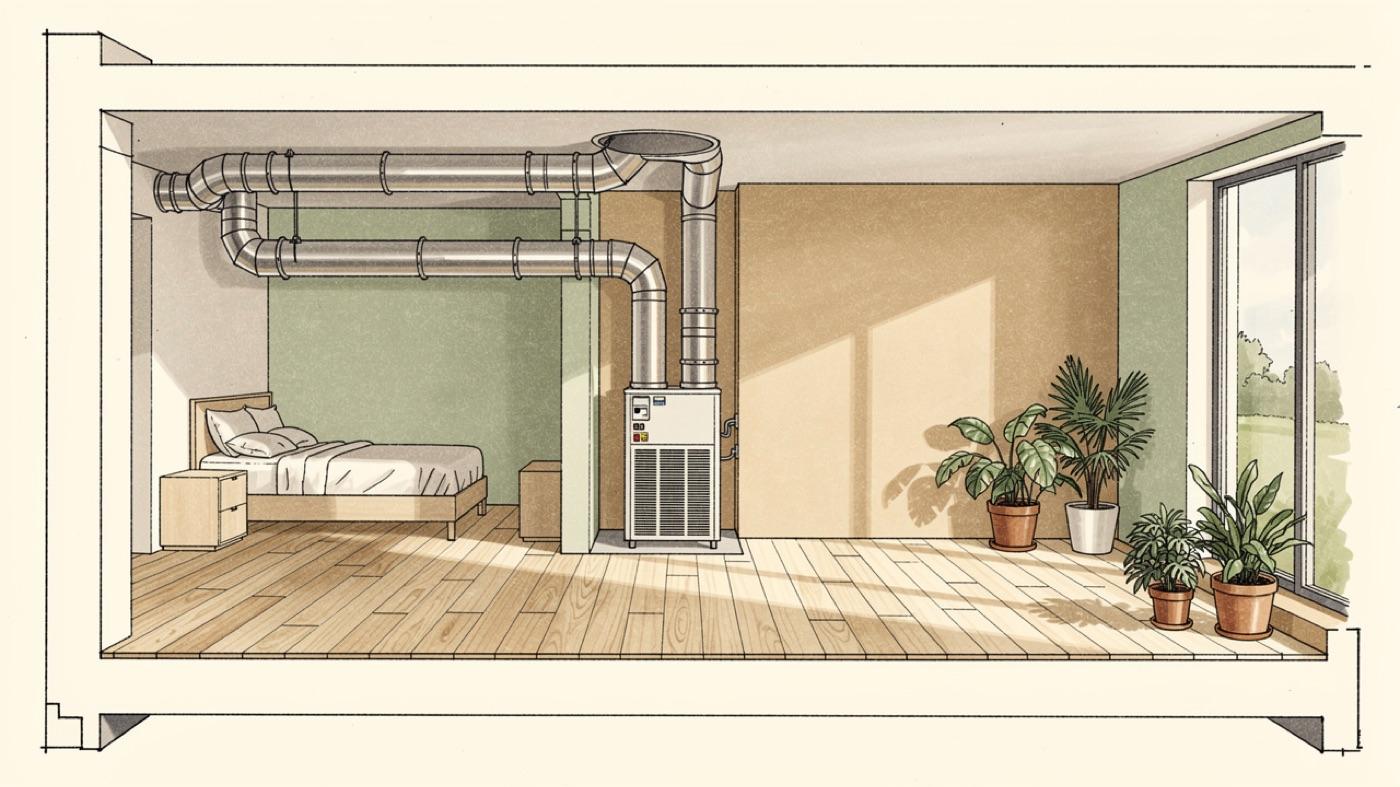
HRVs and ERVs are balanced systems with a core that transfers heat between the outgoing and incoming air streams, so you are not throwing away the energy you paid to heat or cool. They filter incoming air and, in the case of an ERV, help manage humidity.
When selecting one, look for a motor designed for continuous operation, an intake placed well away from driveways, dryer vents, and flues, low energy use, and easy filter access.
Cost: highest. Effectiveness: the best available.
ERV vs HRV: which one for your climate
An HRV transfers heat only. An ERV transfers heat and moisture. That single difference decides the choice.
Choose an HRV in cold, dry climates, where the goal is to keep heat in during winter without adding humidity. Choose an ERV in hot or humid climates, including Arizona summers and Florida year round, because it keeps outdoor humidity out and indoor humidity stable while the air conditioning runs.
Either way, specify a good filter on the intake. Have the system commissioned so the supply and exhaust flows are actually balanced.
Supply ventilation
Supply systems use a fan to pressurize the home with filtered outside air, pushing stale air out through leaks in the envelope. They suit hot, humid climates because positive pressure helps keep humid air out of wall cavities. Their drawbacks are drafts and higher heating and cooling loads, since none of the energy is recovered.
Cost: moderate. Effectiveness: good in the right climate.
Exhaust ventilation
Exhaust systems depressurize the home with a fan and draw fresh air in through vents or leaks. They are simple and inexpensive and work best in cold climates. The weakness is that incoming air is unfiltered and can be pulled through the wrong places, including crawl spaces, garages, and wall cavities.
Cost: moderate. Effectiveness: fair, with real limits.
Humidity, pressure and source control
Moving air is only half of a home ventilation system. The other half is what that air carries, and three rules decide whether the system helps or hurts.
Hold humidity near 45 percent
Controlling humidity is the single metric that does the most for indoor air quality. It reduces dust, dust mites, mold, mold spores, and even the off-gassing rate of VOCs. The target for a single-family home is about 45 percent relative humidity.
Below 30 percent you get dry skin, dry eyes and dry sinuses, and viruses stay suspended longer. Above 60 percent, surface dew points rise and mold has what it needs. Humidity comes from enclosure leakage, but also from breathing, showering, cooking and cleaning.
In hot and humid regions, the air conditioner is the biggest dehumidifier in the house. During mild shoulder seasons it does not run, and moisture builds up. That is why we recommend dehumidification that runs independently of the air conditioner.
Control the source first
Capturing contaminants at the source, or never bringing them in, is the first step. That means sealing the home, sealing the ductwork, keeping toxic chemicals including bleach out of the house, and using exhaust fans when you cook or shower. Without source control, filtration, ventilation and dehumidification are far less effective.
Watch the pressure
Duct leakage, envelope leakage, wind, and even opening doors create pressure imbalances. When the house goes negative, every gap becomes an intake. It pulls in particulates, allergens, heat and humidity from the attic, the crawlspace and outdoors.
For every bit of air an exhaust fan or a leaky supply duct pushes out, the same amount comes back in through the enclosure. Replace damaged ducting and seal supply boots to the drywall. A tight enclosure is what gives you control.
Skip active air chemistry
The indoor air quality research community has one consistent recommendation: do not do air chemistry in occupied spaces. Avoid any device, or that feature on a device, described with words like plasma, ionization, bipolar, ozone, or photocatalytic.
These technologies alter air chemistry in unpredictable ways. They may remove one pollutant well and create several new ones, and none have been shown by independent peer-reviewed research to be a net benefit. Non-ionizing HEPA filtration does the job without the gamble.
Ozone is the best documented example. EPA's review of ozone generators that are sold as air cleaners found that at concentrations that do not exceed public health standards, ozone has little potential to remove indoor air contaminants, and that its reactions with many indoor chemicals can form harmful or irritating by-products. Our article on ozone air purifiers goes into the details.
Filtration and air purification
Air purifiers are not ventilation, but they complement it. They remove particulates, allergens, and some VOCs, and they earn their place in homes with heavy outdoor pollution, a history of mold, or occupants with allergies. Look for true HEPA, activated carbon for VOCs, and no ozone production.
For homes dealing with mold, our post on HVAC system inspections for mold-sensitive homes explains how the duct system fits in.
Smart ventilation controls
Modern controls adjust ventilation rates based on measured indoor air quality, integrate with home automation, and raise airflow during high-occupancy periods. Hybrid setups switch between natural and mechanical ventilation as outdoor conditions change.
Avoiding common ventilation pitfalls
We frequently encounter ventilation systems that were undermined by poor design, cheap components, or careless installation. The symptoms are predictable.
- Drafts and uncomfortable air movement.
- Excess dust circulation.
- Noise from poorly mounted fans.
- Microbial growth in ducts and cores that were never cleaned.
- Imbalanced flows that pressurize or depressurize the home.
- Allergy symptoms that get worse instead of better after the system goes in.
A properly designed system avoids these problems through careful planning, quality components, professional installation, and commissioning that measures the actual airflow. On complex projects, a mechanical designer makes sure there is room for every air quality component before the walls close.
Creating your custom home ventilation plan
The ideal ventilation solution depends on your climate zone, your home's construction and air leakage, specific health sensitivities, budget, and energy goals. A Healthy Home Inspection evaluates all of these and produces a ventilation strategy that balances health, comfort, and efficiency.
Ventilation is one component of a truly healthy home. Our approach considers how it interacts with the building envelope, heating and cooling, non-toxic materials, and low-EMF electrical design. If you are building new, our design and build team designs fresh air in from the first drawing.