September 14, 2026
By Brian Johnson, Building Biologist and Licensed General Contractor
Fresh Air Intake: How Much Fresh Air a Home Really Needs
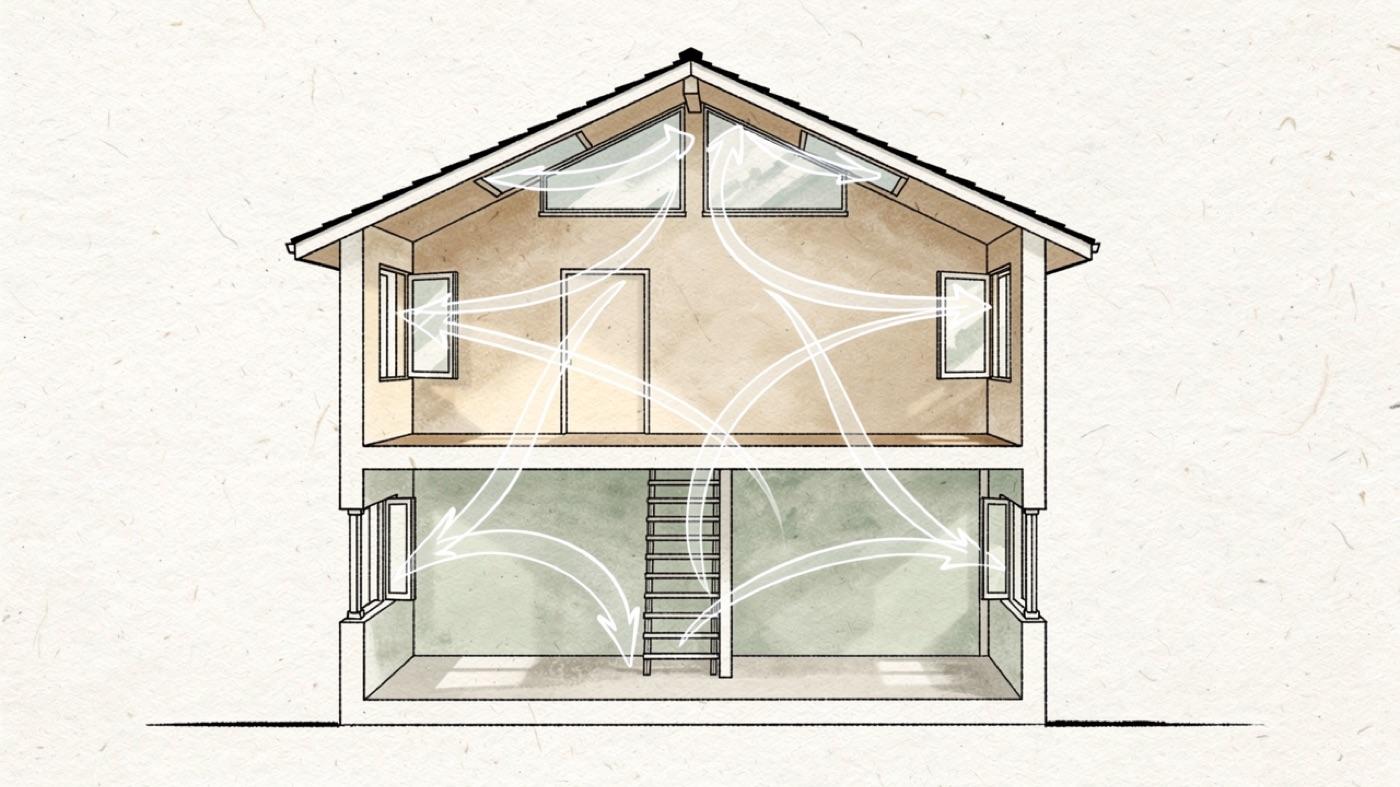
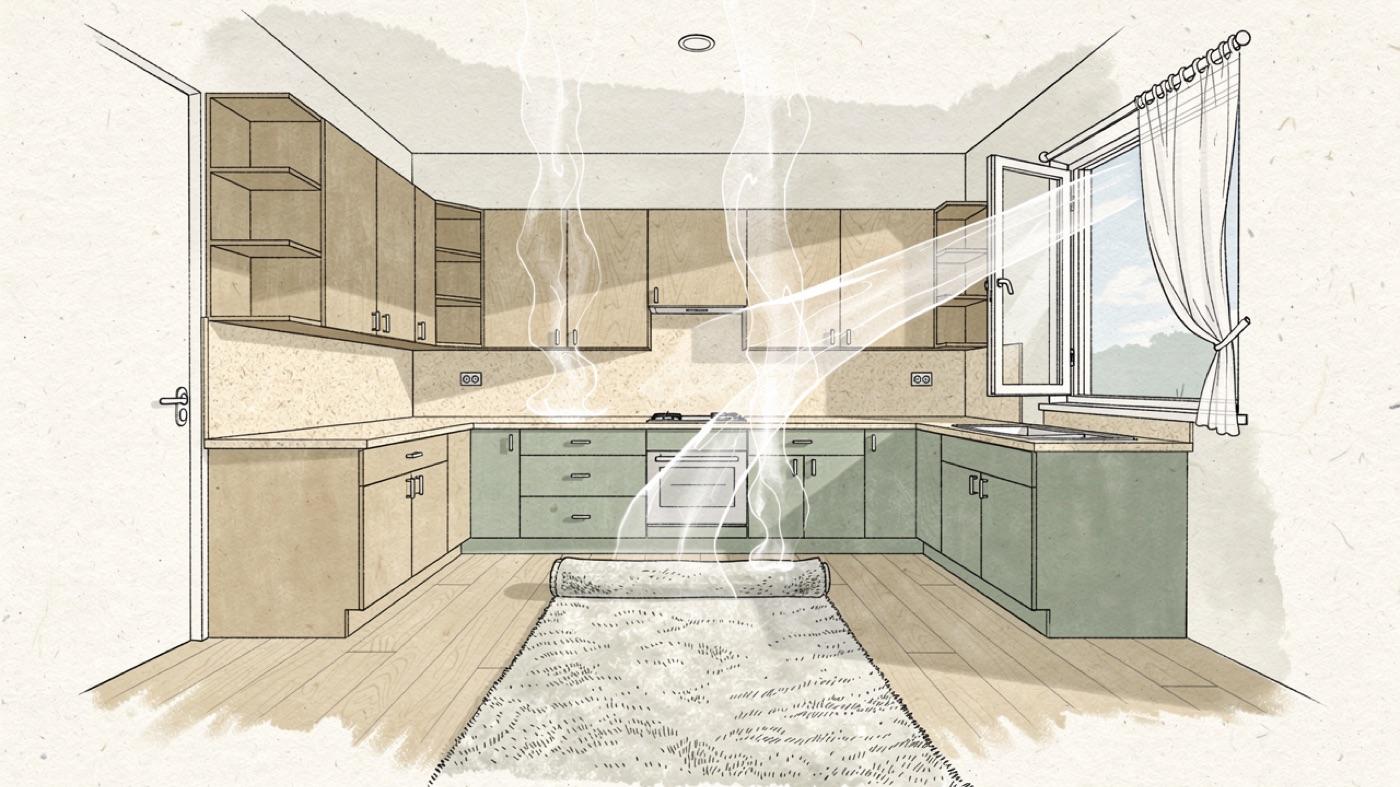
Every home needs a way to bring outdoor air in. Without a deliberate fresh air intake, carbon dioxide, humidity and the pollutants from cooking, off-gassing and simply breathing build up inside.
Older houses did this by accident, through leaks. A well-built house has to do it on purpose. This post covers the two main ways to bring air in, which one fits your climate, and how much fresh air a home actually needs.
Why a fresh air intake matters
Fresh air is not a comfort feature. It does several jobs at once, and a house that skips it fails at all of them.
- Supplies oxygen, since outdoor air is about 21 percent oxygen
- Keeps carbon dioxide and other pollutants from accumulating
- Helps regulate indoor humidity, except in hot and humid climates where it can add moisture
- Dilutes odors and reduces airborne microorganisms
- Brings in the negatively charged air ions that stale indoor air lacks
Air exchange rate is one of the best single indicators of indoor air quality. Investigations of new homes with sealed windows found air changes mostly between 0.2 and 0.5 per hour. That is not enough for a family.
The EPA's guide to improving indoor air quality names ventilation as one of three basic strategies, alongside source control and air cleaning, and points out a gap many homeowners assume is covered.
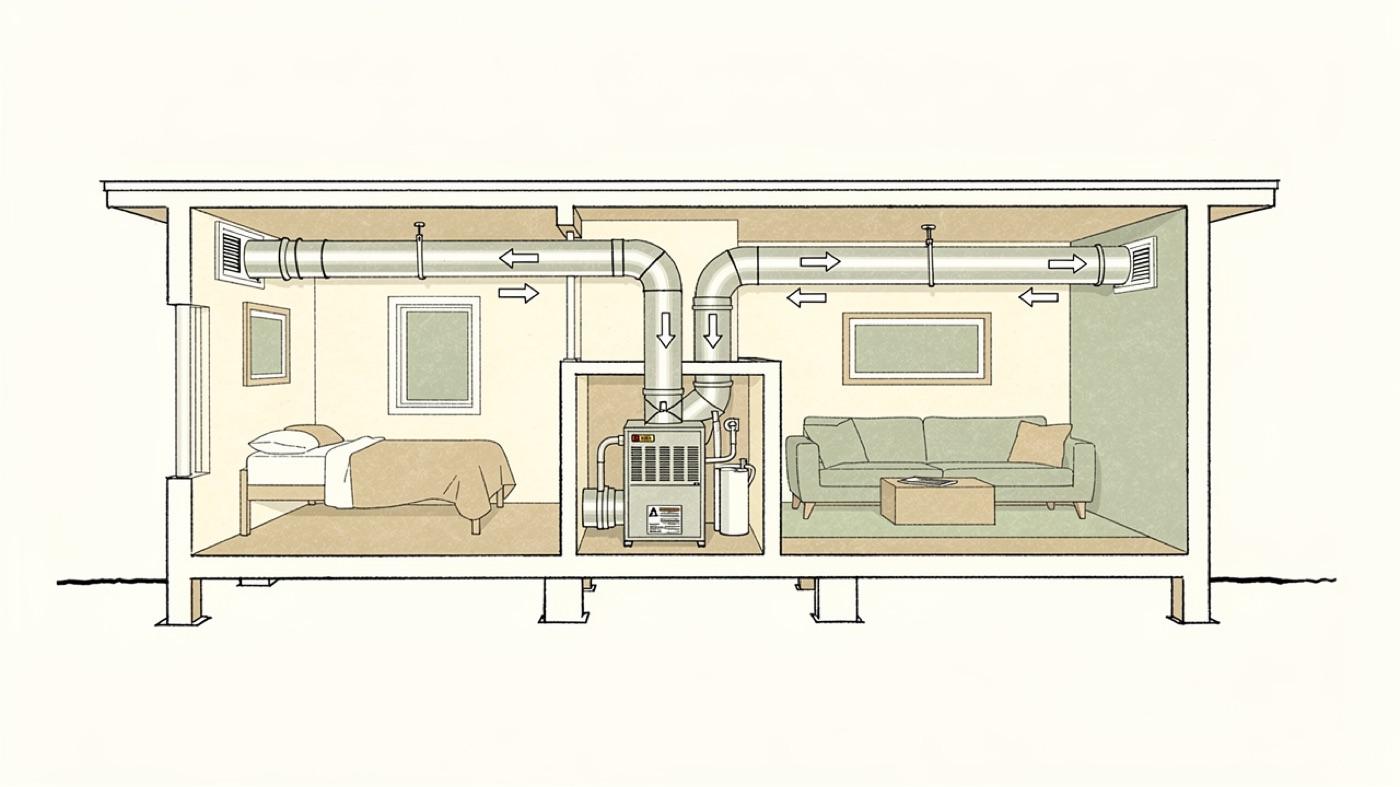
Most home heating and cooling systems, including forced air heating systems, do not mechanically bring fresh air into the house.
Two ways to bring outdoor air in
Direct fresh air intake
A direct intake ducts outdoor air straight into the return side of the HVAC system. The blower pulls it in, mixes it with indoor air, and sends it through the existing ductwork.
- Simple and low cost
- Puts the house under slight positive pressure, which pushes air out through small leaks instead of pulling it in
- The incoming air is unconditioned, so in extreme climates it can cause temperature swings, humidity problems, and extra load on the HVAC
Energy recovery ventilator
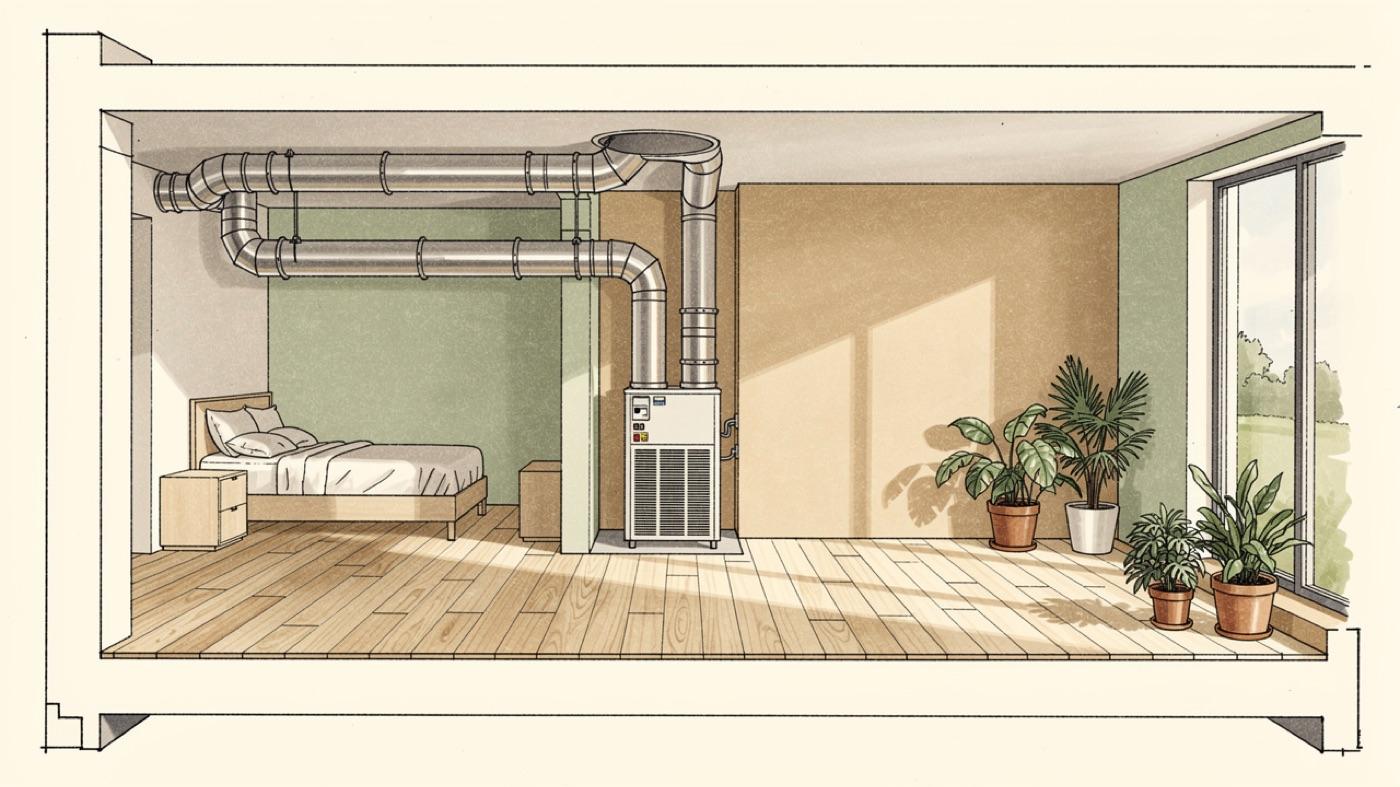
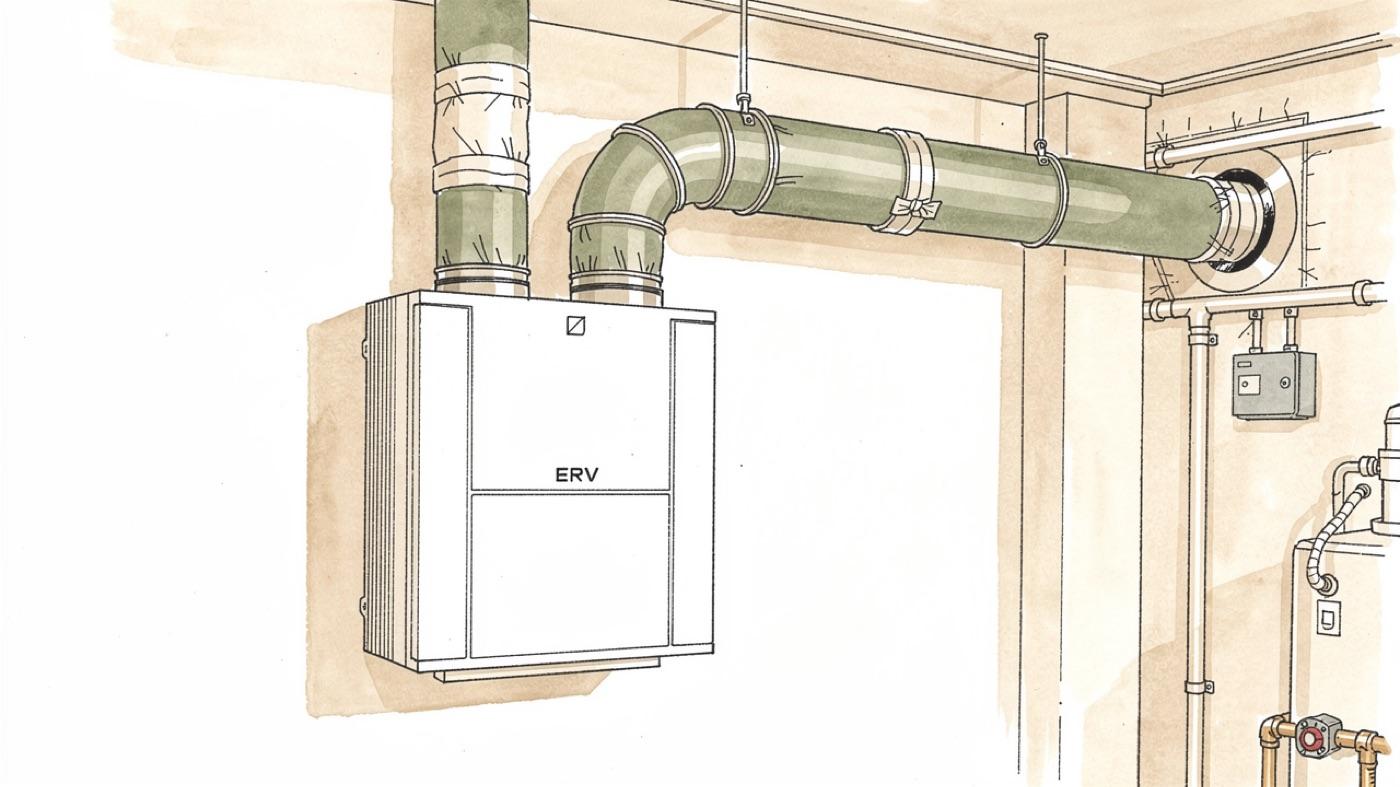
An energy recovery ventilator, or ERV, exchanges both heat and moisture between the outgoing stale air and the incoming fresh air. The two streams never mix, but the core transfers energy between them.
The U.S. Department of Energy's building science overview of energy recovery ventilation explains that both HRVs and ERVs use a heat exchanger, and that an ERV also transfers some water vapor, which helps indoor humidity stay more constant.
- Recovers energy from the exhaust air and lowers heating and cooling costs
- Pre-conditions incoming air, warmer in winter and cooler and drier in summer
- Balances pressure and humidity
- Takes the strain off the HVAC system in a tightly sealed home
Which one fits your climate
ERVs are not ideal everywhere. The right choice depends on where the house sits and how tight it is.
Hot and humid regions
An ERV rejects some moisture but may not keep up with Southeast humidity. In those homes a dedicated dehumidifier, or a heat recovery ventilator paired with a dehumidifier, often works better.
Dry and cold regions
In the Southwest, an ERV can add moisture back into dry winter air, which helps comfort. If the house is moderately leaky, natural air exchange is already happening, and a direct intake may be all that is needed.
Mild or mixed regions
Either approach can work. The deciding factors are the airtightness of the envelope and how many people live there.
Tight homes and leaky homes are different problems
A tightly sealed, high-performance home has almost no natural infiltration. Mechanical ventilation is essential, because air has to be brought in and exhausted on purpose. In return, the air quality is controlled and predictable, and humidity can be balanced by an ERV or a dehumidifier.
A leaky older home has high uncontrolled infiltration. Mechanical ventilation is often not required, because the leaks do the job, badly. That air arrives through crawlspaces, attics and wall cavities, and heating and cooling energy leaves the same way.
Once you air-seal an older home, you have changed its category. Any air-sealing project should trigger some form of controlled ventilation. That is a core part of the building science and performance enclosure principle we design to.
Pressure and exhaust
A direct intake slightly pressurizes the house. Gentle pressurization is the goal. Enough to reduce infiltration, not so much that conditioned air is forced out through gaps, bath fans and vents.
If the pressure is unbalanced, warm moist indoor air can be pushed into the walls. In a cold climate that means condensation inside the assembly. An ERV avoids the problem by moving the same volume of air in as it moves out.
How much fresh air a home needs
The ASHRAE 62.2 formula
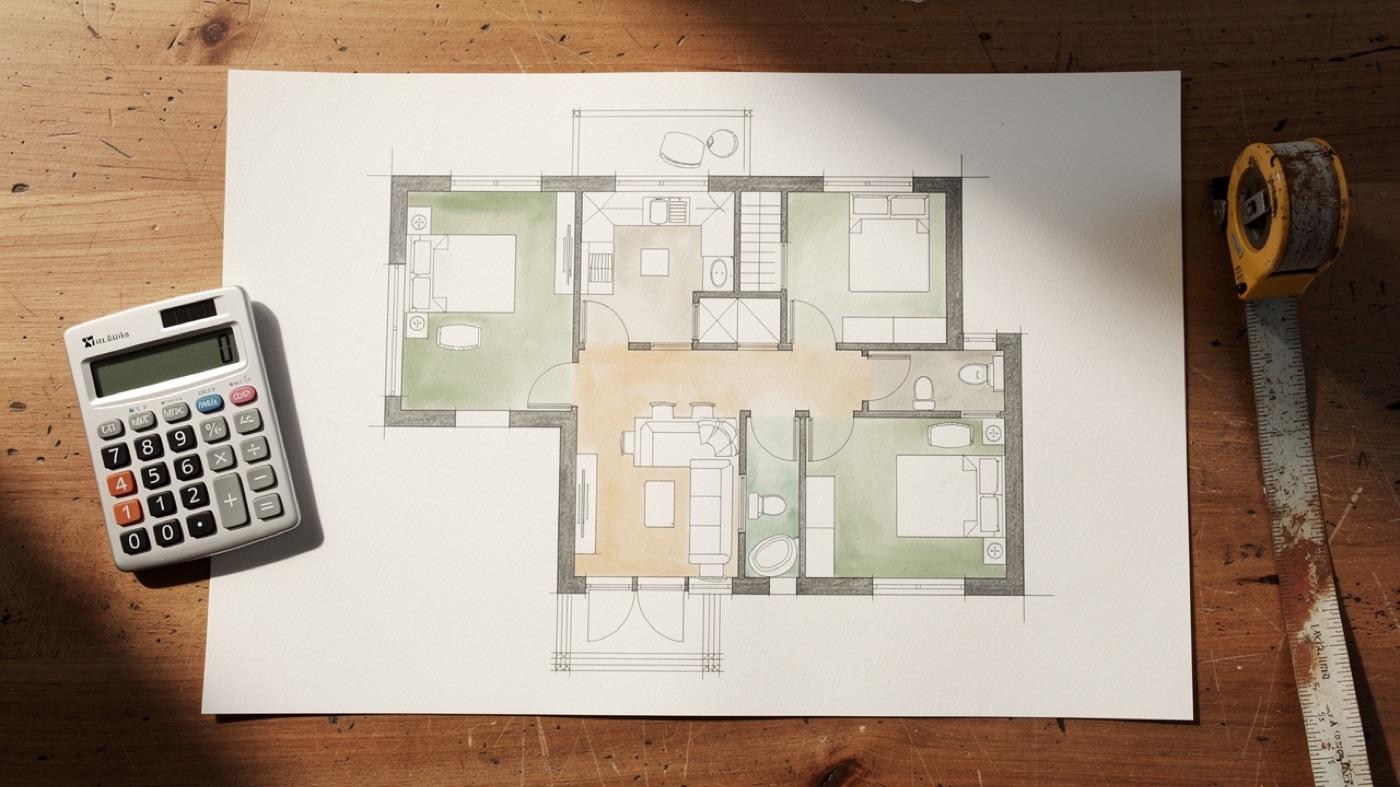
The current residential standard, ASHRAE 62.2, sizes whole-house ventilation with a simple formula. Take 7.5 cubic feet per minute for each occupant plus one, then add 0.01 cfm for every square foot of floor area.
A 1,500 square foot house with three occupants works out to 7.5 times 4, plus 15. That is 45 cfm of continuous fresh air.
What the history tells us
The number has moved around. In 1895, North American ventilation authorities called for 30 cfm per occupant. By the mid-1930s it dropped to 10 cfm, because odor was the only concern anyone measured.
After many revisions, the 2001 ASHRAE standard came back up to at least 15 cfm per person in living areas. Germany's occupational health institute considers 30 cfm appropriate for one person at rest or doing light work. Active occupants easily need double, and rooms with a fireplace or smoking need several times more.
Carbon dioxide as the yardstick
A useful rule of thumb: one quart of exhaled carbon dioxide needs about 35 cubic feet of fresh air to dilute it. That translates to roughly 18 to 35 cfm of fresh air per person under normal outdoor conditions.
In a 1,766 cubic foot room with three people, CO2 climbed within four hours no matter what, but the ceiling depended on the air change rate.
- 0.3 air changes per hour reached above 3,000 ppm
- 1 air change per hour reached above 1,500 ppm
- 2 air changes per hour reached above 900 ppm
Outdoor air sits near 300 to 400 ppm, and that is the target we design toward. The concentration of every other indoor toxin tracks the air change rate the same way. Our post on CO2 levels in a house explains what the readings mean.
What we recommend
The questions are the same on every project. How much outside air do you need, how do you distribute it, how do you clean it, and do you need to add or remove moisture and heat along the way.
- New high-performance homes: always a balanced strategy, ideally an ERV or HRV tied to the HVAC or ducted on its own
- Moderately tight or retrofit homes: a filtered fresh air intake into the HVAC return with a barometric damper or a smart control such as Honeywell or Aprilaire
- Leaky older homes: mechanical ventilation may not be needed yet, but plan for it the moment you start air sealing
The tighter the envelope, the more the house depends on mechanical systems to manage air, humidity and comfort. An ERV is not about selling equipment. It is about keeping conditioned, balanced air moving through a tight home, which is exactly what the climate control, ventilation and indoor air quality principle calls for.
For the full range of options, from exhaust fans to balanced systems, see our home ventilation guide.
If you are not sure which category your house falls into, a Healthy Home Inspection measures the leakage and the CO2 and tells you.