September 14, 2026
By Brian Johnson, Building Biologist and Licensed General Contractor
Home Allergen Test Guide: Find What Is Making Your Family React
Sneezing at home but fine at work is a clue. So is a child whose asthma flares every night. A home allergen test turns those clues into a list of specific triggers, and that list decides what you fix first.
At SENERGY360 we see allergens as one layer of indoor air quality. Testing for them belongs alongside testing for mold, particulates and chemicals, because the fixes often overlap.
The allergens most homes carry
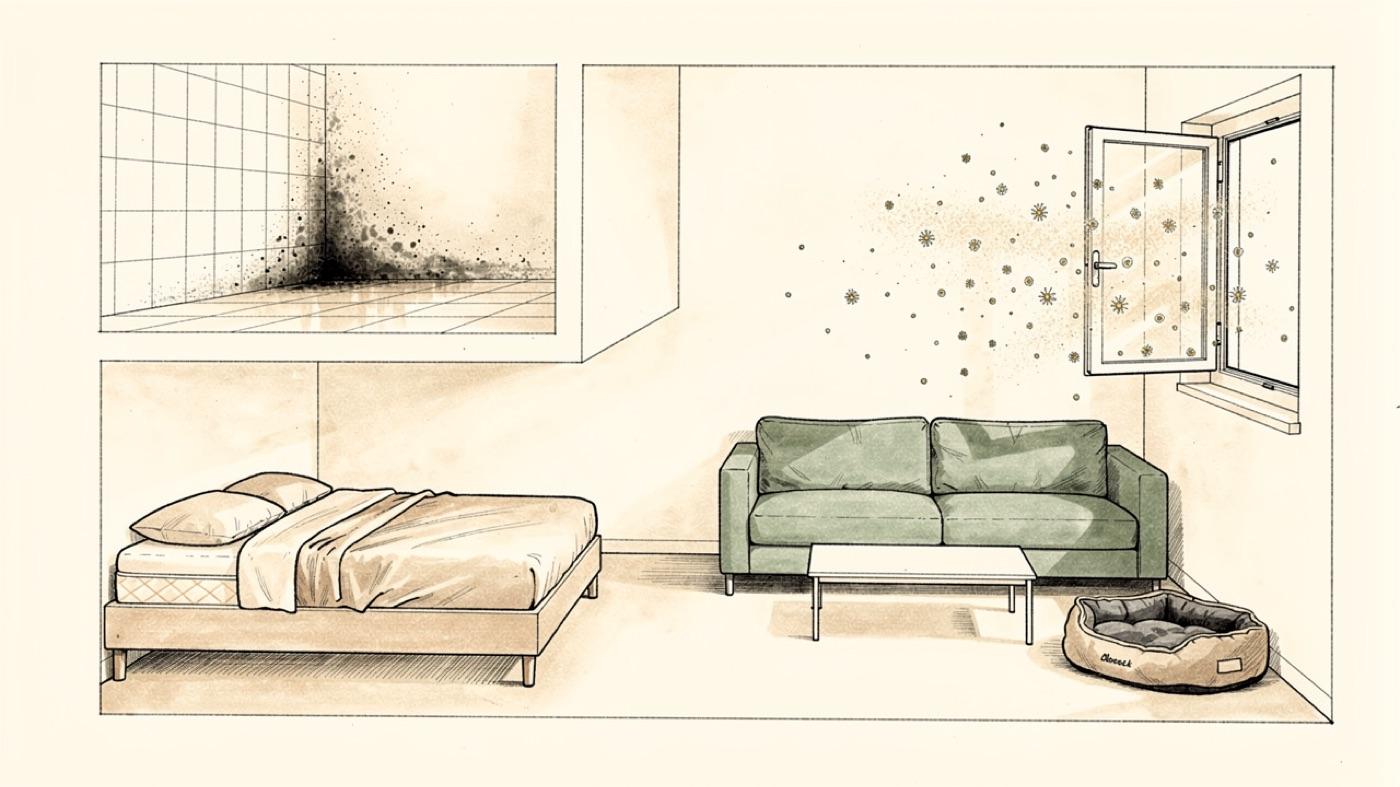
The National Institute of Environmental Health Sciences explains that allergies arise when the immune system overreacts to substances that are normally harmless in most people. It lists pollens, fungal spores, house-dust mites and animal materials among the most common allergens, the same four we cover below.
Dust mites
Dust mites are microscopic creatures that live in warm, humid fabric. Mattresses, pillows and upholstered furniture hold the largest populations.
They are present in nearly every home. For sensitive people they trigger sneezing, a runny nose and asthma attacks, and the reaction is strongest in bed because that is where exposure is highest.
Mold
Mold grows wherever moisture meets organic material. Bathrooms, basements, window sills and the drywall behind a slow leak are the usual places.
Exposure brings respiratory symptoms, skin irritation and a stronger response to other allergens. Mold is also the one allergen that signals a building problem, so a positive result calls for a moisture investigation, not just cleaning.
Pet dander
Dander is skin flakes, and it travels with saliva and urine proteins. It clings to fabric and drifts on air currents, so it shows up in rooms the pet never enters.
Regular grooming, cleaning and a pet-free bedroom bring levels down. Testing shows whether those steps are working.
Pollen and outdoor allergens
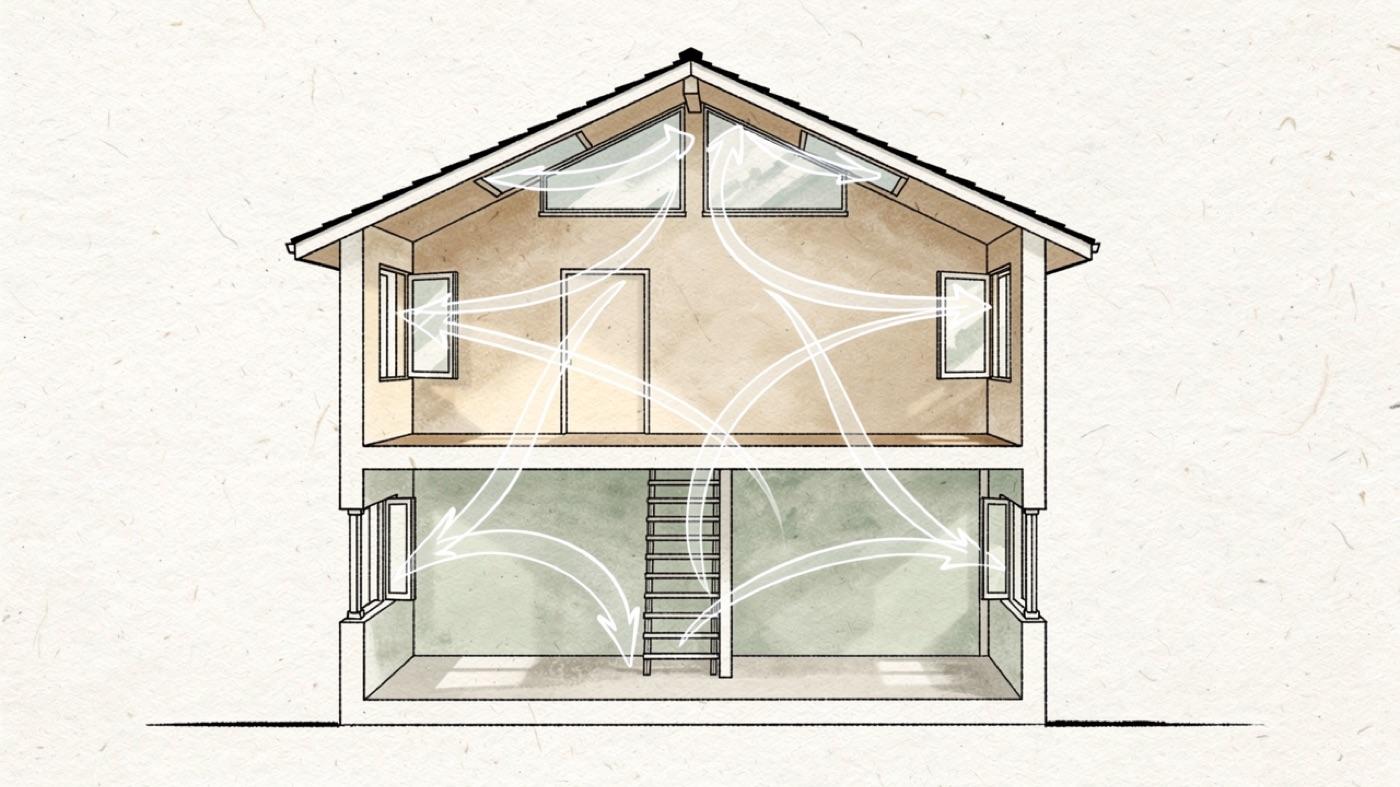
Pollen rides in on clothing, hair and open windows. During high-pollen seasons it accumulates on floors and fabric indoors.
Timing matters. Ventilating in the early morning or after rain, and keeping windows closed at peak pollen hours, limits how much comes in.
Why a home allergen test matters
Symptoms tell you something is wrong. They rarely tell you what. A home allergen test identifies the specific triggers present, so you can act on the right one instead of cleaning everything and hoping.
Testing also sets a baseline. Retesting after changes shows whether the mattress covers, the dehumidifier or the new flooring actually moved the numbers.
Types of home allergen test
In-home kits
Kits let you collect samples yourself and mail them to a lab. Most use a swab for surfaces or a fabric sock on a vacuum nozzle to gather settled dust.
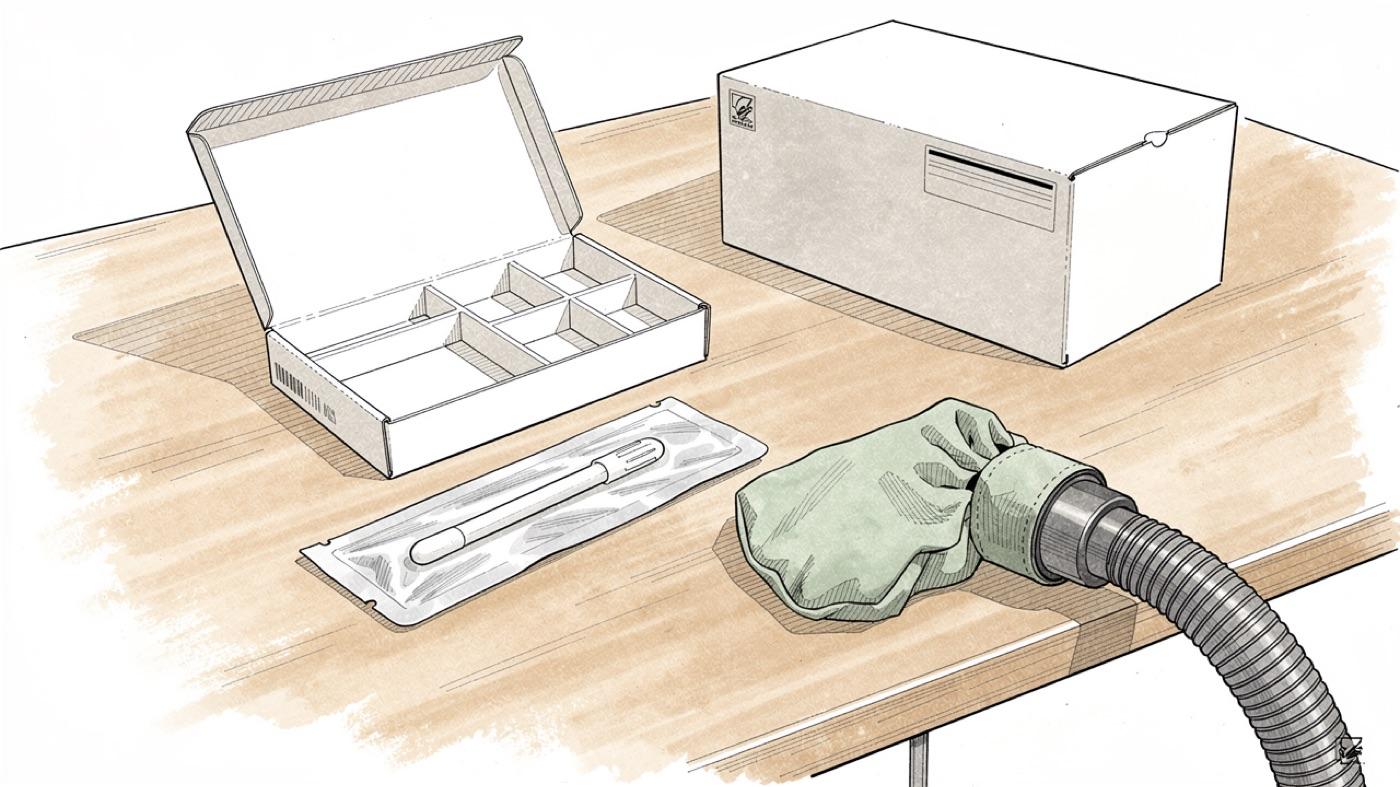
Kits are a fair first step. They can confirm dust mite or pet allergen in a specific room. They cannot tell you where hidden mold is growing or why humidity is high, and they only sample the spots you chose.
Professional testing
A professional IAQ inspection covers the whole house with calibrated equipment. The inspector looks for both visible and invisible allergens, measures humidity and air movement, and reads the building for the conditions that feed each allergen.
The difference is interpretation. A lab number means little without knowing whether the dust came from a carpet, a duct or a leaking wall. Our post on mold testing kits versus a professional inspection covers the same trade-off for mold.
When symptoms are serious or the kit results do not explain them, book a healthy home inspection. It includes allergen sampling as part of a full indoor air review, and what a mold inspection includes explains the moisture side of that visit.
What to do with the results
Assess room by room
Walk every room with the results in hand. Note where each allergen concentrates and rank the rooms by how much time the sensitive person spends there.
The bedroom almost always comes first. Eight hours a night on a mattress full of dust mites outweighs any other exposure.
Clean and maintain on a schedule
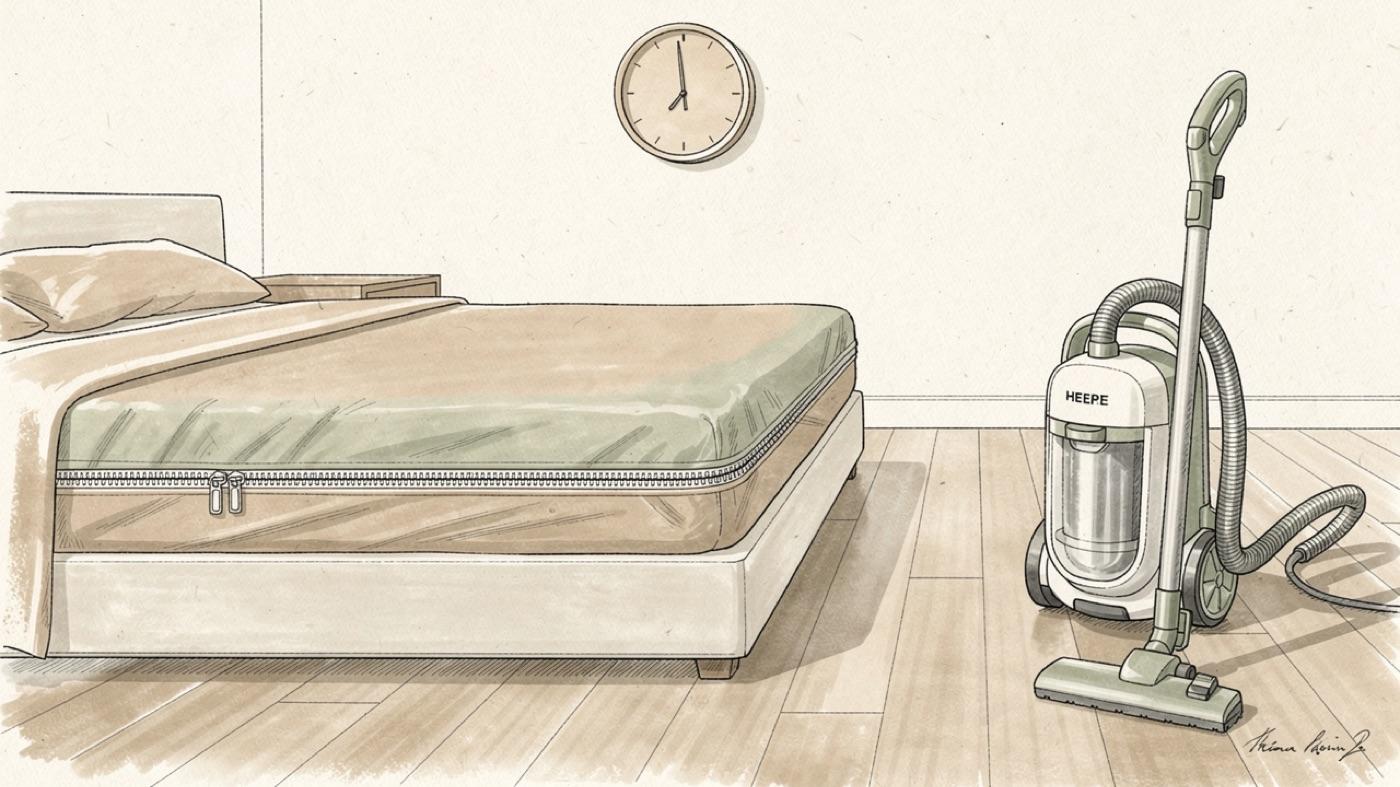
- Vacuum carpets and upholstery with a true HEPA vacuum
- Wash bedding weekly in hot water and use zippered encasements on mattresses and pillows
- Dust hard surfaces weekly with a damp cloth so dust is removed, not lifted
- Keep indoor humidity between 30 and 50 percent to starve dust mites and mold
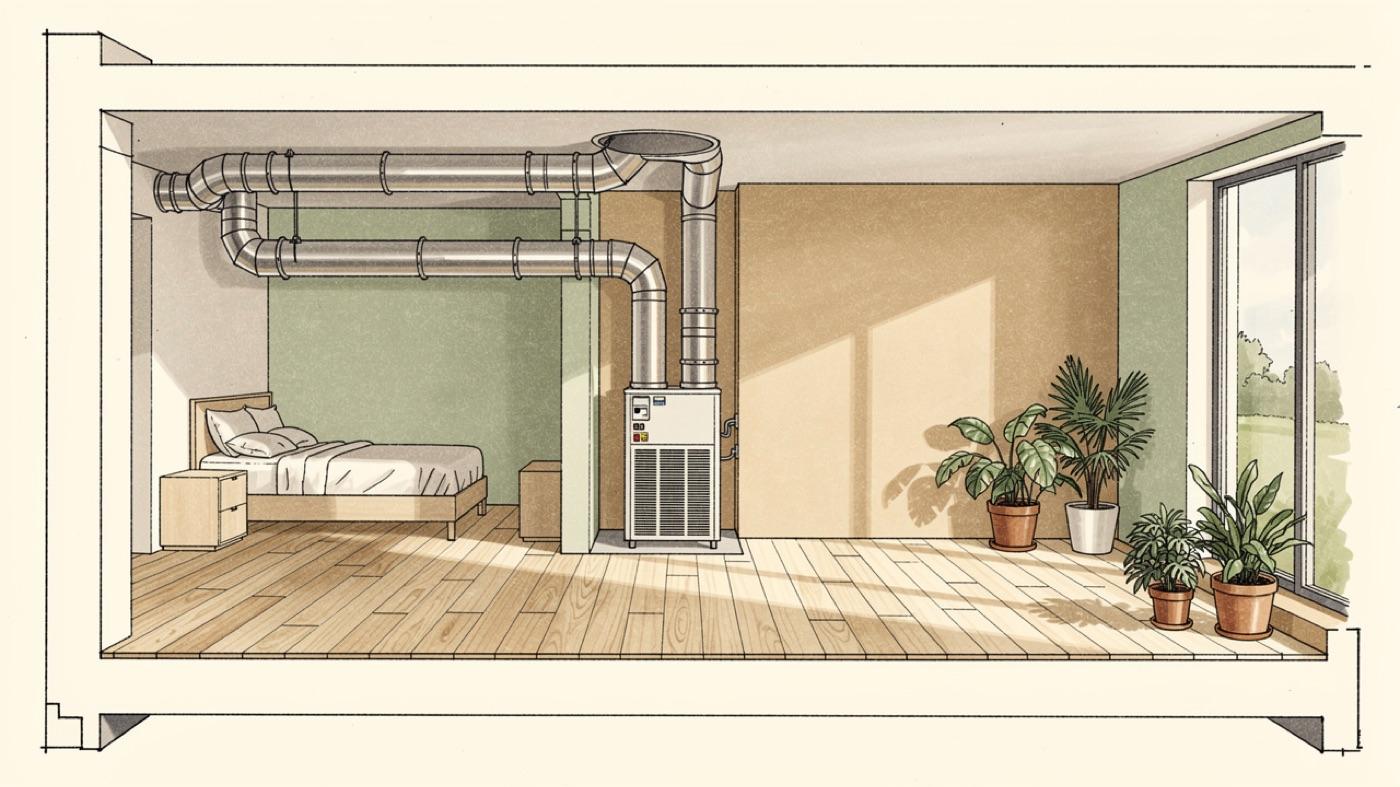
- Change HVAC filters on schedule and keep supply registers clean
The humidity target comes straight from EPA guidance on biological contaminants, which names mold, dust mites, pollen and pet allergens as asthma and allergy triggers.
Keep indoor relative humidity below 60 percent indoors, and ideally between 30-50 percent.
Our six-step method for reducing dust in your house goes further on the cleaning side.
Change the building where it helps
Some allergens are easier to remove by design than by cleaning. Hard flooring holds far less dust than carpet. Washable window coverings beat heavy drapes.
Our non-toxic flooring guide covers the hard floors we specify.
Creating one allergen-controlled bedroom, with hard floors, encased bedding, no pets and filtered air, gives a sensitive person a place to recover every night. In new construction we design that room in from the start using hypoallergenic, low-emission materials.
Retest, then relax
After the changes, test again. Falling numbers confirm the plan worked and show which steps mattered most.
An allergen test is a starting point, not a verdict. It points to the trigger, the building tells you why it is there, and a few targeted changes usually solve what years of general cleaning could not.