September 7, 2026
By Brian Johnson, Building Biologist and Licensed General Contractor
Non-Toxic Flooring: What a Building Biologist Would Put in Your House
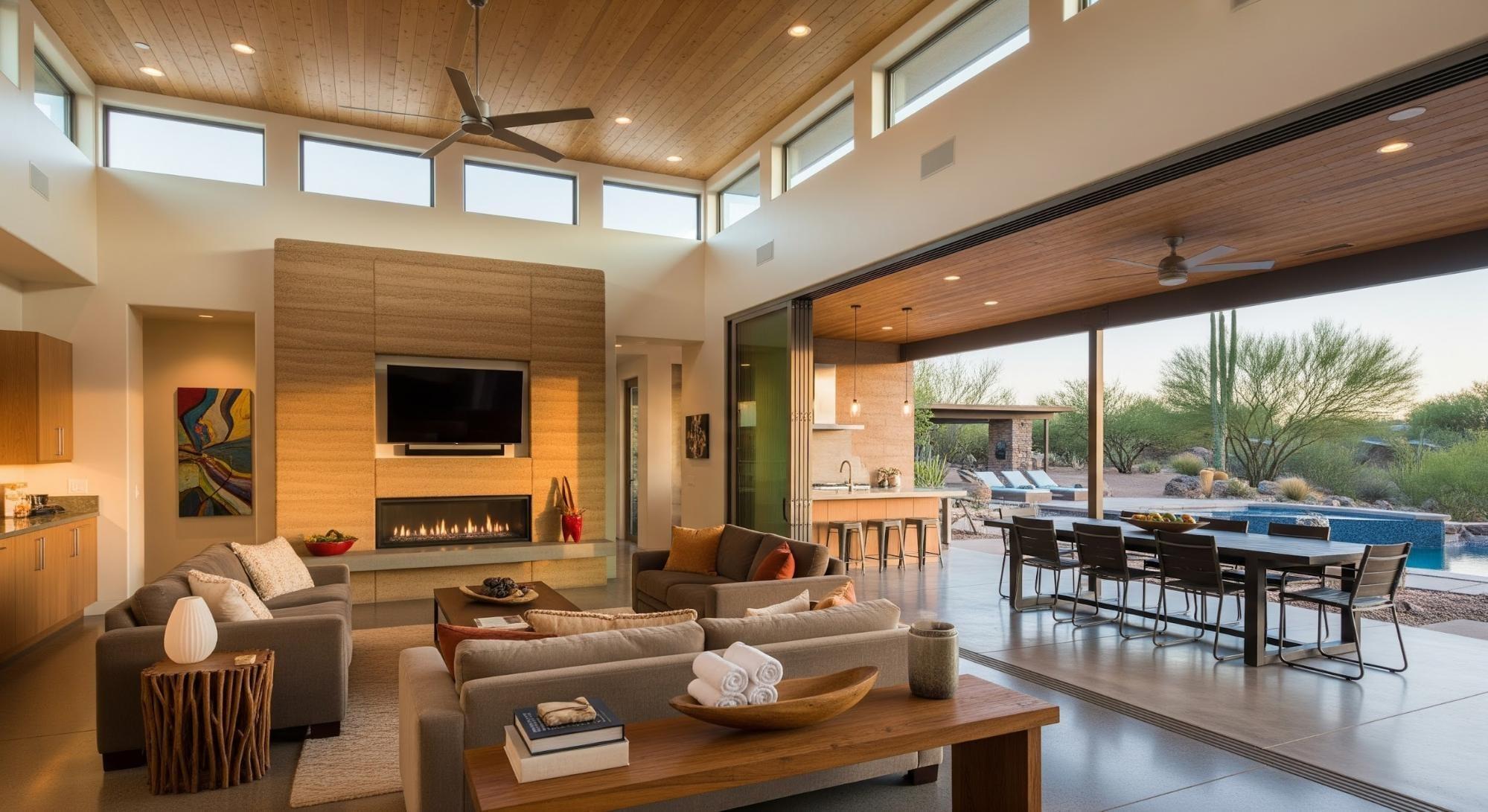
Flooring is the largest surface in your house that you touch every day. It is where kids crawl, where dust settles, and where the air you breathe at night starts.
It is also one of the most confusing purchases in a home. Every box on the shelf has a green leaf on it, and almost none of those labels tell you what is actually in the product.
At SENERGY360, we choose floors for a living, and we are asked about them on nearly every Healthy Home Inspection. This is the guide we wish our clients had before they walked into the flooring store.
What makes a floor non-toxic
A floor is a system, not a slab of material. What matters for indoor air is the finished floor, the adhesive or underlayment beneath it, the finish on top of it, and how all of that ages.
The main concerns are formaldehyde from wood-based cores and glues, volatile organic compounds from finishes and adhesives, plasticizers and other additives in vinyl, flame retardants and stain treatments in carpet, and anything that traps moisture and grows mold.
Low VOC flooring is a good start, but "low VOC" only describes what evaporates in the first days. A truly non-toxic floor is also stable over decades, cleans without chemicals, and does not become a mold reservoir if it gets wet.
The U.S. EPA's facts about formaldehyde list resins used in composite wood products, such as hardwood plywood, particleboard and medium-density fiberboard, among the main sources, which is why the core of a floor matters as much as its face.
The primary way you can be exposed to formaldehyde is by breathing air containing off-gassed formaldehyde.
Solid hardwood with a natural finish
Verdict: the best floor most people can buy.
Solid hardwood is one material, milled from a tree, with nothing inside it to off-gas. The only variables are the finish and how it is fastened.
Nail it down over a plywood or solid-wood subfloor and finish it with a natural oil or hardwax oil, and you have a floor that is safe on day one and will still be safe when your grandchildren refinish it.
The finish matters. A conventional oil-based polyurethane emits solvents for weeks. Water-based polyurethanes are better, and plant-oil finishes are better still. We cover finishes in more depth below.
Tile and stone
Verdict: excellent, if you mind the layers beneath it.
Ceramic and porcelain tile are fired clay. Natural stone is quarried rock. Neither emits anything, and both are easy to clean with water.
The health questions live in the setting materials. Thinset mortar is cement-based and benign once cured. Grout is where problems hide: epoxy grouts emit during cure, and sanded cement grouts need a sealer, so we look for low-emission sealers and give them time to cure before the room is occupied.
Waterproofing membranes behind shower tile vary widely. Some are sheet membranes, some are liquid-applied and solvent-heavy. Ask what is going behind your tile, not just what is on top.
Polished or sealed concrete
Verdict: very good, with the right sealer.
On a slab-on-grade home, the concrete you already own can be the floor. Polished concrete is ground and densified with a silicate hardener, which is mineral and does not off-gas.
Stained and sealed concrete depends entirely on the sealer. Acrylic and urethane sealers emit during cure and need re-coating. Silicate and lithium densifiers penetrate rather than coat and are the healthier choice.
Concrete is also cold and hard underfoot, and it must be dry before any topical coating goes on. We test slab moisture before we let anyone seal a floor.
True linoleum vs vinyl
Verdict: true linoleum yes, vinyl no.
These two get confused constantly, and the difference is the whole point.
True linoleum is made from linseed oil, pine rosin, wood flour, cork dust, and mineral pigments on a jute backing. Marmoleum is the brand name most people know. It has a mild linseed smell when new, it is naturally antistatic, and it lasts for decades.
Vinyl flooring is polyvinyl chloride. PVC needs plasticizers to stay flexible, and the phthalate plasticizers used historically have been a documented concern for children's exposure. Newer vinyl uses alternative plasticizers, and luxury vinyl plank is now marketed as phthalate-free, but the base material is still a chlorinated plastic that we do not specify in bedrooms or nurseries.
The linoleum vs vinyl question comes up because they look similar in a catalog and the words get swapped in conversation. If the box says PVC, it is vinyl.
Cork flooring pros and cons
Verdict: good, with a caveat on the binder and finish.
Cork is harvested bark from a living tree that regrows it. It is warm underfoot, quiet, and naturally resistant to mold and pests.
The pros are comfort, sound, and renewability. The cons are the binder that holds cork granules together, which is often a urethane resin, and the factory finish, which can be a conventional polyurethane. Glue-down cork also depends on the adhesive.
Look for cork with a low-emission binder and a water-based or natural oil finish, and plan to refinish it with a plant oil when the factory coat wears.
Engineered hardwood
Verdict: acceptable if you read the core and the glue.
Engineered hardwood is a real wood veneer over a plywood or fiberboard core. The veneer is fine. The core is where formaldehyde can live, because the layers are bonded with resin.
In the United States, composite wood cores must meet the formaldehyde emission limits set by California's CARB Phase 2 and the federal TSCA Title VI rule. Those limits cap emissions at roughly a hundredth of a part per million for plywood cores, and a compliant label is now standard. That is a floor, not a ceiling: some manufacturers go further with no-added-formaldehyde cores, and those are the ones we prefer.
Engineered floors are often glued down. The adhesive can emit more than the flooring, so specify a low-VOC or solvent-free adhesive, or float the floor where the product allows it.
Laminate flooring
Verdict: use with caution, and never in a room that gets wet.
Laminate is a photograph of wood printed on paper, bonded to a fiberboard core, and covered with a clear wear layer. The question "is laminate flooring toxic" is really a question about the fiberboard and the melamine wear layer.
Compliant laminate meets the same formaldehyde limits as engineered wood, and the wear layer is stable once cured. The bigger problem in our inspections is water. Fiberboard swells when it gets wet, holds moisture, and grows mold from underneath. A laminate floor after a dishwasher leak is usually a demolition job.
If laminate is the budget, keep it out of kitchens, baths, and laundry rooms, and use a foam underlayment without added antimicrobials.
Luxury vinyl plank
Verdict: no, for the same reasons as vinyl.
Luxury vinyl plank, or LVP, is vinyl with a thicker wear layer and a rigid core. It is waterproof, which is why it has taken over the market, and that is a real advantage after a leak.
The trade-off is a house floored in chlorinated plastic. Even phthalate-free lines contain plasticizers and stabilizers, and vinyl is the flooring most likely to show up in a chemical fire's smoke. Where a client insists on waterproof, we steer toward tile or sealed concrete.
Carpet
Verdict: wool carpet with a natural pad, or no carpet at all.
Carpet is the floor a building biologist worries about most, because it is three products in one. The face fiber, the backing, and the pad each have their own chemistry, and the whole assembly holds dust, allergens, and moisture.
Conventional carpet is nylon or polyester face fiber on a synthetic latex backing, often treated with stain repellents that have historically included fluorinated compounds. The pad is usually rebond foam, which can contain flame retardants.
Non-toxic carpet exists. Wool carpet with a jute or natural latex backing, no stain treatment, and a wool or natural felt pad is the version we specify. Low VOC carpet labels help with the first weeks of off-gassing, but they say nothing about what is in the stain treatment or the pad.
If someone in the home has asthma, allergies, or chemical sensitivity, our honest advice is to keep carpet to area rugs that can be taken outside and beaten.
What FloorScore does and does not tell you
FloorScore is a third-party certification that tests flooring for emissions of specific volatile organic compounds and certifies products that fall below California's indoor air standard.
What it tells you: the product's own VOC emissions in a test chamber were low. That is useful and worth looking for.
What it does not tell you: what the flooring is made of, whether it contains plasticizers or flame retardants that are not volatile, what the adhesive or pad will emit, or how the floor behaves after a water event. A vinyl plank can carry a FloorScore label and still be PVC.
The same limits apply to other emissions labels. Our post on what GREENGUARD Gold certified means walks through what those tests cover and what they leave out.
We treat FloorScore as a screen, not a verdict. It narrows the field. It does not pick the winner.
The layers under the floor
Because the floor is a system, the parts you never see matter as much as the part you walk on.
- Subfloor: plywood is preferable to oriented strand board, and both should meet the current formaldehyde rules.
- Underlayment: cork, natural felt, or plain foam without antimicrobial additives.
- Adhesive: solvent-free and low-VOC, or none at all when the floor can be nailed or floated.
- Moisture barrier: required over slabs, and selected for the vapor profile of the whole assembly.
- Finish: natural oil, hardwax oil, or water-based polyurethane, applied and cured before move-in.
Every one of those choices is invisible a week after installation. Every one of them shows up in the air for years.
How we specify floors
Flooring sits inside the healthy building materials principle of SENERGY360's 12 CORE Principles for Healthy Building Design, but it touches the mold prevention principle just as hard.
For each floor in a home we ask four questions. What is it made of. What does it and its adhesive emit during cure and over its life. What happens to it when it gets wet. And how is it cleaned without chemicals.
On our Jupiter, Florida build, a FASWALL home over a slab in a humid climate, those questions ruled out fiberboard cores entirely and pushed the design toward tile and solid wood. In the Arizona desert the moisture risk is lower and sealed concrete becomes a strong option.
There is no single healthiest flooring for every house. There is a healthiest flooring for your house, your climate, and your family. If you are choosing floors for a remodel or a new build, a Healthy Home Inspection will tell you what your subfloor and slab are doing today, and our design and build team can specify every layer from the concrete up.