September 14, 2026
By Brian Johnson, Building Biologist and Licensed General Contractor
How to Reduce Dust in Your House: A Six-Step Method That Works
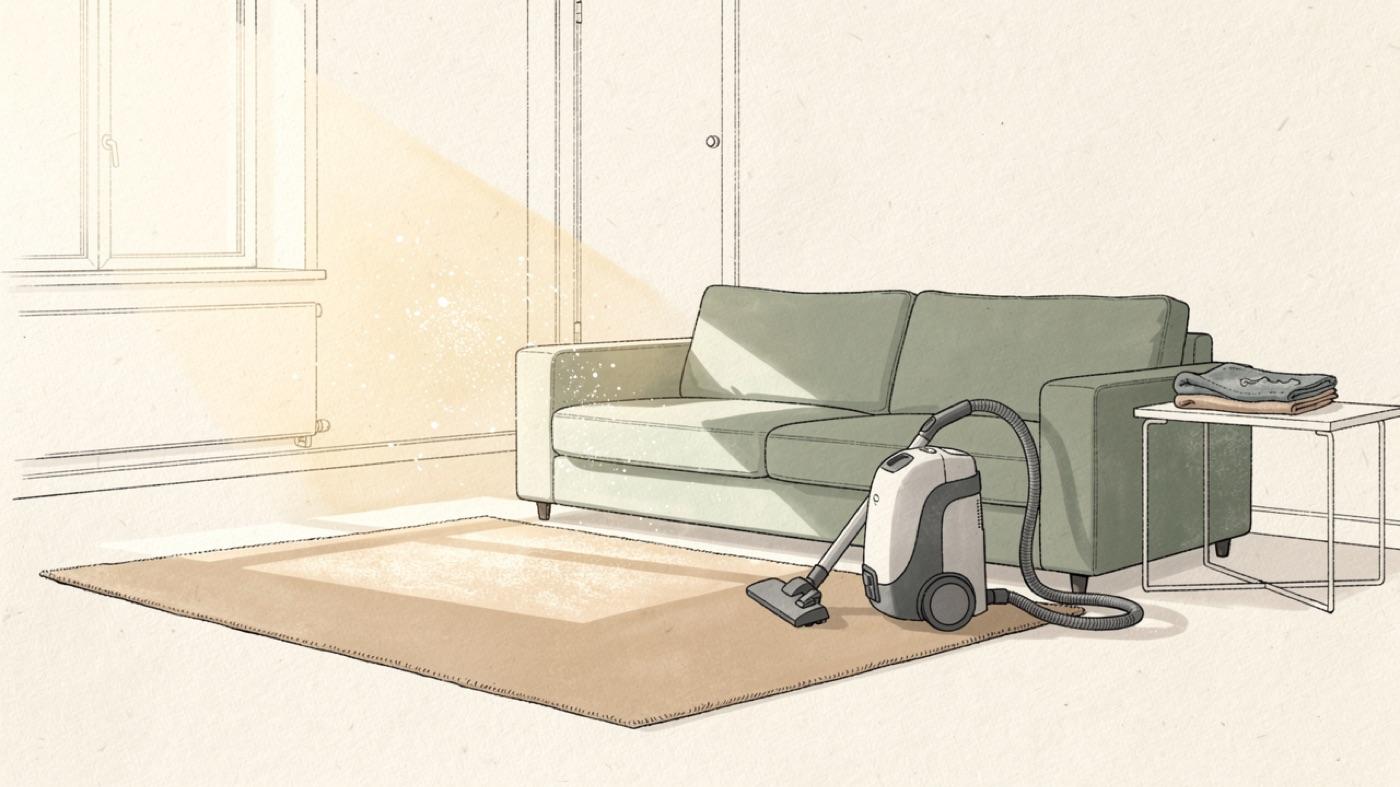
Dust is the part of indoor air quality you can see. It is also the part most people fight the wrong way, with a feather duster and a leaky vacuum. To reduce dust in your house for good, you have to know where it comes from and clean in the right order.
We use a six-step method from the Hayward Score, a home health scoring system, on our own projects. Air filters are the last step, not the first. Here is the whole sequence and why the order matters.
Why dust matters more than it looks
Household dust is a mix of biological, chemical and inert material. Skin, pet dander, dust mite waste, pollen, mold spores and soot are in it. So are chemicals from cleaners, furniture and consumer goods that settle onto the particles.
Size decides how far a particle travels into the body. Airborne particles run from 0.1 to 100 microns, and studies show more than 99 percent of what floats in room air is one micron or smaller. A human hair is 50 to 200 microns wide, and most of us cannot see anything under 10 microns.
- PM10, particles under 10 microns, can be inhaled
- Particles under 3.5 microns slip past the body's defenses into the lungs
- Particles under 0.5 microns can reach the alveoli and stay embedded for years, or pass into the blood
- The World Health Organization ties PM10 to up to 3 million premature deaths a year worldwide
The U.S. EPA's page on indoor particulate matter notes that small particles, less than 10 micrometers in diameter, can get deep into the lungs and some may even get into the bloodstream. It lists cooking, candles, fireplaces, unvented space heaters and smoking among the indoor sources.
The smaller the particle, the longer it stays airborne and the deeper it goes. Babies and small children get the worst of it. They breathe closer to the floor and stir up what has settled every time they play.
Where house dust comes from
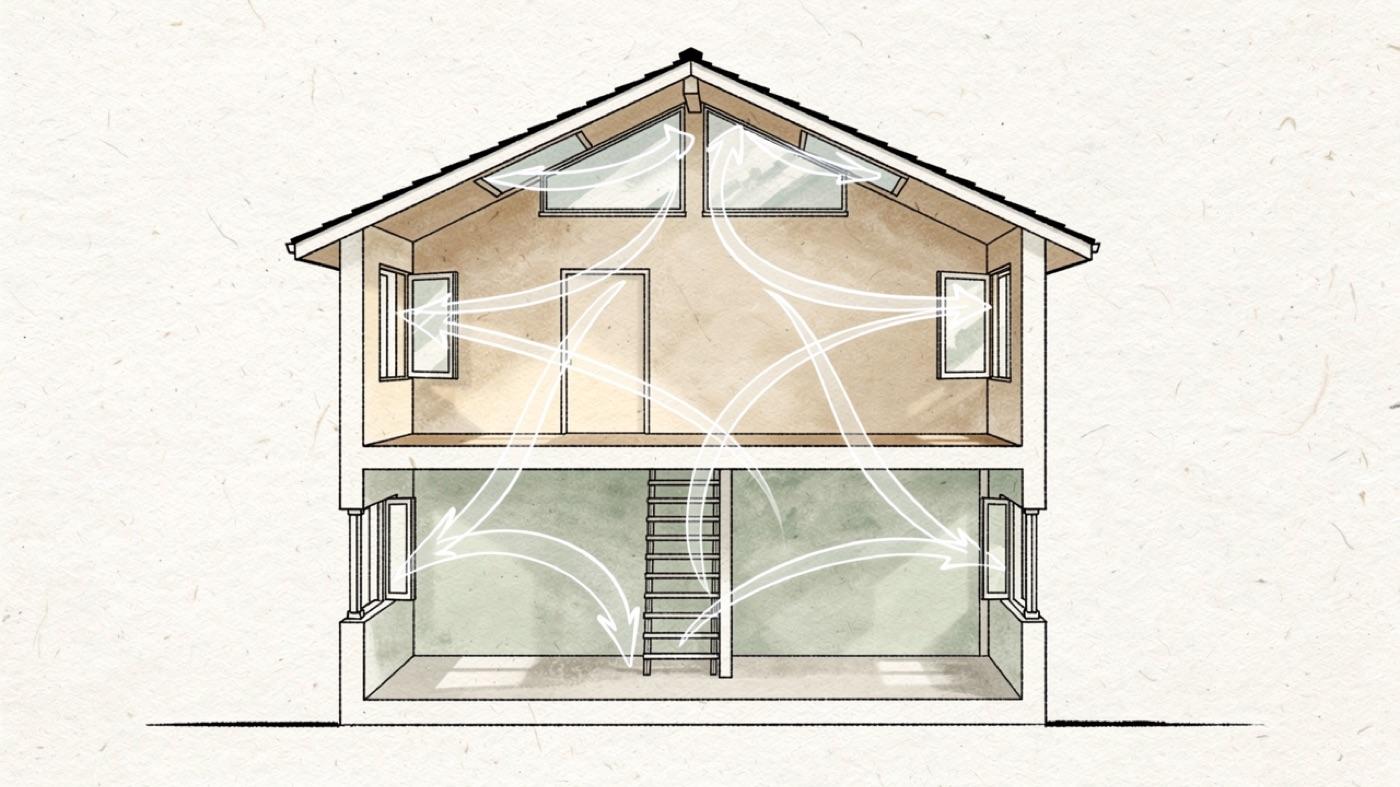
Some dust is made indoors and some is pushed in from outside. Wind against the building drives air through every gap in the envelope, carrying pollen and road chemicals with it. It also carries construction dust, mold and chemicals sitting inside the wall cavities and attic.
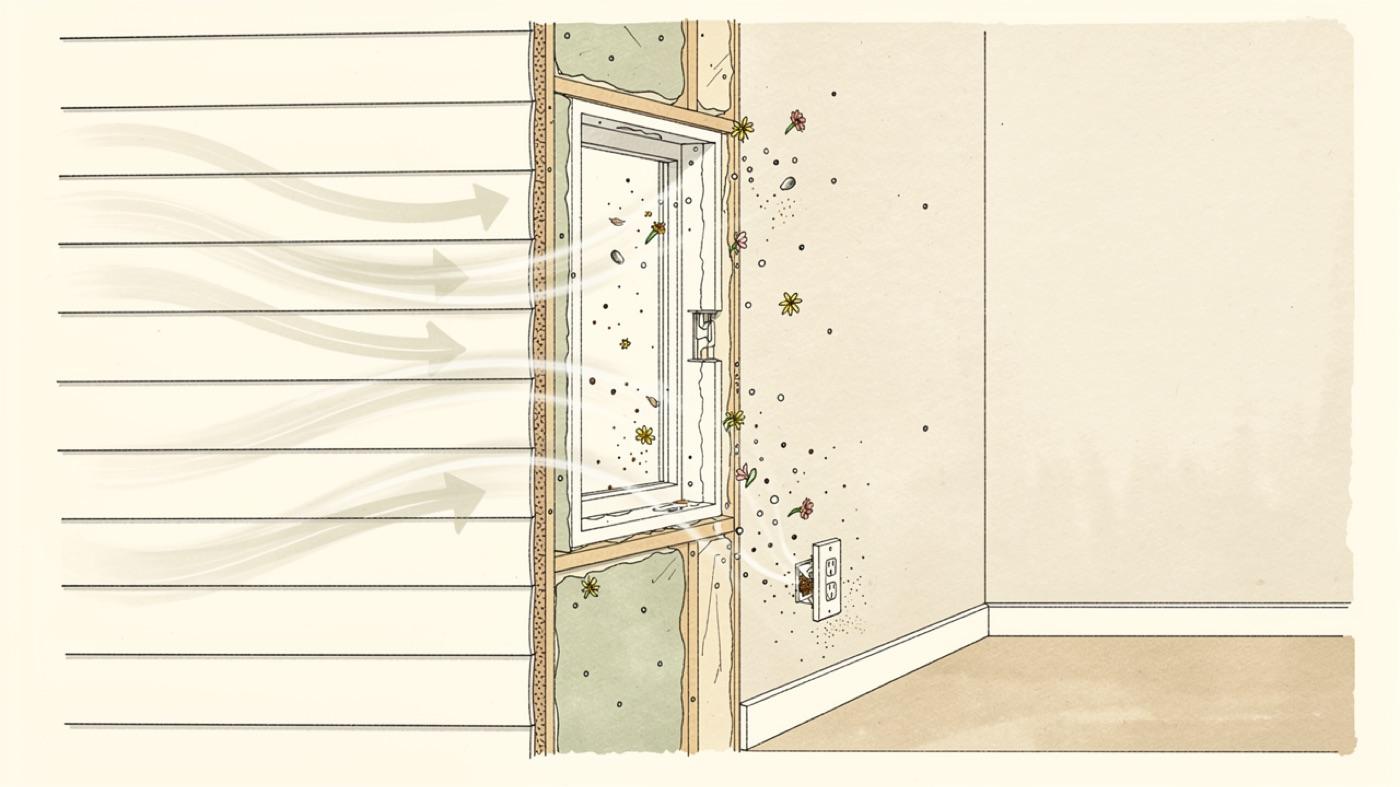
That is why an airtight envelope with controlled fresh air is a dust strategy as much as an energy strategy. It is a core part of our building science principle.
Inside the house the sources are familiar:
- Unsealed vacuum cleaners, which can raise particle counts by over 90 percent in a closed room
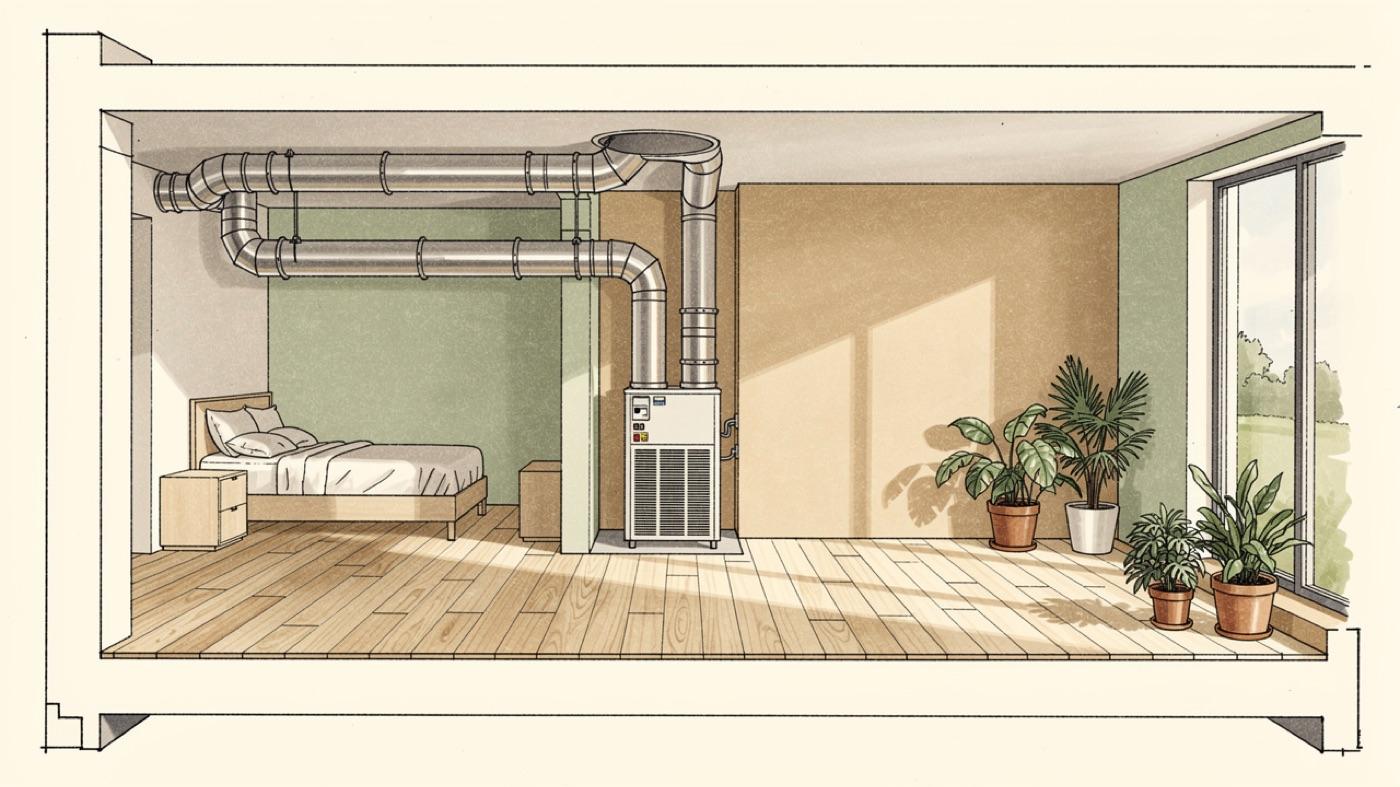
- Poor HVAC filtration that recirculates fine particles through the ducts
- Carpet and rugs, which collect what falls off furniture and release it again
- Fireplace backdrafting
- Pets, including the previous owner's pets
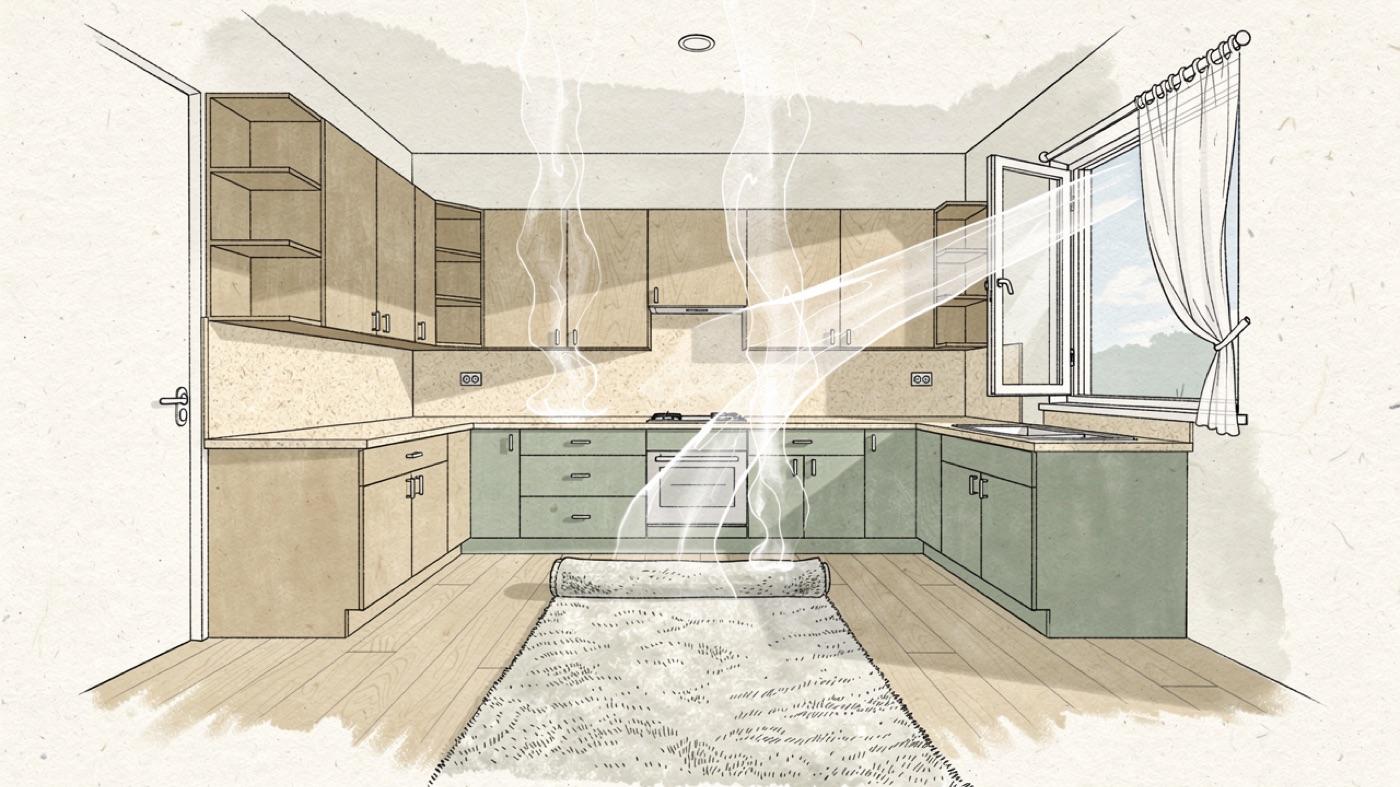
- Cooking, smoking, clothes dryers and renovation work
- The number of people relative to the square footage
The six-step method to reduce dust in your house
Step one: identify the dust-prone areas
Walk the house and note where dust collects fastest. Include the pathways: how air moves through the home, where it leaks in from outside, and which rooms sit downstream. The map tells you where to spend effort and what to seal.
Step two: get the right tools
Above the floor, wet wipe every solid surface. On the floor, dry mop first, then wet mop with just enough water to lift the dust without adding moisture to the room. Skip chemical cleaners and use natural products.
For carpet and rugs you need a sealed HEPA vacuum. HEPA stands for High-Efficiency Particulate Arrestor. An unsealed vacuum blows dust mite waste, cat allergen, pollen fragments and mold spores straight back into your face, which is why allergy sufferers are often told to let someone else vacuum.
A sealed machine with a true HEPA filter, such as a Miele, keeps what it picks up. Open the windows while you vacuum to exhaust anything the process stirs up.
Step three: declutter
A clear surface gets cleaned. A desk buried in paper or a shelf packed with stuffed animals does not. Clutter turns a five-minute wipe into a project, so it gets skipped.
Step four: dust methodically
Work from one end of the house to the other, top to bottom. That way you never track dust through a room you just finished. Do the whole house in one pass rather than a room here and there.
Step five: manage your indoor air
Cleaning gets you to zero. Managing moisture keeps you there. Dust plus dampness equals biological growth, so dehumidification is part of dust control.
Hold indoor humidity in a healthy range and fix any source of moisture before it feeds mold. An indoor air quality monitor that reads particles and humidity together shows you whether the house is holding.
Step six: consider air filters, last
A better filter in a poorly maintained home does not help. Deal with the cause before you manage the effect. Once the first five steps are habits, filtration finishes the job.
The most effective ways to improve your indoor air are to reduce or remove the sources of pollutants and to ventilate with clean outdoor air. In addition, research shows that filtration can be an effective supplement to source control and ventilation.
Choosing filters that actually filter
HVAC filters and MERV
MERV, the Minimum Efficiency Reporting Value, is the single standard for comparing filters. Before it there were three competing ratings and no way to compare. A new filter is at its least efficient on day one, because it has not yet loaded with particles that help it catch more.
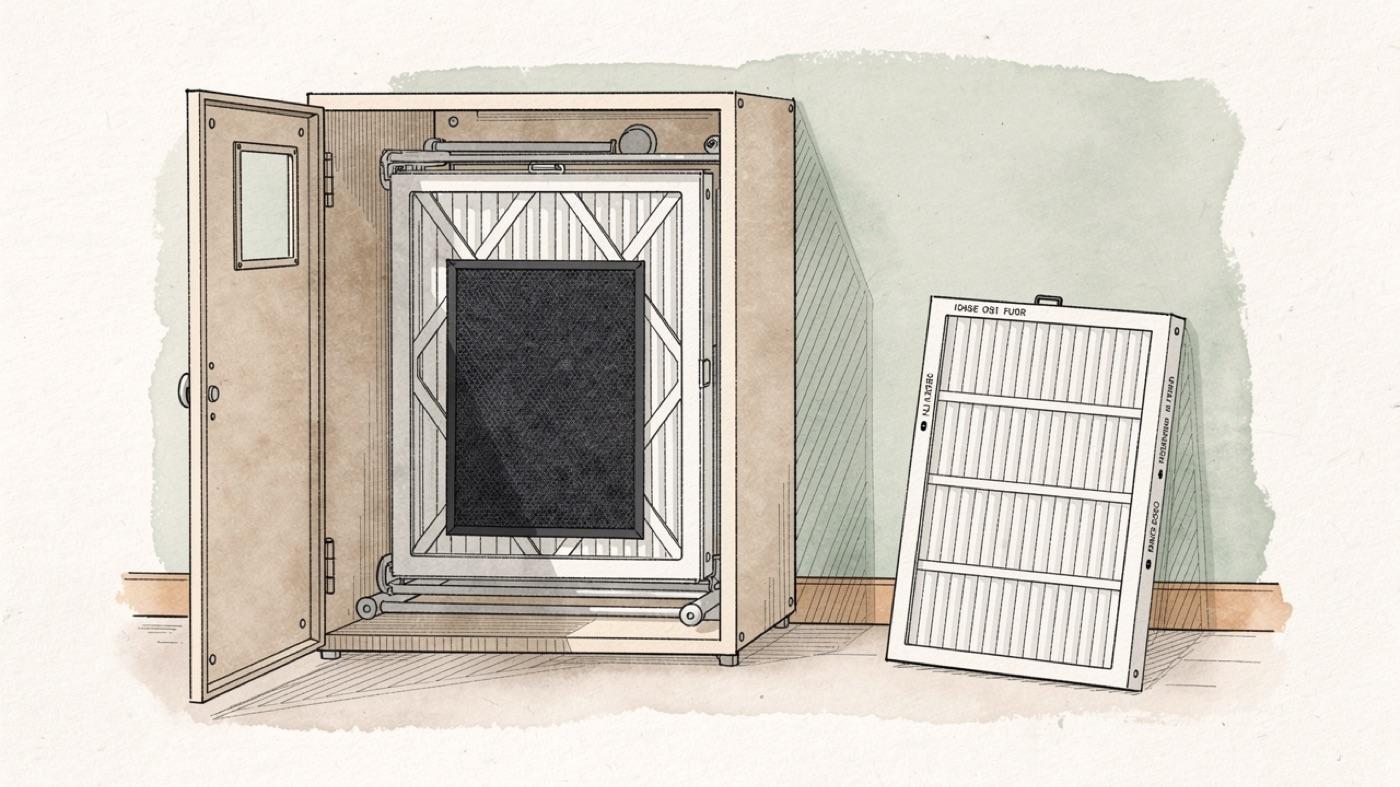
We recommend MERV 13 or higher for a central system, in line with the EPA's guide to air cleaners in the home, which suggests at least MERV 13, or as high a rating as your system fan and filter slot can accommodate. Higher ratings can need a stronger fan and sometimes duct changes, so check with your HVAC contractor first. If your system cannot handle MERV 13, use the highest rating it can. For filters aimed at mold spores, see our guide to the best air filters for mold and mycotoxins.
HEPA and staged filtration
True HEPA media traps almost every particle down to 0.3 microns. Because it is so dense, it needs a heavy-duty fan, which is why it lives in portable air cleaners and vacuums more than in furnaces. Watch for "HEPA-like" labels that do not meet the standard.
HEPA needs a prefilter in front of it. Lower-MERV filters and often a carbon layer catch the big particles and odors first, so the expensive filter does not clog in a month. Change the prefilters often and the HEPA on the manufacturer's schedule.
When to test instead of guess
If dust keeps coming back after all six steps, something is feeding it. It might be a leaky return duct, a wall cavity full of old insulation, or a crawlspace. Professional home air quality testing measures particle counts room by room and finds the source.
Our Healthy Home Inspection includes that testing along with moisture and envelope checks. It turns a dust problem into a short list of fixes.
Related reading: our home allergen test guide.