August 15, 2025
By Brian Johnson, Building Biologist and Licensed General Contractor
11 Essential Low-VOC Building Materials for a Healthy Dream Home

Low-VOC building materials are the single easiest way to keep a new or remodeled home from polluting its own air. Choose them for the big surfaces first: floors, walls, cabinets, insulation, and everything that glues those surfaces together.
Volatile organic compounds (VOCs) are chemicals that evaporate at room temperature. Many conventional building products release them for months or even years after installation, which is why a fresh build can smell "new" long after the crews have left.
The U.S. EPA has measured how large the gap between indoor and outdoor air can be.
Concentrations of many VOCs are consistently higher indoors (up to ten times higher) than outdoors.
For anyone with asthma, chemical sensitivity, or a compromised immune system, that ongoing exposure can mean headaches, respiratory irritation, and fatigue. For everyone else, it is simply a burden the body does not need to carry.
Why low-VOC building materials should be your first choice
Many traditional building materials contain high levels of VOCs that off-gas long after installation. That "new home smell" people associate with fresh construction is not a good sign. It is a sign of poor indoor air quality.
At SENERGY360, we specify low-VOC and non-toxic building materials on every project because they offer a safer alternative without sacrificing quality or durability. The materials below are the ones we reach for most often, and they are the backbone of the healthy building materials principle in SENERGY360's 12 CORE Principles for Healthy Building Design.
If you want the bigger picture on why this matters, start with our guide on why choosing non-toxic building materials is essential.
How we vet healthy building materials
Researching a building product is not a straight line. Each ingredient has to be considered on its own and for how it reacts with the others. We look at the effect on people during manufacturing and installation, the cumulative effect over the life of the product, and what happens when it is discarded.
Start with trusted certifications
The first step is to see whether the product has already been investigated and certified by a trusted organization. These programs are voluntary and certifying a product takes time, so the pool of fully vetted products is still small, but the databases grow every year. Each organization has its own standard, so match the program to what you need.
- Health Product Declaration
- Declare
- Cradle to Cradle
- Building Green
- Pharos
- GreenScreen
- GREENGUARD, through UL SPOT
- CARB II compliance for composite wood
Determine the ingredients
If a product is not certified, the next step is to find out what is in it. Used together these sources are very helpful, but each one has limits on its own.
- Material Safety Data Sheets and Safety Data Sheets
- Health Product Declarations
- Declare labels
- A call to the manufacturer's or distributor's technical support line

Screen against the red lists
Once the ingredients are confirmed, we search them against red lists and precautionary lists. Many organizations maintain these lists of chemicals to avoid. Our post on chemicals used in building a home walks through the databases and lists we rely on.
Natural countertops over plastic alternatives
When selecting countertops, avoid laminate options that depend on adhesives. Those adhesives are notorious for releasing VOCs into your home's air.
Granite, quartzite, soapstone, and butcher block are excellent low-VOC countertop choices. Sealed concrete and honed stone qualify too. All of them are durable, beautiful, and will not compromise your indoor air quality when finished with a low-VOC sealer.
Solid wood: the ultimate low-VOC building material
Real wood consistently outperforms manufactured alternatives when it comes to air quality. Engineered wood products such as particleboard and MDF often contain formaldehyde-based adhesives that off-gas continuously.
The EPA notes that formaldehyde can cause irritation of the skin, eyes, nose, and throat, and that high levels of exposure may cause some types of cancers.
Solid wood cabinets, doors, and trim are premium low-VOC building materials. Choose sustainably harvested lumber where possible, and pair it with a natural oil or a zero-VOC finish so the wood itself is the only thing you are bringing into the house.
Low-VOC paint
Traditional paints are among the worst offenders for indoor air pollution. The pungent smell in a freshly painted room is the VOC content evaporating.
According to the EPA, during and for several hours after certain activities, such as paint stripping, indoor VOC levels may reach 1,000 times background outdoor levels.
Zero-VOC and low-VOC paints are now widely available and perform well. Watch the tint: colorants added at the store can put VOCs back into a zero-VOC base, so ask for zero-VOC colorants too. Primers and trim enamels deserve the same scrutiny as wall paint.
Natural paints and plasters
Beyond standard low-VOC paint, some finishes are made almost entirely from minerals: lime wash, clay paint, silicate paint, and clay or lime plaster. They contain little or no petroleum-based binder and let walls breathe.
These finishes work especially well on the mass walls we build with, and they give a depth of color that flat latex cannot match.
Low-VOC caulk and adhesives
Caulk and adhesives might seem insignificant, but they are used throughout a home: under flooring, behind tile, around every window and tub. Solvent-based products release significant VOCs over time.
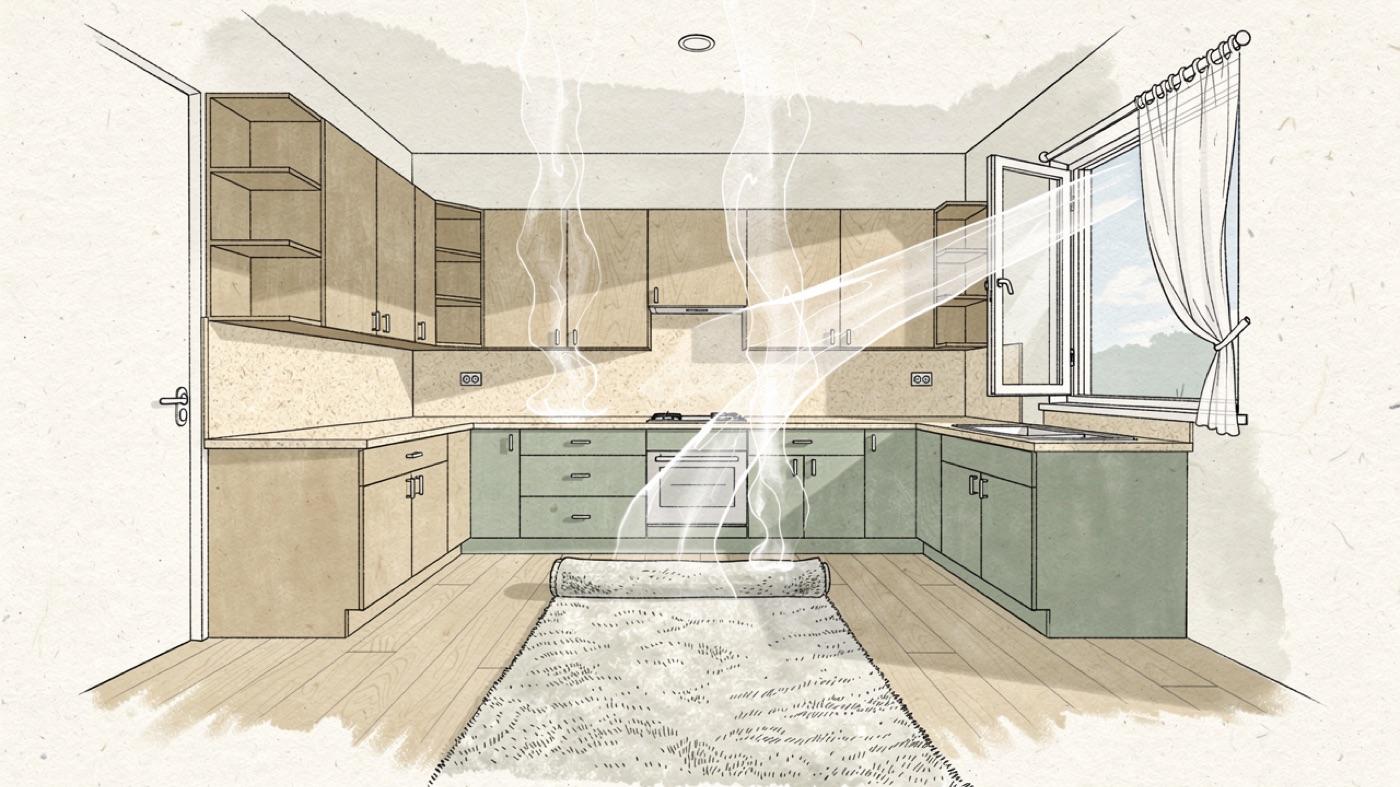
Specify water-based or solvent-free adhesives and caulks, and use the smallest amount that does the job. Two-part epoxies cure hard and emit very little once fully cured, but they must be handled with care and ventilation during application.
Formaldehyde-free insulation
Insulation fills your walls, so the material choice is critical for indoor air quality. Many traditional insulation products contain formaldehyde binders or other harmful chemicals.
Fiberglass and mineral wool insulation made without formaldehyde binders are reliable low-VOC options that still deliver excellent thermal performance. Spray foam is a special case: it can be fine when mixed and cured correctly and a serious problem when it is not, which is why we test it. See our guide to spray foam testing procedures.
Wool insulation
Sheep's wool insulation takes healthy construction a step further. It adds no VOCs of its own, it handles moisture well, and wool fibers can absorb some airborne compounds such as formaldehyde.
Wool is naturally flame resistant without the chemical retardants used on many other products, and its thermal performance is competitive with fiberglass. It costs more, and we think it earns its place in bedrooms and living spaces.
Natural materials that have stood the test of time
Materials that look natural usually are natural, and that makes them dependable low-VOC building materials: stone, brick, clay tile, lime plaster, solid wood, and rammed earth.
We have built rammed earth homes in Oracle, Arizona and Texas for exactly this reason. Earth walls have no cavity to fill, nothing to off-gas, and they regulate humidity on their own.
Structural insulated panels (SIPs)
SIPs construction offers several advantages for healthy homes. These factory-built panels create an exceptionally tight building envelope, which means less dust, fewer pests, and better control over the air you bring in.
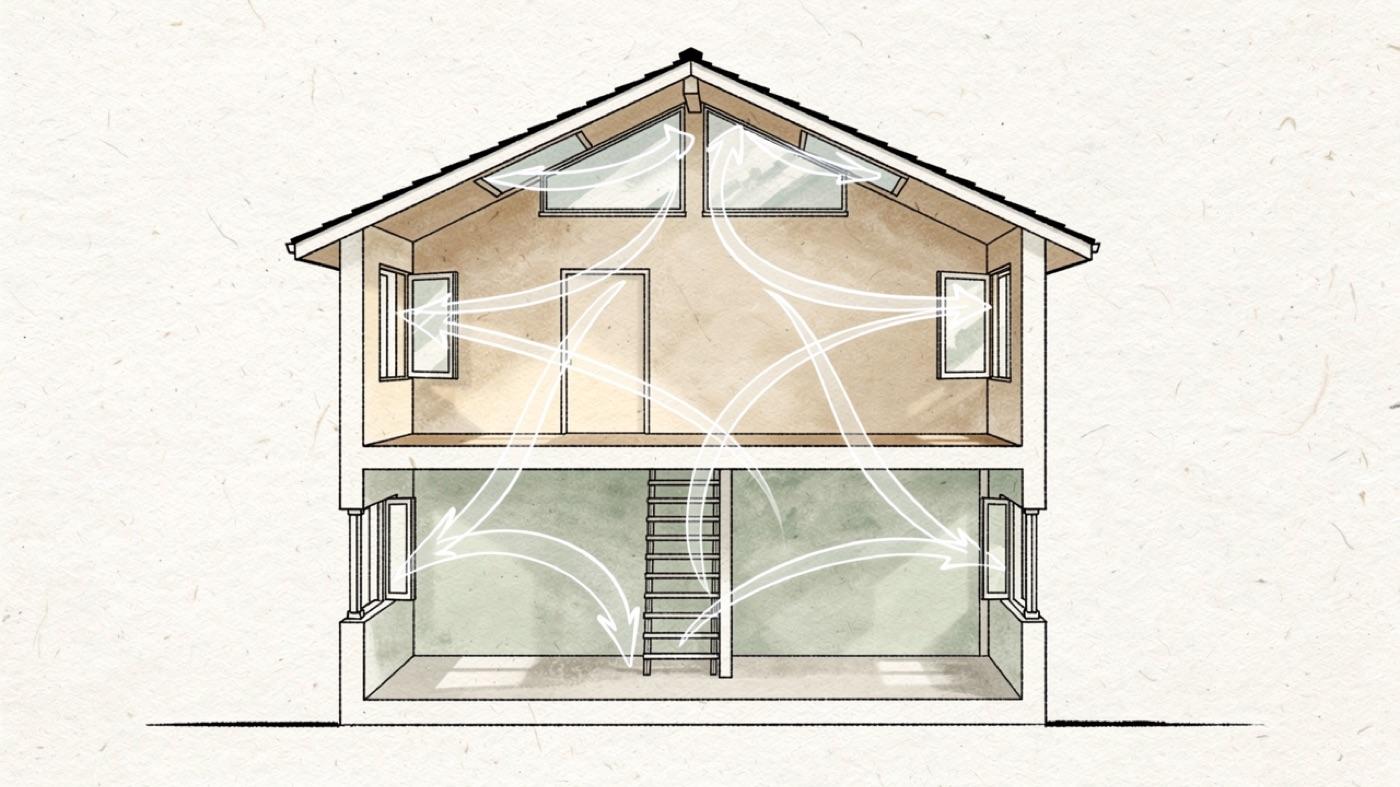
Specify panels made with formaldehyde-free sheathing and low-VOC adhesives, and pair the tight envelope with balanced mechanical ventilation so the house can breathe on your terms.
Bamboo
Bamboo flooring and structural elements are rapidly renewable, low-VOC building materials. This member of the grass family grows quickly while maintaining strength comparable to traditional hardwoods.
The catch is manufacturing. Strand-woven and engineered bamboo products use adhesives, so look for formaldehyde-free binders and a low-VOC finish. Solid bamboo with a natural finish is the cleanest option.
FASWALL blocks and mass walls
FASWALL is a cement-bonded wood-chip block that stacks like ICF and is filled with concrete. It contains no foam, no plastic, and no paper facing, and it produces a wall that is fire resistant, quiet, and inert.
We used FASWALL over slab on our Jupiter, Florida healthy home, and it is the wall system behind ELEMENT by SENERGY360. Read our full FASWALL ICF block review for the details.
Making low-VOC building materials work for your project
Selecting low-VOC building materials takes planning: the floor, the adhesive under it, the finish on top of it, and the insulation behind the wall all have to be chosen together. A single solvent-based product can undo the benefit of everything around it.
The EPA's own guidance starts from the same place: usually the most effective way to improve indoor air quality is to eliminate individual sources of pollution or to reduce their emissions.
That is the work of SENERGY360's 12 CORE Principles for Healthy Building Design, and it is what our design and build process is for. If you are planning a new home or a remodel and want the materials list handled the healthy way from the start, we would love to talk.