September 7, 2026
By Brian Johnson, Building Biologist and Licensed General Contractor
Zero-VOC vs Non-Toxic Paint: What the Labels Hide

Walk into any paint store and you will find "zero-VOC" printed on half the cans. Most homeowners read that as "safe to breathe." It is not quite that simple.
At SENERGY360, paint is one of the last materials to go into a house and one of the first things a family breathes in. We treat it as an air quality decision, not a decorating one. This post explains what the VOC number on a paint can actually measures, why zero-VOC and non-toxic are different claims, and how we select and cure paint before a client moves in.
What does VOC mean on a paint can?
VOC stands for volatile organic compound: a carbon-based chemical that evaporates at room temperature. In paint, VOCs come from solvents that keep the coating workable, from coalescing agents that help the film form, and from additives that resist mold or improve flow.
The number printed on the can, expressed in grams per liter, comes from a regulatory definition. That definition was written to limit smog-forming emissions outdoors, not to protect your indoor air. Because of that, it excludes a list of "exempt" compounds that do not contribute to ground-level ozone but can still affect the air in a closed bedroom. It also measures the base paint as manufactured, before anything is added at the store.
So the label answers a narrow question: how much of a specific list of regulated solvents is in this can before tinting? It does not answer the question you are actually asking, which is whether the paint will make your family feel sick.
The U.S. EPA draws the same line in its Technical Overview of Volatile Organic Compounds. Indoors, the main concern is the effect on the health of people who are exposed. Outdoors, EPA regulates VOCs mainly because of their ability to create photochemical smog, and the term is defined differently for each.
Therefore VOC labels and certification programs may not properly assess all of the VOCs emitted from the product, including some chemical compounds that may be relevant for indoor air quality.
EPA adds that this is especially true of most wet products, such as paints or adhesives labeled "low-VOC" or "zero VOC".
Zero-VOC vs low-VOC vs "non-toxic"
These three phrases are used almost interchangeably in marketing, and they mean very different things.
- Low-VOC paint meets a regulatory ceiling, typically on the order of 50 grams per liter for flat interior paint, with limits varying by region.
- Zero-VOC paint contains less than a small threshold, usually around 5 grams per liter, of the regulated compounds. It is not literally zero.
- "Non-toxic" has no legal definition for paint. It is a marketing claim, and it can appear on a can that still contains biocides, ammonia, glycols, or exempt solvents.
A zero-VOC label is a good starting point. It tells you the manufacturer has removed most of the traditional solvent load. It does not tell you what replaced it, and it does not tell you what happens when the can is tinted, which is where the next surprise lives.
The tinting problem
Most paint is sold as a white or clear base and tinted at the counter with liquid colorants. Historically those colorants were solvent-based, and adding them to a zero-VOC base could raise the VOC content well above the label. Deep colors needed more colorant and became the worst offenders.
Many manufacturers have since moved to zero-VOC colorant systems, but not all lines and not all stores. When we specify paint, we ask two questions: is the base zero-VOC, and is the colorant system zero-VOC? If the store cannot answer the second question, we assume the answer is no and choose a line where it is yes.
This is a small thing that most painters never think about, and it can be the difference between a bedroom that airs out in days and one that still smells a month later.
Biocides and mildewcides
Every water-based paint needs something to stop it from spoiling in the can, and most bathroom and kitchen paints add a second, stronger biocide to resist mildew on the wall. These are pesticides by design. They are added in small amounts, and they are not counted as VOCs, so a zero-VOC can still contain them.
For a healthy home we prefer to solve the mildew problem with the building rather than the paint. A bathroom that is properly ventilated and dries between showers does not need a heavily fortified coating. This is the same logic that runs through our mold prevention principle: control moisture at the source, and the chemistry becomes unnecessary.
When a client is chemically sensitive, we look for lines that disclose their preservative package and use the mildest option available, and we skip the "mildew-resistant" formulations unless the room truly calls for one.
Primers are paint too
Homeowners research the topcoat for weeks and then let the painter grab whatever primer is on the truck. Primers, especially stain-blocking and bonding primers, are often the highest-VOC product used on the job because they rely on stronger solvents to seal and adhere.
A low-VOC primer or zero-VOC primer is available for almost every situation now. New drywall, previously painted walls, and most wood trim can be primed with a water-based, low-emission product. The exceptions are heavy stain blocking, some tannin-bleeding woods, and certain metals, where a solvent-based primer still performs best. In those cases we isolate the work, ventilate hard, and let the primer cure fully before the topcoat goes on.
If you are hiring a painter, ask to see the primer can, not just the topcoat.
What "non-toxic paint" should actually mean
When we call a paint non-toxic, we mean something specific: the full ingredient picture, not just the regulated VOC count, is acceptable for a bedroom where a child sleeps eight feet from the wall.
That standard has a few parts.
- A zero-VOC base with a zero-VOC colorant system.
- A disclosed preservative package with no added mildewcide unless the room requires it.
- No added formaldehyde donors, ammonia, or fragrance masking agents.
- Third-party emissions certification as a floor, backed by a full ingredient disclosure.
- Low odor during application that clears in days, not weeks.
Most mainstream premium zero-VOC lines can meet the first and fourth points. Fewer meet all five, and the ones that do are usually the lines built around simple mineral, plant, or clay chemistry rather than reformulated acrylics. Lime wash, clay paint, and mineral silicate paint each deserve their own discussion, and we will cover them separately, because they behave differently on the wall and are not interchangeable with acrylic paint. Our guide to lime wash, clay paint and mineral paint covers each of them.
How we specify paint on a SENERGY360 project
Paint selection on our projects is part of the material review that runs through SENERGY360's 12 CORE Principles for Healthy Building Design. Every finish that touches the interior air gets the same questions.
We start with the data sheets, not the color chips. The technical data sheet gives the VOC content and the safety data sheet lists hazardous ingredients above disclosure thresholds. If a manufacturer will not share the full ingredient list on request, that tells us something too.
We then choose the sheen and the room together. Flat and matte paints generally carry less resin and fewer additives than high-gloss products. Bathrooms and laundry rooms may justify a more durable finish, but that decision is made room by room rather than defaulting to "semi-gloss everywhere."
We confirm the colorant system, the primer, and any caulk or patching compounds the painter plans to use, since those small products are often overlooked and can carry more solvent than the paint itself.
Finally, we sequence the work. Paint goes on after dusty trades are finished and before soft furnishings arrive, so the house can be ventilated aggressively without fabrics and mattresses soaking up the emissions.
Curing and ventilation before move-in
Even the cleanest paint emits something while it dries and cures. Drying is fast, usually hours. Curing, when the film fully hardens and emissions taper off, takes days to weeks depending on the product, the humidity, and the temperature.
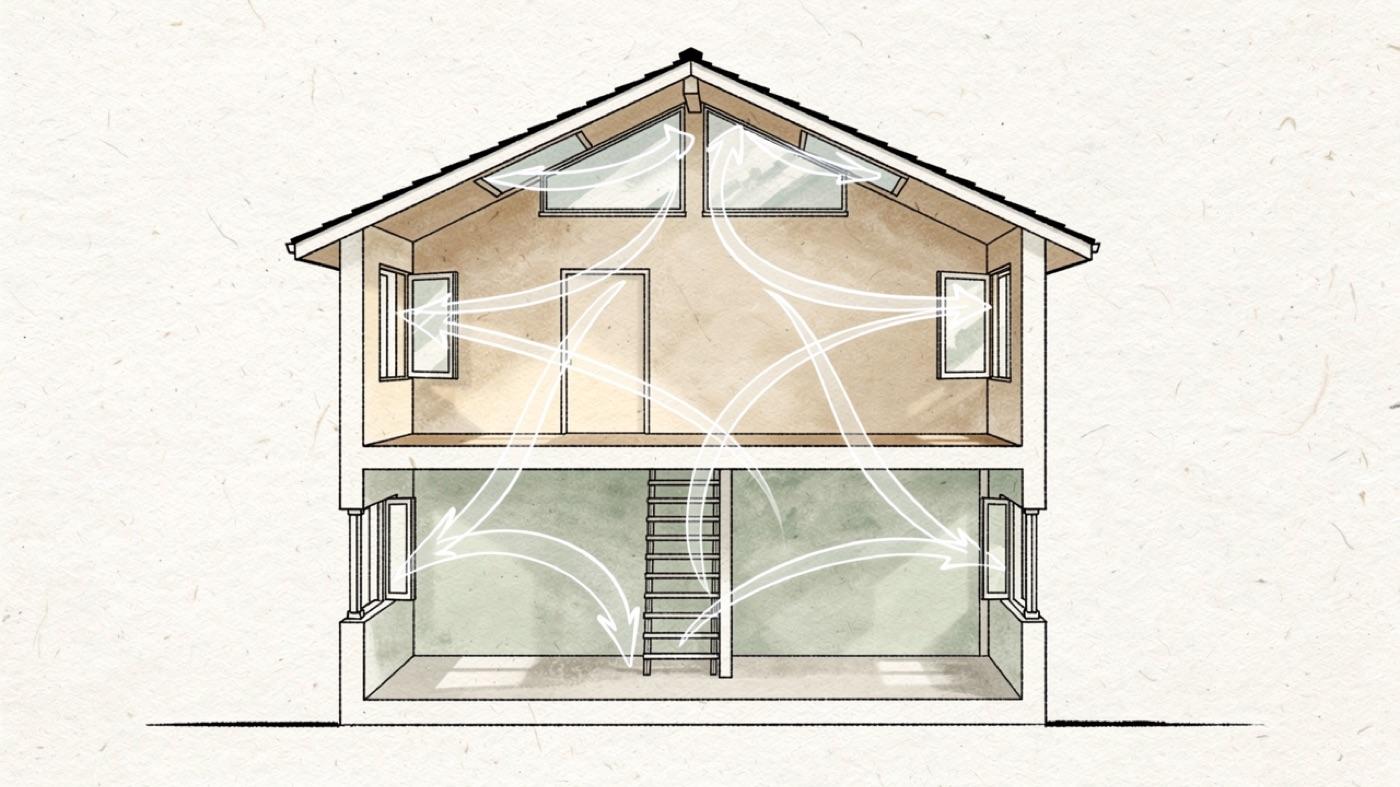
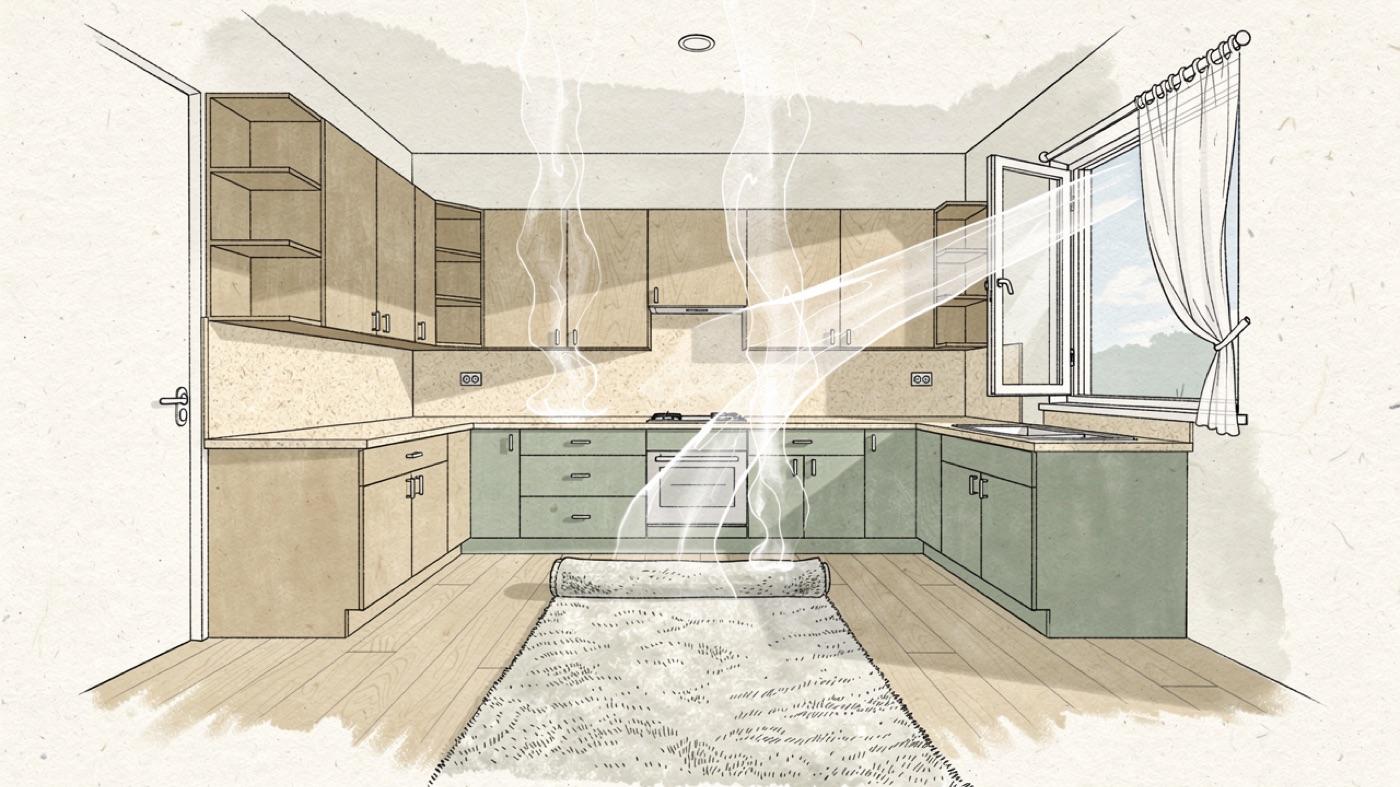
Our rule is simple: the house breathes before the family does. That means open windows and running exhaust fans for as long as the schedule allows, ideally with fresh air moving through every painted room. EPA's page on VOCs' impact on indoor air quality notes that during and for several hours immediately after certain activities, such as paint stripping, levels may be 1,000 times background outdoor levels. Its first listed step to reduce exposure is to increase ventilation when using products that emit VOCs. Our approach to whole-house ventilation, described in our ventilation and indoor air quality principle, is designed with this period in mind.
A word of caution about the "bake-out" idea, where a house is heated to high temperatures to speed off gassing. It can work, but it can also drive moisture into assemblies and push emissions from one material into another, and it is easy to do badly. We prefer time and air exchange, and we prefer to verify rather than assume.
What a building biologist tests for
When a client asks whether their paint is safe, we do not guess. Air sampling can measure total VOCs and, when needed, identify specific compounds such as formaldehyde, glycol ethers, and residual solvents. We compare results to health-based guidelines rather than to the regulatory limits printed on the can.
Testing is most useful in two situations: after a paint job that still smells weeks later, and before move-in on a new build where several finishes went in at once. In both cases the numbers tell us whether to wait, ventilate more, or look for a different source, because paint often gets blamed for emissions that are actually coming from flooring adhesive or new cabinetry. Our post on avoiding toxic chemicals in the home covers those other sources.
The short version
Zero-VOC is a solvent count from a regulation written for smog. Non-toxic is a judgment about the whole can, including colorants, preservatives, and the primer underneath. The two overlap, but they are not the same, and the label alone will not get you to the second one.
If you are choosing paint for a nursery, a bedroom, or a whole new home, the right approach is to read the data sheets, ask about the colorant, buy the primer as carefully as the topcoat, and give the house time to breathe before you do.
If you are building or renovating and want the finishes chosen with the same care as the structure, we would welcome a conversation about your project. And if a recent paint job has left your home smelling wrong, a Healthy Home Inspection can find out what is really in the air and where it is coming from.