September 14, 2026
By Brian Johnson, Building Biologist and Licensed General Contractor
Sauna Health Benefits and How to Build One Into a Healthy Home
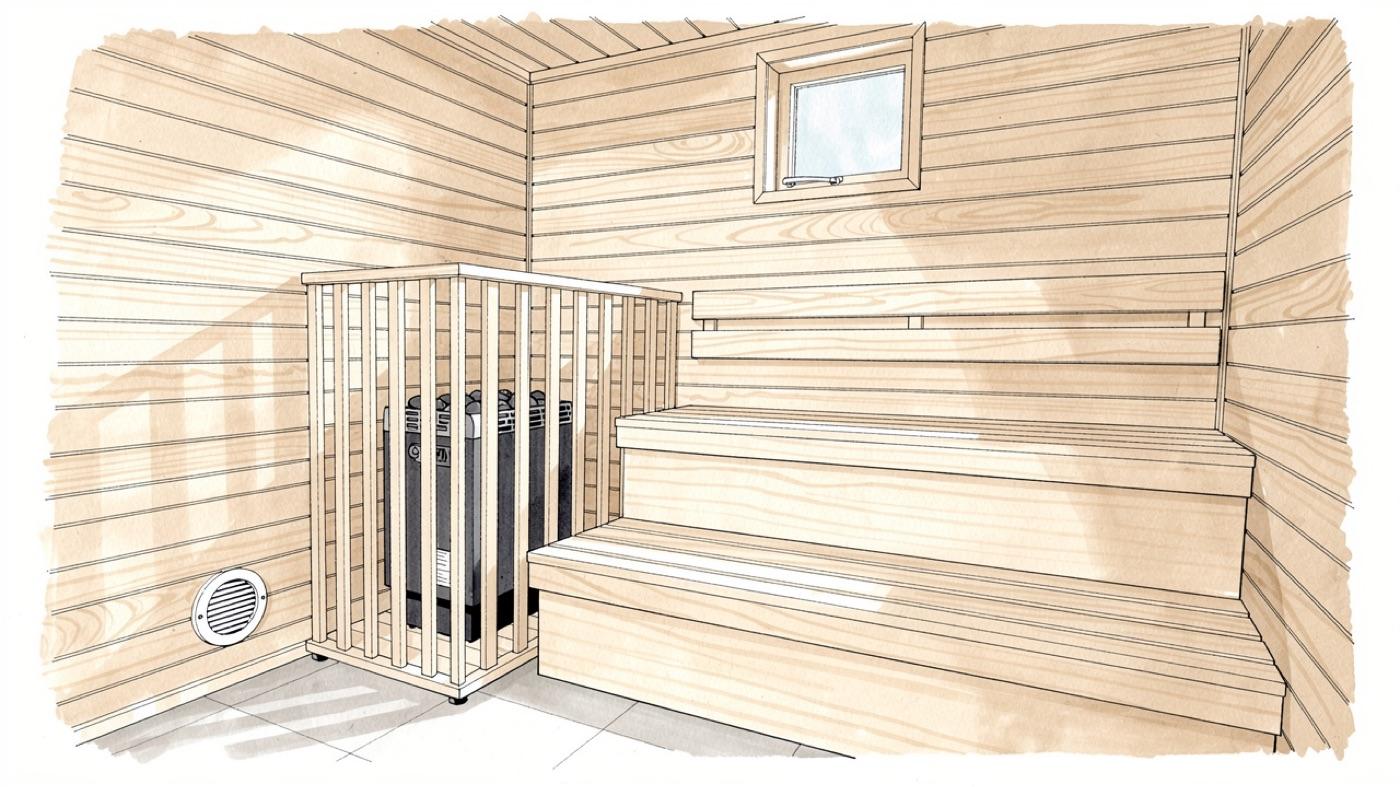
Sauna health benefits are one of the most common reasons clients ask us to add a wellness room to a new home. Regular heat exposure is widely associated with relaxation, better sleep, muscle recovery and a feeling of deep rest. Whether those benefits arrive depends on how the sauna is built.
A sauna is a hot, humid box wired for high electrical loads and lined with wood. Every one of those facts can work for you or against you. This post covers the sauna types we see, how we keep them low-EMF and non-toxic, and the other wellness technologies clients pair with them.
Sauna health benefits start with the design
Heat, sweat and quiet time are the point of a sauna. A poorly built sauna can undo that with off-gassing finishes, a heater that floods the bench with magnetic fields, or damp walls that grow mold behind the boards.
The research on sauna bathing is still developing. A 2018 review in Mayo Clinic Proceedings, Cardiovascular and Other Health Benefits of Sauna Bathing, summarized emerging evidence linking regular Finnish sauna bathing to a lower risk of high blood pressure and cardiovascular disease, and it also discussed areas of outstanding uncertainty. Harvard Health's overview, Saunas and your health, adds a practical caution.
Saunas appear safe for most people. However, people with uncontrolled high blood pressure and heart disease should check with their doctors before taking a sauna.
We design saunas the same way we design the rest of a home. Materials are chosen for low emissions, the electrical system is planned for low exposure, and moisture has a path out. Our healthy building materials principle applies just as much in a sauna as in a bedroom.
Types of home saunas
Each sauna type has a different heat source and a different set of design concerns.
- Traditional dry sauna with an electric or wood-fired heater and rocks
- Steam room or wet sauna with a steam generator and tiled surfaces
- Infrared sauna with radiant panels instead of a heated air space
- Outdoor barrel or cabin sauna set apart from the house
Electric heaters and infrared panels are the two that raise EMF questions. Steam rooms raise moisture questions. Wood-fired units raise combustion and venting questions.
Keeping a sauna low-EMF
An electric sauna heater draws a large current a few feet from where people sit. The wiring and the heater element both produce magnetic fields while running. Infrared panels add electric fields and, in some units, wireless controls.
Our low-EMF electrical principle gives us a clear approach.
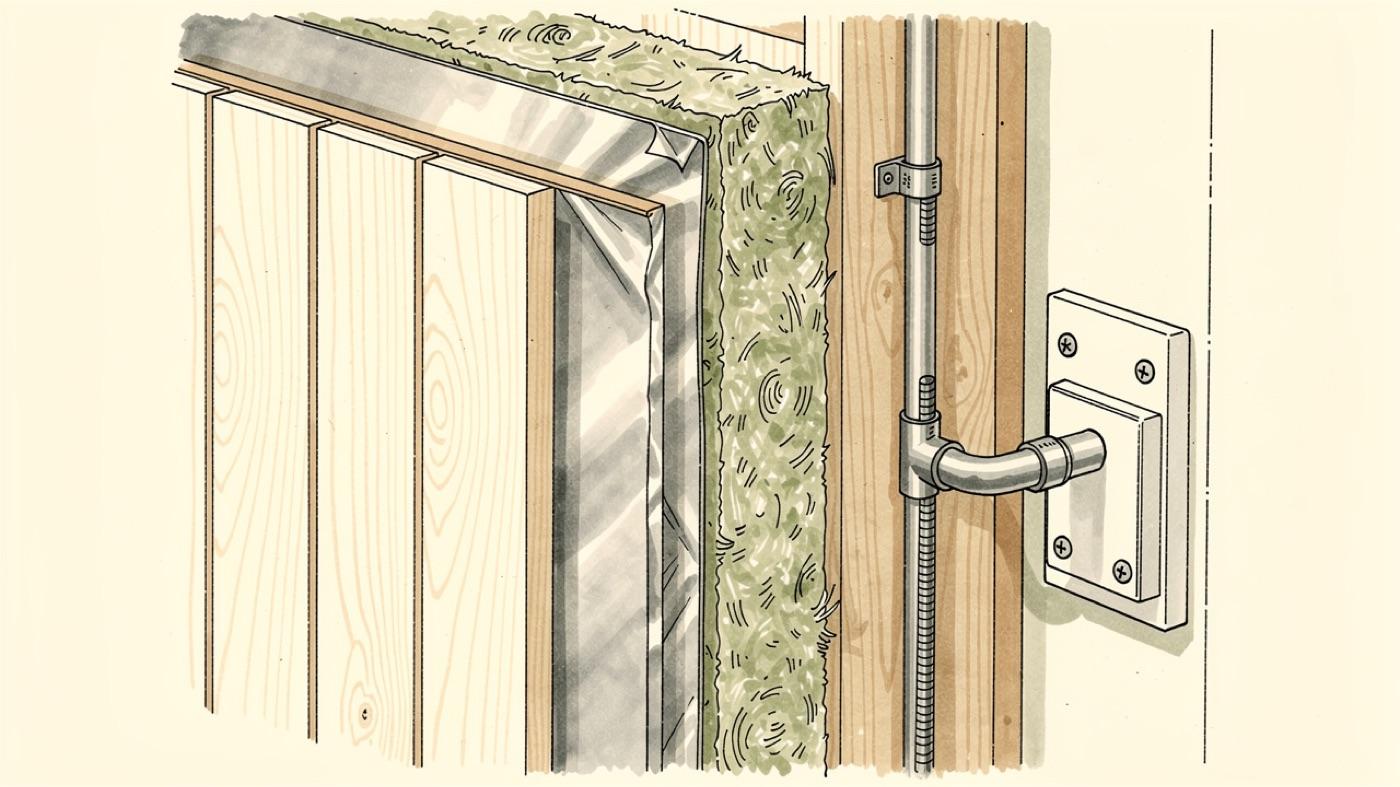
- Run the heater circuit in metal conduit with the conductors twisted together
- Place the heater on the wall farthest from the benches, never beneath them
- Choose infrared panels tested for low magnetic and electric fields
- Put the control panel and any wireless module outside the sauna
- Measure the bench area with a gaussmeter before final sign-off
Our post on alternating magnetic fields explains what that gaussmeter is measuring and why distance matters.
Materials that hold up to heat
Heat makes materials release more of whatever is in them. That rules out glued panels, treated lumber and most stains inside the hot room.
We specify untreated, kiln-dried softwoods such as cedar, hemlock or aspen. Fasteners are stainless steel.
Benches are left bare or sealed with a product that carries an emissions certification. The wall behind the boards gets a foil vapor barrier and mineral wool, not foam.
Ventilation and moisture
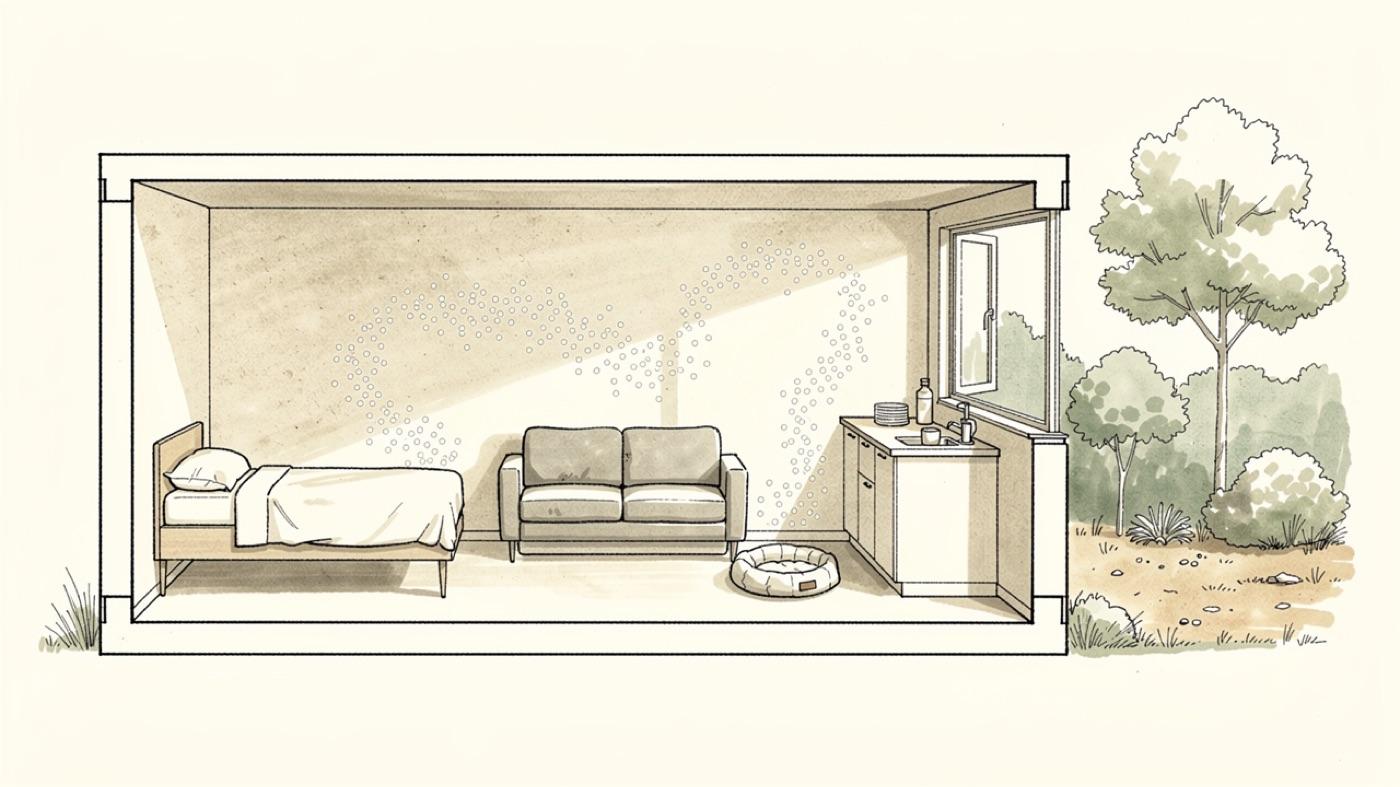
A sauna needs air in low near the heater and air out high on the opposite wall. Without that path the room feels stuffy and the wood stays damp between uses. We also add a drain in steam rooms and an exhaust fan on a timer that runs after each session.
A fresh air intake for the whole home matters here too. The sauna should not pull its makeup air from a garage or a crawl space.
Other wellness technologies clients pair with a sauna
A sauna is rarely the only wellness feature in a new home. The doc we work from lists several products clients have asked about. We include them here as options to research, not as endorsements.
Soaking tubs and water technology
Pneuma Industries makes an HDO tub. The manufacturer describes HDO technology as inducing purification and detoxification and says it has shown increased oxygen in the blood. We have not verified those claims.
What we can design for is clean, filtered water, a drain pan under the unit and a floor that sheds moisture.
Salt rooms and halotherapy
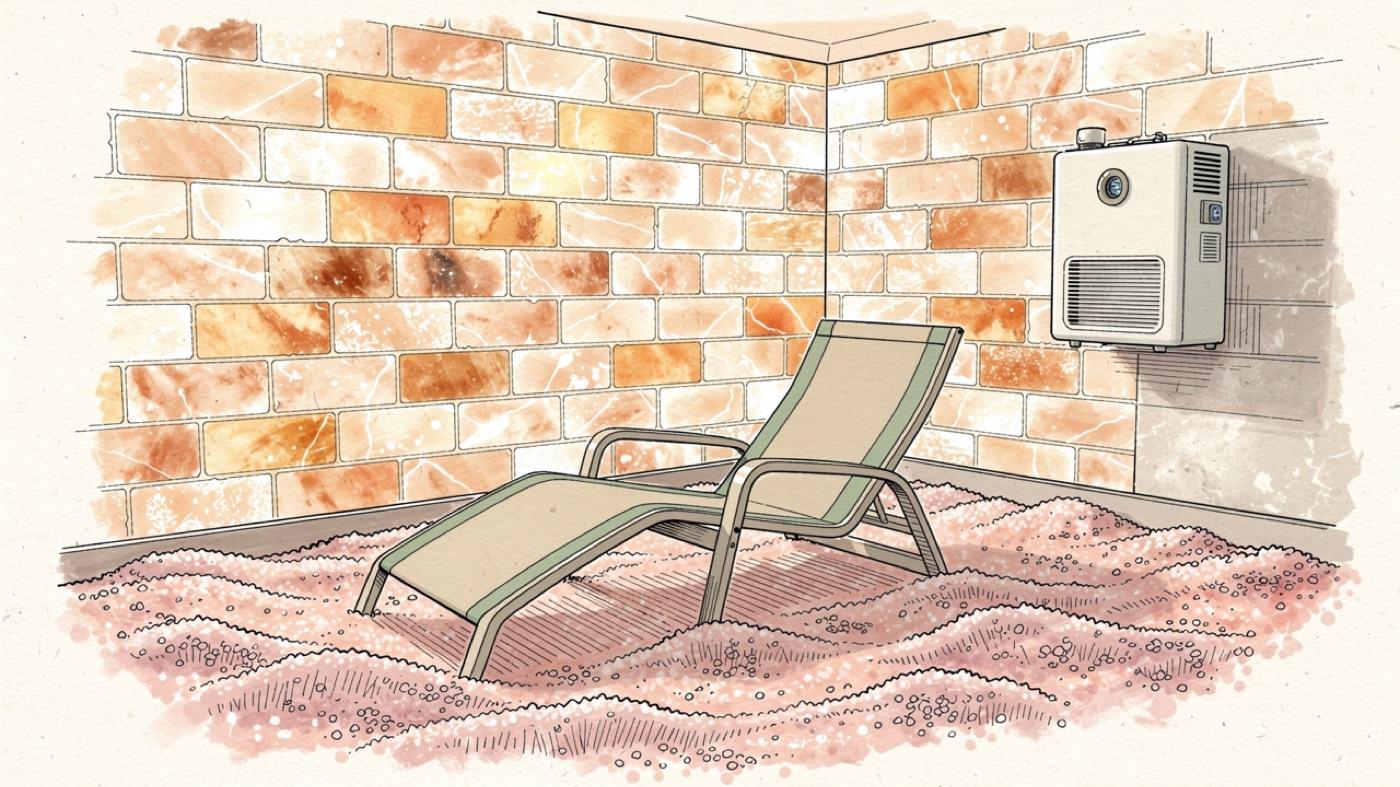
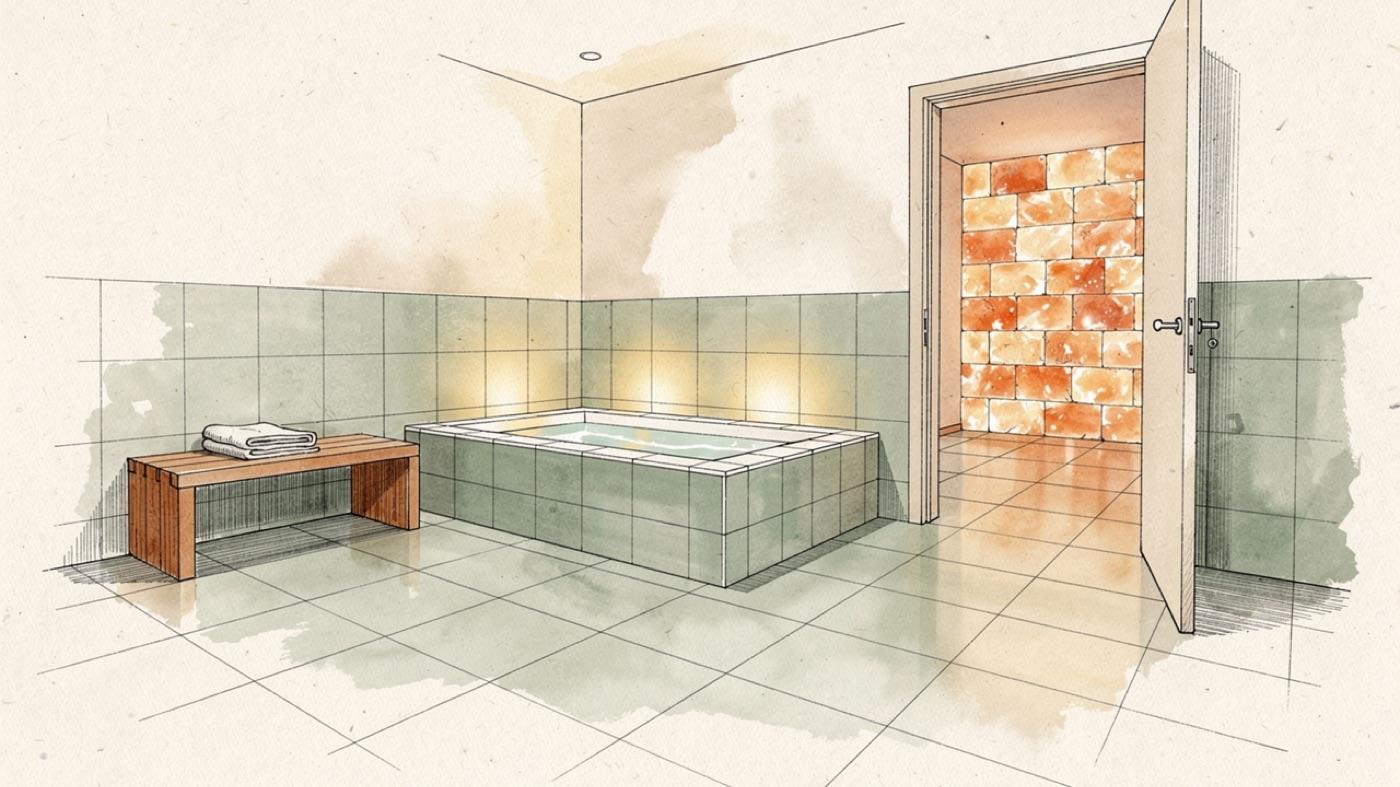
Halotherapy uses a device that grinds pharmaceutical-grade salt into a fine aerosol inside a sealed room. Clients often place a salt room beside the sauna in a shared wellness suite. Our home salt room construction guide covers the wall assembly, ventilation and equipment in detail.
Shower drying and moisture control
Airmada makes an air-jet shower drying system that blows the enclosure dry after each use. Any wellness suite produces a lot of water. Drying it fast is the simplest mold prevention there is.
Daylight and skylights
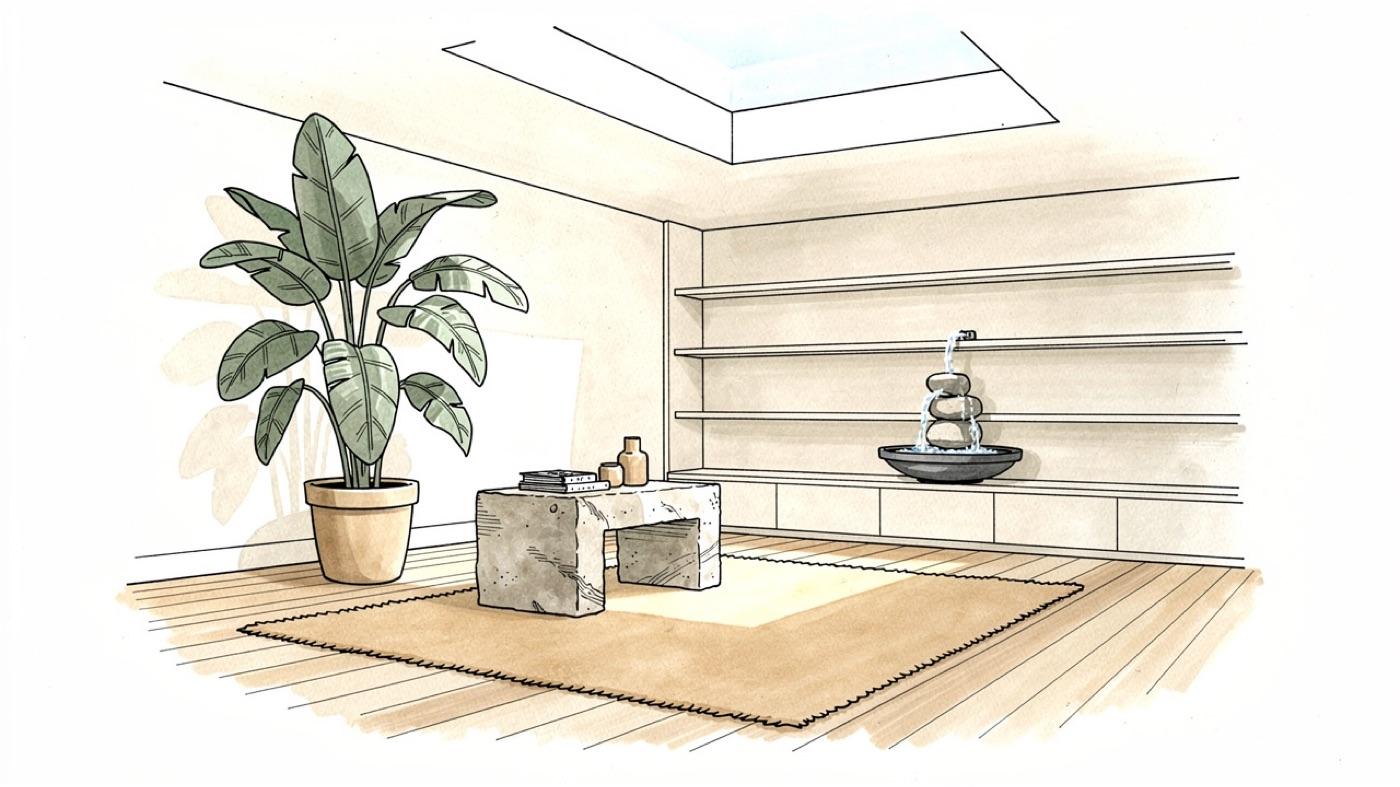
Wellness rooms benefit from natural light. Glass skylights from makers such as Kennedy, Velux and Sun-Tek bring daylight into an interior sauna or tub room. Choose glass over acrylic for durability and low off-gassing. Our post on the science of light explains why daylight is worth designing for.
Fixtures and product research
For sinks and fixtures, ask the manufacturer what antimicrobial treatment is applied and what it contains. Check the Health Product Declaration, Declare and Origin databases to see whether a product is listed. If the manufacturer cannot tell you what is in it, that is an answer too.
A wellness suite is still a building
Every one of these rooms adds heat, water and electrical load to a house. Handled at the design stage, they are simple. Added later without a plan, they are the rooms most likely to grow mold or raise EMF readings.
If a wellness suite is on your list, bring it to the design and build conversation early. The sauna, the tub, the salt room and the shower all share walls, drains and circuits. Designing them together is what makes the health benefits real.