September 7, 2026
By Brian Johnson, Building Biologist and Licensed General Contractor
Mold-Resistant Drywall: Does It Actually Work, and What Else a Mold-Resistant Home Needs
Walk into any big-box lumber aisle and you will find drywall with a green or purple face and the words "mold resistant" printed on the edge. It costs a little more than standard board, and most builders reach for it in bathrooms without thinking twice.
At SENERGY360, we get a version of the same question from almost every client who has had a mold problem: "If I rebuild with mold-resistant drywall, will this stop happening?"
The honest answer is that mold-resistant drywall is a reasonable product that solves a narrow problem. It will not stop a mold problem on its own, and in some situations it can hide one. This guide explains what the product actually is, where it earns its keep, where it does not, and what a genuinely mold-resistant house is built around instead.
What is mold-resistant drywall?
Standard drywall is a gypsum core wrapped in paper. Gypsum itself is a mineral and does not feed mold. The paper does. Paper is cellulose, and cellulose is exactly what mold eats. Add moisture and a little time, and a paper-faced wall becomes a buffet.
The U.S. EPA's mold course on why and where mold grows puts it the same way: mold can grow on virtually any organic material as long as moisture and oxygen are present, and it names wood, paper, carpet and insulation among the materials molds grow on.
Mold-resistant drywall changes that in one of two ways.
The first type keeps the paper but treats it. The paper facing and sometimes the core are impregnated with a fungicide or water-repellent treatment, so the surface is harder to wet and harder for mold to colonize. This is the green board and purple board most people picture.
The second type gets rid of the paper entirely. Fiberglass-faced gypsum board replaces the paper with a woven glass mat. There is nothing organic on the face for mold to feed on, and the mat itself sheds water instead of soaking it up.
Cement board is the third option people lump into this category. It is not drywall at all. It is a cement and aggregate panel, usually reinforced with fiberglass mesh, and it is the standard substrate behind tile in wet areas. Nothing in it feeds mold, and it holds up when it gets wet.
Moisture resistant vs mold resistant drywall
These two terms get used interchangeably, and they do not mean the same thing.
Moisture-resistant drywall (the traditional green board) has a paper face treated to absorb water more slowly. It is meant for rooms with high humidity, like a bathroom with a fan. It still has paper on it, and that paper will still support mold if it stays wet long enough.
Mold-resistant drywall goes further, either by adding a fungicide to the treated paper or by removing the paper altogether. It is designed to resist mold growth on the surface, not just resist getting wet.
Neither one is waterproof. Neither one is rated for direct water contact, which is why neither belongs behind shower tile. That is cement board territory.
Does mold-resistant drywall actually work?
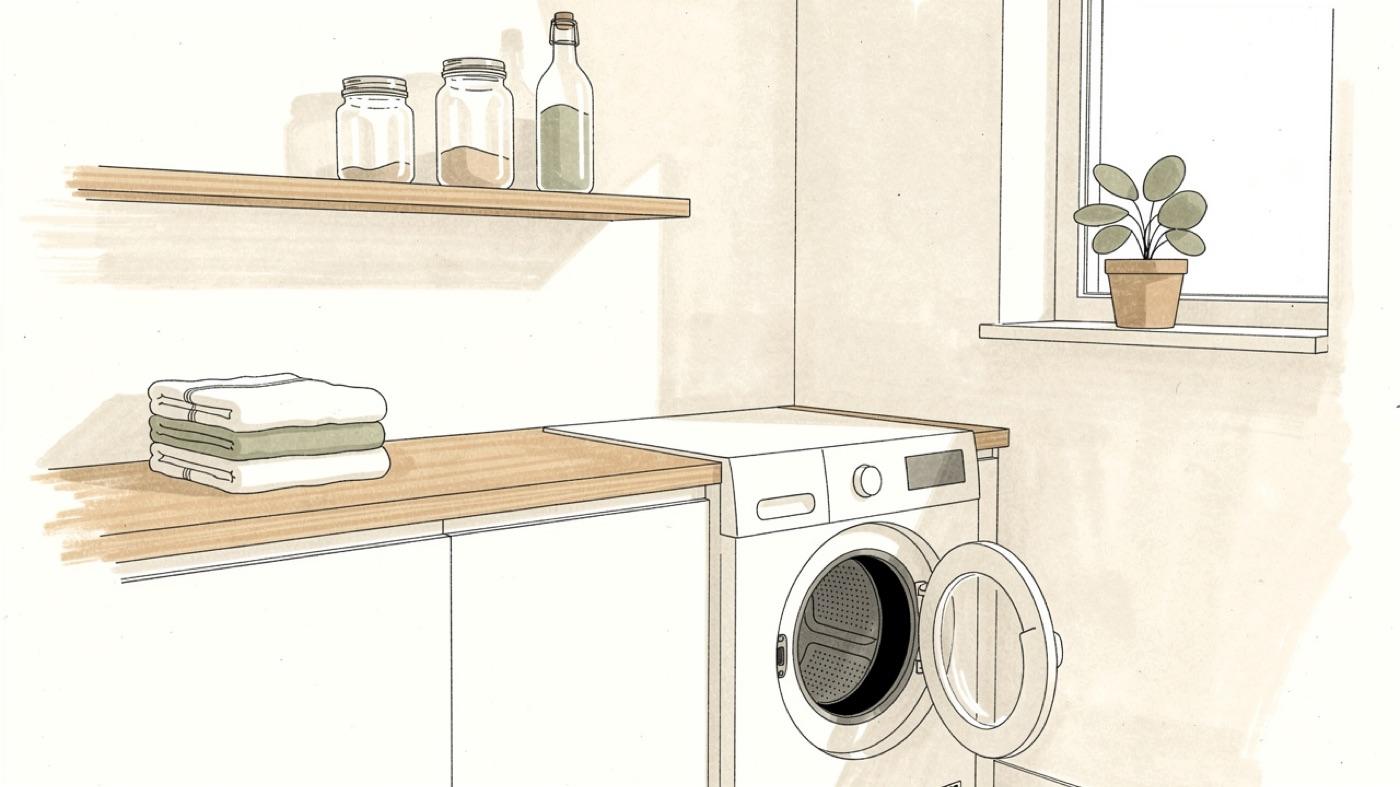
Within its scope, yes. Put a paper-faced board and a fiberglass-faced board in the same humid laundry room, and the fiberglass-faced board will come out cleaner years later. The laboratory tests behind these products are real, and the difference in mold growth on the face is measurable.
The problem is the scope. The product is tested for surface mold growth on the board under humid conditions. That is not the same as a flooded wall.
When a supply line fails or a roof leaks, water runs down the inside of the wall cavity. It wets the back of the drywall, the framing, the insulation, and the bottom plate. Fiberglass-faced board will resist mold on its own face longer than paper will. It does nothing for the wood stud behind it or the fiberglass batt against it, and it does nothing about the water sitting on the plate.
Worse, a mold-resistant face can delay the visible signs. With paper board, a wet wall shows staining and bubbling fairly quickly, and the homeowner opens it up. With a treated or fiberglass face, the surface can look fine for weeks while the cavity behind it grows a colony. We have opened walls in our Healthy Home Inspection work that looked perfect from the room and were black from the back.
The EPA lists the back side of drywall, paneling and wallpaper among the common places where hidden mold grows, which is exactly where a treated face cannot help you.
So the product works. It is just answering a smaller question than the one homeowners are asking.
What is the most mold-resistant drywall?
Ranked by how little there is for mold to eat, fiberglass-faced gypsum board beats treated paper-faced board, and cement board beats both. For a bathroom ceiling or a laundry room wall, fiberglass-faced board is the sensible pick. For anything that tile will cover in a shower or tub surround, use cement board and treat it as a substrate, not as a finished wall.
There is a caution with fiberglass-faced products. The glass mat sheds fine fibers during cutting and sanding, and those fibers irritate skin and lungs. Crews should cut it outside with respiratory protection. It is a workmanship concern, not a long-term occupant concern, but it deserves mention because "mold resistant" does not mean "nothing else to think about."
What material will mold not grow on?
Mold needs three things: moisture, a food source, and a livable temperature. Take away the food and you have the list of materials mold will not colonize on its own.
- Glass, ceramic, and porcelain tile
- Natural stone and concrete
- Metal
- Cement board and lime or cement plaster
- Mineral wool insulation (the fibers themselves)
- Solid gypsum without a paper face
Two things to notice about that list. First, "will not grow on" is not the same as "will never have mold on it." Mold grows happily in the dust, soap film, and skin cells that collect on a tile wall. The tile is not feeding it, the dirt is. That is why the grout line in a shower goes dark and the tile does not.
Second, almost none of the standard wood-frame wall assembly is on the list. Studs, plywood, OSB, paper-faced drywall, and cellulose insulation are all cellulose. A conventional wall is a food source wrapped in a food source, waiting for moisture.
That is the real reason drywall choice cannot fix a mold problem. The board is one layer of a cavity full of organic material.
The real answer is moisture control
Every mold problem we have ever investigated traces back to water that should not have been there or water that stayed too long. Drywall is where you see it. It is almost never where it started. The EPA opens its homeowner guide to mold and moisture with the same idea: the key to mold control is moisture control.
The sources are predictable: a roof or window flashing detail that lets water into the wall, a plumbing leak inside a cavity, a slab that wicks ground moisture, a bathroom or kitchen without adequate exhaust, an air conditioner that is oversized and short-cycles without pulling humidity, or a crawl space or attic where warm moist air hits a cold surface and condenses.
A house that manages all of those does not need mold-resistant drywall to stay clean. A house that manages none of them will grow mold behind the best board money can buy.
We wrote a full guide on this in our moisture management post, and it is one of SENERGY360's 12 CORE Principles for Healthy Building Design. The framework treats mold prevention as a design decision made on paper, not a product swap made at the lumber yard.
In practice, that means getting a handful of things right before drywall is ever discussed.
- Flash every window, door, and roof penetration so water goes out, not in
- Keep plumbing accessible and out of exterior walls wherever possible
- Size the air conditioning to dehumidify, not just to cool
- Vent bathrooms, laundry, and range hoods to the outside, and make sure they actually run
- Break the capillary path between soil, slab, and framing
- Design wall assemblies that can dry in at least one direction
When those are right, the drywall on the wall is a finish decision. When they are wrong, no drywall is the right drywall.
Build without the cavity
There is a more fundamental approach, and it is the one SENERGY360 uses on most of our own builds.
Instead of asking which board resists mold best inside a wood-frame cavity, we remove the cavity. Mass-wall construction replaces the stud-and-sheathing sandwich with a single solid wall that is the structure, the insulation, and the substrate at once.
Our Sanctuary House in Arizona is insulated concrete form (ICF) construction: concrete poured inside rigid insulating forms. There is no stud bay for water to run down, no paper-faced anything inside the wall, and no organic material between the exterior and the interior finish.
The ELEMENT by SENERGY360 models and our Jupiter, Florida build use FASWALL, a mineralized wood-chip and cement block. The wood in FASWALL is fully mineralized, so it does not behave like lumber. The block is vapor-open, meaning moisture that gets in can get back out, and there is no cavity for it to pool in. Our FASWALL review goes into the details.
Our rammed earth homes in Oracle, Arizona and Texas go a step further. The wall is compacted earth. It is mineral through and through, it buffers humidity swings naturally, and there is nothing in it for mold to eat.
In all three systems, the interior finish is usually plaster or a mineral paint applied directly to the wall rather than drywall screwed to studs. That is not a stylistic choice. It is one fewer layer of cellulose and one fewer hidden air space where moisture can collect.
Mass walls are not the right answer for every budget or every site. But they answer the "which drywall" question by making it unnecessary.
Where mold-resistant drywall still makes sense
None of this means the product is useless. On any project that does use conventional framing, we still specify it, in the right places.
Bathroom walls and ceilings outside the wet zone, laundry rooms, mudrooms, basements, garages, and the first few feet of wall in a flood-prone area are all good candidates for fiberglass-faced board. It costs modestly more, and it buys time and margin in rooms where humidity runs high by design.
Behind tile in showers and tub surrounds, use cement board. Every time.
In bedrooms, living rooms, and dry interior walls, standard board is fine if the house is managing moisture. Spending the premium there is money that would do more good on a better bath fan or a proper flashing detail.
If you already suspect mold
If you are reading this because a wall smells musty, a ceiling has a stain, or someone in the house feels worse at home than away, the drywall decision is not the first step. Finding the water is.
Our what does a mold inspection include page walks through how we approach it: moisture mapping, air and surface sampling where warranted, tracing the source, and a written plan that addresses the water before anything gets rebuilt. Replacing wet paper-faced board with mold-resistant board while leaving the leak in place is the single most common mistake we see in remediation, and it guarantees a second remediation.
If you clean up the mold, but don't fix the water problem, then, most likely, the mold problem will come back.
The short version
Mold-resistant drywall resists mold growth on its own face in humid rooms. That is a real benefit in bathrooms, laundries, and basements, and fiberglass-faced board is the best of the drywall options. Cement board belongs behind tile.
It does not protect the framing or insulation behind it, it does not stop leaks, and it can hide a wet cavity longer than paper board would. A mold-free home comes from moisture control designed in from the start, and, where the budget allows, from mass-wall construction that removes the cavity entirely.
If you are planning a build or a renovation and want the moisture strategy worked out on paper before anyone picks a board, our design team can help. If you already have a house that does not feel right, a Healthy Home Inspection will find the water before you buy the drywall.