July 2, 2024
By Brian Johnson, Building Biologist and Licensed General Contractor
Top 5 Categories of Building Biology for Creating a Healthy Home
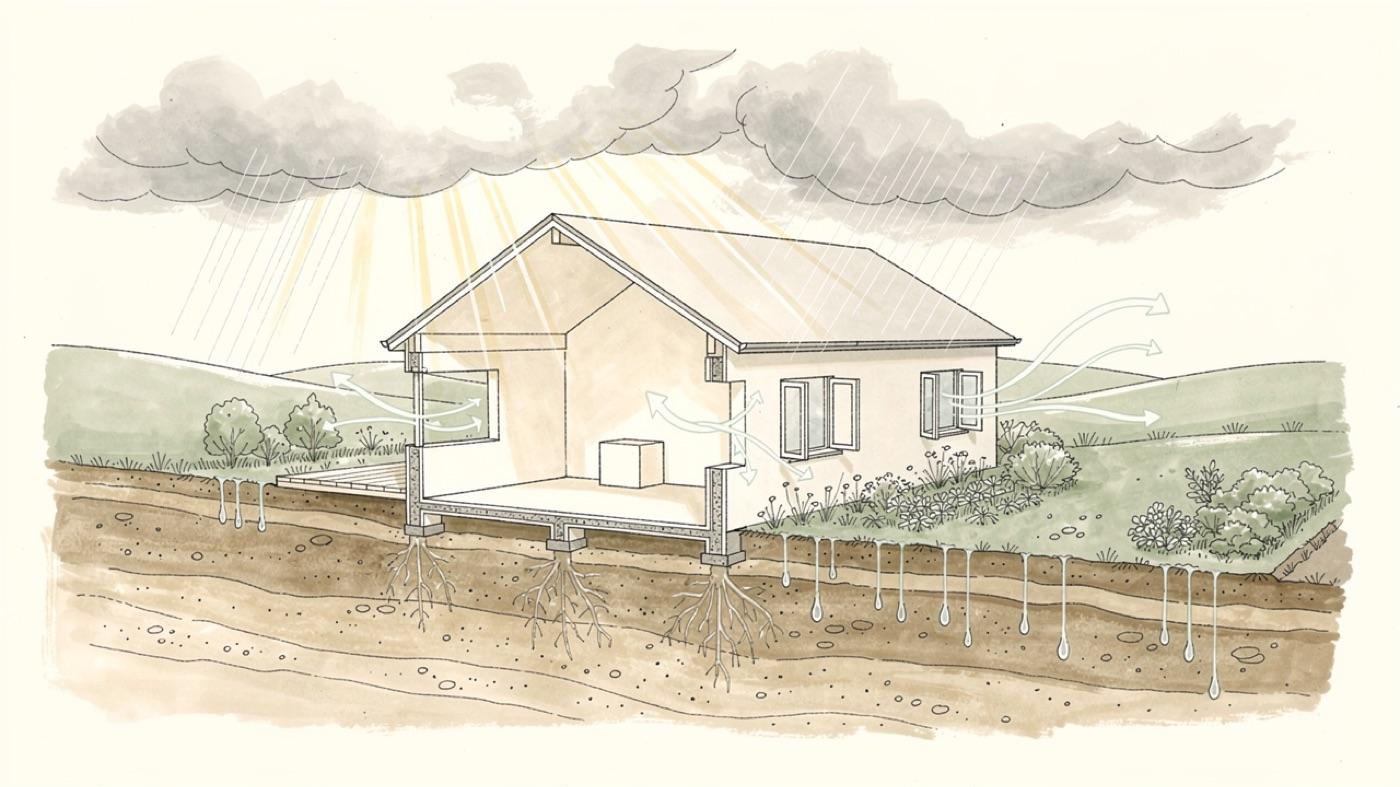
Learn about building biology. Did you know your home can significantly impact your health? Creating a healthy home environment is more important than ever.
SENERGY360 founder Brian Johnson believes that building biology is a whole-house approach. It focuses on designing, building, and constructing living spaces that promote health and well-being while being environmentally friendly.
What is building biology?
Building biology is the science of creating healthy, sustainable environments. It involves thoughtful design and material choices that support human health and reduce environmental impact.
Using inspections that follow its principles, you can transform your home into a healthier home.
Your home is your third skin
Building biology refers to a home as the "third skin." Clothing is the second skin. The home is seen as a permeable, living organism that sits between us and the rest of the environment.
In many ways our home is our life support, like a space suit. It determines the quality of the atmosphere around us, and that atmosphere either supports our health or works against it. We feel our best when the home creates conditions close to the best conditions found in nature.
The four elements and the home
Building biology looks at a house through the same four cycles that run the natural world.
- Air: people and animals remove oxygen from the air by breathing, and plants take the carbon dioxide they give off and make more oxygen
- Water: through evaporation, cloud formation, rain, and a return to groundwater, water purifies and energizes itself
- Matter: plants and animals take in minerals from the earth, and when they die that matter returns to the earth
- Energy: the sun's energy is stored in wood, plants, oil and gas, and released when burned, with some sources renewable and others being used up
A healthy home keeps those cycles moving instead of blocking them.
The Building Biology Institute
The field of Baubiologie und Okologie is also known as building biology. Helmut Ziehe founded the Building Biology Institute in the United States.
His research looked at the impact of natural building materials and methods on public health. It laid the foundation for further studies in the field.
The Building Biology Institute teaches building biology and is dedicated to promoting healthy and sustainable living environments. It offers education and certification programs for architecture, design, and construction professionals. Its focus is on principles that support the health and well-being of occupants and the natural environment.
SENERGY360 founder Brian Johnson is a certified Building Biology Environmental Consultant and Electromagnetic Radiation Specialist. By leveraging the lessons learned at the institute, Brian prioritizes human health, ecological sustainability, and the use of natural, non-toxic materials.
The forces that act on every building
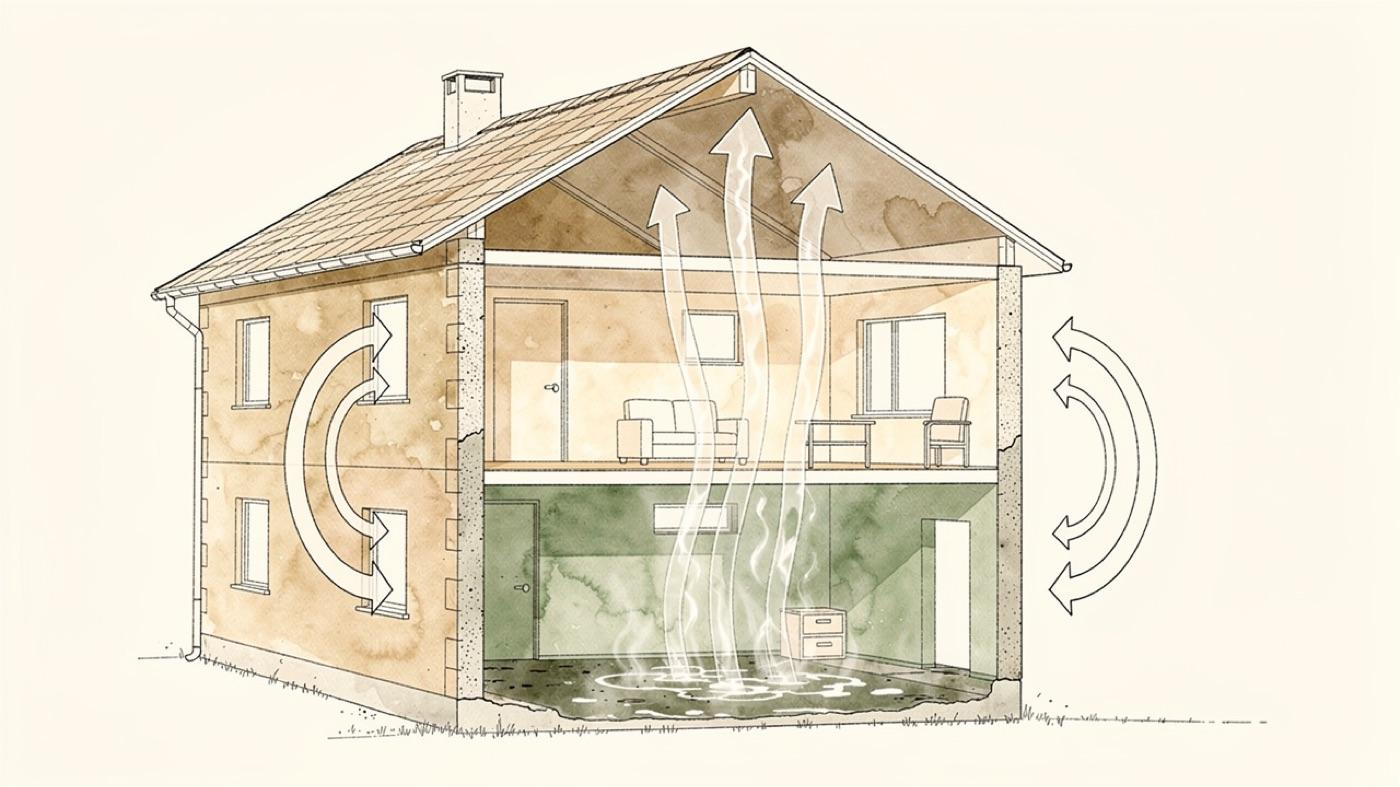
Building biology borrows from building science, which explores the physical forces acting on a house. There are three: heat, air, and moisture. Each one moves from more to less.
Heat
Heat moves from hot to cold in three ways. Conduction is direct contact, convection is movement through air and fluids, and radiation is transfer by electromagnetic waves. Insulation, surface temperatures, and many other variables decide whether a room feels comfortable, not just the number on the thermostat.
Air
Air moves from high pressure to low pressure. Wind pushes on one side of the house and leaks in, while air is drawn out on the sheltered side. The stack effect is warm air rising from the basement and leaving through the attic hatch, a window, or a leaky wall.
Exhaust fans, furnace fans, and dryers also change the pressure inside the home. Our post on building science basics walks through each of these mechanisms.
Moisture
Moisture shows up as liquid water and as water vapor. Liquid water makes a visible mess, such as an overflowing tub or a roof leak. Water vapor is the steam after a shower or the damp air in a basement, and when it lingers it damages the building and the health of the people inside.
The electro-climate
Building biology adds a fourth condition that building science usually skips: the electro-climate. It includes direct current fields, both natural and human-made, alternating current electric and magnetic fields, and radio frequency exposure from Wi-Fi, cell phones, and smart meters. The low-EMF electrical design principle in our framework addresses each one.
Electric and magnetic fields (EMFs) are invisible areas of energy, often called radiation, that are associated with the use of electrical power and various forms of natural and man-made lighting.
The science on everyday exposure is still developing. The same NIEHS page notes that the WHO's International Agency for Research on Cancer has classified radio frequency electromagnetic fields as possibly carcinogenic to humans (Group 2B), based on an increased risk for glioma associated with wireless phone use. Our EMF glossary defines the terms building biologists measure.
Guiding principles of building biology
Here are the five core principles of building biology that can help you create a healthy home.
Healthy indoor air
Clean air without indoor pollutants is important for good health. Indoor air can be up to five times more polluted than outdoor air. Common indoor pollutants, like mold, chemicals, and dust, can negatively affect your respiratory system.
The U.S. EPA's Report on the Environment notes that Americans spend about 90 percent of their time indoors, where the concentrations of some pollutants are often 2 to 5 times higher than typical outdoor concentrations.
- Use non-toxic, low-emission building materials
- Install a high-quality air filtration system
- Regularly clean and maintain your HVAC system
- Incorporate houseplants that purify the air
Thermal and acoustic comfort
Comfortable temperatures and sound levels enhance well-being in an indoor environment. A home that is too hot, too cold, or too noisy leads to stress and discomfort.
- Use natural insulation materials to maintain a consistent indoor temperature
- Install double-glazed windows to reduce noise pollution
- Incorporate soft furnishings that absorb sound
Human-based design
Design your home with people in mind. Human-based design focuses on creating spaces that meet the needs of the occupants. This includes ergonomics, accessibility, and aesthetic appeal.
- Create functional layouts that promote ease of movement
- Choose furniture that supports good posture
- Ensure your home is accessible for all ages and abilities
Sustainable environmental performance
Sustainability is key to building a healthy future. Sustainable building practices reduce your home's environmental impact and contribute to long-term health benefits.
- Use renewable energy sources like solar panels
- Opt for water-saving fixtures and appliances
- Choose sustainable, recyclable materials for construction and decor
- Evaluate toxic sources such as electromagnetic fields and water contaminants
Socially connected and ecologically sound communities
Healthy homes are part of healthy communities. Building a socially connected community enhances mental well-being and fosters a sense of belonging.
- Participate in local community events and activities
- Support local businesses and sustainable products
- Create community gardens and green spaces
Keeping mold and bacteria out of a healthy home
Building biology treats mold and bacteria as part of the indoor climate, not as a separate problem. Mold needs food, water, and warmth. Damp cellulose materials such as drywall, paper, and wood give it all three.
Reduce mold by controlling dampness
The single most important action is to minimize dampness in the building. The two primary sources are building failures, such as roof leaks and basement seepage, and plumbing failures. Inspect under sinks, look for signs of water damage, and clean, dry, and repair anything you find right away.
Keep relative humidity between 35 and 55 percent, with a dehumidifier during humid seasons if needed. Bathroom and kitchen fans should exhaust outside, and a bathroom fan that can hold a piece of toilet paper can remove the moisture from a shower. Our mold prevention principle covers how we design this in from the start.
Reduce bacteria with simple habits
Clean humidifiers regularly and replace the foam media at least once a year, or air seal the home so you need them less. Close the toilet lid before flushing. Check condenser trays under older refrigerators and air conditioners for standing water.
Clean the bathroom first, then the kitchen, then garbage cans and children's toys. Use regular soap and water. Antibacterial soaps at home kill the harmless bacteria and make room for stronger, more resistant ones.
Healthy building conclusion
Following the principles of building biology can transform your home into a space that promotes health, comfort, and sustainability. Start by assessing your current environment and making small, impactful changes.
By incorporating these principles, you are creating a healthier home for yourself and contributing to a better world for everyone. When you want a professional read on your home, a Healthy Home Inspection reports on the physical and biological findings and gives practical suggestions to improve your indoor environment.