July 22, 2024
By Brian Johnson, Building Biologist and Licensed General Contractor
Green Building vs Healthy Building: The Key Differences Explained
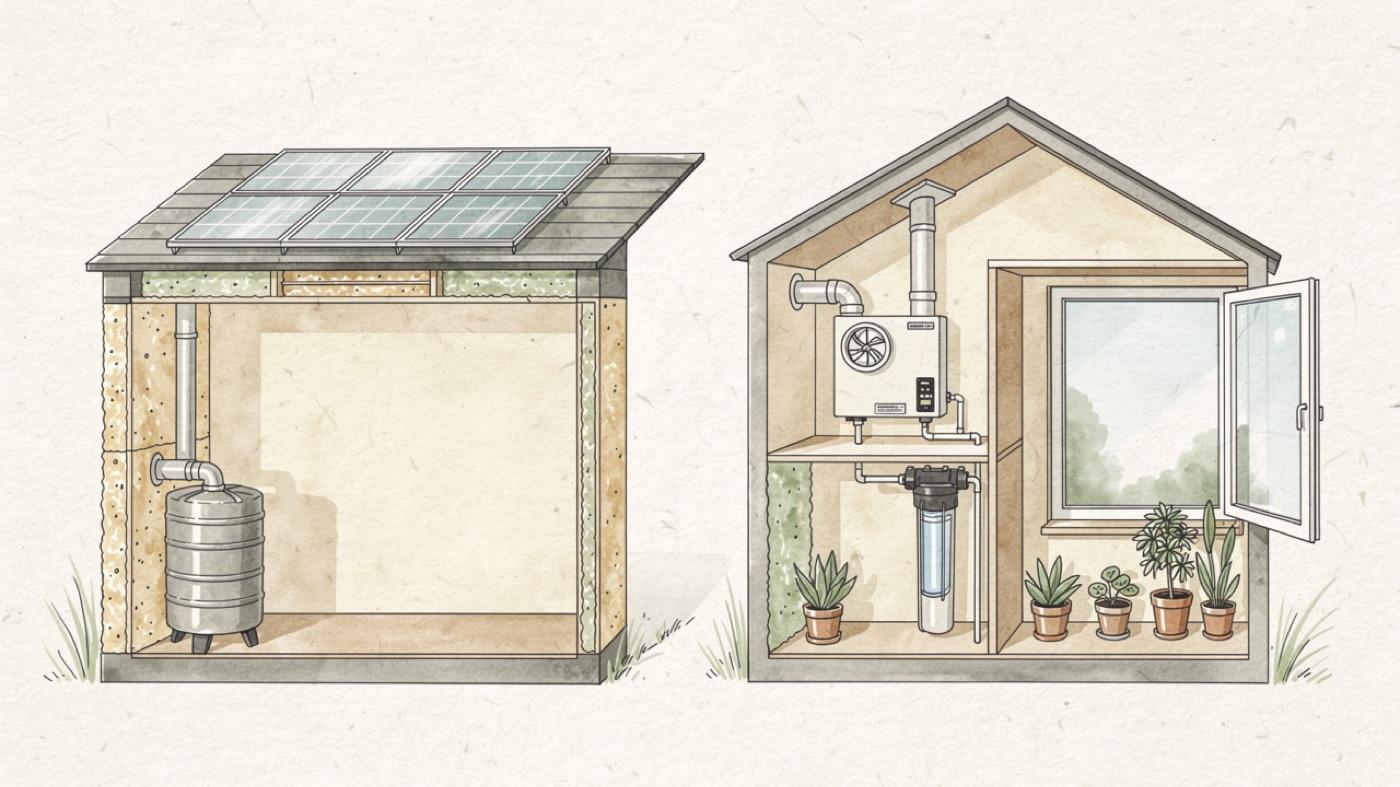
The green home vs healthy home question comes up on almost every project we design. Most people assume the two mean the same thing. They do not, and the difference changes what gets built.
Green building focuses on the planet. It cuts energy use, water use and carbon footprint. Healthy building focuses on the people inside, through indoor air quality, water purity, light and comfort.
As a Building Biologist and licensed contractor, I work with both every day. The goal is a home that does both well. This post walks through the seven places where the two approaches part ways, and where they meet.
Concept and focus
A green home prioritizes sustainability and a smaller environmental impact. Its success is measured in kilowatt hours saved, gallons conserved and tons of carbon avoided.
A healthy home prioritizes occupant well-being. Its success is measured in the air you breathe, the water you drink and how well you sleep at night.
Both matter. But when the two conflict, we prioritize health, because the family lives inside the walls every day.
Design philosophy
Green design reduces energy consumption, water usage and carbon footprint. It leans on passive solar orientation, thermal mass, tight envelopes and renewable energy.
Healthy design starts from the inside out. It asks what the walls, floors and systems do to the air, the light and the sound in each room.
Environmental impact focus in green buildings
In green buildings the primary goal is to minimize environmental impact. That comes through sustainable materials, energy-efficient systems and waste reduction.
- Sustainable materials from recycled or rapidly renewable resources
- Energy-saving technology such as solar panels and high-efficiency HVAC
- Water-saving fixtures and rainwater harvesting
- Site selection that considers the ecological effect of where the house sits
Occupant health focus in healthy buildings
Healthy buildings put the health of the people inside first. That shows up as air quality, natural light and thermal and acoustic comfort.
- Low-VOC materials and real filtration to reduce indoor pollutants
- Daylight through large windows and open floor plans
- Biophilic design, with plants, water and natural textures
- Quiet rooms that make rest and focus easier
Construction materials
The choice of materials is where the two approaches diverge most. Green buildings prioritize sustainable sourcing. Healthy buildings prioritize what a material releases once it is inside your home.
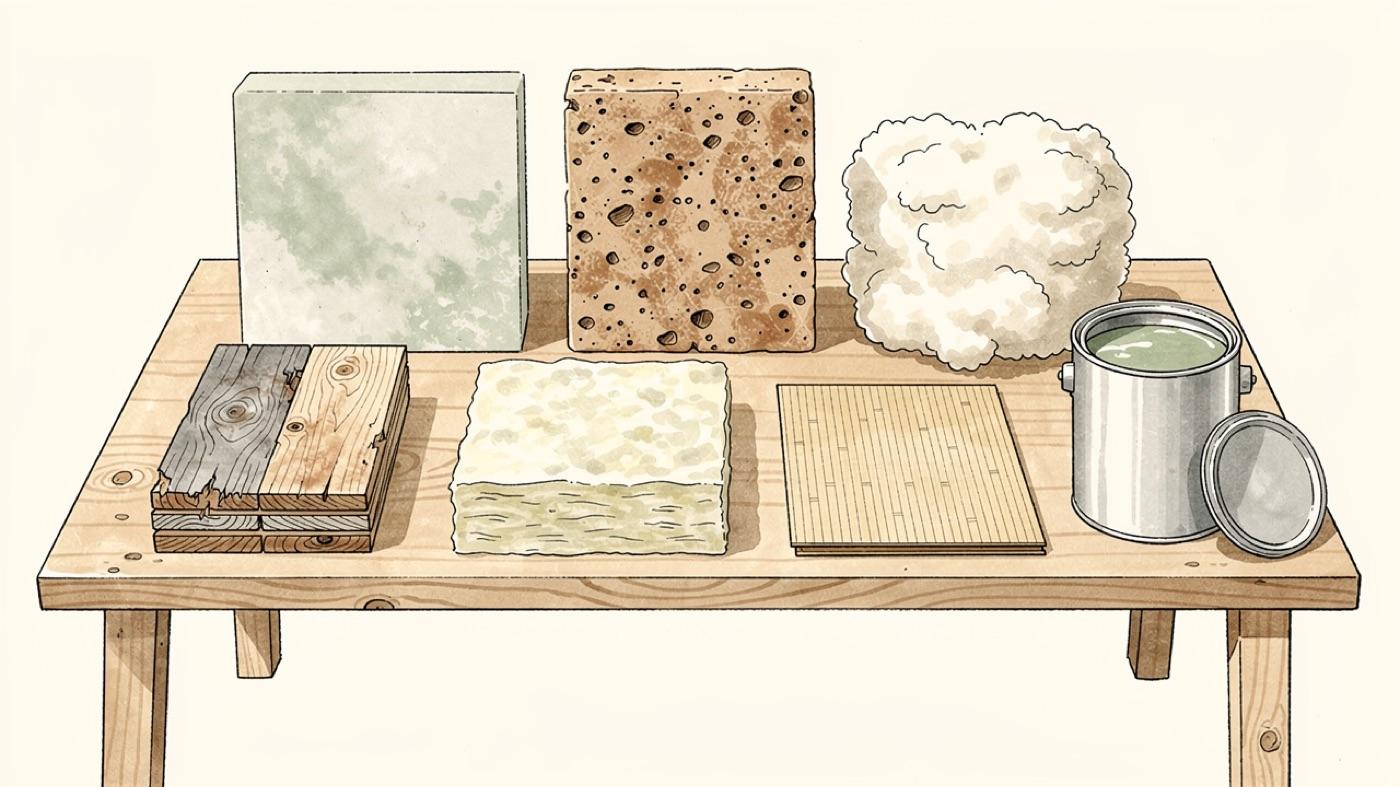
Choice of materials in green buildings
Green builders select materials by their sustainability credentials. Recycled, renewable and locally sourced materials rank highest.
Bamboo flooring, reclaimed wood and cellulose insulation made from recycled paper are common choices. Low embodied energy and long service life round out the list.
Materials that protect indoor air
For a healthy home, the material has to pass a different test. Does it off-gas, hold moisture or feed mold?
We specify low-VOC products, natural finishes and mineral paints. Hemp, cotton, wool and linoleum bring texture without toxins. Mold-resistant assemblies and moisture control keep the walls dry, which is the foundation of our healthy building materials principle.
Energy efficiency and consumption
Energy efficiency is central to green building. It is important in a healthy home too, but it is not the primary focus.
Energy conservation in green buildings
Green buildings conserve energy through passive design first. Orientation, thermal mass and insulation reduce the need for artificial light, heating and cooling.
High-efficiency HVAC, LED lighting and Energy Star appliances lower consumption further. Renewable sources such as solar panels are often integrated.
According to the United States Green Building Council, green buildings can use up to 30 percent less energy than conventional structures.
Energy use and occupant health
A tight, efficient envelope changes how a house breathes. Without designed ventilation, a tight house traps moisture, carbon dioxide and chemical emissions.
That is why every efficient home we build gets balanced fresh air. Studies show that better ventilation improves cognitive function and reduces absenteeism. Consistent temperatures from an efficient envelope add thermal comfort, which supports sleep and productivity.
In one controlled study published in Environmental Health Perspectives, office workers spent full days in a test space set up to mimic conventional and green buildings. Average cognitive scores were 61 percent higher under low-VOC green conditions and 101 percent higher when outdoor air ventilation was also increased, compared with the conventional conditions.
Unless buildings are built with special mechanical means of ventilation, those designed and constructed to minimize the amount of outdoor air that can "leak" in and out may have higher indoor pollutant levels.
Water use and management
Water is another place where the priorities split. Green building manages quantity. Healthy building manages quality.
Sustainable water practices in green buildings
- Rainwater harvesting for irrigation or flushing toilets
- Low-flow faucets, showerheads and toilets
- Native, drought-tolerant landscaping
- Greywater recycling from baths and sinks for irrigation
These practices reduce waste and lower utility costs. They treat water as a resource to conserve.
Water quality in healthy buildings
Healthy buildings focus on the purity of what comes out of the tap. That means whole-house filtration, routine water testing and non-toxic plumbing materials that do not leach into the supply.
Our water quality principle treats water the same way we treat air. It is filtered, tested and commissioned before the family moves in.
Indoor environmental quality
Indoor environmental quality covers air, light, temperature and sound. Green buildings address it through ventilation and efficient HVAC. Healthy buildings go further with advanced filtration, daylight and biophilic design.
Air quality and ventilation
Effective ventilation keeps fresh air moving and pollutants moving out. Low-VOC materials reduce what enters the air in the first place. HEPA and carbon filtration capture what remains.
Adequate air exchange rates and regular HVAC maintenance keep air quality high over time. An indoor air quality monitor shows whether the system is doing its job.
Natural lighting and views
Daylight improves mood and reduces fatigue. Large windows and skylights bring it in.
- Circadian rhythm support that helps regulate sleep
- Less reliance on artificial lighting
- A connection to the outdoors that supports well-being
Window placement balances sunlight with heat gain. Done well, it serves both the green goal and the healthy one.
Certifications and standards
Certification systems show which priority a project follows.
Green building certifications
- LEED, an internationally recognized rating of design, construction and operation for energy and resource conservation
- BREEAM, a UK-based standard that assesses sustainability across energy, ecology and materials
Both require documentation and third-party verification. They hold projects accountable for environmental impact.
Healthy building standards
- WELL Building Standard, which addresses air, water, light, comfort and mind
- Fitwel, a rating system built around occupant health and wellness
These standards focus on ventilation, lighting quality and access to nature. Meeting them lowers health risks for the people inside.
Is a green home a healthy home?
Not automatically. The word green is often misused, and greenwashing is common. A product can be labeled green without any real look at its health impact.
In my opinion, a truly green home is built from minimally processed materials, natural where possible. You need to know where a material comes from, how it is made and what chemicals it contains.
Low carbon is not the same as non-toxic
A low carbon footprint is also called green. Cutting fossil fuel use is worthwhile, but it does not make the result non-toxic. A foam-heavy envelope can score well on energy and still off-gas for years.
It is like preservatives in food. Plastics and chemicals can persist for generations without breaking down, while their short-term off-gassing threatens health today.
Where the two meet
The balance is a non-toxic home that lasts for generations. Durable, natural, low-emission materials serve both goals at once. Good building science ties them together through a dry, tight, well-ventilated envelope.
We choose products that are both green and healthy whenever we can. When we have to pick, health comes first.
The key takeaway
A green home is environmentally friendly. It reduces energy and water use and shrinks the carbon footprint.
A healthy home is non-toxic, comfortable and built to support wellness. It protects air, water, light and sleep.
The best homes we design and build do both. They start with health and let sustainability follow from durable, honest materials.