September 14, 2026
By Brian Johnson, Building Biologist and Licensed General Contractor
Radon in Your Home: How It Gets In, How to Test, How to Fix It
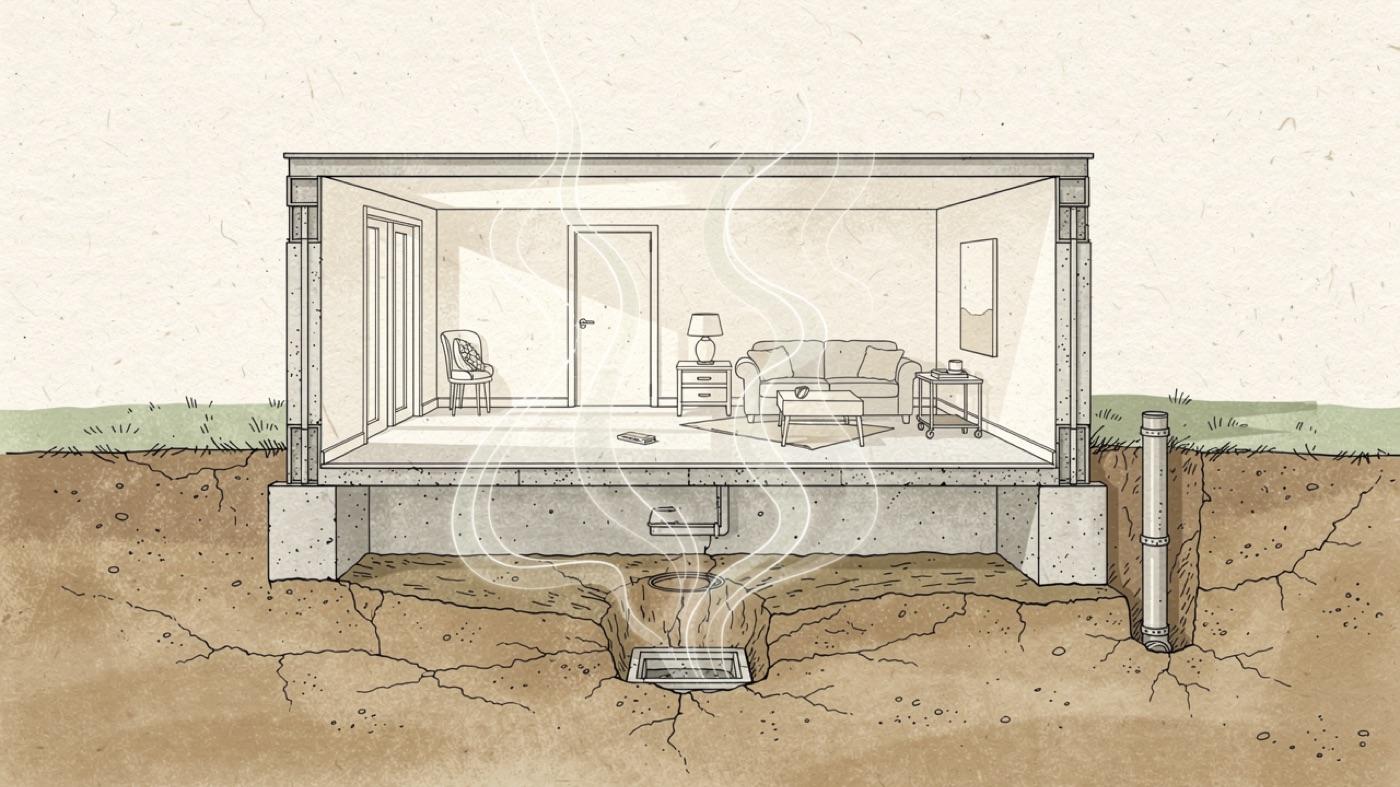
Radon in a home is invisible, has no smell and comes from the ground under the house. It is the second leading cause of lung cancer in the United States after smoking. The good news is that it is easy to measure and, in most houses, straightforward to fix.
We test for it on every healthy home inspection because a tight, well-built house is exactly the kind that can trap it. This post explains where it comes from, what the numbers mean and what a proper fix looks like.
What radon in a home actually is
Radon is a naturally occurring radioactive gas produced as uranium in soil and rock decays. It is everywhere outdoors at harmless levels. Trouble starts when it rises through the soil and seeps into a building, where it collects in confined spaces.
Energy-efficient construction makes this worse, not better. A tight envelope holds heat, and it holds soil gas too. Soil gases can make up as much as a quarter of the air inside a home.
How it harms the lungs
When radon decays it throws off alpha particles. Breathe those particles in and they damage lung tissue directly. Over years, that damage can become cancer, and the source material we work from puts the toll at roughly 21,000 deaths a year in the United States.
As we breathe, these particles are deposited on the cells lining the airways, where they can damage DNA and potentially cause lung cancer.
The U.S. EPA's radon health risk page gives the same figure, about 21,000 lung cancer deaths a year, and estimates that about 2,900 of them occur among people who have never smoked. The WHO estimates that radon causes between 3 and 14 percent of all lung cancers in a country, depending on the national average radon level and how many people smoke.
Reading the numbers
Radon is measured in picocuries per liter of air, written pCi/L. The EPA action level is 4 pCi/L as a yearly average. Anything above that should be brought down.
Levels move with the time of day and the season. A single afternoon reading can mislead you in either direction, which is why test length matters.
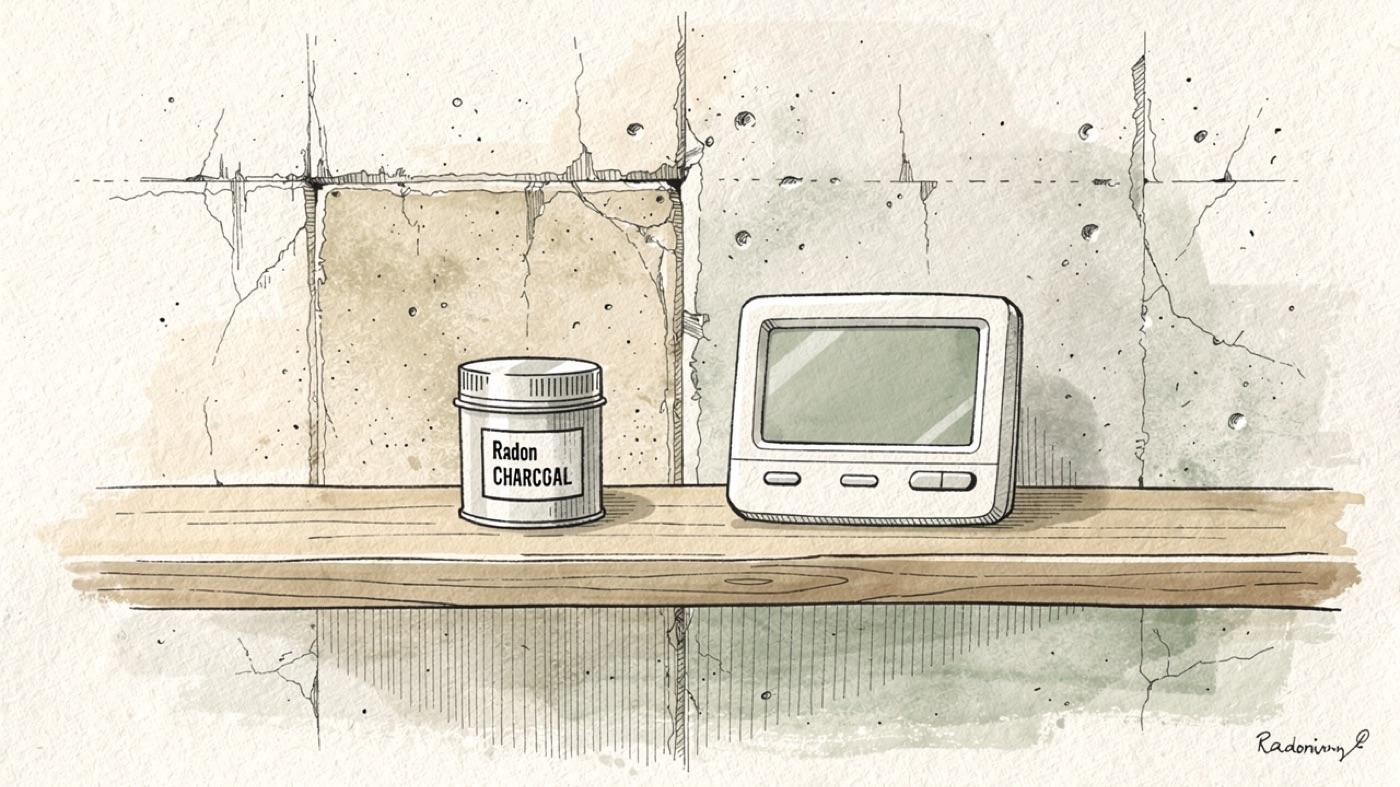
How to test
- Short-term kits, usually a charcoal canister left out for a few days, give a quick first look
- Long-term kits run for three months or more and get closer to a true yearly average
- Continuous monitors log readings hour by hour and show the swings between day and night
- Test the lowest lived-in level of the house, with windows closed, away from drafts and moisture
A professional healthy home inspection pairs radon testing with the rest of the indoor air picture. If you already own an indoor air quality monitor, check whether it includes a radon sensor before you assume you are covered.
Where it gets in
Radon does not need a big opening. It follows pressure, and a heated house pulls air up and out, which draws soil gas in from below.
Typical entry points
- Cracks in basement floors and foundation walls
- The gap where the slab meets the stem wall
- Sump pump pits and floor drains
- Openings where water, gas and electrical lines enter the building
- Crawl spaces with bare earth floors
Radon is not the only soil gas
Nitrogen, carbon dioxide and methane also move through soil. So do vapors from contaminants left behind by previous use of the land. This is called vapor intrusion, and it follows the same paths into the house that radon does.
Past uses that leave vapors behind
- Old landfills, which produce methane, ammonia, sulfides and carbon dioxide
- Gas stations, with benzene, toluene, xylenes and MTBE
- Dry cleaners, which used perchloroethylene, also called PCE or PERC
- Auto repair shops, with trichloroethylene, TCE, and other solvents
- Foundries and fertilizer plants, with lead, arsenic and PCBs
A parking lot on an old gas station site may pose little risk. The same lot developed into homes is a different matter. For a pre-purchase inspection we look at what stood on the land before, not just what stands there now.
How to fix a radon problem
The standard fix is sub-slab depressurization. A pipe is set into a suction pit under the slab, run up through the house and connected to an inline fan that vents above the roof. The fan keeps the soil under the slab at a lower pressure than the house, so gas goes up the pipe instead of into your rooms.
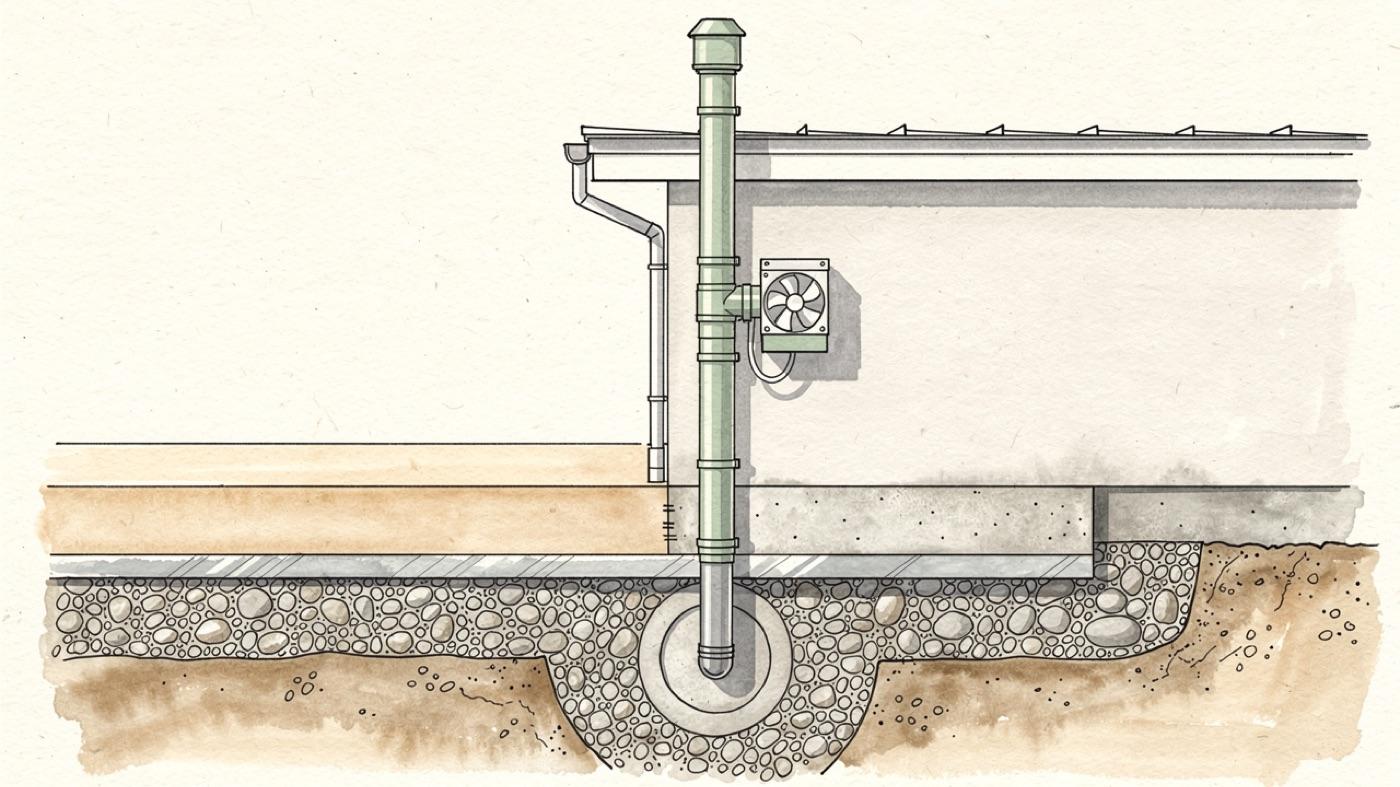
What a complete mitigation includes
- Sealing cracks, the slab edge, sump lids and utility penetrations
- A suction point and vent pipe sized for the footprint of the slab
- A fan located outside the living space or in the attic, never in the basement
- A manometer on the pipe so you can see at a glance that the system is running
- A follow-up test after the system has run for a few days
Building it out from the start
In new construction the fix costs a fraction of a retrofit. A gravel layer under the slab, a sealed vapor barrier and a capped vent pipe rough-in let you add a fan later only if testing calls for it. This is part of how we approach the building enclosure on every home.
The EPA's radon-resistant construction guidance describes the same features: clean gravel under the slab, plastic sheeting or a vapor retarder, a vent pipe labeled "Radon System," sealed cracks and openings, and an electrical junction box in the attic for a fan if testing later calls for one. The slab details are covered in our post on the vapor barrier under slab and soil treatment, and the pressure physics in building science basics for homeowners.
A tight house and clean indoor air are not in conflict. You just have to decide where the soil gas goes before you pour the slab, then test to prove it went there. Our post on home air quality testing covers how radon fits with the other tests worth running.